
Every family has at least one story told with suspicious confidence. A great-grandfather was supposedly a sea captain. An aunt insists the family once owned half the county. Someone is certain there is a royal connection, although the supporting evidence is mostly “Grandma said so.” Tracing your ancestry is how you turn those colorful legends into a family history built on names, dates, places, records, and carefully tested clues.
You do not need a history degree or a detective’s trench coat. The most useful ancestry research combines three approaches: talking with relatives and examining home records, searching historical documents, and using DNA testing responsibly. Each method answers different questions. Together, they can help you build a family tree that is accurate, meaningful, and less likely to include three unrelated people named William Johnson.
Begin with one focused question. “Who were all my ancestors?” is a lifetime project disguised as a sentence. Try something manageable, such as, “Who were my maternal grandfather’s parents?” or “Where did the Nguyen family live before moving to California?” A precise goal keeps your research organized and prevents the classic genealogy condition known as 47-open-browser-tab syndrome.
Way 1: Begin With Relatives and Records at Home
The best place to start tracing your ancestry is usually your own family. Genealogy organizations recommend working from the known to the unknown: record what you know about yourself, your parents, and your grandparents, then move backward one generation at a time. This creates a reliable framework and reduces the risk of attaching the wrong person to your family tree.
Interview relatives before memories disappear
Older relatives may remember details that were never written down: nicknames, neighborhoods, occupations, military service, migration routes, religious communities, adoption rumors, or why two branches of the family stopped speaking in 1974. Oral history is not proof by itself, but it is an excellent source of leads. Smithsonian guidance recommends planning interviews, explaining how recordings will be used, and allowing participants to skip questions or stop the interview.
Ask open-ended questions. “What do you remember about your grandparents?” will produce more useful information than “Was your grandfather named Joseph?” Follow up with questions about school, work, language, traditions, major moves, and the people who lived nearby. For immigrant relatives, ask why they moved, who traveled with them, what they brought, and which customs survived in the new country.
Record the conversation with permission and take notes. Audio preserves pronunciation and emotion; notes let you flag uncertain claims. When someone says, “Cousin Billy lived near Springfield,” write down which Springfield might be meant and how Billy was related. In many families, “cousin” can mean a first cousin, a distant cousin, a neighbor, or a man who attended enough barbecues to become permanent.
Search the family archive hiding in plain sight
Look for birth and death certificates, marriage licenses, obituaries, funeral cards, military papers, passports, naturalization documents, family Bibles, letters, diaries, yearbooks, deeds, photo albums, and the mysterious envelope marked “IMPORTANT” that has not been opened since 1986.
Do not examine only the main name. Witnesses, sponsors, informants, neighbors, pallbearers, and beneficiaries may be relatives. A marriage record may identify parents; an obituary may list married daughters; the back of a photograph may preserve a location or nickname. Scan each item, record who owns the original, and use descriptive file names. 1948-06-12_Maria-Lopez_Marriage.jpg will be much more helpful than IMG_9274.jpg.
Create a simple tree and research log
Build a pedigree chart beginning with yourself. Record full names, maiden names, relationships, approximate dates, and locations for births, marriages, residences, and deaths. Mark uncertain details as “about,” “probably,” or “unconfirmed.” A polished-looking online tree does not turn a guess into a fact.
Keep a research log showing what you searched, where you searched, the date, the terms used, and the resulteven when nothing was found. Documentation prevents repeated work and lets others understand your conclusions. The Genealogical Proof Standard emphasizes broad research, source citations, evidence analysis, conflict resolution, and a clear written conclusion.
Way 2: Follow the Paper Trail Through Historical Records
Once you have names, places, and approximate dates, move into public records. The National Archives highlights census, military, immigration, and naturalization files as major resources for family historians. State archives, county courthouses, libraries, historical societies, churches, cemeteries, and local newspapers may hold records that large genealogy sites do not.
Use census records as the backbone
U.S. federal census records can place a household in a specific location and may reveal ages, relationships, birthplaces, occupations, immigration details, and nearby relatives. The National Archives provides public schedules from 1790 through 1950 and recommends beginning with the newest available census, then working backward. A search can often begin with only a name and a state.
Personally identifiable decennial census information becomes public after 72 years. More recent records are restricted, although the named person, an heir, or a legal representative may be able to request an individual record through the appropriate process.
Search creatively because names were frequently misspelled or misread. Try initials, nicknames, phonetic spellings, alternate surnames, and searches based on a spouse, child, birthplace, occupation, or address. If “Kowalski” fails, the record may be indexed under “Kovalsky,” “Kowalsky,” or something invented during one hurried doorstep conversation.
Confirm identities with several record types
Birth, marriage, and death records can connect generations, but coverage differs by state and period. When civil registration is missing, search baptismal registers, marriage banns, cemetery records, funeral-home files, probate papers, land deeds, and family Bible entries. Probate records may identify spouses, children, guardians, debts, land, and personal belongings. Deeds can reveal relationships when property moves among relatives.
Never accept a record solely because the name matches. Compare age, residence, occupation, spouse, children, birthplace, and associates. Two people with the same name in one county can create years of confusion. Your goal is not to find a person with the right name; it is to show that the record belongs to your person.
Search immigration, naturalization, and newspaper collections
Passenger lists, border records, passport applications, alien files, and naturalization papers may identify a birthplace, arrival date, ship, sponsor, or previous residence. Naturalization records from state and local courts may be held by state archives or county historical organizations. USCIS also runs a fee-based program for certain historical immigration and naturalization records.
Official records establish facts; newspapers restore personality. Local papers reported births, marriages, deaths, school events, businesses, accidents, court cases, military departures, and detailed accounts of who visited whom for Sunday dinner. The Library of Congress’s Chronicling America collection contains millions of pages from newspapers published across nearly every state and U.S. territory through 1963.
Search names, nicknames, married names, addresses, workplaces, and relatives. Because optical character recognition can struggle with faded pages and decorative type, browse issues around a known date when keyword searches fail. A death certificate may tell you when someone died; an obituary may reveal that she played the church organ, raised prize-winning roses, and refused to own a telephone.
Use location-based guides when records are confusing. The FamilySearch Research Wiki explains record types and where they may be found, while the Library of Congress offers extensive state and local genealogy guides. These tools are especially useful when county boundaries changed or collections moved to regional repositories.
Way 3: Use DNA Testing as a Clue, Not a Crystal Ball
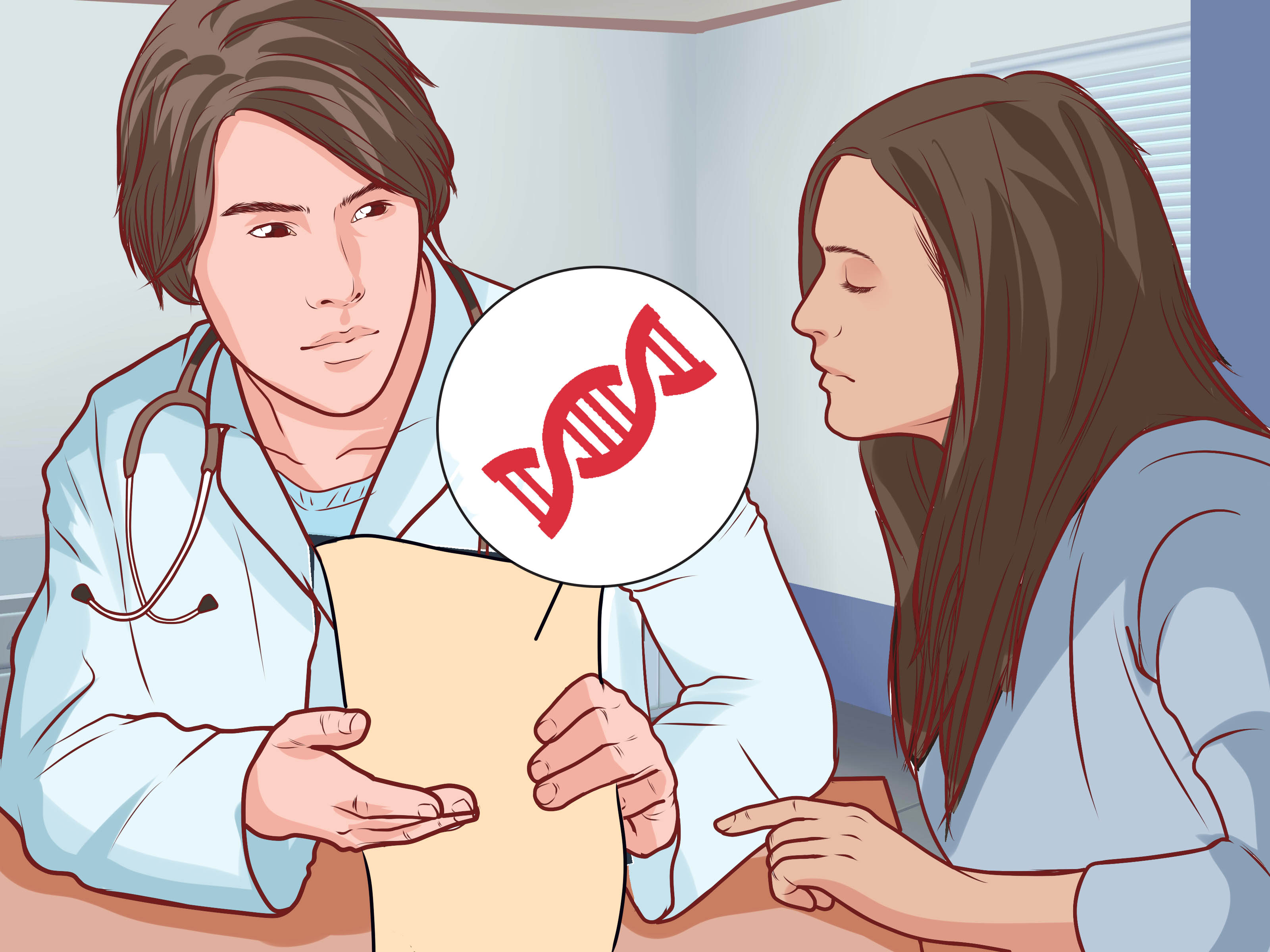
DNA testing can connect you with genetic relatives and suggest broad ancestral origins, but it works best beside documentary research. Ancestry tests compare selected DNA variations with reference groups and other customers. The results offer clues about relationships and geographic origins; they are estimates, not a notarized certificate declaring that you are exactly 17 percent anything.
Choose the test that fits the question
Autosomal DNA is the most common genealogy test because it can identify relatives across several family lines, especially within recent generations. Y-DNA follows the direct paternal line and is useful for certain father-to-son questions. Mitochondrial DNA follows the direct maternal line. Each test answers a different question, so buying the wrong one is a little like bringing a metal detector to search for a Wi-Fi password.
Focus on matches, not only ethnicity percentages
The most useful feature is often the match list. Begin with close matches and compare family trees, surnames, locations, and shared matches. A cluster of people connected to the same county, church, or immigrant community can point toward a missing branch even when no single match has a complete tree.
Verify proposed relationships with records. Shared DNA may support a connection, but predicted labels such as “second cousin” can represent several possibilities because inherited DNA varies. A match’s online tree may also contain copied errors. DNA does not make an unsourced tree correct; it merely gives the error better lighting.
Understand privacy, limitations, and unexpected results
Ethnicity estimates depend on a company’s reference database and methods, so they may change as those systems change. They describe genetic similarity, not cultural membership, nationality, tribal citizenship, or personal identity. The National Human Genome Research Institute cautions that commercial DNA kits cannot determine Native American identity, which involves community, history, traditions, and the rules of tribal nations.
Read the company’s privacy policy before submitting a sample. Check whether you can delete data and the biological sample, whether research participation is optional, how law-enforcement requests are handled, and what happens if the company is sold. Genetic results can affect relatives because families share DNA. Federal health and consumer resources also warn that testing may reveal unexpected relationships or emotionally difficult information.
Prepare for surprises such as adoption, donor conception, previously unknown siblings, or misattributed parentage. Approach matches respectfully. A first message should be brief, explain the predicted connection, and give the recipient room not to reply. A DNA match is a person, not merely a number on a screen.
How to Combine the Three Methods
The strongest ancestry research moves in a loop. An interview reveals a maiden name. A census places that woman in a county. A newspaper identifies her brother. A DNA match descends from that brother. Probate records then confirm the sibling relationship. Each source strengthens, corrects, or complicates the others.
For every conclusion, ask: What is the source? Who supplied the information? How close was that person to the event? Does another independent record agree? A death certificate may be official, yet a birthplace could have been reported incorrectly by a grieving child. A family Bible may contain firsthand entriesor dates copied from memory decades later.
When evidence conflicts, do not select the date you like best. Document the disagreement, compare the sources, and explain why one appears more reliable. A small, well-supported family tree is more valuable than a sprawling forest of strangers who happen to share your surname.
Experiences From the Ancestry Trail
The following scenarios reflect common genealogy experiences. Ancestry research rarely travels in a straight line. It behaves more like a road trip planned by someone who enjoys detours, courthouse basements, and dramatic revelations in old newspapers.
The family legend that was wrong but still useful
A researcher grows up hearing that her great-grandfather arrived from Italy through Ellis Island in 1905. Passenger searches produce nothing. An older uncle remembers hearing the word “Boston.” A later census suggests an arrival around 1907, and a naturalization petition finally identifies Boston as the port and names a Sicilian hometown.
The story was wrong about the port and year, yet it preserved the central truth: the family had an immigration journey worth investigating. Oral history often compresses events, swaps locations, and rounds dates. Treat it like a map drawn on a napkinhelpful for direction, risky for measuring property lines.
The ancestor hidden behind a spelling error
Another researcher searches for a Polish ancestor named Stanislaw Brzezinski. No census result appears, although family papers place him in Chicago. Searching only his wife’s first name, approximate age, and neighborhood uncovers the household under “Breshinsky.” That record identifies three children, an occupation, an immigration year, and two boarders who later prove to be cousins.
The lesson is simple: historical records were made by humans who were busy, tired, multilingual, and not thinking about your future search box. Flexible spelling is not a clever trick. It is a basic genealogy skill.
The DNA match that opens a sensitive door
A third researcher takes a DNA test expecting an entertaining ethnicity map. Instead, she receives a close match whose tree overlaps hers nowhere. Shared matches point to one branch of her paternal family. After respectful conversations and documentary research, she learns that her grandfather had a previously unknown half-brother.
The discovery brings photographs and new relatives, but it also raises difficult questions. Some family members are delighted; others prefer silence. Good genetic genealogy requires empathy. Evidence matters, but so do privacy, consent, and emotional boundaries.
The quiet discovery that matters most
Many people begin hoping to find royalty, a famous outlaw, or at least someone whose portrait hangs in a museum. The most meaningful discovery may be smaller: a newspaper says a great-grandmother organized meals during an epidemic; a pension file contains her handwriting; a probate inventory lists six books and a blue glass lamp.
These details may not extend the tree, but they turn a name into a life. They show what someone valued, endured, owned, built, or gave to others. That is the difference between collecting ancestors and understanding them.
The brick wall that needs a sideways step
Eventually, nearly every researcher meets an ancestor who seems to have appeared fully grown. The birthplace changes in every document, the surname has six spellings, or the courthouse burned. Repeating the same search usually produces the same empty result with extra frustration. Research siblings, witnesses, neighbors, in-laws, and business partners instead. Study county boundaries, make a timeline, and look for unexplained gaps. Sometimes a record that never names your target directly provides the clue that breaks the case. Leaving a well-documented question for future research is not failure; it is responsible genealogy.
Conclusion
To trace your ancestry, begin with living relatives and records at home, follow the paper trail through archives and historical collections, and use DNA testing as supporting evidence. Organize every discovery, cite your sources, test assumptions, and remain willing to correct your tree.
The reward is not simply a longer list of names. It is a clearer understanding of how ordinary lives crossed places and generations to reach you. You may not find a castle. You may find a baker, a nurse, a railroad worker, or a grandmother who quietly held an entire family together. Those stories are usually better.