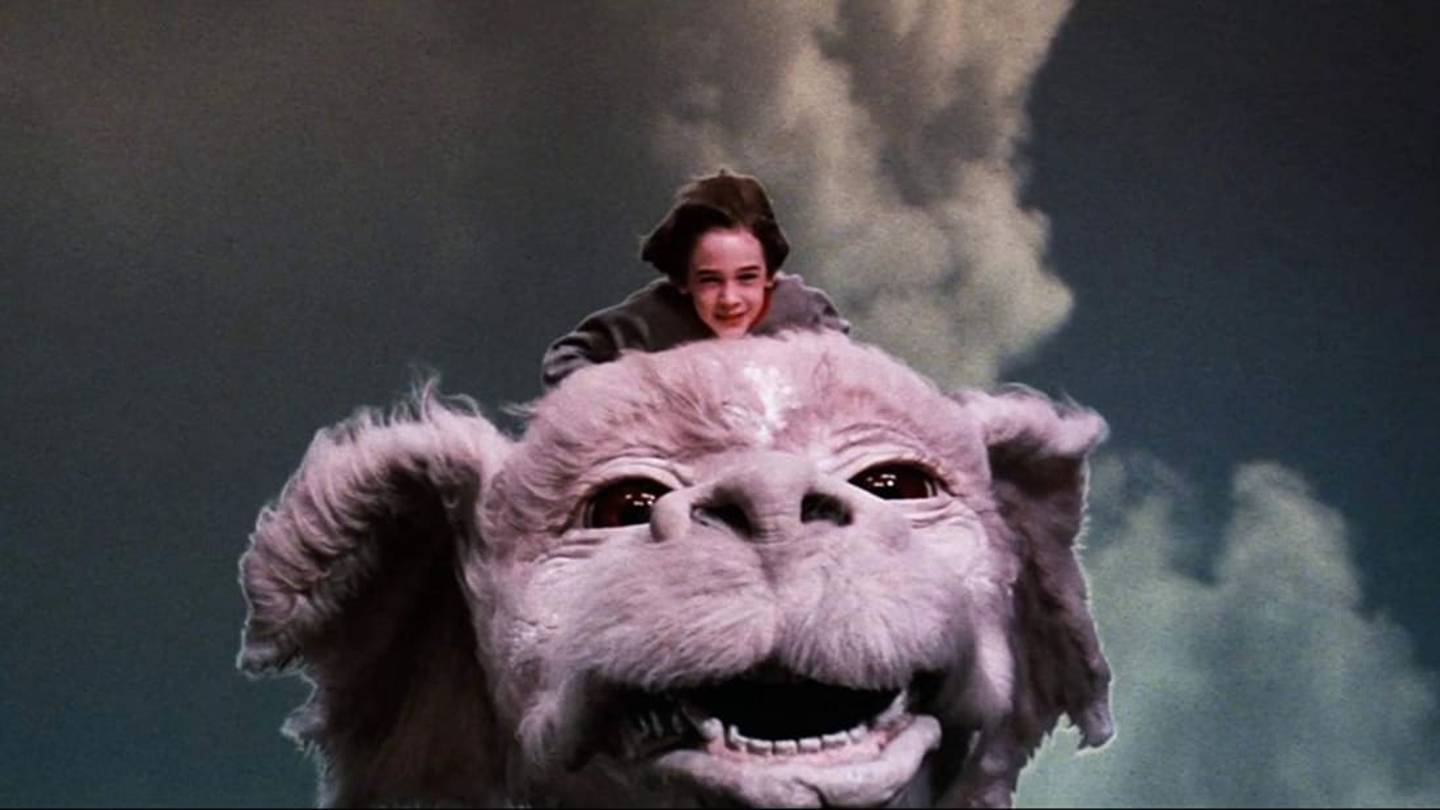

The NeverEnding Story is one of those rare fantasy films that feels less like a movie and more like a childhood fever dream with a theme song. Released in 1984 and directed by Wolfgang Petersen, the film gave audiences a lonely boy named Bastian, a brave warrior named Atreyu, a luckdragon who looks suspiciously like the world’s most optimistic golden retriever, and a villain called the Nothing that somehow still describes a bad Wi-Fi connection perfectly.
Based on Michael Ende’s 1979 novel The Neverending Story, the movie became a cult favorite because it did more than show a fantasy world. It asked a question that still works today: what happens when people stop dreaming? That is a big idea for a movie containing a racing snail, a giant rock eater, and a dragon with eyelashes more expressive than most actors’ entire filmographies.
Below are 14 amazing facts about The NeverEnding Story, from its record-breaking budget and behind-the-scenes drama to its unforgettable theme song and lasting pop-culture magic.
1. It Was One of the Most Expensive German Films Ever Made at the Time
When The NeverEnding Story arrived in theaters, it was not a small fantasy experiment stitched together with cardboard castles and wishful thinking. The production reportedly cost around $25 million to $27 million, an enormous sum for German cinema in the early 1980s. At the time, it was widely described as the most expensive film production in German history.
That budget shows. The movie is packed with elaborate sets, puppets, matte paintings, creature effects, and practical fantasy design. Before computer-generated dragons became standard studio furniture, filmmakers had to build their magic by hand. In this case, “by hand” meant huge animatronics, giant models, carefully painted backdrops, and enough creature craftsmanship to make a fantasy fan start pricing attic space for a Falkor of their own.
2. Wolfgang Petersen Made His English-Language Debut With the Film
Director Wolfgang Petersen was already respected internationally because of Das Boot, his tense 1981 submarine drama. With The NeverEnding Story, he stepped into English-language filmmaking for the first time. That move mattered. Petersen later became known in Hollywood for films such as In the Line of Fire, Outbreak, Air Force One, and The Perfect Storm.
Looking back, the jump from claustrophobic submarine warfare to flying luckdragons seems wildly unexpected. But both projects reveal Petersen’s interest in pressure, survival, and characters facing forces much larger than themselves. In Das Boot, the danger is war and the sea. In The NeverEnding Story, the danger is despair, imagination fading, and a mysterious force literally called the Nothing. Subtle? Not exactly. Effective? Absolutely.
3. The Movie Only Adapts the First Half of the Book
Many viewers are surprised to learn that the 1984 movie covers only part of Michael Ende’s novel. The film mainly adapts the first half, building toward Bastian’s realization that he is not merely reading a story; he is part of it. In the book, however, that moment is not the ending. It is closer to a doorway into a larger, stranger, more psychologically complex second half.
This difference is one reason readers sometimes describe the novel and film as very different experiences. The movie is a grand adventure about saving Fantasia. The book becomes a deeper exploration of wishes, identity, memory, power, and the danger of escaping reality so completely that you lose yourself. In other words, the film gives you the dragon ride; the book asks whether you remembered where you parked your soul.
4. Michael Ende Strongly Disliked the Film Adaptation
One of the most famous facts about The NeverEnding Story is that Michael Ende, the author of the original novel, was deeply unhappy with the film. He felt the adaptation simplified and distorted his work, and he reportedly tried to have production stopped or the title changed. When that did not happen, he took legal action and lost.
Ende’s reaction has become part of the movie’s legend. For fans, it creates a fascinating split: the film is beloved by millions, yet the original author considered it a betrayal of the book’s spirit. This does not mean one version must defeat the other in single combat atop the Ivory Tower. It means The NeverEnding Story exists in two powerful forms: a philosophical fantasy novel and a visually unforgettable 1980s movie that took on a life of its own.
5. The Novel Used Two Colors of Text
Michael Ende’s book had a brilliant design idea: different colors of text represented different worlds. In many editions, the real-world sections involving Bastian appear in one color, while the events in Fantastica appear in another. This visual distinction helps readers feel the border between reality and imagination.
That design choice also makes the physical book feel magical. It is not just a container for the story; it becomes part of the story. Bastian reads a mysterious volume, and the reader holds a volume that behaves mysteriously. Long before “immersive storytelling” became a trendy phrase used in marketing meetings, Ende was already making the page itself part of the adventure.
6. Fantastica Became Fantasia in the Movie
In Michael Ende’s novel, the magical realm is called Fantastica. In the 1984 film, it is called Fantasia. The change may seem small, but it gives the movie’s world a softer, more musical quality for English-speaking audiences. “Fantasia” also sounds immediately connected to fantasy, dreams, and imagination.
The name change is one of several differences between the book and movie. Some characters were simplified, redesigned, or reinterpreted for the screen. That is normal in adaptation, especially for a novel as symbol-heavy as Ende’s. Still, for book fans, the differences are part of the ongoing conversation about what the movie captures beautifully and what it leaves behind.
7. Atreyu Was Changed for the Screen
In the book, Atreyu belongs to a people known as the Greenskins, hunters who live on the Grassy Ocean and hunt purple buffalo. Translating that literally to screen would have required a very different visual approach. The movie instead presents Atreyu, played by Noah Hathaway, as a more traditionally heroic young warrior.
This change helped audiences connect quickly with the character, but it also softened some of the novel’s world-building. Still, Hathaway’s performance gave the movie its emotional backbone. Atreyu is brave, serious, wounded, loyal, and sometimes clearly having the worst field trip in fantasy history. His quest carries the film through danger, grief, and wonder.
8. Falkor Is a Luckdragon, Not a Regular Dragon
Falkor is often casually called a dragon, but he is specifically a luckdragon. That distinction matters because he is not a fire-breathing monster guarding treasure. He is gentle, wise, cheerful, and powered by optimism. He does not roast knights; he gives pep talks. He is less “ancient terror of the mountains” and more “flying emotional support cloud.”
The movie’s Falkor became iconic because of his unusual design. Instead of scales and spikes, he has soft fur, expressive eyes, and a doglike face. Some viewers adore him instantly. Others need a minute. Either way, once he swoops in to rescue Atreyu, the design works. Falkor represents hope arriving when everything looks lost, which is exactly the kind of friend every fantasy hero needs.
9. Fans Can Still Experience Falkor at Bavaria Film Studios
Much of The NeverEnding Story was created at Bavaria Film Studios near Munich, Germany. Today, the studio tour remains a pilgrimage spot for fans. Visitors can see displays connected to the film, and one of the most famous attractions lets guests recreate the feeling of riding Falkor.
This is a major reason the movie still feels tangible. Modern fantasy films often exist inside digital environments, but The NeverEnding Story was built in physical space. People can still visit part of that legacy. The magic was not just imagined; it was constructed, painted, wired, operated, filmed, and occasionally climbed onto by very excited tourists.
10. The Movie Was Filmed in Several Real Locations
Although Fantasia feels like another universe, parts of The NeverEnding Story were filmed in real-world locations. Studio work took place in Germany, while scenes from Bastian’s everyday life were filmed in Vancouver, Canada. Other footage, including beach imagery, was shot in Spain.
This mix of locations gives the movie an unusual texture. Bastian’s city feels grounded and ordinary, while Fantasia feels theatrical and dreamlike. That contrast is essential to the film’s power. The story begins with school, bullies, grief, and a bookstore. Then, suddenly, we are dealing with ancient turtles, collapsing worlds, and a wolf creature whose main hobby appears to be ruining everyone’s afternoon.
11. The Artax Scene Still Traumatizes Generations
No discussion of The NeverEnding Story is complete without mentioning Artax in the Swamps of Sadness. The scene is famous because it is emotionally devastating. Atreyu’s horse sinks into the swamp because he gives in to sadness, while Atreyu begs him to fight. It is a children’s movie scene in the same way a thunderstorm is “a little weather.”
The reason the moment works is that it connects fantasy danger with a real emotional truth. Sadness can feel heavy. Grief can feel like mud. The scene gives children a visual language for despair, and it does not talk down to them. It says, “Yes, sadness is powerful.” Then the rest of the movie says, “But hope can still fly in.” That is why people remember it decades later, usually while yelling, “Why did they show us this when we were eight?”
12. The Theme Song Became a Pop-Culture Time Machine
The English-language theme song, “Never Ending Story,” was performed by Limahl and produced by Giorgio Moroder. It became one of the most recognizable fantasy movie songs of the 1980s. Its sparkling synth-pop sound is so deeply tied to the film that hearing the opening notes can make fans mentally mount a luckdragon in under three seconds.
The song gained renewed attention in 2019 when it appeared in Stranger Things. A new generation discovered the track, while longtime fans experienced the strange joy of watching a childhood anthem become cool again. That revival proved something important: the movie’s magic was never locked in the 1980s. It was just waiting for the right moment to burst through the clouds again, wearing a fabulous synth melody.
13. Several Young Cast Members Took Unexpected Paths After the Film
Barret Oliver, who played Bastian, later stepped away from acting and became known for photography, especially historical photographic processes. Tami Stronach, who played the Childlike Empress, also moved away from mainstream film after childhood fame and built a career connected to dance, performance, teaching, and creative production.
These post-film paths add another layer to the story’s legacy. The NeverEnding Story is about imagination, identity, and growing into yourself. In real life, some of its young stars did exactly that, but not by endlessly repeating their childhood roles. They found different creative lives. That feels oddly appropriate for a movie about how stories shape us without needing to trap us forever.
14. A New Adaptation Has Been Announced
The world of The NeverEnding Story is not finished. In 2024, reports announced that Michael Ende Productions and See-Saw Films were developing new live-action films based on the novel. The news excited fans because the original book contains much more material than the 1984 movie adapted.
A new version could explore the second half of Ende’s novel more deeply, including Bastian’s complicated journey through wishes, power, and self-discovery. Of course, remaking a beloved fantasy classic is risky. Fans protect childhood movies with the intensity of dragons guarding gold. But if a new adaptation honors the book’s emotional and philosophical depth, it could introduce Fantastica to another generation.
Why The NeverEnding Story Still Matters
The NeverEnding Story endures because it understands something simple and profound: imagination is not childish. It is survival equipment. Bastian is not strong in the obvious movie-hero way. He is not a warrior, wizard, prince, or chosen athlete with suspiciously good hair. He is a grieving boy who loves books. His power comes from paying attention to a story when everyone else treats imagination as useless.
That idea has aged beautifully. In a world full of screens, speed, noise, and doom-scrolling, the Nothing feels more relevant than ever. It is not just a fantasy villain. It is emptiness, cynicism, apathy, and the slow disappearance of wonder. The movie suggests that stories help push back. They give shape to fear, language to sadness, and wings to hope.
Personal Experiences and Reflections Related to The NeverEnding Story
Watching The NeverEnding Story is a different experience depending on your age. As a child, you may see it as a grand adventure: a boy hides in an attic, opens a mysterious book, and escapes into a world of monsters, heroes, and flying dragons. That is the surface magic, and it works wonderfully. Every kid understands the appeal of a book that feels more interesting than school. Honestly, many adults understand that too, especially during budget meetings.
But revisiting the film as an adult often reveals a deeper emotional current. Bastian is not simply avoiding bullies. He is dealing with loss, loneliness, and a world that keeps telling him to toughen up. His father wants him to keep his feet on the ground. His classmates treat him as a target. The adults around him do not seem cruel, but they do seem busy, distracted, and unable to see what he really needs. Then he finds a story that speaks directly to him.
That is why the movie remains powerful for readers, writers, movie lovers, and anyone who has ever used fiction as shelter. Many people have their own version of Bastian’s attic. It might be a library corner, a bedroom floor, a late-night movie marathon, a comic book shop, or a pair of headphones playing a soundtrack that makes ordinary life feel briefly enchanted. The NeverEnding Story understands that escape is not always avoidance. Sometimes escape is how we gather enough courage to return.
The film also captures the strange way childhood stories grow with us. When you are young, Falkor is cool because he flies. When you are older, Falkor is moving because he arrives when Atreyu has almost lost hope. As a kid, the Rock Biter is funny because he is huge and eats rocks like snacks. As an adult, his grief near the end of the film lands differently because he cannot save the friends he loves. Even the Nothing becomes more frightening with age. Children may see it as a spooky force destroying a fantasy world. Adults may recognize it as burnout, depression, indifference, or the feeling that wonder is being quietly erased from daily life.
For anyone creating stories, The NeverEnding Story is also a reminder that fantasy does not need to be realistic to be truthful. A giant turtle can represent ancient knowledge and exhaustion. A wolf can represent destructive cynicism. A childlike empress can represent the fragile center of imagination itself. These symbols are bold, even strange, but they work because they connect with emotions people already know.
That may be the greatest experience the film offers: permission to care. It asks viewers to care about a book, a boy, a horse, a dragon, a world, and the act of naming something precious. It says imagination is not decoration. It is participation. The story continues because Bastian finally speaks, chooses, and believes. For audiences, that message still feels personal. Every time someone watches the film, sings the theme song, rides a studio Falkor, rereads the novel, or introduces the movie to a new generation, the story begins again.
Conclusion
The NeverEnding Story remains amazing because it is more than a nostalgic 1980s fantasy film. It is a record-breaking production, a controversial adaptation, a practical-effects showcase, a pop-music time capsule, and a surprisingly thoughtful meditation on grief, courage, and imagination. Its creatures may look handmade because they were, and that handmade quality is part of the charm. The movie feels like a dream assembled in a workshop by people who believed audiences would follow them anywhere, even into the Swamps of Sadness. Rude of them, emotionally speaking, but unforgettable.
Four decades later, the film still inspires debate, affection, memes, sing-alongs, rereleases, and new adaptation plans. That is the real magic of The NeverEnding Story: it keeps inviting people back into the book. And once you enter Fantasia, or Fantastica if you are feeling literary, you never leave quite the same.