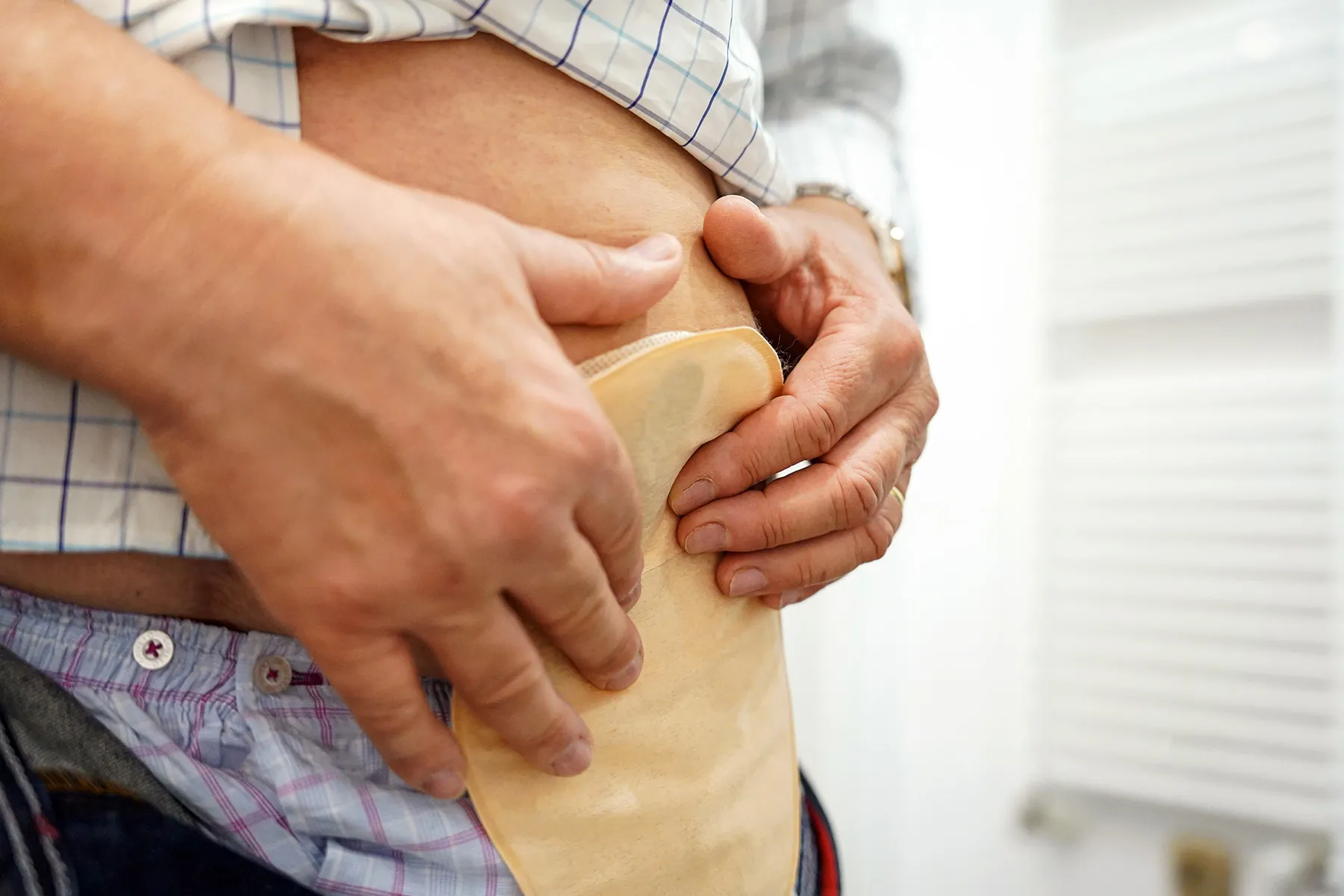

A colostomy bag may look like a simple pouch, but it is really a compact waste-manem fits well, it protects the skin, contains stool and odor, supports an active routine, and quietly gets on with business. When it does not fit well, an ordinary Tuesday can become a surprise laundry event.
Learning colostomy bag care takes practice, not perfection. The right pouch depends on the stoma, output, abdominal contours, lifestyle, dexterity, and personal preference. This guide explains the major types of colostomy bags, how to empty and change them, ways to prevent leaks and skin irritation, and maintenance habits that make everyday life easier.
What Is a Colostomy Bag?
A colostomy is a surgically created opening from the colon through the abdominal wall. The visible opening is called a stoma. Stool exits through the stoma and enters an external pouching system, commonly called a colostomy bag.
A healthy stoma is usually moist and pink to red. Because it has no sphincter muscle, a person cannot voluntarily control when gas or stool exits. A colostomy may be temporary, allowing part of the bowel to heal, or permanent when the normal route cannot be restored.
Why Colostomy Output Varies
The farther stool travels through the colon, the more water is absorbed. An ascending colostomy therefore tends to produce looser output, while a descending or sigmoid colostomy usually produces more formed stool. A transverse colostomy often falls between those extremes. Output also changes with diet, medications, illness, and hydrationbecause intestines, like coworkers, do not all follow the same schedule.
Main Types of Colostomy Bags
One-Piece Systems
In a one-piece system, the skin barrier and pouch form one unit. The whole system is removed during a change. These products are flexible, have a low profile under clothing, and can adapt well to rounded or creased areas. However, changing the pouch also means removing the adhesive barrier.
Two-Piece Systems
A two-piece system separates the skin barrier, also called a wafer or flange, from the pouch. The parts connect mechanically or with an adhesive coupling. The barrier can stay in place while the pouch is replaced, which may reduce repeated adhesive removal and makes it possible to switch pouch styles. Some systems are slightly bulkier or require more hand strength to connect securely.
Drainable and Closed-End Bags
Drainable pouches open at the bottom and are useful for loose, frequent, or unpredictable output. They can be emptied and reused until the full system is changed. Closed-end pouches have no outlet; the entire pouch is discarded when partly full. They are often convenient for predictable, formed output from a descending or sigmoid colostomy.
Flat and Convex Barriers
A flat barrier may work when the stoma protrudes and the surrounding skin is fairly even. A convex barrier curves toward the abdomen, helping direct output from a flush or retracted stoma into the pouch. Convexity can also help with folds or soft contours, but it should be selected with an ostomy nurse, especially soon after surgery.
Cut-to-Fit and Pre-Cut Openings
Cut-to-fit barriers are trimmed to match the current size and shape of the stoma. They are especially useful during the first six to eight weeks after surgery, when swelling decreases and the stoma becomes smaller. Pre-cut barriers save time after the stoma has stabilized and matches a standard opening.
Other Useful Features
Pouches may be transparent or opaque. Transparent material makes the stoma easier to see during application, while opaque material offers discretion. Many pouches include gas filters, viewing windows, soft fabric panels, belt tabs, or high-output drainage options.
How to Choose the Right Colostomy Bag
There is no universal “best colostomy bag.” The best system is the one that maintains a reliable seal, protects peristomal skin, handles the output, and fits daily life. Important factors include:
- Stoma diameter, shape, height, and location of its opening
- Liquid, pasty, or formed output
- Scars, folds, hernias, soft contours, or a recessed stoma
- Skin sensitivity and adhesive tolerance
- Hand strength, vision, mobility, and dexterity
- Work, exercise, clothing, travel, and sleep habits
- Insurance coverage and access to supplies
An ostomy nurse can assess the abdomen while the person is sitting, standing, and bending. A surface that looks smooth while lying down may develop a dramatic little valley during movement. Product samples can help, but changing several variables at once makes it difficult to identify what solvedor causeda problem.
Daily Colostomy Bag Care
Empty the Pouch Before It Gets Heavy
Empty a drainable pouch when it is about one-third to one-half full. Waiting until it resembles a small water balloon adds weight to the seal and increases bulging and leakage risk. Sit, kneel, or stand according to comfort. Placing toilet paper in the bowl first can reduce splashing.
Open the outlet, direct it into the toilet, and empty the contents. Wipe the tail before resealing it. Rinsing the entire pouch is generally unnecessary unless the manufacturer or ostomy nurse recommends it.
Inspect the Stoma and Skin
Check the stoma and surrounding skin regularly. Peristomal skin should look much like the rest of the abdomen. Persistent redness, burning, itching, weeping, or open areas are not simply “part of having a stoma.” They may indicate leakage, adhesive injury, infection, allergy, or an incorrect fit.
A small spot of blood during gentle cleaning can occur because the stoma has many blood vessels. Heavy bleeding, bleeding that does not stop, or blood coming from inside the stoma requires medical advice.
How to Change a Colostomy Bag
Change frequency varies by product, output, skin condition, and clinical instructions. Many people change the full system every three to five days. Change it immediately if it leaks or if burning or itching develops beneath the barrier.
1. Gather Supplies
Prepare the new pouch or barrier, measuring guide, scissors if needed, warm water, soft cloths or gauze, disposal bag, and prescribed accessories. Keeping everything within reach prevents the awkward mid-change scavenger hunt.
2. Remove the Old System Gently
Support the skin with one hand while slowly peeling the barrier away with the other. An approved adhesive remover may help. Pulling quickly can strip the skin, especially when changes are frequent.
3. Clean and Dry the Skin
Use warm water and a soft cloth or gauze. If soap is needed, choose a mild, residue-free option approved by the care team. Avoid oily soaps, lotions, alcohol-heavy products, and moisturizing wipes beneath the adhesive. Pat the skin completely dry.
4. Measure the Stoma
Use a measuring guide and cut or mold the barrier opening so it fits closely around the stoma without rubbing it. Exposed skin can be damaged by stool. Recheck the size during healing and whenever weight, abdominal shape, or the stoma changes.
5. Use Accessories Selectively
Barrier rings can fill small gaps or uneven areas. Ostomy paste works more like caulk than glue. Barrier powder is generally reserved for moist, irritated skin and should be used as directed. More products do not automatically create more security; sometimes they create a seven-layer dip that still leaks.
6. Apply the New System
Center the opening over the stoma, apply gentle pressure, and smooth the barrier outward. Holding a warm hand over the barrier for a few minutes may help it conform. Close the outlet and confirm that any two-piece connection is secure.
Preventing Leaks and Skin Irritation
Most leaks begin with a fit problem. Common causes include an opening that is too large, a stoma that has changed size, creases beneath the barrier, an overly full pouch, worn adhesive, or a product that does not match the abdominal contour.
Do not patch an active leak with layers of tape and hope it develops better manners. Stool trapped against the skin can quickly cause irritation. Remove the system, clean and dry the area, reassess the fit, and apply a fresh barrier. Repeated leaks, shortened wear time, or damaged skin deserve evaluation by an ostomy nurse.
Hair beneath the barrier may interfere with adhesion and make removal uncomfortable. If hair removal is recommended, carefully clip it or follow the method taught by the care team. Aggressive shaving can irritate hair follicles.
Maintenance, Storage, and Travel
Store pouches and barriers in a cool, dry place away from direct sunlight, heaters, hot cars, and humid bathrooms. Keep products in their original packaging, check expiration dates, and rotate older stock forward.
Maintain an emergency kit containing at least one complete pouch change, gauze or tissues, a disposal bag, and essential accessories. Keep one at work or in a backpack. For travel, carry more supplies than usual and place them in carry-on luggage. Pre-cutting barriers can simplify changes away from home if the stoma size is stable.
Place used pouches in a sealed disposal bag and follow local household-waste rules. Never flush a pouch, barrier, wipe, ring, or other accessory.
Food, Gas, Odor, and Hydration
Most people with a healed colostomy can eventually eat a varied diet. Soon after surgery, the care team may recommend smaller meals and bland, lower-fiber foods, followed by gradual reintroduction. Chew thoroughly, add foods one at a time, and track personal patterns.
Beans, onions, cabbage, carbonated drinks, and chewing gum may increase gas for some people. Eggs, fish, and certain vegetables may increase odor. These are tendencies, not dietary laws. A well-fitted pouch should contain odor except during emptying or changing, and pouch deodorants can help.
Drink enough fluid according to the care plan, especially during hot weather, exercise, fever, or diarrhea. A colostomy generally carries less dehydration risk than an ileostomy, but prolonged watery output still needs attention.
When to Contact a Healthcare Professional
Contact a surgeon, ostomy nurse, or another qualified clinician for persistent leakage, worsening skin damage, major changes in stoma size or shape, or frequent appliance failure. Seek prompt medical care for:
- A stoma that becomes dark red, gray, brown, black, white, or dry
- Heavy bleeding or bleeding that does not stop with gentle pressure
- No stool or gas along with cramping, pain, swelling, nausea, or vomiting
- Severe or persistent diarrhea, fever, chills, or signs of dehydration
- Pus, foul-smelling drainage, spreading redness, or worsening wounds
- A stoma that suddenly retracts, protrudes much farther, or becomes very swollen
- A new painful bulge around the stoma or symptoms of obstruction
Real-World Experiences and Lessons From Living With a Colostomy Bag
The first weeks with a colostomy often feel less like a “new normal” and more like an unexpected technical course. People may stare at barriers, rings, pouches, templates, powders, and disposal bags while wondering whether an engineering degree was supposed to arrive in the box. The useful truth is that repetition creates familiarity. A change that initially takes 40 minutes may eventually become a calm routine.
Prepare Before Removing the Old Pouch
A common early experience is removing the old pouch before discovering that the new barrier has not been cut. Meanwhile, the stoma continues doing its job without checking the calendar. Experienced users often arrange supplies in the order they will be used or keep a checklist inside the cabinet. Changing when output is usually quieter, often before breakfast, can help, though no stoma signs a legally binding schedule.
Avoid the “More Product” Trap
After a leak, a beginner may add more paste, powder, rings, tape, and possibly a motivational speech. Excess accessories can create an uneven surface and shorten wear time. A better approach is to identify where the leak began. Was the opening too large? Did a crease appear while sitting? Was the pouch too full? Did the stoma shrink during healing? One adjustment at a time provides better information than rebuilding the system like a layered wedding cake.
Clothing and Confidence Usually Improve
Many new users worry that everyone can see the pouch. Modern systems are generally discreet under ordinary clothes. A waistband may feel better above or below the stoma rather than directly across it. Stretchy undershirts, wraps, support garments, or higher-rise clothing may reduce movement, but specialized clothing is optional. The goal is comfort, not hiding the pouch as though it has committed a crime.
Public Life Gets Easier With a Backup Plan
Returning to work, exercise, or travel often brings fear of a public leak. An emergency kit turns that fear into a manageable plan. Experienced users commonly carry a complete change, disposal bags, tissues, and spare clothing. They learn restroom locations, empty before long meetings or boarding, and avoid letting the pouch become heavy.
After recovery and medical clearance, many people return to walking, swimming, cycling, gardening, strength training, and other activities. Gradual progression and professional advice about lifting can reduce strain and help protect against a parastomal hernia.
Skin Problems Are Useful Information
Burning, itching, and repeated leakage should not be normalized. Damaged skin makes adhesion harder, leading to more leakage and more damage. An ostomy nurse can evaluate fit, body contour, convexity, accessories, and skin treatment. Asking for help early is usually faster than attempting twelve increasingly creative home modifications.
Emotional Adjustment Is Part of Maintenance
Colostomy care is not only mechanical. Body-image concerns, anxiety about odor, intimacy worries, and frustration after leaks are common. Support from an ostomy nurse, counselor, partner, peer, or support group can reduce isolation. Confidence often grows through small wins: the first successful change, the first restaurant meal, the first trip, and the first full day when the pouch is simply therenot the main character.
Conclusion
Successful colostomy bag care is built on a close fit, healthy skin, timely emptying, planned changes, and early troubleshooting. One-piece and two-piece systems, drainable and closed-end pouches, and flat or convex barriers each serve different needs. The right choice depends on the stoma, output, body contours, abilities, and routine.
With training and a dependable supply setup, maintaining a colostomy pouch can become a practical part of daily life rather than a constant emergency. Treat leaks, irritation, and stoma changes as useful signals and involve an ostomy professional early. The goal is not a flawless performance. It is healthy skin, a secure seal, and enough confidence to get back to everything else.