
Note: Airsoft rifles are recreational replicas, but they can still injure eyes, teeth, and skin. Always adjust your hop up in a legal, designated shooting area with approved eye protection, a safe backstop, the magazine handled responsibly, and the rifle pointed in a safe direction. Accuracy is fun; safety is the price of admission.
What Hop Up Does on an Airsoft Rifle
Learning how to adjust hop up on an airsoft rifle is one of the easiest ways to make your BBs fly flatter, travel farther, and stop performing interpretive dance halfway to the target. Hop up is the small system inside your rifle that applies backspin to the BB as it passes through the hop-up bucking. That backspin creates lift, helping the BB resist gravity for longer than it would with no spin at all.
In plain English, the hop-up unit gives your BB a controlled “float.” Too little hop and the BB drops early like it suddenly remembered it has responsibilities. Too much hop and the BB rises upward like it is applying to aviation school. The sweet spot is a mostly flat BB trajectory that carries straight, remains predictable, and gently drops near the end of its effective range.
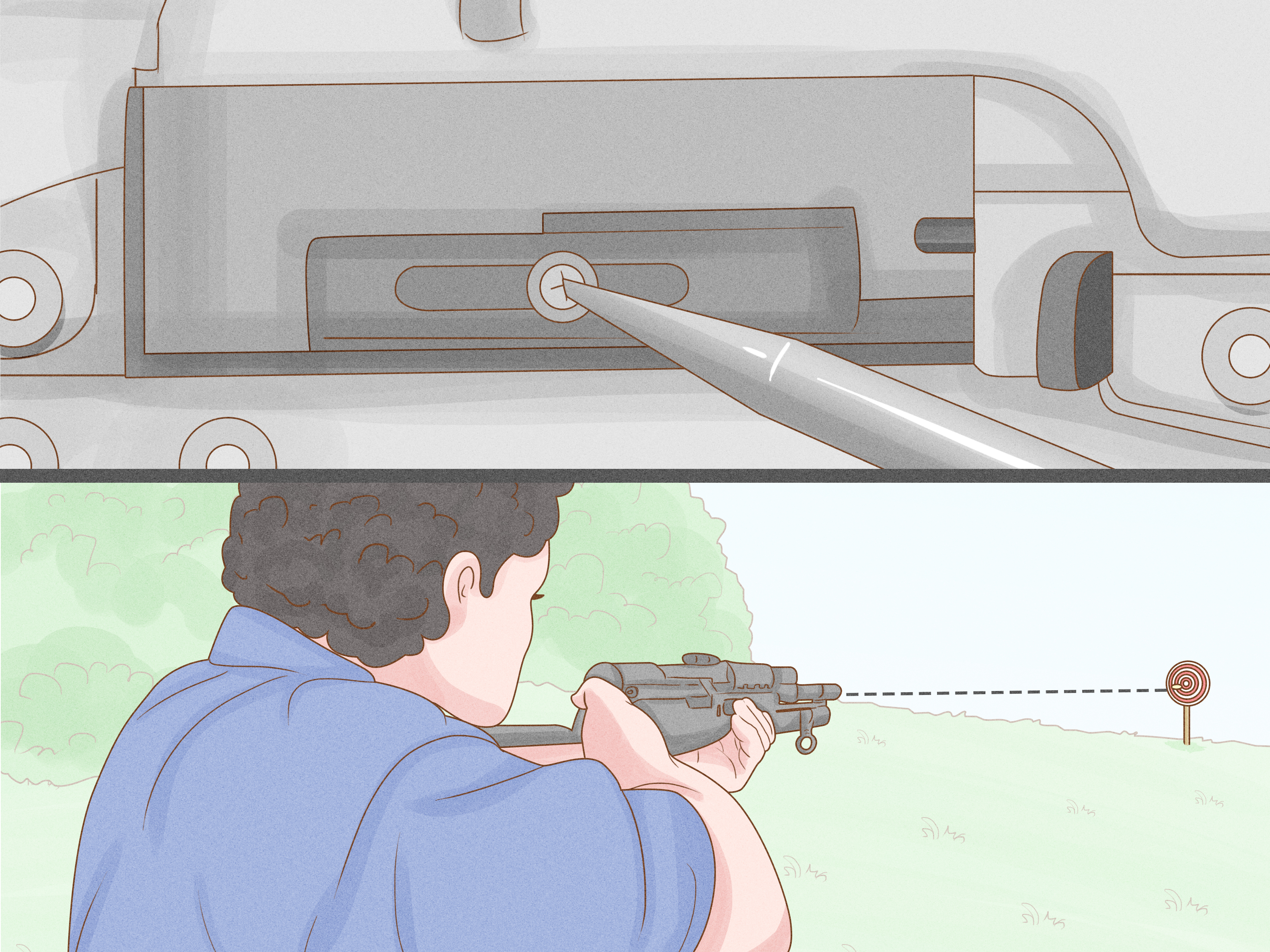
The main parts involved are the hop-up chamber, the bucking, the nub or tensioner, and the adjustment mechanism. On many M4-style AEGs, you access the hop-up wheel by pulling back the charging handle and opening the dust cover. AK-style rifles often use a slider. Other rifles may use a rotary dial, drum, lever, or top-dead-center adjustment screw. Different systems look different, but the goal is the same: apply the right amount of pressure to the bucking so the BB leaves the barrel with consistent backspin.
Before You Start: Safety, Setup, and BB Choice
Before touching the hop-up dial, set yourself up for clean testing. Use a safe range, a proper backstop, and full-seal rated eye protection. If you are at an airsoft field, follow the field’s chrono rules, barrel-cover rules, safe-zone rules, and test-fire area instructions. Do not adjust hop up by shooting randomly across a yard, road, hallway, or neighborhood. The best airsoft players are not just accurate; they are welcome to come back.
Next, use the BB weight you actually plan to play with. This matters because hop-up adjustment depends heavily on BB weight. A rifle tuned perfectly for 0.20g BBs may under-hop or behave differently with 0.28g BBs. Many standard AEG users test with BBs in the 0.20g to 0.32g range, while some gas, HPA, DMR, and sniper setups may use heavier BBs depending on field limits, power output, bucking quality, and rifle design.
Also use high-quality, clean, seamless BBs. Cheap BBs can be inconsistent in size and weight, and they may make a perfectly decent rifle look like it has a personal grudge against accuracy. If your shots curve sideways, double-feed, roll out of the barrel, or spread wildly even after hop-up adjustment, the issue may not be your dial setting. It could be dirty BBs, a dirty barrel, a damaged bucking, a misaligned hop-up chamber, wind, or poor-quality ammunition.
Easy Ways to Adjust Hop Up on an Airsoft Rifle: 10 Steps
Step 1: Read the Rifle Manual or Identify the Hop-Up Style
Start by finding your rifle’s hop-up adjustment mechanism. On many M4-style airsoft rifles, pull the charging handle back to expose the hop-up wheel inside the mock ejection port. On AK-style rifles, look for a sliding lever under the dust cover or near the chamber area. On G36, AUG, sniper, and specialty rifles, the adjustment may be a drum, slider, side lever, or screw.
Do not force anything. A hop-up dial should move with gentle pressure. If it feels stuck, check the manual or inspect the area carefully. Forcing a plastic dial is a wonderful way to turn a two-minute adjustment into a parts-ordering adventure.
Step 2: Choose the BB Weight You Will Actually Use
Hop-up tuning only makes sense when you test with your game BBs. If you normally play outdoors with 0.28g BBs, tune with 0.28g BBs. If your indoor field requires 0.20g BBs for chrono or gameplay, tune with those. Heavier BBs often need more hop pressure, but they can also provide better stability at range when the rifle can lift them properly.
Try not to change BB weight, brand, and hop setting all at once. When everything changes, troubleshooting turns into detective work without coffee.
Step 3: Set Up a Safe Test Range
Use a safe, open area where you can clearly see the BB’s full flight path. A distance of about 100 to 150 feet is useful for many rifles, while longer outdoor setups help with DMR or sniper-style platforms. Use a target with a safe backstop, and avoid windy conditions when possible. Wind can push BBs around and trick you into blaming your hop-up unit for weather’s bad attitude.
A dark background, bright daylight, or tracer BBs can help you see the BB path. Do not rely only on where the BB lands; watch how it travels.
Step 4: Start With Minimal Hop
Turn the hop-up adjustment down toward the lowest setting. Depending on your rifle, this may mean turning the wheel left, rotating it down, sliding the lever forward, or following the marking that reduces hop. Because designs vary, rely on your rifle’s markings and manual when available.
Fire a few test shots in semi-auto. With little or no hop, the BB will usually drop sooner. This gives you a baseline. You now know what “not enough hop” looks like.
Step 5: Increase Hop in Small Increments
Adjust the hop up a little at a time. Tiny movements are better than dramatic twists. After each adjustment, fire three to five shots and observe the BB trajectory. You are looking for the point where the BB starts flying farther and flatter instead of dropping early.
Small adjustments matter because the bucking is applying pressure directly to a lightweight plastic BB. A tiny change in pressure can noticeably change the flight path, especially with lighter BBs.
Step 6: Watch for the Flat Flight Path
The ideal airsoft hop-up adjustment usually creates a flat path for most of the rifle’s effective range, followed by a gentle drop at the end. Your BB should not climb sharply upward, dive immediately, or curve hard left or right. It should travel straight enough that your sights or optic can be zeroed around a reliable path.
A slight rise near the end of the flight can be acceptable for some outdoor setups, but avoid extreme over-hop. If your BB floats above the target line and keeps rising, you have gone too far.
Step 7: Reduce Hop if BBs Rise Too Much
If BBs arc upward, reduce hop slightly. This is called over-hopping, and it happens when the BB receives too much backspin. Over-hop may look impressive for half a second, but it makes real accuracy worse. You want usable range, not BBs auditioning for a satellite launch.
Back the setting down until the BBs stop climbing and settle into a flatter line. Fire another small group to confirm consistency.
Step 8: Check for Sideways Curving
If your BBs consistently curve left or right, the hop setting may not be the only issue. Sideways movement can come from wind, a dirty barrel, low-quality BBs, a damaged bucking, uneven nub pressure, a twisted bucking, or a misaligned inner barrel and hop-up chamber.
First, clean the inner barrel with the correct cleaning rod and soft cloth. Do not flood the hop-up bucking with oil, because excess oil can reduce friction and cause inconsistent hop. If cleaning does not help, inspect the bucking and chamber alignment. A bucking that is twisted even slightly can apply uneven pressure, sending BBs sideways in a very annoying but educational manner.
Step 9: Confirm the Setting With Several Shot Groups
Once the BBs fly flat, shoot several groups at your typical engagement distance. Do not judge the setting from one magical shot. Airsoft accuracy is about consistency, not a single lucky BB that deserves its own trophy.
Fire from a stable position and keep your aim point the same. If most BBs land near the same vertical line and the flight path remains predictable, your hop-up adjustment is close. After that, you can zero your optic or iron sights to match the tuned BB path.
Step 10: Mark or Remember Your Best Setting
When you find the sweet spot, make a mental note or use a small, non-permanent mark if your rifle design allows it. This is especially helpful if you switch between BB weights or need to reset hop for chrono procedures. Some players mark a dial position for 0.25g BBs and another for 0.28g BBs.
Recheck your hop-up setting before games. Vibration, transport, weather, and normal use can shift settings over time. A thirty-second test before the match can save you from wondering why your rifle suddenly shoots like it is trying to avoid conflict.
How to Tell If Your Hop Up Is Adjusted Correctly
A properly adjusted hop up gives you a stable, repeatable BB path. The BB should leave the barrel, travel mostly straight, maintain lift through the useful range, and then drop predictably. The rifle should feel easier to aim because your shots behave the same way again and again.
Signs of Too Little Hop
- BBs drop quickly after leaving the barrel.
- Your shots fall short even when the rifle has decent power.
- You must aim unusually high to reach normal distances.
- Heavier BBs seem impossible to lift.
Signs of Too Much Hop
- BBs rise sharply near the middle or end of flight.
- Shots sail over the target even with correct aim.
- Groups become vertically inconsistent.
- Lighter BBs look especially floaty or unstable.
Signs of a Mechanical Problem
- BBs curve the same direction every time, even in calm air.
- Shots alternate between dropping and over-hopping.
- BBs roll out of the barrel.
- The rifle double-feeds or jams near the chamber.
- The hop-up wheel moves but nothing changes.
Common Mistakes When Adjusting Airsoft Hop Up
Using the Wrong BBs
One of the most common mistakes is tuning with one BB weight and playing with another. BB weight changes the amount of hop pressure needed. For example, a setting that works beautifully with 0.25g BBs may not lift 0.32g BBs well enough. Keep your tuning process honest by using your actual field BBs.
Making Huge Adjustments
Hop-up systems reward patience. Big adjustments often overshoot the sweet spot. Move the dial or slider slightly, test, then adjust again. Think of it as seasoning soup, not dumping in the whole spice cabinet.
Ignoring Barrel Cleanliness
A dirty inner barrel can ruin accuracy even if the hop-up setting is correct. Dust, oil, old residue, and tiny debris can interfere with BB travel. Clean the barrel carefully with an airsoft-safe method, and avoid getting silicone oil on the bucking contact patch unless your manual specifically instructs otherwise.
Adjusting in Strong Wind
Wind can make BBs curve, rise, or drop unpredictably. If you tune on a windy day, you may end up compensating for weather instead of setting the rifle correctly. Whenever possible, tune in calm conditions or shoot with the wind direction in mind.
Zeroing the Optic Before Hop Up
Hop up should be adjusted before you zero a red dot or scope. If you zero first and then change hop, your point of impact changes. The smarter order is: choose BBs, adjust hop, confirm trajectory, then zero your optic.
Best Practices for Better Range and Accuracy
Once you understand airsoft hop-up adjustment, the next step is consistency. Use the same BB weight, keep your magazines clean, store BBs in a sealed container, and test your rifle after transport. If your rifle uses a rotary hop-up chamber, check whether the wheel holds position firmly. If it uses a slider, make sure it is not loose enough to drift during play.
For players chasing longer range, upgrades such as better buckings, nubs, flat-hop setups, precision inner barrels, and high-quality chambers can help. However, upgrades are not magic. A well-tuned standard hop-up unit often performs better than an expensive setup installed poorly. Good installation, alignment, air seal, and BB quality matter more than buying shiny parts and hoping physics feels generous.
Flat hop and R-hop systems can improve contact with the BB and provide more consistent backspin, especially with heavier BBs. These setups are popular among experienced players who want improved range and grouping. Beginners, however, should first learn to tune a standard hop-up system. Master the basics before modifying parts. Your wallet will appreciate the character development.
Troubleshooting Hop-Up Problems
BBs Drop No Matter How Much You Adjust
If BBs keep dropping, your hop-up bucking may be worn, oily, damaged, or not contacting the BB properly. The rifle may also be underpowered for the BB weight you selected. Try a slightly lighter BB, clean the barrel, and inspect the bucking if you are comfortable doing so.
BBs Over-Hop Even on Low Settings
If BBs rise even with minimal hop, the bucking or nub may be applying too much pressure. This can happen with certain bucking combinations, incorrect assembly, or very light BBs. Try heavier BBs if your rifle and field rules allow them, or inspect the hop-up assembly for improper seating.
BBs Curve Left or Right
Consistent sideways curve often points to uneven pressure. The bucking may be twisted, the nub may not sit centered, or the inner barrel may not align correctly in the chamber. Clean first, then inspect. If you are not confident disassembling the hop-up unit, ask a trusted airsoft technician or experienced player.
Hop-Up Dial Moves During Play
A loose hop-up wheel can drift from vibration. Some rotary systems hold settings better than older slider designs, but every rifle is different. If your setting moves often, inspect the chamber, look for worn parts, or consider a replacement hop-up chamber designed to hold adjustment more firmly.
Real-World Experience: What Adjusting Hop Up Teaches You
The first time many players adjust hop up, they expect a dramatic “before and after” moment. Sometimes that happens. More often, the process feels like tuning a guitar string: a little too loose, a little too tight, then suddenly everything sounds right. On an airsoft rifle, that “right” moment is when the BB stops dropping early and starts carrying forward in a smooth, flat line.
One useful experience is testing at different distances. At 50 feet, almost any decent rifle may look acceptable. At 100 feet, weak hop settings begin to show. At 150 feet, poor BBs, dirty barrels, and uneven buckings start telling on themselves like kids caught near an empty cookie jar. This is why experienced players do not tune hop up only by shooting at a close paper target. They watch the full BB flight.
Another lesson is that heavier BBs often feel slower but more stable. A player switching from 0.20g to 0.28g BBs may think the rifle has lost speed because the BB takes a little longer to reach the target. But if the hop-up unit can lift that BB properly, the shot may resist wind better and land more consistently. That is the tradeoff: lighter BBs get there fast, while heavier BBs can hold their line better at range.
Field conditions also matter. On a calm morning, a rifle may seem perfectly tuned. In the afternoon, wind picks up, humidity changes, and suddenly the same shots drift. That does not always mean your hop up is wrong. Airsoft BBs are light, and the outdoors has a sense of humor. Before changing your dial mid-game, fire a few controlled shots and confirm whether the problem is your rifle or the breeze.
Many players also learn that hop-up adjustment should be done before optic zeroing. A common beginner mistake is mounting a red dot, zeroing it indoors, then adjusting hop outdoors and wondering why the point of impact moved. The BB’s flight path changed, so the sight picture must be updated. Tune first, zero second. This order saves time and prevents the classic “my optic is broken” panic, which is usually just physics wearing a fake mustache.
Maintenance experience matters too. If your rifle suddenly shoots inconsistently after months of good performance, do not immediately buy upgrade parts. Clean the inner barrel. Check the bucking. Confirm your BBs are not old, dusty, or from a mystery bag in the bottom of your gear box. Many accuracy problems are boring maintenance problems wearing a dramatic costume.
The biggest practical lesson is patience. The best hop-up setting is rarely found in one turn of the dial. It comes from small adjustments, repeated testing, and honest observation. Once you find it, write it down or mark it carefully. Your future self, standing at the chrono station five minutes before game start, will be deeply grateful.
Finally, good hop-up tuning builds confidence. When your rifle sends BBs on a predictable path, you stop fighting your equipment and start focusing on movement, positioning, communication, and timing. That is where airsoft becomes more fun. A tuned rifle will not turn you into a superhero, but it will make every clean shot feel less like luck and more like skill.
Conclusion
Adjusting hop up on an airsoft rifle is simple once you understand the goal: create enough backspin to keep the BB flying flat without making it climb. Start with the right BB weight, use a safe test range, begin with minimal hop, increase gradually, and watch the entire flight path. If the BB drops, add hop. If it rises, reduce hop. If it curves sideways, investigate BB quality, barrel cleanliness, bucking alignment, wind, and chamber condition.
The hop-up unit may be small, but it has a huge effect on airsoft range and accuracy. Whether you use an M4 AEG, AK-style rifle, G36, gas rifle, HPA build, or sniper platform, careful hop-up adjustment can make your shots more predictable and your games more enjoyable. Treat the process like tuning, not guessing, and your rifle will reward you with straighter shots, better consistency, and fewer BBs wandering off like they forgot the mission.
SEO Tags