“A 1980s Teen Boy”: I Reimagine My Throwback Thursday Crushes As If I Had Met Them, With The Help Of Photoshop (39 Pics)

Most people revisit their teenage crushes by finding an old movie on streaming, h embarrassing box of magazine clippings in the attic. Graphic designer Kevin R. Tengesdal took a more ambitious route: he digitally inserted his younger self into the pop-culture universe that once made his teenage heart race.
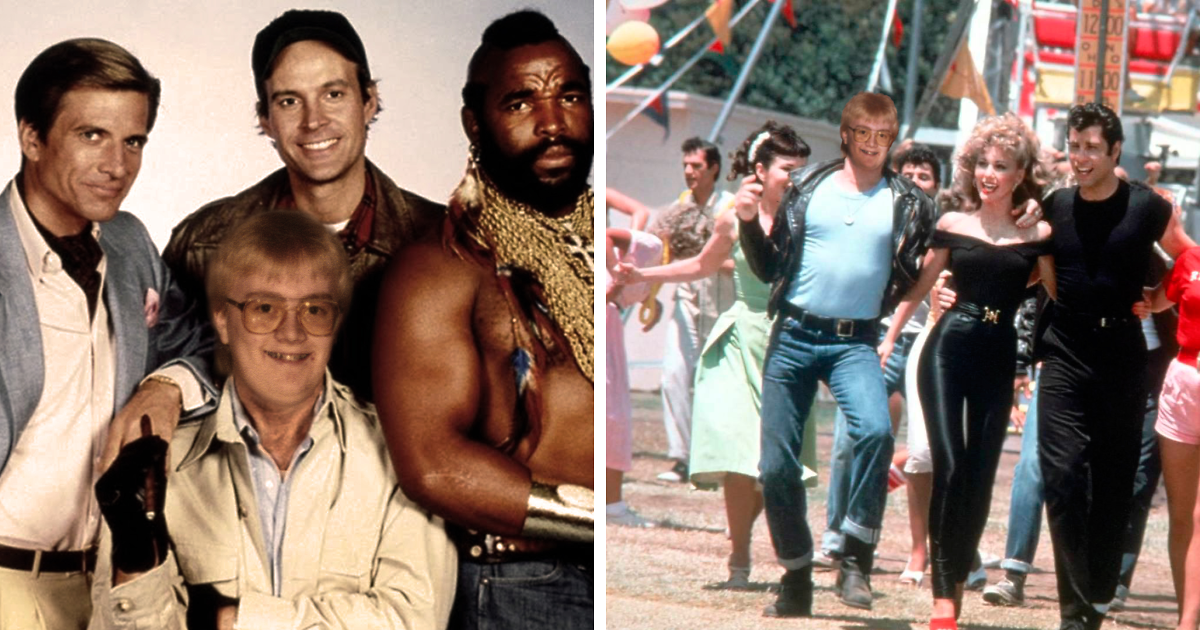
The result is a wonderfully playful collection of 39 Photoshop images built around the idea of Throwback Thursday crushes. Using senior photos of himself and carefully selected celebrity ims with the stars, characters, movies, television shows, and cultural icons that occupied his imagination when he was young.
It is part digital art project, part visual diary, and part proof that a teenage crush can survive for decades without paying rent.
What began as a satirical #TBTCrush concept eventually grew into an extended creative experiment. The images do not merely ask, “Who did I have a crush on?” They ask a much funnier question: “What would my life have looked like if I had somehow wandered into all those famous photographs?”
A Photoshop Time Machine Powered by Teenage Nostalgia
The basic formula sounds simple. Take an old photograph of yourself, find a recognizable celebrity or entertainment image, combine the two, and enjoy the joke. In practice, however, a successful composite depends on dozens of small visual decisions.
The face has to point in roughly the right direction. The lighting must make some sense. Grain, contrast, color, shadows, scale, and image quality all need enough adjustment to convince the eye to play along. Even when the finished picture is intentionally silly, it works best when the viewer needs a second or two to notice exactly what has changed.
That is where Tengesdal’s background as a graphic designer becomes important. His project is not trying to rewrite history with forensic perfection. Instead, it creates an alternate scrapbook in which an ordinary 1980s teenager somehow received unlimited backstage passes to popular culture.
The comedy often comes from the contrast. There is the recognizable world of a movie, television series, celebrity photograph, or famous characterand then, suddenly, there is teenage Kevin, looking as though he has always belonged there.
It is visual wish fulfillment with a wink.
Why the 1980s Were Practically Built for Celebrity Crushes
The 1980s were an especially fertile era for teenage fascination with celebrities. Movies grew into enormous cultural events. Cable television expanded. Music videos gave performers a powerful new visual presence. Teen-oriented films and television programs created stars whose hairstyles, jackets, poses, and facial expressions became instantly recognizable.
Before social media placed celebrities in an endless stream of daily updates, fans often encountered their favorite stars through a more limited collection of images: movie posters, television screens, album covers, magazines, VHS boxes, publicity photographs, and bedroom-wall pinups.
That scarcity arguably gave individual images extra power. One photograph could become the photographthe picture clipped from a magazine, saved in a drawer, taped to a wall, or remembered decades later.
Tengesdal’s Photoshop project plays directly with that visual memory. Rather than simply displaying the stars he admired, he enters the frame. The distance between fan and celebrity disappears. The impossible encounter becomes a fake memory.
From Footloose to the Danger Zone
The 39-image gallery moves freely through a giant pop-culture toy box. References include Footloose, Magnum, P.I., Sixteen Candles, Young Guns, Raiders of the Lost Ark, Star Wars, Family Ties, Ferris Bueller’s Day Off, The A-Team, CHiPs, Growing Pains, and other familiar corners of television and film history.
Some entries are built around direct title references. Others lean on famous dialogue, song lyrics, character names, or cultural catchphrases. That variety keeps the concept from becoming repetitive. Each image functions like a small visual puzzle: recognize the source, spot the altered element, and appreciate the ridiculous alternate reality.
One moment places the project in the orbit of Footloose. Another heads into the “Danger Zone.” Elsewhere, the gallery visits worlds associated with Dirty Dancing, American Gigolo, The Blue Lagoon, Happy Days, and even classic television programs that predate the 1980s but remained part of the creator’s wider pop-cultural memory.
In other words, this is not a strict museum catalog of one decade. It is closer to the contents of a teenager’s brain after too much television, several movie marathons, a stack of magazines, and absolutely no intention of organizing anything alphabetically.
The Best Joke Is How Seriously the Images Pretend to Take Themselves
Humorous Photoshop often works because the editing is deliberately chaotic. Tengesdal’s approach is funnier for almost the opposite reason. The pictures frequently maintain the original mood of the source image while introducing one deeply improbable detail: him.
That deadpan quality is essential. If every composite screamed, “Look at this joke!” the concept would quickly become exhausting. Instead, the images often behave as though nothing unusual has happened.
Of course teenage Kevin was there.
Of course he knew these people.
Of course he somehow appeared in one famous entertainment universe after another.
Why are you asking so many questions?
The humor also benefits from using old personal photographs. A modern selfie inserted into a vintage scene would immediately look like a visitor from another era. A senior portrait from the creator’s youth already carries period-specific visual clues: hairstyle, clothing, photographic texture, and the unmistakable energy of a school picture taken when everyone was trying very hard to look effortlessly cool.
That makes the composite feel less like a random meme and more like a page from an alternate yearbook.
Photoshop Turns “What If?” Into a Visual Story
Digital image editing has become so common that it is easy to forget how powerful the basic idea remains. A photograph traditionally suggests that something stood in front of a camera at a particular moment. A composite breaks that expectation. It allows separate times, places, and people to occupy a single frame.
Modern Photoshop workflows make it possible to separate subjects, work with independent layers, resize elements, create masks, adjust color, change lighting, repair edges, and blend materials from different sources. Yet the software alone does not provide the joke. The entertaining part is the concept behind the edit.
In this series, the central idea remains remarkably consistent: adult hindsight meets adolescent fantasy.
There is also a delightful technological irony to the whole thing. Photoshop was developed near the end of the 1980s and reached the public in 1990. The software now serves as a time machine for creating fictional encounters with the very decade that largely existed before Photoshop became a household name in digital creativity.
Teenagers in the 1980s could daydream about meeting their favorite celebrities. Decades later, one of those teenagers could finally manufacture the photographic evidence.
Progress!
Why These Fake Photos Can Trigger Real Feelings
Nostalgia is rarely a simple desire to return to the past exactly as it happened. It is often a mixture of affection, humor, longing, identity, and selective memory. A song can suddenly revive a car ride. A movie poster can bring back a bedroom wall. A television theme can return someone to a family living room faster than any expensive time machine could manage.
Psychological research has also linked nostalgia with feelings of social connection, personal continuity, belonging, and meaning. That helps explain why projects built from shared pop culture can feel strangely communal. The creator may be editing his own teenage memories, but viewers bring their memories to the gallery too.
One person sees Magnum, P.I. and remembers watching television after school. Someone else recognizes Sixteen Candles and remembers a first crush. Another sees Star Wars and immediately recalls the friend who could recite entire scenes at lunch.
The pictures become conversation starters precisely because the source material is familiar. Viewers are not simply looking at someone else’s nostalgia; they are comparing it with their own.
Shared Memories Make the Gallery Bigger Than 39 Pictures
A list of 39 images can never contain every crush or every favorite character from an era. Fortunately, it does not need to. Half the fun is mentally adding your own candidates.
Who would appear in your fictional photograph?
Would you sneak into an iconic movie scene? Join a fictional television family? Stand next to a musician whose poster once occupied valuable bedroom-wall real estate? Would your younger self remain calm, or would the finished composite need to document a complete emotional system failure?
This participatory quality gives the project extra life. Every image suggests another possible image. The idea is infinitely expandable because pop culture is full of people we admired from a distance and moments we once wished we could enter.
The Imperfect Edit Can Be More Charming Than the Perfect One
There is a temptation in digital art to treat technical perfection as the final goal. Perfect masking. Perfect color matching. Perfect shadows. Perfect realism.
But comedy has different requirements.
A humorous composite can become less entertaining when it is polished until all personality disappears. The charm of a project like #TBTCrush comes partly from recognizing the handmade act of putting a personal photograph into a famous scene. The viewer is invited to notice the construction, not be deceived by it.
The editing only needs to be convincing enough to support the fantasy.
That balance between believable and obviously impossible is where the series lives. If the images were completely realistic, the joke might become confusing. If they were careless, the visual idea would collapse. The sweet spot is a picture that says, “This never happenedbut wouldn’t it have been fun?”
A Visual Memoir Without the Usual Serious Face
Personal history is often presented with great solemnity. We preserve childhood pictures, graduation portraits, family photographs, and old letters because they document who we were. Tengesdal’s project treats those same materials as creative raw ingredients.
The senior photo is no longer only a record of a particular year. It becomes a passport.
One version of the younger self can enter a television show. Another can meet a movie star. Another can stand in a famous promotional image. The original photograph remains connected to real life, while the composite explores all the ridiculous lives that never happened.
That is what makes the series feel surprisingly personal beneath the jokes. The celebrity references attract attention, but the repeated presence of the same younger face gives the collection its emotional center. This is a grown man looking back at his teenage self and allowing that teenager to have some impossible fun.
There is no attempt to pretend that adolescent crushes were sophisticated. Teenagers are not famous for calmly evaluating attraction through peer-reviewed research. Sometimes a hairstyle happened, a movie started, and suddenly a bedroom wall required a new poster.
The series embraces that awkward sincerity instead of mocking it.
What Makes “A 1980s Teen Boy” So Relatable Today
Although the project is rooted in an earlier era, its basic impulse feels completely modern. Social media is filled with people remixing personal photographs, inserting themselves into fictional universes, recreating old family pictures, restoring damaged images, and using digital tools to turn memory into something new.
The difference here is that the technology serves a very specific personal joke. The creator is not merely demonstrating Photoshop skills. He is using digital compositing to stage a reunion between two versions of himself: the adult who understands how memory changes over time and the teenager who simply knew who made him swoon.
That combination gives the work warmth. It is easy to laugh at old hairstyles, old fashion, and old celebrity obsessions. It is more interesting to laugh while also admitting that those things mattered to us.
Our teenage selves may have had questionable hair and highly dramatic opinions, but they were still us.
My Experience Looking at This Kind of Throwback Photoshop Project
The most enjoyable way to experience a gallery like this is not to rush through the pictures as though they are 39 items on a digital checklist. The fun comes from slowing down long enough for recognition to happen.
First, there is the source image. Something about the scene feels familiar. Maybe it is a costume, a pose, a television cast, or the visual atmosphere of a movie you have not watched in years. Then comes the second reaction: something is slightly wrong. A face does not belong there. A new person has quietly entered the memory.
That small delay is where the humor lands.
Looking through projects like this also creates an unexpectedly competitive form of nostalgia. You start testing yourself. Do I recognize this one? What was that show called? Who played that character? Why can I remember the exact shape of a 1980s television mustache but not where I put my keys five minutes ago?
Then the personal memories begin arriving.
A reference to Footloose is not only a reference to a movie. For one viewer, it may bring back a school dance. For another, a cassette tape. For someone else, an older sibling who controlled the television and therefore indirectly controlled the household’s entire cultural education.
That is why the best nostalgia projects feel larger than their actual subject. You may never have shared Tengesdal’s specific crushes, but you probably understand the experience of seeing a celebrity from your youth and briefly remembering the person you were when that star seemed impossibly glamorous.
The Photoshop element adds another layer because it gives form to a fantasy most people never bothered to express. Many teenagers have imagined meeting someone famous. Few have gone back decades later, opened their old photographs, and created an entire archive of evidence proving that the meeting “happened.”
There is something oddly generous about doing so. The project transforms a private memory into a public game. Viewers are invited to laugh, recognize references, compare crushes, and imagine their own edits.
It also makes me think about the photographs people choose to keep. A senior portrait can sit untouched in a box for decades, carrying one fixed meaning: this is what I looked like then. Creative editing asks a different question: what else can this picture become?
Suddenly, the photograph is active again.
It can become a joke sent to friends. It can become a fictional adventure. It can start conversations about identity, aging, attraction, entertainment, and how dramatically the media landscape has changed. It can remind us that old pictures are not necessarily finished objects. Sometimes they are ingredients waiting for a new story.
Most of all, the experience of seeing these 39 images is a reminder not to become too embarrassed by the enthusiastic person we used to be. Teenage crushes were often exaggerated, impractical, and based on approximately nine seconds of eye contact with a television screen. That does not make them meaningless. They belong to the emotional landscape of growing up.
Revisiting them with humor is a way of making peace with time.
You do not have to pretend you are still 17. You do not have to insist the 1980s were perfect. You certainly do not have to bring back every fashion trend. Some fabrics have suffered enough.
But you can look at an old photograph, remember what once made your heart jump, and let your younger self have one more impossible adventure.
Conclusion: Sometimes the Best Memories Are the Ones We Invent
“A 1980s Teen Boy” works because it combines three things people rarely outgrow: curiosity about the past, fascination with famous faces, and the desire to imagine a slightly more exciting version of our own history.
Kevin R. Tengesdal’s 39 Photoshop creations turn teenage crushes into fictional encounters, transforming old senior photos into a humorous alternate autobiography. The collection travels through movies, television, music, and celebrity culture while keeping one wonderfully consistent idea at its center: what if the fan could step inside the picture?
The answer is funny, nostalgic, technically creative, and more emotionally recognizable than it first appears.
We cannot actually return to our teenage years. Frankly, many of us worked very hard to survive the hairstyles. But with an old photograph, a good idea, and some digital editing, we can visit an alternate past for a few minutes.
And in that past, apparently, we knew everybody.
Note: This article is an original, independently written editorial feature inspired by the publicly presented #TBTCrush project and informed by broader research into 1980s popular culture, nostalgia, photography, and digital image compositing.