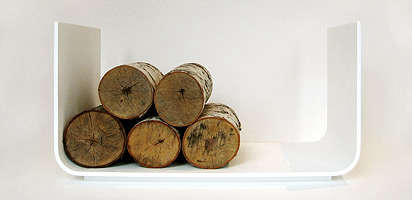

Some home accessories politely disappear into the room. The Rack by FTF Design Studio does not. It sits there in crisp white Corian like a very well-dressed minimalist who somehow manages to be both quiet and unforgettable. That is the trick, really. The Rack is not shouting for attention with wild colors, extra hardware, or decorative gymnastics. Instead, it leans on proportion, material, and usefulness. In a market full of storage pieces that either look painfully practical or suspiciously decorative, this one lands in the sweet spot between sculpture and everyday utility.
Designed by FTF Design Studio, the collection tied to West Chin Architects & Interior Designers, The Rack has been around long enough to feel proven rather than trendy. It has been described in design media as a holder for kindling, towels, blankets, and magazines, which is a polite way of saying it is one of those rare pieces that can migrate from the bathroom to the living room to the hearth without looking lost. That flexibility is a major reason it still feels relevant. The best modern accessories do not trap you in one room or one use. They adapt as your life changes, your space shifts, and your styling habits evolve from “collector of beautiful objects” to “please help, why do I own seventeen throws?”
What Exactly Is The Rack?
At its core, The Rack is a freestanding storage accessory made in Snow-colored Corian with a matte finish. Current product information lists multiple sizes, from compact versions that begin around 14 inches square to larger options that stretch up to 36 inches wide. The design is suitable for indoor or outdoor use, which already gives it a broader brief than the average magazine holder or towel bin. It is not just a pretty box. It is more like a refined, architectural cradle: open, generously proportioned, and shaped to hold visible essentials without making them look messy.
That last part matters. Visible storage is hard. Hidden storage is easy. You shove the clutter in a cabinet, close the door, and call it a lifestyle. Open storage has to work much harder because the things you place inside become part of the room’s composition. The Rack handles that challenge by framing whatever it holds. Rolled towels look spa-like. Split logs look deliberate. Folded blankets look curated instead of abandoned. Even magazines, those slippery little stacks of domestic guilt, suddenly look like a design choice.
Why The Material Does So Much of the Heavy Lifting
If The Rack were made from flimsy metal or ordinary painted wood, it would still be functional, but it would not have the same presence. Corian is the game changer here. The material is known for being non-porous, easy to clean, seamless in appearance, and formable into smooth, continuous shapes. In other words, it lets designers make pieces that feel monolithic rather than assembled. That is exactly what gives The Rack its polished, almost gallery-like attitude.
There is also a practical upside. Corian is the kind of material that likes real life. It can handle splashy environments better than many finishes, which is why it makes sense in bathrooms and around wet towels. It also makes sense near a fireplace because it is easy to wipe down when the room collects a little dust and ash. And because the finish is matte rather than glossy, the piece feels calm and tactile instead of slippery or showroom-cold.
The choice of white is equally strategic. White storage can go very wrong when it feels sterile, but FTF’s broader design language is rooted in clean lines and restrained forms, so the color reads as intentional. The Rack feels less like a “white accessory” and more like a small piece of architecture that just happens to store your stuff.
The Design DNA Behind The Rack
FTF Design Studio launched in 2006 as an extension of the custom work created by West Chin Architects & Interior Designers for private clients. That background is important because it explains why The Rack feels architectural rather than merely decorative. It was born from a practice that understands how people actually move through rooms, how materials behave in lived spaces, and how furniture can bridge the gap between utility and atmosphere.
This is also why the piece avoids gimmicks. There is no need for unnecessary ornament when the geometry already does the talking. The Rack embodies a familiar rule of good modern design: when the shape is disciplined and the material is strong, simplicity becomes expressive. Or, to put it less academically, a smart silhouette can do more than a thousand little flourishes and still leave room for your towels.
Where The Rack Works Best
1. At the Fireplace
This may be the most obvious and the most satisfying placement. Design publications have long treated firewood storage as part of the hearth’s visual story, not just a practical necessity. The Rack is especially effective here because it keeps logs organized while softening the usual ruggedness of firewood holders. Most log storage pieces lean industrial, rustic, or aggressively masculine. The Rack goes in a different direction. It lets the natural texture of wood supply the organic contrast while the form remains spare and modern.
If your living room has a clean-faced stone fireplace, a plaster surround, or a minimal hearth with little ornament, The Rack makes a lot of sense. It keeps the area useful without visually muddying the room. The white Corian provides crisp contrast against stacked wood, and the overall effect can make firewood feel less like fuel and more like texture.
2. In the Bathroom
Bathrooms are where The Rack starts to show off. Rolled towels in a Corian vessel feel immediately elevated, and the material itself belongs in moisture-prone spaces. The piece is particularly effective in bathrooms that need storage without wanting to add visual heaviness. Open shelving can look busy. Cabinets can feel bulky. A lightweight-looking freestanding form offers another option.
Small bathrooms can use a compact version to hold fresh towels or guest essentials. Larger baths can treat it almost like a design punctuation mark next to a soaking tub. It adds function, but it also adds calm. That may sound dramatic for a storage piece, but anyone who has seen the wrong chrome stand in the wrong bathroom knows accessories can absolutely ruin the mood.
3. In the Living Room
House Beautiful and other design outlets often stress the importance of double-duty furniture and stylish storage in shared spaces, and The Rack fits that logic beautifully. Use it for throw blankets, reading material, or even children’s books if you are blessed with a stylish family and cursed with actual belongings. It reads as intentional because it has enough design integrity to stand alone, even when it is not full.
That last point is more important than people realize. Many storage pieces only look good when packed. The Rack still looks composed when it holds just one folded throw or a few favorite magazines. It does not beg to be filled, which makes it feel more luxurious.
4. Outdoors or in Transitional Spaces
Because the current product description notes indoor or outdoor use, The Rack also works in covered patios, pool houses, mudrooms, and entry-adjacent zones. Imagine it holding rolled towels by an outdoor shower, extra throws on a screened porch, or garden accessories in a refined entry. The piece can absorb those functional roles without starting to look like utility-room equipment. It is still polished, still composed, still unmistakably design-forward.
Why It Still Feels Current
Minimalism has changed. The old version often felt severe, almost allergic to comfort. The newer version is warmer, more human, and more interested in tactile materials and objects that earn their keep. The Rack fits this updated sensibility very well. It is minimalist, yes, but not punishingly so. It does not ask you to live with one spoon and a single morally superior chair. It simply asks that your storage look as considered as the rest of your room.
That is especially relevant now, when design advice from publications like Better Homes & Gardens and Real Simple keeps circling back to organized, flexible spaces. People want less clutter, but they do not necessarily want every room to look stripped bare. Accessories like The Rack help solve that tension. They let you keep useful items close while maintaining a clean visual field.
What Buyers Are Really Paying For
Let us be honest: The Rack is not a bargain-bin basket. Depending on size and timing, editorial coverage has placed it in the premium category, and the current retail listing starts above the thousand-dollar mark. So why would someone choose this over a much cheaper alternative?
Because they are not just buying storage. They are buying material quality, sculptural presence, flexibility of use, and a piece that can move through different rooms over time. In other words, they are buying permanence. A cheap basket solves a temporary problem. The Rack is more like a long-term relationship with excellent posture.
That does not mean it is right for everyone. If you want hidden storage, maximum capacity, or a piece you can forget about entirely, there are more economical options. But if you care about visible storage, subtle luxury, and objects that contribute to the architecture of a room, The Rack makes a compelling case for itself.
Styling Tips for Making The Rack Look Its Best
Keep the contents disciplined
The Rack is not the place for visual chaos. Three beautifully rolled towels will outperform eleven crumpled ones every time. The same goes for blankets, magazines, or logs. Think edited, not stuffed.
Use contrast wisely
Because the piece is white and clean-lined, it loves contrast. Warm wood, charcoal textiles, blackened steel, natural stone, and woven materials all play nicely against it. The Rack does not need loud styling; it needs texture.
Let it breathe
Do not wedge it into an overcrowded corner between five other accessories trying to become the main character. This piece performs best with negative space around it. Give it room to look intentional.
Repeat its language elsewhere
If the room includes other soft-edged, streamlined forms, The Rack will feel native to the space. If everything else is ornate and traditional, it can still work, but it becomes more of a deliberate contrast piece.
The Real Appeal: It Turns Necessity Into Decor
The smartest thing about The Rack is that it makes ordinary domestic stuff look good. That is harder than it sounds. Towels are not naturally glamorous. Firewood is charming but messy. Magazines multiply like rabbits with subscriptions. Blankets have a habit of collapsing into fabric weather systems. The Rack does not eliminate these realities, but it reframes them. It gives the everyday a stage.
And that, ultimately, is why this accessory endures. It is not trying to be the trendiest object in the room. It is trying to be the most quietly useful beautiful one. That is a different ambition, and a better one. Trends arrive wearing neon sneakers. Timeless pieces show up in matte white Corian and get to work.
Experience: What Living With The Rack Actually Feels Like
Here is the experience people are really chasing when they bring home a piece like The Rack: not just storage, but relief. The visual kind. The kind that happens when a room suddenly stops looking like it is mid-argument with itself.
Picture a living room in late fall. There is a fireplace, a sofa with a slightly overachieving number of throw blankets, and a coffee table that has become the accidental headquarters for magazines, remotes, and whatever else wandered in during the week. Add The Rack near the hearth and the room changes almost immediately. One folded blanket, a small stack of journals, and a neat row of split logs later, the clutter is not gone, but it is transformed. The eye reads the corner as composed. The room exhales.
Or picture a bathroom that is technically large enough but somehow never feels calm. Towels migrate. Guest supplies hover in awkward baskets. The floor seems to attract piles by magnetic force. A freestanding storage piece like The Rack creates a little order without resorting to built-ins or another cabinet. Rolled towels sit higher, cleaner, more deliberate. The piece catches light softly because of the matte finish, and the white surface makes even ordinary cotton towels look spa-adjacent. Suddenly your bathroom has gone from “functional” to “someone here owns matching hand soap.”
What people often notice first is the shape. It has enough curve to feel warm and enough restraint to feel architectural. That balance gives it an almost calming presence in person. It does not fidget visually. It does not have decorative details tugging your attention in six directions. It just sits still, which is oddly luxurious in a home full of screens, notifications, and furniture trying very hard to be interesting.
Then there is the daily usability. Because the form is open, access is easy. You are not opening lids, tugging drawers, or reaching behind doors. You grab the towel. You grab the blanket. You grab the next log. That ease sounds small, but it changes how often a storage piece gets used well. Beautiful things fail all the time because they are annoying. The Rack succeeds because it asks almost nothing from you.
There is also a less obvious experience: it makes you edit. Not in a stern, minimalist-monk way, but in a healthy one. When a storage piece is this visible and this clean, you become more selective about what deserves to live in it. You choose the nicer towels. You keep only the magazines you are actually reading. You stack the logs with a little more care. The object gently improves the habits around it. That is one of the most underrated pleasures in good design.
And perhaps that is the best way to understand The Rack. It is not just a holder for things. It is a holder for better-looking routines. It nudges a room toward clarity. It turns the practical into part of the atmosphere. And on the best days, it makes your home feel a little more intentional without forcing you to stage-manage every inch of it. Not bad for a piece whose job description is technically just “hold stuff.”
Conclusion
The Rack by FTF Design Studio proves that accessories do not have to be fussy to be memorable. With its clean Corian construction, flexible sizing, indoor-outdoor versatility, and quietly sculptural form, it bridges the gap between storage and statement piece with unusual confidence. It works by the fireplace, in the bathroom, in the living room, and even in transitional spaces where most storage looks clumsy. More importantly, it supports the way people actually want to live now: organized, flexible, design-aware, and just a little less cluttered.
If you appreciate modern home accessories that pull real weight, The Rack is easy to admire. If you are willing to invest in visible storage that feels architectural rather than incidental, it is even easier to justify. In a world crowded with forgettable bins and trendy organizers, The Rack remains what the best design objects always are: useful, beautiful, and annoyingly hard to stop thinking about.