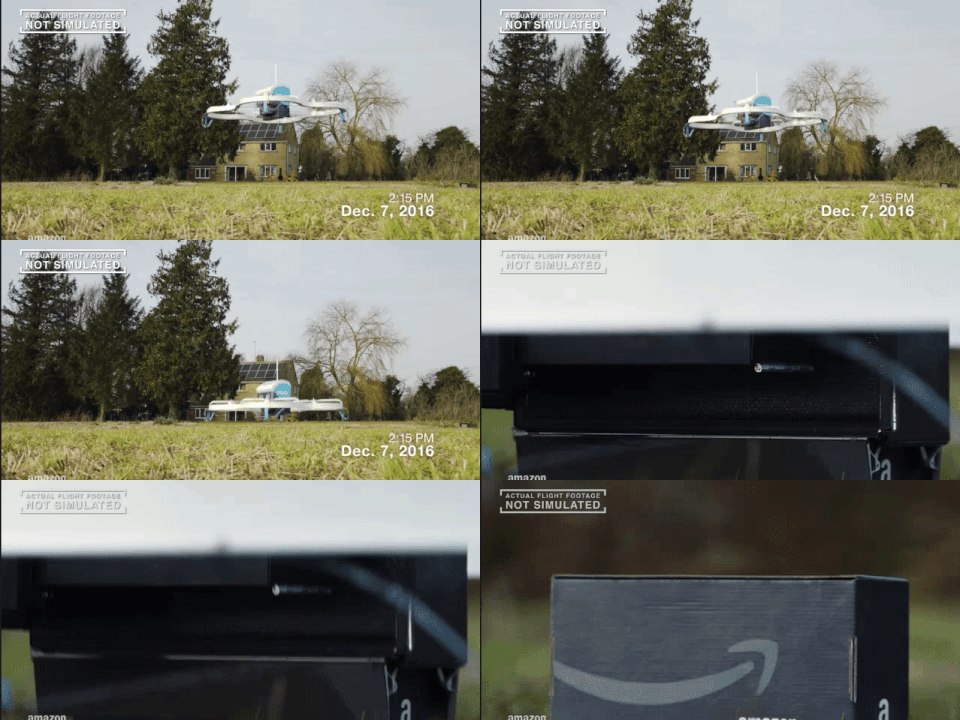

Amazon has spent years promising that one day a small flying machine would bring your order to your door faster than you can finish arguing with yourself about whether you really needed it. Then, in a quiet corner near Cambridge, England, that sci-fi sales pitch finally became a real delivery. Amazon Prime Air completed its first customer drone delivery on December 7, 2016, carrying an Amazon Fire TV device and a bag of popcorn to a customer identified as Richard B. The entire trip took about 13 minutes from click to delivery.
That may sound like a tiny errand with propellers, but it was a major moment in the history of e-commerce, logistics, automation, and last-mile delivery. For Amazon, it was proof that drone delivery could move from flashy concept video to an actual customer’s yard. For everyone else, it was a glimpse of a future where “out for delivery” might mean “currently hovering politely over your lawn.”
The first real Amazon drone delivery was not a mass-market launch. It was part of a limited private trial, conducted under strict conditions, with only a small number of eligible customers. Still, the event mattered because it showed that autonomous drone delivery could work outside a laboratory. The drone took off from a nearby Amazon facility, flew using GPS guidance, landed near the customer’s home, dropped off the package, and returned. No traffic lights. No driveway confusion. No delivery van circling the block like a confused shark.
What Actually Happened During Amazon’s First Drone Delivery?
The first Prime Air delivery was simple by design. The customer ordered two lightweight items: a streaming device and popcorn. That combination was almost too perfect. It was as if Amazon wanted to say, “Here is the future of logistics, and yes, it comes with movie night.”
After the order was placed, a worker packed the item into a specially designed delivery box. The package was loaded into a drone at an Amazon facility near Cambridge. The aircraft then took off autonomously and traveled to the customer’s property. Once it reached the drop-off location, it landed, released the package, and completed the delivery. The entire click-to-doorstep experience took about 13 minutes.
The drone did not fly through a thunderstorm, dodge skyscrapers, or land on a crowded city balcony. The first delivery happened in a rural environment with favorable weather, daylight, and carefully controlled safety conditions. That is important. Drone delivery is not magic; it is aviation. And aviation, unlike a suspiciously cheap phone charger, has rules.
Why the First Amazon Drone Delivery Was a Big Deal
The first successful drone delivery mattered because it attacked one of the hardest problems in online retail: the last mile. The last mile is the final stretch between a fulfillment center and the customer’s door. It is often expensive, slow, and complicated. Trucks deal with traffic, fuel costs, parking, human labor, apartment access codes, dogs with strong opinions, and customers who somehow forget they ordered a package two hours ago.
Drone delivery offers a different model. Instead of sending a vehicle along roads, a drone can fly directly from a local facility to a customer’s address. In theory, that can reduce delivery time, cut certain transportation costs, and make ultra-fast shipping possible for small items. The keyword there is “small.” Amazon’s drone system has generally focused on packages weighing five pounds or less, which still covers many everyday items: electronics accessories, household products, toiletries, batteries, small gifts, and yes, snacks that may or may not improve a movie night.
For Amazon, Prime Air was never just about delivering popcorn. It was about building a new layer of the delivery network. The company already had fulfillment centers, sortation centers, delivery stations, trucks, vans, airplanes, and human drivers. Drones added a new possibility: fast, local, automated delivery for lightweight products that customers want quickly.
The Technology Behind Amazon Prime Air
Amazon’s drone delivery system depends on several technologies working together. The drone must navigate accurately, avoid obstacles, manage changing weather, communicate with operators, identify a safe drop-off zone, and complete the delivery without creating a neighborhood circus. That is a lot of responsibility for a machine carrying popcorn.
Autonomous Navigation
Prime Air drones are designed to fly autonomously, meaning they do not need a human pilot steering them like a remote-control toy. They use onboard systems, GPS, route planning, and sensor data to travel from the launch point to the delivery destination. Human operators still monitor the system, but the goal is for the drone to manage the actual flight safely and consistently.
Sense-and-Avoid Systems
A major challenge for drone delivery is obstacle avoidance. A delivery drone must be able to detect and avoid trees, buildings, birds, poles, wires, aircraft, and other objects. Amazon has repeatedly emphasized its detect-and-avoid technology as central to Prime Air’s safety case. Without that capability, drone delivery cannot scale responsibly. Nobody wants their toothpaste delivered by a flying robot that treats oak trees as optional.
Lightweight Package Design
Drone delivery also requires practical packaging. A drone must carry the package securely, keep it balanced, protect the item, and release it safely at the delivery site. Eligible packages are typically small and light, often under five pounds. The package must fit within the drone’s carrying system and be suitable for aerial delivery.
Weather Monitoring
Drone delivery works best in favorable weather. Heavy wind, severe rain, lightning, poor visibility, and extreme conditions can ground flights. Amazon’s later Prime Air operations have included weather-based availability, meaning customers may see drone delivery as an option only when conditions are safe. That is less glamorous than “instant sky shipping,” but much better than having your package reenact a dramatic kite incident.
From Cambridge Trial to U.S. Expansion
After the first drone delivery in England, Amazon still had a long road ahead. In fact, the road was so long that the drone probably would have preferred to fly over it. Scaling Prime Air required regulatory approvals, better aircraft, more testing, community acceptance, and integration with Amazon’s real delivery network.
In the United States, commercial drone delivery has been shaped heavily by Federal Aviation Administration rules. Drone operators carrying packages for compensation need appropriate certification and approvals. One of the biggest regulatory milestones is permission to fly beyond visual line of sight, often called BVLOS. That means the drone can operate farther than a human observer can directly see, using technology and procedures to maintain safety.
Amazon later received important FAA approvals that allowed Prime Air to expand drone delivery operations more realistically. These approvals helped Amazon move beyond tiny test areas and closer to broader customer availability. The company also introduced newer drone models, including the MK30, designed to be lighter, quieter, more capable, and able to operate in more conditions than earlier versions.
The MK30 Drone and the Newer Phase of Prime Air
The MK30 represents a more advanced stage of Amazon’s drone delivery ambitions. Amazon has described the drone as having longer range and lower noise compared with previous versions. It is also designed to operate in light rain and handle a wider range of delivery scenarios. That matters because real neighborhoods are not clean test labs. They have trees, pets, parked cars, lawn furniture, wind gusts, and at least one person staring out the window wondering whether the sky is now part of customer service.
The newer Prime Air model is not just about aircraft design. Amazon has also worked to integrate drone launches with its same-day delivery sites. That could make drone delivery more practical because eligible items can be stored closer to customers. Instead of creating a separate drone-only network, Amazon can connect drones to the same infrastructure that already supports fast local delivery.
Benefits of Amazon Drone Delivery
Drone delivery has several potential advantages, especially for small, urgent items. The most obvious benefit is speed. A drone can travel directly to a customer without road traffic, stop signs, or parking delays. In ideal conditions, that can mean delivery in under an hour, and sometimes much faster.
Faster Delivery for Everyday Items
Imagine needing a phone charger, cold medicine, batteries, baby supplies, or a forgotten birthday candle. A drone delivery system could make these small emergencies easier to solve. It is not about replacing every delivery truck. It is about creating a faster option for lightweight items that customers need soon.
Reduced Road Congestion for Some Orders
If drone delivery scales safely, it could reduce the number of small-package trips made by vans in certain areas. That does not mean highways will suddenly become peaceful meditation gardens. But for short-distance, lightweight deliveries, drones could remove some pressure from road-based logistics.
Better Access in Certain Areas
Drone delivery may also help customers in suburban or semi-rural areas where direct flight paths are easier to manage. Early drone programs often begin in places with lower density because there is more room for safe operations. Over time, improved technology and regulation could make denser areas more realistic, though cities bring extra complexity.
The Challenges: Safety, Noise, Privacy, and Practicality
For all the excitement around Amazon Prime Air, drone delivery still faces serious challenges. A drone flying over a neighborhood is not the same as a package moving quietly in a truck. People notice it. Dogs notice it. Sometimes the entire group chat notices it.
Safety Comes First
Delivery drones must be safe around people, property, aircraft, power lines, trees, and unexpected obstacles. Even a lightweight drone can cause damage if something goes wrong. That is why regulators pay close attention to aircraft design, operating procedures, pilot oversight, emergency systems, and maintenance.
Noise Is a Real Issue
Drone noise can be annoying, especially during takeoff and landing. A single drone may be tolerable, but repeated flights can become a community concern. Amazon and other drone companies have worked on quieter designs, but public acceptance will depend on how the technology sounds and behaves in everyday life.
Weather Limits Availability
Drone delivery is not always available. Bad weather can pause operations. This means drone delivery may be fast when conditions are right but unavailable when they are not. Customers expecting a flying robot during heavy wind may have to settle for a regular delivery, which is less futuristic but less likely to have an argument with the atmosphere.
Delivery Zones Are Limited
Drone delivery depends on geography. Customers usually need to live within a specific radius of an eligible launch facility. They also need a safe drop-off area. Apartment towers, dense urban blocks, covered porches, power lines, and small yards can complicate the process.
How Amazon Drone Delivery Changes E-Commerce Expectations
The first real Amazon drone delivery changed the conversation around online shopping. Before that moment, drone delivery sounded like a bold idea from a tech demo. After that moment, it became something that had actually happened. That matters because customer expectations evolve quickly. Two-day shipping once felt amazing. Then one-day shipping became normal. Same-day delivery raised the bar again. Drone delivery pushes the idea even further: what if small orders could arrive almost immediately?
This does not mean every package will arrive by drone. Your sofa is not gently descending from the clouds anytime soon, and honestly, that is probably best for everyone. Drone delivery is best suited for small items, short routes, and controlled delivery zones. But even limited use can influence customer expectations. Once people experience 30-minute or 60-minute delivery for certain products, they may begin to expect faster fulfillment across more categories.
Amazon Is Not Alone in the Drone Delivery Race
Amazon is one of the most visible names in drone delivery, but it is not the only company chasing the sky. Other companies, including Wing, Zipline, UPS Flight Forward, Flytrex, DroneUp, and Walmart partners, have also tested or launched drone delivery services. Some focus on medical products, some on food and retail, and some on suburban convenience.
This competition matters because drone delivery is not just an Amazon story. It is part of a larger shift in logistics. Companies are experimenting with automation, robotics, electric vehicles, micro-fulfillment centers, and AI-powered route planning. Drones are one piece of a much bigger puzzle: how to move goods faster, cheaper, cleaner, and more predictably.
What the First Drone Delivery Really Proved
The Cambridge delivery proved that an Amazon drone could complete a real customer order safely under controlled conditions. It proved that a package could move from an Amazon facility to a customer’s property without a driver. It proved that the concept was more than a dramatic animation designed to make investors spill their coffee.
But it did not prove that drone delivery was ready for everyone. That distinction is important. A successful first delivery is like a baby’s first step: exciting, historic, and not yet ready for a marathon. Amazon still needed years of testing, aircraft development, regulatory work, and operational refinement before Prime Air could expand in meaningful ways.
What Comes Next for Amazon Prime Air?
The future of Amazon drone delivery will likely depend on four factors: regulation, technology, customer demand, and neighborhood acceptance. The technology must become safer, quieter, and more reliable. Regulators must create rules that allow growth while protecting the public. Customers must find the service useful enough to choose it. Communities must feel that drone delivery improves convenience without turning the sky into a buzzing delivery lane.
Amazon’s long-term vision is ambitious. The company has discussed delivering hundreds of millions of packages by drone annually in the future. Whether that goal becomes reality depends on execution. The first drone delivery was a milestone. The harder challenge is making drone delivery boringly reliable. In logistics, boring is a compliment. Boring means the system works so well that nobody panics when a package arrives from above.
Experience Section: What It Feels Like to Live in the Age of Drone Delivery
The idea of Amazon completing its first real drone delivery creates a strange mix of excitement and comedy. On one hand, it is genuinely impressive. A customer clicks a button, and a flying machine delivers popcorn in minutes. That is the kind of thing people in old science-fiction movies imagined while wearing silver jumpsuits. On the other hand, the first item delivered was popcorn, which makes the whole event feel wonderfully human. We build advanced autonomous aircraft, and then we use them to improve snack logistics.
From a customer’s point of view, drone delivery feels less like ordinary shipping and more like a tiny event. A regular package may arrive with a doorbell ring or a photo confirmation. A drone delivery announces itself with motion, sound, and curiosity. Neighbors might look up. Kids might point. Pets might file a formal complaint. Even if the process is smooth, it feels different because the sky is involved.
The most interesting part of drone delivery is not just speed. It is the psychological shift. Waiting two days for a package feels normal. Waiting one day feels convenient. Waiting 13 minutes feels almost suspicious, as if the product had been hiding behind a bush the whole time. When delivery becomes that fast, shopping starts to feel closer to downloading. You do not just order an item; you summon it.
For small urgent products, that could be genuinely useful. A parent who runs out of baby supplies, a student who needs a calculator battery, a remote worker who loses a charging cable before a meeting, or someone who needs basic medicine during the day could benefit from fast drone delivery. These are not glamorous use cases, but they are practical. Most innovation becomes valuable when it solves boring problems quickly.
Still, the experience must be calm and predictable. Customers do not want a dramatic flying robot adventure every time they order toothpaste. They want the item to arrive safely, quietly, and without confusing the dog or damaging the garden furniture. Amazon’s biggest challenge may not be making drones fly. It may be making drone delivery feel normal.
There is also the neighborhood factor. A customer receiving one drone delivery may be delighted. A neighbor hearing dozens of flights per day may feel differently. This is where drone delivery becomes a social technology, not just a logistics tool. The experience must work for the buyer, the operator, the regulator, and the surrounding community. A sky full of convenience still needs manners.
Personally, the most fascinating part of Amazon’s first drone delivery is how small it was. A Fire TV device and popcorn do not sound like history. But many major technology shifts begin with humble examples. The first online purchases were not glamorous either. Early smartphones were not perfect. Early cars were noisy, unreliable, and confusing to people used to horses. The first Prime Air delivery was not the finish line. It was a signal: the delivery network of the future may include roads, warehouses, aircraft, algorithms, and tiny landing spots in people’s yards.
In that sense, Amazon’s first real drone delivery was less about one package and more about a new expectation. It suggested that fast delivery could become faster, local logistics could become more automated, and the boundary between digital ordering and physical arrival could shrink. The future may not arrive all at once. Sometimes it arrives in 13 minutes, carrying popcorn.
Conclusion
Amazon’s first real drone delivery was a landmark moment in modern logistics. It took a simple order and turned it into a powerful demonstration of what autonomous delivery could become. The delivery near Cambridge proved that Prime Air could complete a real customer shipment, but it also revealed the long path ahead. Drone delivery must still solve safety, noise, weather, regulatory, privacy, and community challenges before it becomes widespread.
Even so, the milestone remains important. It showed that the future of e-commerce may not be limited to roads and vans. For small packages, short distances, and urgent needs, drones could become a practical part of the delivery mix. Amazon did not just deliver a Fire TV device and popcorn. It delivered a preview of a faster, stranger, and more automated shopping experienceone where the phrase “your package has arrived” might come with the faint sound of propellers.