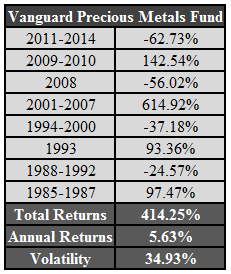

Precious metals stocks have finally remembered that they are supposed to benefit when precious metals become more valuable. For years, gold climbed while many miners behaved like a delivery truck with a flat tire: technically moving forward, but making investors wonder whether walking would be faster.
That changed dramatically during the powerful metals rally of 2025 and early 2026. Higher gold and silver prices expanded mining margins, strengthened balance sheets, encouraged dividends and share repurchases, and renewed interest in companies that had spent much of the previous decade being treated like financial wallpaper.
But after a major rally, the important question is no longer whether precious metals stocks were an opportunity. It is whether a worthwhile opportunity still exists.
The answer is a cautious yesbut it is a stock picker’s opportunity rather than an invitation to purchase every company with the words “gold,” “silver,” or “royalty” in its name. Metal prices, production costs, mine quality, jurisdictional risk, management discipline, and valuation all matter. A beautiful gold price cannot rescue a company that loses equipment, dilutes shareholders, or discovers that its flagship deposit is mostly expensive dirt.
Why Precious Metals Stocks Are Back in the Conversation
The fundamental backdrop for precious metals remains unusually supportive. Global gold demand, including over-the-counter activity, exceeded 5,000 metric tons in 2025. During the first quarter of 2026, demand reached approximately 1,231 tons, with the value of that demand rising to a record level. Investment purchases and continued central-bank accumulation helped offset weaker jewelry consumption caused by exceptionally high prices.
Silver has a different personality. Gold is primarily a monetary and investment asset, while silver works two jobs and complains about neither. It functions as a store of value while also serving manufacturers of electronics, solar equipment, batteries, medical products, and other industrial technologies.
The Silver Institute expects the silver market to post a sixth consecutive annual deficit in 2026. Total supply is projected to grow, but mine production is expected to increase only modestly. That matters because a large share of silver is produced as a by-product of copper, lead, zinc, and gold mines. Silver supply therefore cannot always respond quickly to a higher silver price. A copper producer will not necessarily build a new mine merely because the silver hiding in its concentrate has become more fashionable.
The macroeconomic environment also remains relevant. Inflation was still above the Federal Reserve’s 2% objective in June 2026, while geopolitical uncertainty, energy-price shocks, government deficits, and questions about monetary policy continued to support demand for tangible assets. Precious metals tend to attract attention whenever investors begin asking whether paper currencies, government bonds, and political leaders are all participating in the same practical joke.
Why Mining Stocks Can Outperform the Metals
Operating Leverage Is the Main Attraction
A mine has substantial fixed and semi-fixed expenses. Workers, processing plants, maintenance programs, trucks, permits, power systems, and sustaining capital do not become dramatically cheaper simply because gold declines by $100 per ounce.
The same cost structure creates powerful upside when metal prices rise.
Consider a simplified gold producer with an all-in sustaining cost of $1,700 per ounce. At a gold price of $2,500, its theoretical margin is $800 per ounce. If gold rises to $3,300 while costs remain unchanged, the metal price has increased 32%, but the margin has doubled to $1,600.
That is the basic appeal of precious metals mining stocks. Revenue can rise faster than operating expenses, causing earnings and free cash flow to grow much faster than the underlying commodity. Fidelity has noted that gold-mining shares have historically displayed considerably greater sensitivity to changes in bullion prices. This leverage is delightful on the way up and considerably less charming when the elevator changes direction.
Recent Results Show the Margin Effect
Major producers have provided real-world evidence of this operating leverage. Newmont reported record quarterly earnings and free cash flow for the first quarter of 2026. Barrick reported sharply higher operating cash flow, free cash flow, and earnings compared with the prior year. Agnico Eagle also announced record quarterly operating margins and adjusted net income.
The exact cost figures require careful interpretation because companies may report co-product and by-product costs differently. Still, the broader message is clear: high realized gold prices have created substantial cash margins for efficient producers.
That cash can be used to reduce debt, repurchase shares, increase dividends, fund exploration, extend mine lives, or develop new projects without constantly passing the hat around to shareholders. For an industry famous for building expensive monuments to management optimism, self-funded growth is a refreshing development.
The Supply Side May Favor Existing Producers
Mining supply is slow, capital-intensive, and allergic to calendars. A promising deposit can require more than a decade of drilling, engineering, environmental reviews, community negotiations, financing, construction, and commissioning before commercial production begins.
Higher metal prices do not instantly create new ounces. They may encourage exploration and make lower-grade deposits economical, but new capacity still takes years to reach the market. Existing producers with permitted mines, established infrastructure, long reserve lives, and nearby expansion opportunities therefore possess assets that are difficult to reproduce.
This scarcity can become especially valuable during periods of rising demand. A company with a functioning mill, reliable power, water access, supportive local relationships, and additional deposits within trucking distance may have a far easier growth path than a junior company attempting to build a mine in a region where the permitting department communicates primarily through mysterious silence.
Where the Better Opportunities May Be
Large, Diversified Producers
Senior miners offer scale, liquidity, multiple operating assets, and generally stronger balance sheets. Their geographic diversification can reduce the damage caused by a disruption at any single mine.
Investors should still examine production trends, reserve replacement, capital spending, and cost guidance. A large company can own excellent mines and a few geological houseplants that consume cash without producing much. Size reduces some risks, but it does not repeal geology.
High-Quality Mid-Tier Producers
Mid-tier miners may offer a more attractive balance between operational credibility and growth. A company that increases production from two or three established mines can generate faster percentage growth than a global major.
The best candidates typically combine manageable debt, positive free cash flow, credible expansion projects, strong grades, and assets in jurisdictions where contracts and mining licenses are treated as more than polite suggestions.
The danger is concentration. One flood, labor dispute, processing failure, or government intervention can affect a mid-tier producer far more severely than a diversified giant. Investors should determine whether the apparent bargain is compensation for temporary uncertainty or simply the market noticing a very real problem.
Royalty and Streaming Companies
Royalty and streaming businesses provide financing to mine operators in exchange for a percentage of future revenue or the right to purchase metal at a predetermined price. These companies can gain exposure to rising metal prices without directly employing the workforce, operating the equipment, or explaining why a haul truck has become emotionally attached to the repair shop.
The model often produces high margins, portfolio diversification, and lower direct exposure to cost inflation. However, royalty companies are not magically risk-free. They still depend on operators successfully building and running mines. They can also become expensive when investors prize their predictable business models.
Silver Producers
Silver miners can offer more dramatic upside than gold producers because the silver market is smaller and typically more volatile. Investment inflows can move the metal quickly, while industrial demand provides an additional long-term driver.
Investors must verify how much revenue actually comes from silver. Some companies described as silver miners generate substantial income from gold, lead, zinc, or copper. By-product credits can lower reported silver costs, but exposure to several commodities also makes the earnings story more complicated.
Exploration and Development Companies
Junior miners provide the greatest speculative upside and the highest probability of introducing investors to exciting vocabulary such as dilution, permitting delay, metallurgical recovery, and “strategic review.”
A major discovery can create enormous value. Unfortunately, a promising drill hole is not a mine. Investors must consider deposit size, grade, depth, metallurgy, infrastructure, financing requirements, local support, permitting, and management’s record of converting geological potential into economic production.
For most diversified portfolios, juniors belong in the hot-sauce section: potentially rewarding in small quantities, but unwise to pour over everything.
Why This Opportunity Could Go Wrong
Metal Prices Can Correct Sharply
Gold, silver, platinum, and palladium experienced extraordinary moves during 2025 and early 2026. After such gains, expectations may become too optimistic. A stronger dollar, tighter monetary policy, easing inflation, reduced geopolitical tension, or investor profit-taking could pressure prices.
Mining equities usually magnify commodity movements. If operating leverage expands profits when gold rises, it also compresses profits when gold falls. The mathematics does not become sentimental simply because an investor has a bullish newsletter subscription.
Costs Can Chase the Metal Price
Higher commodity prices frequently produce higher wages, contractor rates, royalties, taxes, equipment prices, and energy costs. Governments may also decide that a successful mine looks like an unattended buffet.
Investors should focus on margin growth rather than metal-price growth alone. A 20% increase in revenue means less if operating costs, sustaining capital, and taxes rise by a similar amount.
Operational Problems Are Normal, Not Exceptional
Mines are complex industrial operations built around imperfect geological information. Grades can disappoint. Walls can move. Recovery rates can decline. Equipment can fail. Weather can interrupt logistics. Expansion projects can exceed their budgets with the enthusiasm of a kitchen renovation.
A sensible valuation should include room for ordinary problems rather than assuming every mine will operate exactly according to a presentation created by the investor-relations department.
Valuation Still Matters
Precious metals stocks are no longer universally neglected. Many delivered exceptional returns during 2025, and independent valuation research in 2026 has warned that portions of the mining sector appear expensive relative to long-term commodity assumptions.
A great company can be a poor investment when purchased at a price that already assumes perfect execution and permanently elevated metal prices. The opportunity is therefore selective. Investors may find better value among companies where cash flow, reserves, and growth are not fully reflected in the share price.
A Practical Checklist for Evaluating Precious Metals Stocks
Before buying a mining stock, investors should investigate several factors:
- Production profile: Is output growing, stable, or declining over the next three to five years?
- All-in sustaining costs: How large is the margin at current metal prices and at more conservative prices?
- Reserve life: How many years of economically recoverable metal remain?
- Balance sheet: Can the company finance sustaining capital and growth without issuing excessive shares?
- Jurisdiction: Are taxes, permits, royalties, contracts, and community relationships reasonably predictable?
- Management: Has leadership allocated capital sensibly across previous commodity cycles?
- Growth quality: Does expansion create value, or does it merely create a larger company?
- Valuation: What metal-price assumptions are already embedded in the stock?
It is also useful to stress-test a company at lower gold or silver prices. A miner that remains cash-flow positive under conservative assumptions has options. A miner requiring record prices merely to pay its bills has a hostage situation.
Experience-Based Lessons From Precious Metals Cycles
The most useful experiences in precious metals investing often arrive disguised as uncomfortable surprises. Investors repeatedly discover that correctly predicting the metal price is only half the job. Selecting a company capable of converting that price into shareholder value is the other halfand sometimes the more difficult half.
Lesson One: Bullion and Miners Are Not Interchangeable
An investor may correctly expect gold to rise and still choose a miner that underperforms. Bullion has no chief executive, payroll, diesel bill, environmental liability, or development project. A mining company has all of them, plus several hundred other ways to turn a favorable commodity forecast into an awkward earnings call.
Physical-metal funds generally provide cleaner exposure to metal prices. Mining stocks add operational leverage, dividends, exploration potential, and company-specific risk. Successful portfolio construction begins by deciding which exposure is actually desired.
Lesson Two: Management Quality Becomes Obvious at the Top
When metal prices are high, almost every producer looks healthier. The important question is what management does with the windfall.
Disciplined teams strengthen the balance sheet, return appropriate capital to shareholders, invest in high-return projects, and avoid acquisitions based on heroic commodity assumptions. Undisciplined teams celebrate higher prices by purchasing marginal deposits from equally enthusiastic sellers.
The next downturn usually reveals which group was which, but investors do not have to wait. Previous acquisitions, construction decisions, share issuance, and debt management provide useful evidence.
Lesson Three: Low Costs Create Time
Low-cost operations do more than produce larger margins. They give companies time to survive weak markets, solve technical problems, fund exploration, and wait for better prices before developing lower-quality deposits.
High-cost producers can generate spectacular returns when prices soar, but they offer less protection when conditions reverse. This makes them closer to leveraged commodity trades than durable businesses. That distinction should affect position size.
Lesson Four: Do Not Confuse a Discovery With an Economic Deposit
Exciting drill results attract attention because a few impressive intervals can suggest a major discovery. Yet an economic mine requires continuity, sufficient tonnage, acceptable metallurgy, infrastructure, permits, financing, and a realistic construction plan.
Experienced investors learn to ask what happens between the drill hole and commercial production. That journey often contains years of studies, fundraising, redesigns, negotiations, and delays. Promotional language tends to sprint while engineering walks at a responsible pace.
Lesson Five: Position Size Is a Research Tool
Investors sometimes believe confidence should determine position size. Risk should play the larger role. A diversified senior producer may deserve a different allocation from a single-asset developer in a politically uncertain jurisdiction.
Smaller initial positions allow investors to follow operating results, management behavior, and project milestones without making every quarterly update feel like a medical event. Additional capital can be committed as the thesis is confirmed.
Lesson Six: Build a Sell Discipline Before Euphoria Arrives
Precious metals cycles can become emotional. Rising prices generate bold forecasts, optimistic acquisitions, and the widespread belief that traditional valuation has become an antique hobby.
A written sell discipline can help. Reasons to reduce a position may include excessive valuation, deteriorating grades, rising costs, unexpected dilution, project overruns, worsening jurisdictional risk, or a share price that already discounts years of flawless execution.
Taking partial profits does not require abandoning a long-term thesis. It simply acknowledges that even valuable metal can become attached to an overvalued stock.
Conclusion: Is There Still an Opportunity?
Precious metals stocks may still offer attractive opportunities, but the easy phase of buying a universally ignored sector has probably passed. Gold and silver enjoy supportive structural drivers, existing mines are difficult to replace, and efficient producers are generating substantial cash flow. Those conditions can support earnings, dividends, buybacks, reserve growth, and disciplined expansion.
At the same time, major gains have lifted expectations. Investors must distinguish between companies benefiting from genuine margin expansion and companies merely floating upward with the commodity tide. Cost control, reserve quality, management discipline, political exposure, and valuation will determine which stocks turn high metal prices into lasting shareholder value.
The most compelling opportunity may lie not in predicting another spectacular move in gold or silver, but in finding businesses that can prosper under more conservative assumptions. A miner that requires permanently record-breaking prices is a wager. A miner with strong assets, low costs, a sound balance sheet, and responsible management may be an investment.