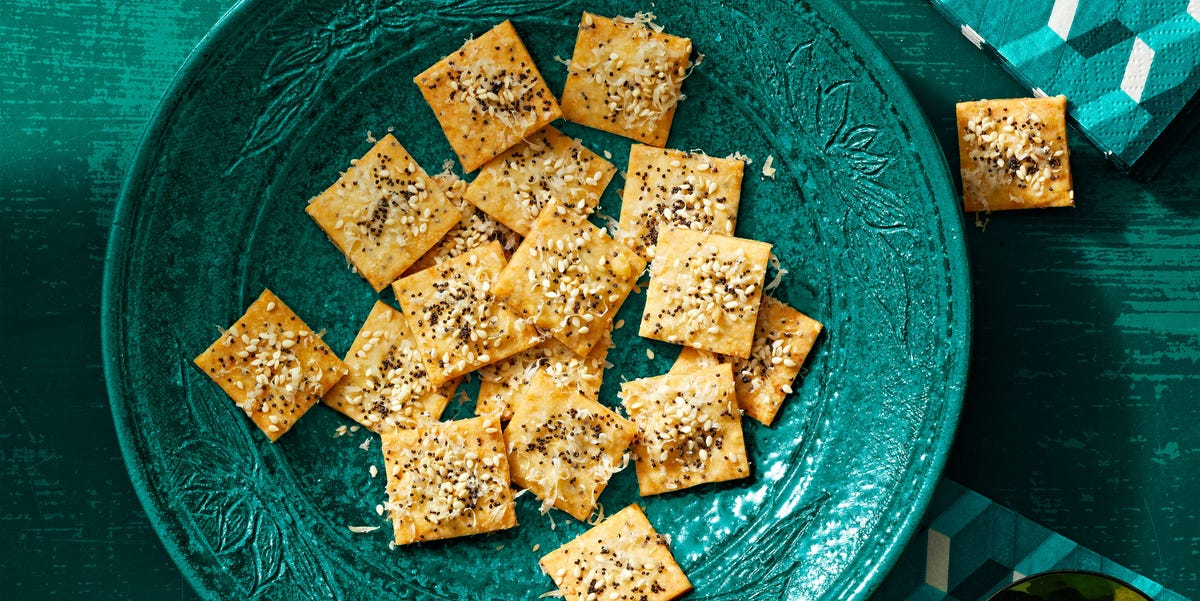
Best Parmesan Seeded Crackers Recipe – How To Make Parmesan Seeded Crackers

Store-bought crackers are perfectly respectable until a tray of homemade Parmesan seeded crackers walks into the room wearing a golden-brown jacket and smelling like toasted cheese. Then the boxed crackers suddenly look as though they forgot to dress for the party.
This recipe creates thin, crisp crackers with buttery layers, nutty sesame and poppy seeds, plenty of freshly grated Parmesan, and a gentle black pepper finish. The dough comes together quickly in a food processor, rests in the refrigerator, rolls out directly on parchment, and bakes into dozens of cocktail-ready bites. They are elegant enough for a holiday cheese board but easy enough for a Tuesday afternoon when your snack standards become unexpectedly ambitious.
Why This Parmesan Seeded Crackers Recipe Works
The best homemade crackers balance three things: flavor, structure, and dryness. Parmesan supplies concentrated savory flavor, cold butter creates a delicate, flaky bite, and thin rolling allows moisture to escape before the crackers become tough. Toasted seeds add crunch without turning the dough into birdseed wearing a cheese costume.
A small amount of sugar does not make the crackers sweet. It rounds out the saltiness and encourages browning. Black pepper keeps the cheese flavor lively, while sesame and poppy seeds provide a pleasant contrast in color and texture.
Chilling the dough twice also matters. The first rest hydrates the flour and firms the butter. The second makes the rolled dough easier to cut cleanly and helps the crackers hold their shape in the oven.
What the Finished Crackers Taste Like
Expect a savory, deeply cheesy cracker with crisp edges, a slightly flaky center, and a roasted seed aroma. They are sturdy enough for hummus, whipped feta, pimento cheese, or tapenade, but not so hard that guests need to negotiate with them.
On their own, they taste a little like pie crust, Parmesan frico, and a fancy seeded cracker decided to form a very successful business partnership.
Parmesan Seeded Crackers Recipe
Yield: About 70 to 90 small crackers
Prep time: 25 minutes
Chilling time: 45 minutes
Baking time: 16 to 22 minutes
Total time: About 1 hour 30 minutes
Ingredients
- 1 1/4 cups all-purpose flour, plus more for dusting
- 2 ounces finely grated Parmesan cheese, about 1/2 cup
- 1/2 ounce finely grated Parmesan cheese, about 2 tablespoons, for topping
- 1 1/2 teaspoons granulated sugar
- 1/2 teaspoon fine sea salt or kosher salt
- 1/2 teaspoon freshly ground black pepper
- 1/2 cup cold unsalted butter, cut into small cubes and chilled
- 2 tablespoons sesame seeds, lightly toasted and divided
- 2 teaspoons poppy seeds, divided
- 1 teaspoon flaxseeds or fennel seeds, optional
- 3 to 5 tablespoons ice water
- 1 large egg white mixed with 1 teaspoon water
- Flaky sea salt, for finishing, optional
Equipment
- Food processor
- Rolling pin
- Parchment paper
- Large baking sheet
- Pizza cutter, pastry wheel, or sharp knife
- Fork or wooden skewer
- Wire cooling rack
How To Make Parmesan Seeded Crackers
1. Combine the Dry Ingredients
Add the flour, 2 ounces of Parmesan, sugar, salt, and black pepper to a food processor. Pulse several times until evenly blended.
Add 1 tablespoon of the sesame seeds, 1 teaspoon of the poppy seeds, and the optional flaxseeds or fennel seeds. Pulse once or twice. Do not process the seeds into dust; they should remain visible.
2. Cut In the Cold Butter
Add the chilled butter cubes. Pulse in short bursts until the mixture resembles coarse crumbs with a few pea-size pieces of butter remaining.
Those small butter pockets are useful. They melt in the oven, release steam, and help produce a lighter, flakier cracker instead of a dense cheese tile.
3. Add Ice Water Carefully
Drizzle in 3 tablespoons of ice water and pulse a few times. Pinch a small handful of dough. If it holds together, stop. If it falls apart like dry sand, add more ice water 1 teaspoon at a time.
The mixture should still look crumbly in the processor but hold together when pressed. A wet, sticky dough requires additional flour later, and extra flour can mute the Parmesan flavor.
4. Shape and Chill the Dough
Turn the mixture onto a clean surface and press it together without kneading. Shape it into a flat rectangle approximately 6 by 8 inches. Wrap or cover it and refrigerate for 30 minutes.
This rest allows the flour to absorb moisture while keeping the butter cold.
5. Roll the Dough Thinly
Heat the oven to 350°F and position a rack in the center. Place the chilled dough on a lightly floured sheet of parchment paper. Let it stand for 5 minutes if it is too firm to roll.
Dust the top lightly with flour, then roll it into an approximately 11-by-13-inch rectangle. Aim for an even thickness between 1/16 and 1/8 inch.
Thinness is the difference between a cracker and a tiny biscuit. Roll from the center outward, rotate the parchment as needed, and pay special attention to the middle, which often stays thicker than the edges. Imperfect borders are harmless. They become the baker’s snack tax.
6. Chill, Brush, and Top
Slide the parchment and dough onto a baking sheet. Chill the rolled dough for 15 minutes in the refrigerator or approximately 8 minutes in the freezer.
Brush the surface lightly with the egg-white mixture. Sprinkle it with the remaining sesame seeds, poppy seeds, topping Parmesan, and a very small amount of flaky salt. Press the toppings gently with your palm or rolling pin so they adhere.
7. Cut and Dock the Crackers
Use a pizza cutter or sharp knife to cut the dough into 1 1/2-inch squares, narrow rectangles, or diamonds. You do not need to separate them before baking.
Prick each cracker once or twice with a fork or skewer. Docking releases steam and helps prevent large bubbles, although a few small blisters make the crackers look charmingly handmade rather than factory-polished.
8. Bake Until Deeply Golden
Bake for 16 to 22 minutes, rotating the pan after approximately 10 minutes. Watch the edges closely because they brown first. The crackers are ready when the outer pieces are golden, the centers feel dry, and the Parmesan topping has toasted.
Pale crackers may look polite, but they often cool soft. If the edge pieces finish before the center, remove the pan, transfer the browned crackers to a rack, and return the paler middle section to the oven for 3 to 6 minutes.
This small step prevents the familiar homemade-cracker mystery in which half the batch snaps and the other half bends thoughtfully.
9. Cool Completely
Let the crackers rest on the baking sheet for 5 minutes. Break or separate them along the cut lines and move them to a wire cooling rack.
Cool completely before storing. Crackers continue to firm as steam escapes, so tasting one immediately may give a misleading impression of softness. Tasting three, however, is quality control.
Expert Tips for Thin, Crisp Crackers
Grate the Parmesan Finely
Use the small holes of a box grater or a fine rasp-style grater. Finely grated cheese disperses through the flour more evenly than thick shreds.
Pre-shredded Parmesan can work in a pinch, but it often melts less smoothly. A firm wedge of Parmesan generally delivers a cleaner, nuttier flavor.
Keep the Butter Cold
If the kitchen is warm, chill the cubed butter for 10 minutes before processing. Once the dough begins to feel greasy or soft, pause and refrigerate it. Cold dough rolls more cleanly and is less likely to stick to the parchment.
Use Visual Cues Instead of Trusting the Clock Alone
Ovens vary, baking sheets differ, and cracker thickness is rarely mathematically perfect. Start checking early, but do not remove the pan merely because the timer has spoken. Look for dry centers and rich golden edges.
Toast the Seeds First
A brief toast wakes up sesame seeds and gives the finished crackers a fuller aroma. Place the seeds in a dry skillet over medium-low heat for 2 to 3 minutes, stirring constantly, just until fragrant.
Cool them before adding them to the dough so they do not warm the butter.
Do Not Overwork the Dough
Once the dough holds together, stop mixing. Excess processing develops more gluten and can make crackers tough. Pressing is better than kneading. This is not bread dough; it does not need motivation, encouragement, or a vigorous workout.
Flavor Variations
Everything Parmesan Crackers
Replace the seed topping with 1 1/2 tablespoons of everything bagel seasoning. Reduce the salt in the dough slightly because the seasoning blend may already contain plenty.
Rosemary Parmesan Crackers
Add 1 teaspoon of finely chopped fresh rosemary or 1/2 teaspoon of dried rosemary to the flour mixture. Rosemary pairs especially well with goat cheese, white bean dip, and roasted tomato soup.
Spicy Parmesan Crackers
Add 1/8 to 1/4 teaspoon cayenne pepper or crushed red pepper flakes. The heat should arrive after the cheese rather than tackle it in the doorway.
Whole-Wheat Parmesan Crackers
Replace up to half of the all-purpose flour with whole-wheat pastry flour. The crackers will taste nuttier and may require an extra teaspoon or two of water.
Herb and Lemon Crackers
Add 1 teaspoon of finely grated lemon zest and 1/2 teaspoon of dried thyme. These are excellent with smoked salmon, whipped ricotta, or a spring vegetable dip.
Common Problems and Easy Fixes
The Crackers Are Chewy Instead of Crisp
They were probably rolled too thick, underbaked, or stored before completely cool. Return soft crackers to a 300°F oven for 5 to 8 minutes, then cool them on a rack. They often recover beautifully.
The Edges Burn Before the Center Is Done
The dough may be thinner around the border. Next time, roll the center more aggressively and the edges more gently. For the current batch, remove finished edge pieces and continue baking the center.
The Dough Cracks While Rolling
It is either too cold or slightly dry. Let it rest at room temperature for 5 minutes. If cracks remain, dab them with a few drops of cold water and press them together. Avoid pouring water directly onto the dough unless you want a surprise swamp.
The Toppings Fall Off
Brush the surface lightly with egg white or water, then press the seeds and Parmesan into the dough before cutting. A few loose seeds are normal and should not trigger an investigation.
The Crackers Taste Too Salty
Parmesan varies in saltiness. Use unsalted butter, keep the dough salt modest, and apply flaky salt sparingly. When serving the crackers with salty cured meats or olives, omit the finishing salt entirely.
How To Serve Parmesan Seeded Crackers
These crackers fit naturally on a cheese board with Brie, goat cheese, aged cheddar, fresh fruit, toasted nuts, olives, and honey. Their buttery texture also works with creamy dips such as hummus, spinach dip, whipped feta, or artichoke spread.
For a simple appetizer, top each cracker with ricotta, a small basil leaf, and a drop of balsamic glaze.
They can also replace croutons beside tomato soup, broccoli soup, or a green salad. Break larger pieces over a bowl for a salty crunch, or serve them with a soft-boiled egg for a snack that feels suspiciously close to a meal.
Storage and Make-Ahead Instructions
Store completely cooled crackers in an airtight container at room temperature for up to one week. Keep them away from steam, humidity, and open bowls of dip.
If they soften, spread them on a baking sheet and warm them at 300°F for 5 to 7 minutes. Cool fully before returning them to the container.
The unbaked dough can be refrigerated for up to two days. Let it soften briefly before rolling. It can also be wrapped tightly and frozen for up to one month. Thaw overnight in the refrigerator, then roll and bake as directed.
Conclusion: A Better Cracker Is Worth the Roll
This Parmesan seeded crackers recipe turns basic baking ingredients into a polished appetizer with very little specialized skill. Keep the butter cold, add water cautiously, roll the dough evenly, and bake until genuinely golden. Those four habits produce crackers that are crisp, flaky, savory, and far more memorable than anything pulled from a cardboard sleeve.
Serve them at a cocktail party, package them as a homemade gift, or keep a jar on the counter for snacking. Just be aware that “I made crackers from scratch” sounds impressively disciplined, even when the truth is that the food processor did most of the work.
Real-World Baking Experience: What Usually Happens in the Kitchen
The first experience many home bakers have with Parmesan seeded crackers begins with confidence and ends with a rolling pin held at eye level as though it has committed a personal offense. The dough looks small, the target rectangle looks large, and the recipe insists that “thin” is important.
This is the moment to trust the process. Once the dough warms for a few minutes, it spreads surprisingly far. Rolling directly on parchment also removes the most annoying part of cracker making: transferring a fragile sheet of dough without turning it into an abstract map.
A common early mistake is leaving the center thicker than the edges. The outside crackers then become brown and crisp while the middle pieces remain pale and flexible. The useful lesson is not that the recipe failed; it is that crackers reveal uneven rolling more honestly than cookies do.
On the next batch, roll from the center outward and occasionally run a flat hand across the dough. Your fingers can detect ridges that your eyes miss. A pizza cutter makes the experience faster, but a knife works just as well when the goal is homemade charm rather than geometric perfection.
The most satisfying stage arrives halfway through baking. The kitchen begins to smell like toasted Parmesan, warm butter, and sesame. At this point, opening the oven every 40 seconds feels emotionally reasonable but technically unhelpful. Leave the door closed until the first scheduled check.
When the pan finally comes out, the crackers at the corners may already be ready. Removing those pieces and returning the center to the oven feels fussy the first time, but it quickly becomes routine. Professional-looking results often come from small practical adjustments rather than one dramatic secret.
Another experience worth expecting is the disappearing-cracker problem. A batch that appears generous on the baking sheet can shrink rapidly once cooling begins, especially if other people discover the kitchen. The smallest, most irregular edge pieces are usually the first to vanish because they are clearly “not suitable for serving,” a standard applied with remarkable convenience.
For a party, making a double batch is not excessive. It is defensive planning.
Flavor testing is also part of the fun. Sesame and poppy seeds create a balanced, familiar version, while fennel makes the crackers more aromatic and grown-up. Rosemary pushes them toward holiday territory. Cayenne turns them into a better companion for cold drinks.
The key is changing one or two elements at a time. A cracker containing Parmesan, five seeds, four herbs, garlic, chili, lemon, and optimism may taste less sophisticated than the ingredient list suggests.
The final lesson is that homemade crackers do not need to look identical. Slightly irregular shapes make a cheese board feel relaxed and abundant. Deeply browned pieces taste toastier; lighter pieces are more buttery. Once stored in a jar or piled beside cheese, the variation looks intentional.
What matters most is an even, dry bake and a clean snap after cooling. When that snap happens, the rolling, chilling, and seed-covered countertop suddenly seem entirely worthwhile.
Note: Parmesan brands, seed sizes, pan materials, and ovens vary. Use the dough texture and degree of browning as your primary guides, and adjust the final salt to match the cheese you use.