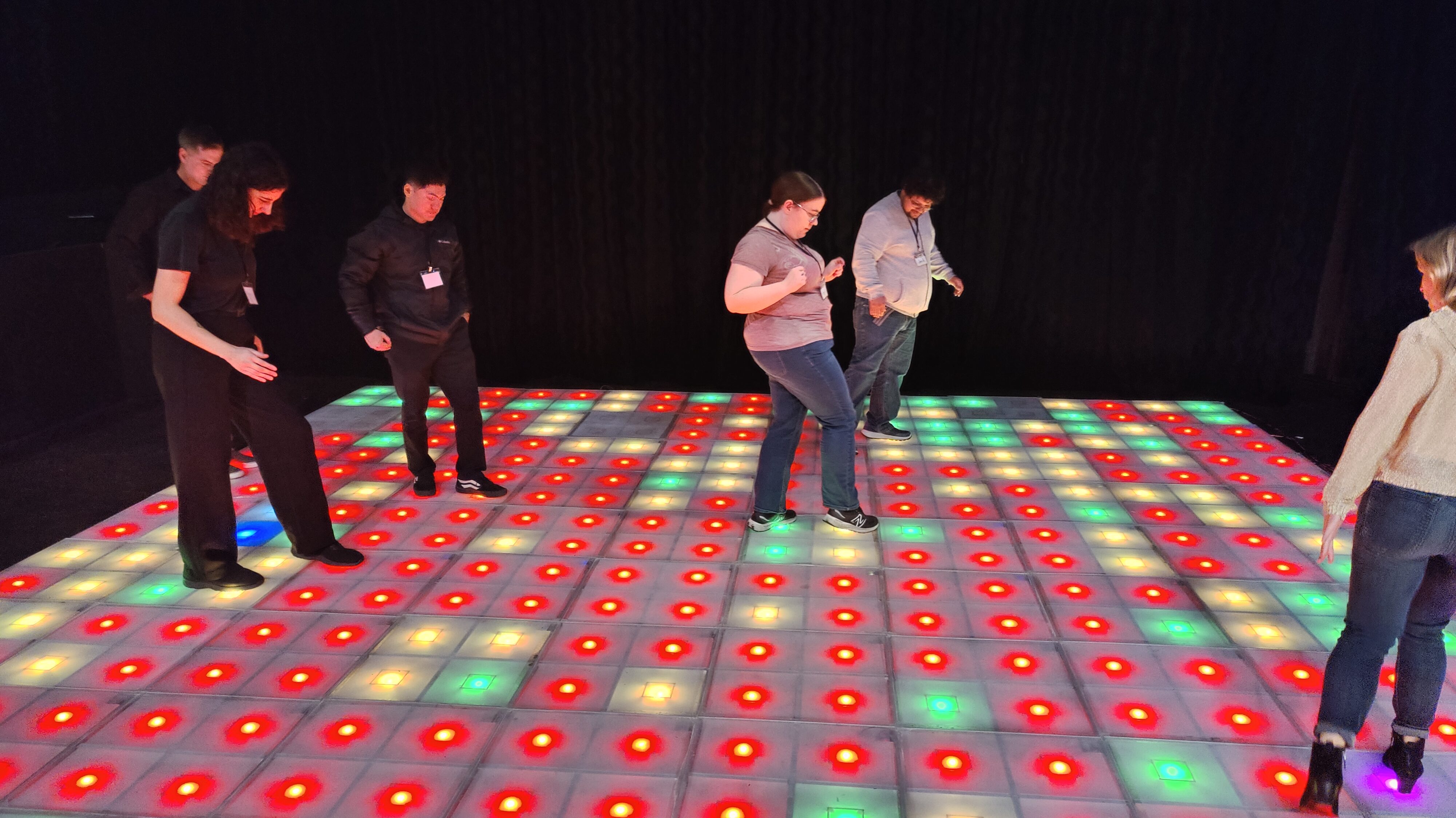

Building a giant boardgame sounds simple until the first oversized die rolls into someone’s ankle, the “tiny” foam token needs two people to carry it, and the rulebook suddenly reads like an emergency evacuation plan for a cardboard kingdom. On paper, the idea is delightful: take a familiar tabletop experience, enlarge it, invite players to step onto the board, and watch the magic happen. In reality, building a giant boardgame is part game design, part theater production, part logistics puzzle, and part “why did we think six-foot cards were a good idea?”
Still, when it works, it works beautifully. A life-size board game can turn passive spectators into active players, make a school fundraiser unforgettable, give a convention booth a magnetic center, or transform a backyard party into a slightly chaotic festival of dice, laughter, and suspiciously competitive uncles. The challenge is that “giant” changes almost every rule of design. A move that takes two seconds on a tabletop might take thirty seconds when players must walk across the board. A token that looks cute at two inches can become a storage problem at two feet. A simple instruction card can become unreadable if the sun hits it at the wrong angle.
This guide breaks down why giant board game design is harder than it looks, what creators can learn from tabletop prototyping, large-format printing, accessibility planning, public-event safety, and real-world immersive game examples, and how to build something fun without creating a plywood monument to regret.
What Makes a Giant Boardgame Different?
A traditional tabletop game lives in a controlled environment: a table, chairs, cards, dice, tokens, and players close enough to read the same rulebook. A giant boardgame explodes that environment. The board might cover a lawn, gym floor, stage, parking lot, trade-show booth, museum gallery, or festival plaza. Players may become the pieces. Game masters may need microphones. Weather may become a villain. Wind, in particular, has the personality of a toddler with a leaf blower.
The first difference is physical scale. When you enlarge a board, you also enlarge every inconvenience. Movement takes longer. Components cost more. Storage becomes serious. Setup and teardown require planning. Even a simple “roll and move” game can become complicated when players need safe walking paths, visible spaces, readable instructions, and enough room to avoid bumping into each other like cheerful shopping carts.
The second difference is attention. Giant games often attract spectators. That is good for energy, but it changes pacing. Players may feel watched. The rules need to be clear not only to participants but also to people standing nearby wondering whether they can join. A giant boardgame is not just played; it is performed.
The third difference is risk. Small cardboard tokens rarely cause injury unless someone is emotionally wounded by losing. Giant tokens, platforms, ladders, ramps, dice, and props can introduce trip hazards, sharp edges, heavy lifting, and crowd-control issues. The bigger the game, the more it needs adult supervision, sturdy materials, clear boundaries, and common sense that arrives before the ambulance.
Start With the Game, Not the Gimmick
The biggest mistake in building a giant boardgame is assuming size is the whole idea. It is not. “It is huge!” is a fun first impression, but it is not a full game loop. Players still need meaningful choices, understandable goals, satisfying moments, and enough uncertainty to keep everyone from mentally checking out after turn three.
Professional tabletop designers often begin with a minimum viable prototype: the simplest playable version of the game. Stonemaier Games, The Game Crafter, Board Game Design Lab, and other design communities consistently emphasize prototyping and playtesting before polishing. The same principle applies even more strongly to giant games. Before printing a ten-foot vinyl board, test the game on paper. Before cutting foam tokens, use sticky notes. Before building a dramatic castle gate, make sure the castle gate actually matters to the rules.
Ask These Questions First
- What is the goal of the game?
- How does a player make meaningful decisions?
- How long should one session last?
- How many people can play without waiting forever?
- Can spectators understand what is happening?
- Does the game still work if one player is slower, younger, shorter, or less physically able?
If those answers are fuzzy, scaling up will not fix the design. It will only make the fuzzy parts easier to trip over.
Prototype Small Before You Build Big
Every giant boardgame should begin as a small, ugly prototype. Ugly is not a flaw; ugly is a budget strategy. Use index cards, marker lines, coins, scrap paper, toy figures, or cereal-box cardboard. At this stage, the goal is not beauty. The goal is to discover whether the idea survives contact with actual humans.
Playtesting reveals problems that imagination politely hides. Maybe the game has too much downtime. Maybe one strategy always wins. Maybe the board is too long. Maybe players forget where they are supposed to stand. Maybe the dramatic final challenge is secretly boring. Better to learn that with a Sharpie prototype than with a custom-printed floor mat that costs more than your first car.
Good playtesting is not simply asking, “Did you like it?” Most polite people will say yes, even while quietly planning to move to another city. Ask sharper questions: Where did you feel confused? Which turn was the most fun? When did the game feel slow? What did you think your best choice was? Did you understand why you won or lost? Specific feedback is more useful than a friendly thumbs-up.
The Board Must Be Readable From a Distance
Designing a giant board is a signage problem as much as a game problem. Large-format printing rules matter. Vector artwork scales better than low-resolution images. High contrast improves readability. Large typefaces beat decorative fonts that look magical on a laptop and become spaghetti from twelve feet away. Outdoor signs and banners also need to survive sunlight, glare, moisture, dirt, and the tragic human tendency to step on things clearly labeled “Do Not Step.”
A giant board should guide the eye. Numbered spaces need strong contrast. Action zones should be color-coded, but color alone is not enough. Use icons, patterns, labels, or shapes so players who are colorblind or visually impaired are not forced to play “guess the red square.” This is not only more inclusive; it also helps everyone when lighting is bad, attention is split, or the event is loud.
Readable Giant Game Design Tips
- Use large, simple fonts with strong spacing.
- Keep instructions short enough to read while standing.
- Pair colors with symbols, patterns, or text labels.
- Avoid glossy surfaces in bright outdoor settings.
- Test print a small section at full scale before producing the whole board.
- Walk around the prototype and view it from player height, not designer-chair height.
The best giant boardgames feel instantly understandable. Players should not need a magnifying glass, a law degree, or a committee meeting to know where to go next.
Game Pieces Become Engineering Problems
On a tabletop, a pawn is a pawn. In a giant boardgame, a pawn can become a traffic cone, foam sculpture, rolling cart, wearable costume, or human being wearing a hat and questioning life choices. Oversized game pieces must be visible, durable, safe, and easy to move. That combination is harder than it sounds.
Foam is light but can dent. Wood is sturdy but heavy. Plastic is weather-resistant but can crack. Fabric is portable but may wrinkle or blow away. Cardboard is cheap but has the outdoor survival instincts of a sandwich. The right material depends on location, budget, storage, weather, and whether the game will be used once or repeatedly.
For public events, avoid sharp corners, unstable towers, splinter-prone wood, slippery surfaces, and pieces so heavy that volunteers start negotiating with gravity. OSHA and NIOSH guidance on manual materials handling is useful here: reduce load weight, use carts or hand trucks when practical, keep heavy objects close to the body, and use team lifting for bulky items. That may sound overly serious for a game, but backs do not care whether the heavy object is industrial equipment or a gigantic foam dragon named Gary.
Safety Is Not the Enemy of Fun
Safety planning is where many giant game ideas meet adulthood. If the board sits on the ground, consider slips and trips. If players climb, jump, crawl, or balance, the design needs protective surfacing and supervision. The Consumer Product Safety Commission’s playground guidance repeatedly stresses protective surfaces, spacing, maintenance, and adult supervision for play environments. A giant boardgame is not automatically a playground, but if people move through it like one, similar caution is smart.
For indoor events, secure edges and cables. For outdoor events, check wind, rain, heat, and ground conditions. Use sandbags, stakes, tape, mats, or weights as appropriate. Mark entry and exit points. Keep walkways clear. Avoid placing props where spectators will drift into them. If the game uses large dice, make them soft. A dramatic die roll should create suspense, not dental paperwork.
Common Giant Boardgame Hazards
- Loose floor mats or vinyl edges that curl upward.
- Oversized pieces blocking accessible routes.
- Small children running through active play zones.
- Heavy props without handles or transport plans.
- Rules that encourage unsafe movement, such as racing on slick surfaces.
- Outdoor boards that become slippery after rain.
A safe game is not a boring game. It is a game that can be played again tomorrow without everyone comparing bruises like trading cards.
Accessibility Should Be Designed In, Not Added Later
Large-scale games are often used at schools, museums, festivals, team-building events, libraries, and community spaces. That means accessibility matters. ADA event-planning guidance emphasizes that temporary events should be planned so people with disabilities can participate. For a giant boardgame, this can affect surface choice, route width, table height, signage, seating, audio instructions, and alternative ways to complete physical challenges.
Accessibility is not just a checklist; it is better design. A board with clear icons helps children and adults. A route wide enough for a wheelchair also prevents crowd jams. Written instructions help people who cannot hear the host. Audio cues help people who cannot easily read distant signs. Optional seated participation can make the game more welcoming to older adults, people with injuries, and anyone who has already made peace with their knees.
Inclusive Giant Game Options
- Provide alternate challenges for players who cannot run, jump, or kneel.
- Use tactile markers or raised edges where practical.
- Offer large-print rules and simple visual summaries.
- Keep pathways wide and free of loose props.
- Allow team play so players can contribute in different ways.
- Use both spoken and written instructions.
The goal is not to remove challenge. The goal is to make the challenge come from the game, not from avoidable barriers.
Real-World Giant Game Examples Show the Range
Giant boardgames are not just backyard experiments. They appear in museums, immersive entertainment, fashion sets, conventions, classrooms, and public spaces. A life-size Monopoly experience has toured major cities, turning the familiar board into an interactive team event with actors, challenges, and a theatrical structure. San Jose, California, became known for a large permanent Monopoly installation, showing how a classic board can become a civic attraction when licensing, fundraising, fabrication, and public use are handled seriously.
The game World in Flames: Collector’s Edition has been recognized for its enormous physical footprint, with multiple hard-mounted maps, thousands of counters, and a rulebook large enough to make casual players blink twice. It is not a “walk on the board” attraction, but it proves that scale can be part of a game’s identity. The lesson is clear: size must serve experience. In a strategic war game, size supports complexity and scope. In an event game, size supports presence, movement, and spectacle.
Museum and art-world projects have also experimented with life-size play. When designers turn people into pieces, the board becomes architecture. Players must understand space, not just rules. That crossover between game design and environmental design is where giant boardgames become especially interestingand especially difficult.
Budget: The Final Boss
Building a giant boardgame can be affordable, but only if the scope is honest. A one-day backyard game might use painted drop cloths, laminated cards, pool noodles, foam dice, and plastic bins. A traveling event game may need weatherproof vinyl, modular flooring, custom props, storage crates, insurance, staffing, transportation, and replacement parts. Suddenly the “fun little idea” has a spreadsheet, and the spreadsheet is wearing armor.
Budget for more than the visible board. Include prototyping materials, printing tests, spare components, repair tools, storage, signage, rule sheets, transport, cleaning supplies, staff training, and safety equipment. If children will play, expect components to be stepped on, pulled, dropped, hugged, licked, and used in ways that would make the designer stare into the middle distance.
Where to Spend Money Wisely
- Durable board material if the game will be reused.
- Clear signage and readable graphics.
- Safe, lightweight oversized pieces.
- Storage containers that protect components.
- Prototype testing before final fabrication.
- Accessibility improvements that make participation easier.
Where can you save? Use modular pieces instead of one enormous board. Reuse generic tokens across multiple games. Print replaceable cards rather than permanent boards for changeable rules. Choose simple geometry over complicated sculpture unless the sculpture is essential to the experience.
Rules Must Be Shorter Than You Think
Long rulebooks can work for serious tabletop games because players sit down, read, ask questions, and manage components. Giant boardgames usually happen in louder, more social settings. People may join mid-event. Players may be excited, distracted, or wearing a costume shaped like a top hat. The rules must be simple enough to explain in one or two minutes.
Use a three-layer rule system: a quick-start explanation, visible reminders on the board, and a staff reference sheet for edge cases. Players do not need every detail up front. They need the objective, the turn structure, the main action, and how to win. Anything else can appear when needed.
For example, instead of saying, “When a player lands on a blue challenge space, they may select one of three cooperative task cards depending on the phase marker, current team score, and remaining round count,” say, “Land on blue, draw a challenge card, and complete it with your team.” The first version sounds like a tax seminar. The second can be played.
Staffing Can Make or Break the Game
A giant boardgame often needs hosts, referees, reset crews, safety spotters, photographers, line managers, and someone who knows where the tape is. The best staff do more than enforce rules. They create energy, explain turns, help shy players, adjust pacing, and prevent minor confusion from becoming full theatrical chaos.
For larger events, train staff with a short script. Give them a one-page rules summary, a list of common problems, and clear authority to pause the game if something becomes unsafe. If the game has timed rounds, assign one person to the clock. If it has props, assign one person to reset them. If it has children, assign several people to watch the perimeter because children are basically dice with shoes.
Testing the Giant Version Is Its Own Stage
After the small prototype works, build a medium prototype. Tape the board layout on a floor. Use chairs, cones, or paper markers. Ask players to move through the space. Time turns. Watch bottlenecks. See whether people can hear instructions. Notice whether the final space feels exciting or awkwardly far away.
Only after that should the project move to final materials. The giant version will reveal new problems: walking distance, crowd sightlines, storage, weather, fatigue, and reset time. A tabletop game may be balanced mathematically but fail physically. If players spend more time walking back and forth than making decisions, the design needs compression. If one corner of the board is invisible to spectators, the layout may need rotation. If the game takes too long to reset, staff will quietly mutiny.
Personal Experience: What Building a Giant Boardgame Teaches You
The first lesson of building a giant boardgame is humility. You may begin with a clean design document and a heroic vision. Then a gust of wind lifts your “perfect” card deck off the table and turns it into confetti with objectives. Suddenly, nature is a playtester, and her feedback is rude but actionable.
One of the most useful experiences is watching players ignore the path you lovingly designed. On a tabletop, people usually follow the spaces because the board is clearly in front of them. In a giant boardgame, players look around, talk, wander, celebrate, forget whose turn it is, and occasionally stand on the wrong square with complete confidence. This teaches an important design truth: if the physical environment does not guide behavior, the rules must work too hard. Arrows, boundaries, color zones, icons, and host prompts are not decoration. They are navigation.
Another lesson is that components should be comfortable before they are clever. A giant card shaped like a scroll may look amazing, but if players cannot hold it, read it, or put it down without it rolling away, the charm fades fast. Oversized dice are crowd-pleasers until they bounce into a flower bed. Large tokens look fantastic in photos, but if they are awkward to move, every turn becomes furniture delivery. The best props are simple, sturdy, and intuitive. They invite handling instead of demanding instruction.
Building a giant boardgame also teaches respect for reset time. Designers often obsess over the player journey and forget the staff journey. If a challenge uses ten balls, six cards, four cones, and a dramatic mystery envelope, someone has to put all that back after each team. Multiply that by fifty groups and the reset crew will start speaking in haunted whispers. A great event game resets quickly, stores neatly, and survives imperfect handling.
Perhaps the biggest surprise is how much players enjoy clarity. Designers sometimes fear that simple rules will feel childish, but giant games thrive on fast understanding. When players know what to do, they perform, laugh, cheer, and strategize. When they are confused, they look at the host like the host is a malfunctioning vending machine. Clear rules do not make a game less clever. They make the cleverness playable.
Finally, building a giant boardgame reminds you that fun is physical. People remember the moment they stepped onto the board, rolled a die the size of a pumpkin, shouted advice to a teammate, or completed a silly challenge while strangers applauded. The spectacle matters. But it works only when the invisible design is strong: safe surfaces, readable spaces, tested pacing, inclusive options, durable materials, and staff who know what happens next. Giant games are not easy because they are not just enlarged board games. They are shared experiences built at human scale, with all the beautiful messiness that humans bring.
Conclusion: Big Fun Requires Big Planning
Building a giant boardgame is not easy, but that is exactly why a good one feels special. It combines the logic of tabletop design, the visibility of large-format signage, the movement of live events, the durability of fabrication, and the hospitality of inclusive planning. When those pieces align, players do not just play a game; they step into it.
The smartest path is simple: prototype small, test honestly, design for readability, choose safe materials, plan accessibility early, budget for logistics, and keep the rules short enough for real people in real spaces. A giant boardgame can be funny, strategic, educational, dramatic, or delightfully ridiculous. It just cannot be accidental. The bigger the board, the more every detail matters.
Note: This article is written as original publishable content based on real-world practices in tabletop game design, prototyping, playtesting, large-format printing, accessibility planning, event logistics, and public play safety.