
Note: This article is based on widely reported public information, interviews, profiles, reviews, and entertainment-industry accounts. It treats disputed incidents carefully, using terms such as “reported,” “recalled,” and “alleged” where appropriate.
Introduction: The Man, the Myth, the Very Difficult Meeting
Chevy Chase is one of those comedy figures who arrives with two shadows. The first is enormous: Saturday Night Live, Weekend Update, Caddyshack, Fletch, National Lampoon’s Vacation, and a run of deadpan, pratfall-heavy performances that helped shape American screen comedy. The second shadow is less cuddly: decades of stories from coworkers, directors, writers, and castmates describing him as rude, combative, arrogant, insensitive, or simply exhausting to work with.
That is why the title “Chevy Chase: A History Of Being Terrible” is not really about pretending he was never funny. He was funny. Sometimes brilliantly funny. The problem is that his off-screen reputation has often threatened to outrun the work itself, like Clark Griswold chasing a Christmas bonus that absolutely refuses to arrive.
To understand Chevy Chase’s public image, you have to hold two ideas at once. He helped define a style of American comedy built on cool detachment, smug timing, and physical chaos. He also became a case study in how talent can open doors that personality keeps slamming on everyone’s fingers. His career is not just a Hollywood success story. It is a cautionary tale about ego, timing, changing cultural standards, and the dangerous belief that being “edgy” gives a person permanent permission to be cruel.
The Early Genius: Why Chevy Chase Became Famous So Fast
Before the controversy became a permanent sidekick, Chevy Chase was a breakout star. Born Cornelius Crane Chase, he came into national fame as part of the original Saturday Night Live cast in 1975. His dry delivery, handsome goofball energy, and famous pratfalls made him one of the show’s first major personalities. As the original anchor of Weekend Update, he used arrogance as a comic instrument. His “I’m Chevy Chase, and you’re not” persona worked because it was ridiculous, polished, and just mean enough to feel dangerous.
A Comedy Style Built on Smug Collapse
Chase’s best comedy often came from contradiction. He looked like the country-club guy who knew where the good towels were kept, but he moved like a folding chair falling down a staircase. He could be charming and insulting in the same breath. He made vanity funny by turning it into a trap: the more confident his characters seemed, the more satisfying it became when the universe knocked them into shrubbery.
That formula helped him move from television to movies. In the late 1970s and 1980s, he became a bankable comedy star with roles in Foul Play, Caddyshack, National Lampoon’s Vacation, Fletch, Spies Like Us, and Three Amigos! For many fans, he will always be Ty Webb drifting through golf-course nonsense, Clark Griswold trying to manufacture family joy with industrial-strength denial, or Fletch wisecracking through disguises and danger.
But even in the early years, the same qualities that made Chase electric on camera reportedly made him difficult backstage. The smugness that worked as performance did not always stay safely inside the performance. That is where the story gets messier.
Saturday Night Live: Breakout Star, Bruised Egos, and Bad Blood
Chase’s first run on SNL was short, but the impact was huge. He became one of the show’s first household names, won major acclaim, and left early in the second season to pursue a film career. That move made sense commercially, but it also created tension. The original SNL cast was famously competitive, sleep-deprived, and allergic to anyone getting too much attention. Chase got a lot of attention.
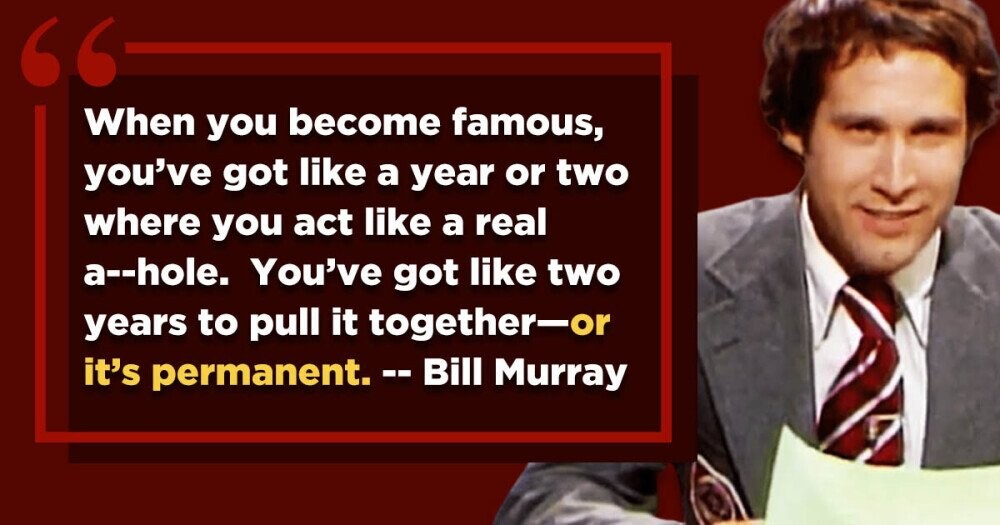
Reports and oral histories have long described resentment between Chase and other cast members. John Belushi reportedly disliked the spotlight Chase received. Bill Murray, who joined after Chase left, eventually clashed with him directly. When Chase returned to host in 1978, the backstage atmosphere was tense enough to become part of comedy folklore. The reported fight between Chase and Murray became one of the most famous behind-the-scenes brawls in SNL history. Nothing says “live comedy institution” quite like two future movie stars allegedly turning the dressing room into a very poorly lit boxing gym.
The “Worst Host” Reputation
Chase’s later returns to SNL did not exactly polish the legend. Several accounts from former cast members and writers have described him as insulting or inappropriate during hosting weeks. Will Ferrell later named Chase as his least favorite host from his time on the show, recalling behavior that embarrassed the room. Terry Sweeney, one of the show’s groundbreaking openly gay cast members, has also spoken about cruel remarks he said Chase made during the 1980s.
There are also long-running reports that Chase’s final hosting stint in 1997 went badly enough that he was no longer invited back to host, though he has appeared in special guest contexts since. The larger point is not whether every version of every backstage story can be reconstructed perfectly. The larger point is that many different people, across many different eras, have described a similar pattern: Chevy Chase could be hilarious, but he could also make the workplace feel like a comedy roast where only he had approved the menu.
Movie Stardom: Classic Roles, Declining Momentum
The 1980s gave Chase some of his most beloved roles. Caddyshack let him play a relaxed, Zen-like rich guy with a golf club and a fog machine where his moral compass should be. Vacation turned him into Clark Griswold, the father whose optimism is so aggressive it should probably require a permit. Fletch showcased his gift for fast, dry, improvisational-style comic rhythm.
But the career peak did not last forever. By the late 1980s and early 1990s, the hits became less consistent. Films like Caddyshack II, Nothing but Trouble, and Memoirs of an Invisible Man did not sustain his earlier momentum. His 1993 late-night talk show on Fox was famously short-lived, canceled after only a handful of weeks. For a performer whose whole identity was built on appearing effortlessly superior, public failure was not exactly a flattering lighting setup.
The Chris Columbus Christmas Vacation Story
One of the most revealing stories about Chase’s reputation involves National Lampoon’s Christmas Vacation. Director Chris Columbus was originally attached to direct the film and even began early work on it. Years later, Columbus said he left after difficult meetings with Chase, explaining that he felt he could not work with him. In a twist worthy of Hollywood’s strangest gift exchange, Columbus then went on to direct Home Alone, one of the biggest family comedies ever made.
That anecdote matters because it shows the professional cost of being difficult. A strained relationship did not merely create gossip. It changed who directed a major movie. It also became part of a larger industry narrative: Chevy Chase was talented, but working with him could come with emotional assembly instructions, missing screws, and possibly a raccoon in the attic.
Community: The Comeback That Became a Cautionary Tale
For younger viewers, Chase’s most important role may not be Clark Griswold or Fletch. It may be Pierce Hawthorne on Community, the NBC sitcom that premiered in 2009. At first, the casting looked clever. Pierce was older, wealthy, insecure, offensive, needy, and desperate to matter inside a study group that frequently wished he came with a mute button. Chase could bring real comic bite to the role because he understood arrogance from the inside out.
But the role also blurred the line between character and reputation. Pierce Hawthorne was written as socially clueless and bigoted. Chase reportedly disliked the direction of the character and grew frustrated with the writing. Public tension between Chase and creator Dan Harmon became a major part of the show’s behind-the-scenes drama, including leaked voicemails, public apologies, and mutual irritation that seemed to have its own parking space on the studio lot.
The Donald Glover and Yvette Nicole Brown Reporting
The most serious criticism from the Community era involves reports about race-related comments and incidents. A major profile of Donald Glover reported that Chase made racial cracks between takes and tried to disrupt Glover’s scenes. Harmon described Chase’s behavior as rooted in jealousy of Glover’s talent. Glover’s own response was more nuanced than a simple takedown; he suggested Chase was “fighting time,” a phrase that lands like a quiet diagnosis of a star watching the industry move past him.
There was also a reported on-set incident involving Chase’s frustration with a storyline for Pierce that included a blackface hand puppet. Entertainment-industry reporting has stated that Chase used the N-word while questioning dialogue, with accounts clarifying that the slur was reportedly not directed at Black cast members present. Still, the incident became a major part of the explanation for his exit from Community. Director Jay Chandrasekhar later recalled the situation in the CNN documentary, describing tension on set and Chase’s reaction after the incident became public.
Chase has denied being racist and has described the situation as a misunderstanding. That matters for fairness. But denial does not erase the impact of what colleagues said they experienced. Comedy sets are workplaces. When the joke depends on one person feeling targeted, humiliated, or cornered, it stops being “old-school” and starts being a human resources training video with worse lighting.
The 2026 Documentary: “I’m Chevy Chase and You’re Not”
The 2026 CNN documentary I’m Chevy Chase and You’re Not put Chase’s contradictions back in public conversation. Directed by Marina Zenovich, the film was described as authorized but not exactly soft-focus. Reviews noted that it explored both Chase’s gifts and his flaws, including his difficult reputation, family background, health issues, and the professional relationships damaged along the way.
One early exchange from the documentary became a neat summary of the entire Chevy Chase problem. When Zenovich said she was trying to figure him out, Chase responded with a cutting insult about her intelligence. It was the kind of moment that could be defended as a joke, except that “it was just a joke” becomes less persuasive when it has been used as a forwarding address for decades of complaints.
Complicated Does Not Mean Excused
The documentary also explored Chase’s childhood and personal pain. That context matters. People are not born as punchlines. Personal history can shape defensiveness, insecurity, anger, and the need to control a room before the room controls you. But context is not the same as a permission slip. A painful past may explain some behavior; it does not automatically excuse the damage that behavior causes.
That is the central tension in Chase’s public image. He can be vulnerable, gifted, charming, and wounded. He can also be dismissive, cutting, and careless with other people’s dignity. The most honest version of the story allows both truths to exist without letting either one erase the other.
Why Chevy Chase’s Reputation Still Fascinates People
There are plenty of difficult celebrities, so why does Chevy Chase remain such a magnet for discussion? Part of the answer is timing. He rose during an era when comedy often rewarded cruelty if it was delivered with enough confidence. The sharp insult, the smug grin, the boundary-pushing line: these were treated as signs of comic courage. Over time, audiences became more willing to ask who was paying the bill for that kind of humor.
Another reason is the contrast between Chase’s screen persona and real-world accounts. Clark Griswold is annoying, but lovable. Fletch is arrogant, but charming. Ty Webb is detached, but cool. The public stories about Chase suggest what happens when those qualities lose the fictional frame. Arrogance without warmth becomes plain arrogance. Deadpan without timing becomes contempt. A roast without consent becomes a workplace problem.
The Talent vs. Behavior Debate
Fans often ask whether it is still okay to enjoy Chevy Chase’s movies. The reasonable answer is yes, with awareness. Enjoying Christmas Vacation does not require pretending every coworker had a merry little experience. Laughing at Caddyshack does not mean appointing Chase the mayor of emotional intelligence. Art and artists are connected, but they are not always identical twins wearing matching sweaters.
The better question is what we learn from the tension. Chase’s career shows that talent can create opportunities, but character helps determine how long people want to keep opening the door. His story is not just about being “terrible.” It is about how charm can curdle, how fame can freeze a person inside the version of himself that first worked, and how comedy changes when the audience starts listening to the people who were standing just off camera.
Specific Examples That Shaped the “Difficult” Label
1. The Bill Murray Fight
The reported backstage fight between Chevy Chase and Bill Murray during Chase’s 1978 return to SNL became symbolic. It represented the resentment around Chase leaving the show, becoming a star, and then returning to a cast that had already learned how to survive without him. The story has been retold for years because it feels almost too perfectly scripted: two comedy icons, one cramped backstage environment, and enough ego in the air to qualify as weather.
2. The Terry Sweeney Account
Terry Sweeney’s account of Chase making cruel remarks during the 1985-86 SNL era remains one of the more troubling parts of the record. It reflects a type of humor that targeted identity and vulnerability while hiding behind the language of “just kidding.” Modern audiences are less willing to accept that disguise, and for good reason.
3. The 1997 SNL Hosting Reports
Chase’s 1997 hosting appearance has been repeatedly described as disastrous behind the scenes. Reports of abusive behavior and an alleged incident involving Cheri Oteri helped cement the idea that Chase had worn out his welcome as a host. Even if the details vary depending on the account, the broader reputation stuck: when people discussed difficult SNL hosts, Chase’s name tended to arrive early and sit down uninvited.
4. The Community Exit
The Community years gave the internet a modern version of the Chevy Chase debate. It had everything: a beloved cult sitcom, a young ensemble cast, leaked audio, public feuds, creative disagreements, allegations involving race, and a veteran star who seemed increasingly out of step with the show around him. It turned Chase from a nostalgic comedy legend into a trending example of “never meet your heroes.”
Experience Section: Watching the Chevy Chase Story as a Modern Viewer
Experiencing Chevy Chase’s work today can feel like opening a holiday decoration box and finding both twinkling lights and something that may have been alive in 1994. On one hand, the movies still have power. National Lampoon’s Christmas Vacation remains a seasonal ritual for many families because Clark Griswold captures the absurd pressure to make everything perfect. He wants the lights, the tree, the dinner, the bonus, the family harmony, and the emotional fireworks show. Instead, he gets chaos with tinsel. That is relatable. Most people have had at least one holiday moment where they wanted to smile warmly and instead made the face of a man trying not to scream into a casserole.
Watching Fletch can also be a reminder of how quick Chase was at his best. He had a casual rhythm that made jokes feel tossed away rather than presented on a silver platter. He did not beg for laughs. He simply placed them on the table and walked off as if the table belonged to him. In Caddyshack, his looseness works beautifully against the louder comic energies around him. He is not the whole circus; he is the guy leaning near the exit, making fun of the circus while somehow being paid by it.
But then the behind-the-scenes history enters the room, clears its throat, and ruins the easy nostalgia. Once a viewer knows about the repeated accounts of rude or harmful behavior, the experience changes. The joke still lands, but it lands in a different room. You become more aware of the difference between a character who is comically arrogant and a performer accused by colleagues of behaving arrogantly in real life. That does not mean every scene is spoiled. It means the laughter becomes more complicated.
This is especially true with Community. Pierce Hawthorne is written as a man who does not understand how far behind he is. He wants respect without doing the emotional work that earns respect. That makes him funny, sad, and sometimes unbearable. Knowing that Chase himself reportedly clashed with the younger cast and creative team gives the performance an accidental documentary quality. Pierce is supposed to be the outdated guy at the table. The discomfort comes from wondering how much of that was acting and how much was friction leaking through the walls.
The modern viewing experience also forces a useful question: What do we do with talented people who behaved badly? The answer does not have to be dramatic. We can enjoy the work while refusing to romanticize the behavior. We can laugh at Clark Griswold without turning Chevy Chase into a misunderstood saint. We can appreciate his timing while also listening to coworkers who said the timing off camera was often painful. That balanced approach is not as satisfying as a simple hero-or-villain label, but it is more honest.
In the end, the experience of revisiting Chevy Chase is like watching a brilliant comic machine with several warning stickers attached. The machine still works. It still produces laughs. But you also notice the dents, the sparks, and the people standing nearby who remember getting burned.
Conclusion: The Legacy of a Brilliant, Difficult Comic
Chevy Chase’s history is not simple. He is not merely a villain in a golf sweater, and he is not merely a misunderstood genius persecuted for telling jokes before society “got sensitive.” He is a major American comedian whose talent helped create iconic television and film moments. He is also a performer whose reputation for being difficult has been reinforced by many accounts across decades.
The most useful way to understand Chase is as a warning about what happens when a comic persona becomes a personal operating system. Smugness can be funny in a sketch. Contempt is harder to defend in a workplace. Arrogance can make a character memorable. It can also make collaborators disappear, directors walk away, and costars decline to revisit old wounds for a documentary.
That is why Chevy Chase remains fascinating. His career contains real brilliance, real damage, real laughs, and real consequences. He helped build modern comedy’s cool, sarcastic voice. Then he spent decades showing how quickly that voice can turn sour when it forgets other people are in the room.
SEO Tags