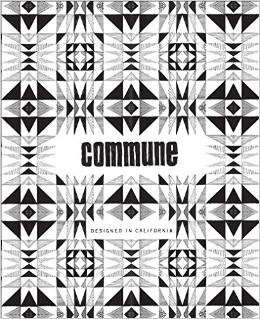

Commune: Designed in California – Paperback is not the kind of design book that politely sits on a coffee table and waits to be admired from a safe distance. It practically leans forward, clears its throat, and says, “Wouldn’t that corner look better with more texture, better light, and maybe one very interesting chair?” Published by Abrams, this design monograph captures the early creative universe of Commune, the influential Los Angeles-based design studio known for interiors that feel relaxed, layered, artistic, sun-warmed, and stubbornly allergic to boring beige.
At its heart, Commune: Designed in California is a book about more than pretty rooms. Yes, there are beautiful homes, hospitality spaces, commercial interiors, patterns, materials, and objects worth pausing over. But the deeper appeal is the philosophy behind them: a belief that design should improve daily life, honor place, respect craft, and make a room feel as if real people actually live there. Shocking, I know. A design book that remembers humans exist.
For readers searching for a California interior design book, a Commune Design book, or a thoughtful paperback design monograph, this title remains a standout because it documents a specific moment in modern American design: the rise of a warm, eclectic, craft-forward West Coast style that mixes old and new without making either one feel embarrassed at the party.
What Is Commune: Designed in California?
Commune: Designed in California is the first major monograph dedicated to Commune’s work. The book features projects across private residences, hotels, restaurants, commercial spaces, commissioned objects, and collaborations with artisans. The authors credited with the book are Roman Alonso, Steven Johanknecht, Pamela Shamshiri, and Ramin Shamshiri, the founding figures associated with Commune’s early identity and creative direction.
The paperback edition was published in 2014 and includes 256 pages with hundreds of color illustrations. Its generous visual format makes it useful as both inspiration and reference. This is not a tiny book you tuck into a backpack beside a granola bar and a guilty airport novel. It is a substantial design volume meant to be opened, studied, revisited, and occasionally used to convince yourself that your living room deserves better lighting.
The title says “Designed in California” for a reason. Commune’s work is deeply tied to the cultural and physical landscape of California: indoor-outdoor living, Pacific light, desert tones, modernist architecture, handmade objects, vintage pieces, and a certain relaxed confidence that says, “Yes, the chair is old, but it has lived a richer life than most sofas.”
Who Is Commune Design?
Commune is a Los Angeles-based design studio founded in 2004. The firm became known for a holistic approach that moves across architecture, interior design, product design, graphic design, branding, hospitality, and lifestyle objects. That range matters because the book does not present interiors as isolated rooms. It treats design as an ecosystem, where a hotel lobby, a ceramic lamp, a textile, a restaurant identity, and a private home can all share a point of view.
Roman Alonso and Steven Johanknecht are especially central to Commune’s continuing identity. Their background in fashion, retail, display, publishing, and design helps explain the studio’s layered eye. Commune rooms often feel collected rather than decorated. They are polished but not precious, sophisticated but not stiff, and stylish without acting like they need their own security detail.
One reason Commune’s work resonates is its comfort with contradiction. A room can be rustic and glamorous. A cabin can be simple and intellectually rich. A hotel can feel communal without looking like a committee designed it. A modernist space can hold handmade ceramics, patterned textiles, vintage furniture, contemporary art, and wood surfaces without descending into visual traffic.
Why This Paperback Still Matters
Design books age in interesting ways. Some become time capsules of trends we would rather not discuss, like overly shiny tile, aggressively gray interiors, or that period when every room appeared to be auditioning for a luxury dental clinic. Commune: Designed in California has aged better because it is built around principles rather than gimmicks.
The book emphasizes material honesty, local context, craft, texture, color, and the emotional temperature of a room. Those ideas are still relevant in today’s design conversation, especially as homeowners and designers move away from sterile minimalism and toward interiors that feel personal, durable, and rooted in place.
Commune’s version of California style is not just white walls and linen curtains drifting in a breeze, although nobody is mad at a good curtain moment. It is more complex: a blend of Spanish, modernist, bohemian, Arts and Crafts, midcentury, rustic, global, and handmade influences. The studio’s rooms often look as if they evolved over time rather than arrived by overnight shipping in twelve identical boxes.
What You Will Find Inside the Book
Private Residences With Personality
The residential interiors featured in Commune: Designed in California show the firm’s gift for making homes feel expressive without becoming chaotic. These are rooms with wood, textiles, ceramics, artwork, vintage silhouettes, patterned rugs, and furniture that feels chosen rather than merely purchased. The spaces are often warm and tactile, encouraging readers to think about how a room feels to the hand, the eye, and the body.
For homeowners, the practical lesson is clear: good design is not about buying everything new. It is about editing, layering, and letting objects speak to one another. A vintage chair can calm down a contemporary table. A handmade lamp can soften a clean-lined room. A bold textile can wake up a quiet wall. Design, in the Commune universe, is a conversationnot a furniture showroom monologue.
Hospitality Projects With a Sense of Place
Commune’s hospitality work is one of the reasons the studio became widely known. Its projects for hotels and communal spaces helped define a type of boutique hospitality that feels local, cultural, and lived-in rather than generic. The Ace Hotel & Swim Club in Palm Springs is a frequently cited example of Commune’s ability to transform an existing structure into an atmosphere. The project drew from desert culture, vintage references, local makers, road-trip romance, and California informality.
Hospitality design can easily become theatrical in the wrong waymore stage set than place. Commune’s best work avoids that trap by grounding design decisions in local history, materials, artists, and rituals. The result is not merely “cool.” It is specific. And specificity is what makes a space memorable after the Instagram post has disappeared into the algorithmic soup.
Commercial Spaces, Restaurants, and Brand Worlds
The book also highlights Commune’s broader design language through restaurants, stores, and commercial projects. These spaces show how the studio thinks beyond furniture plans. Commune understands mood, graphics, light, identity, and how people move through a room. That matters because a restaurant or shop has to work hard. It must welcome, guide, sell, serve, and linger in memorypreferably without making guests feel like they accidentally walked into a design thesis.
For readers interested in branding, the book demonstrates how interiors can communicate values without a giant sign yelling them from the wall. Materials, color, scale, and objects can create a story quietly but powerfully.
Artisans, Craft, and Commissioned Work
One of the most appealing aspects of Commune’s work is its relationship with artisans and makers. The firm often commissions objects, textiles, ceramics, furniture, and decorative elements that give its spaces depth. This is where the book becomes especially useful for design lovers who want to understand why some rooms feel alive.
Handmade pieces introduce irregularity, and irregularity introduces charm. A ceramic light fixture with subtle variation, a woven textile with texture, or a custom table with visible material character can keep a room from feeling overly manufactured. In a world where mass-produced sameness is only one click away, Commune’s emphasis on craft feels almost rebellious. A very tasteful rebellion, naturally.
The Design Philosophy Behind the Pages
Old and New Can Be Friends
The book’s strongest design lesson is that old and new elements do not need to compete. Commune interiors often bring together vintage furniture, modern art, contemporary textiles, historic references, and handcrafted details. The result feels layered, not confused. This approach is especially helpful for real homes, because most real people do not start with an empty room, an unlimited budget, and a dramatic before-and-after montage.
Instead, design usually begins with what is already there: a sofa you cannot replace yet, inherited furniture, awkward windows, beloved books, weird corners, and the eternal mystery of where to put the printer. Commune’s work suggests that constraints can become character if handled with imagination.
Color, Pattern, and Texture Are Not Enemies
Many people fear color because they have seen it go terribly wrong. Commune’s work offers a more confident path. Color can be earthy, faded, saturated, surprising, or architectural. Pattern can be layered when scale and tone are handled carefully. Texture can create richness even when the palette is restrained.
The book is valuable because it shows color and texture in context. You can study how a rug relates to a wall, how a chair fabric changes a room’s mood, or how wood surfaces warm up modern architecture. These are practical lessons, not just pretty pictures.
California Style Is a Mindset
The phrase “California style” can become a cliché if it is reduced to beachy whites and casual furniture. Commune: Designed in California presents something more nuanced. California, in this book, is freedom, experimentation, sunlight, migration, craft, informality, landscape, and cultural layering. It is not one look. It is a permission slip.
That permission is useful even if you live nowhere near Malibu, Palm Springs, Los Angeles, or the Pacific Ocean. The lesson is not to copy California literally. The lesson is to design with openness, curiosity, and sensitivity to place. Your “California” might be a brick apartment in Chicago, a farmhouse in Vermont, or a small rental in Austin. The principle is the same: listen to the space before you start shouting at it with furniture.
Who Should Read Commune: Designed in California – Paperback?
This book is ideal for interior designers, architects, decorators, students, stylists, hospitality designers, homeowners, and anyone who enjoys studying how beautiful spaces are assembled. It is also a strong choice for readers who love California interiors, modern bohemian design, artisan-made objects, boutique hotel design, and visual storytelling.
For professionals, the book works as a reference for mood, materiality, and composition. For design students, it offers a case study in building a recognizable studio language across different project types. For homeowners, it provides permission to mix eras, use more texture, and stop believing every room needs to look like it just returned from a spa retreat.
Collectors of design books will also appreciate it as a monograph from a firm that has shaped the way many people think about relaxed luxury. It belongs in the same conversation as books on California modernism, craft-driven interiors, and boutique hospitality design.
Paperback Format: Practical, Visual, and Giftable
The paperback format makes Commune: Designed in California accessible while still substantial. With its large dimensions and image-rich layout, it functions as a coffee table book, but the content rewards actual reading. In other words, it is not just decorative camouflage for a table with no personality.
As a gift, the book works especially well for people who appreciate interiors, architecture, California culture, independent makers, and artful living. It is thoughtful without being overly niche, stylish without being impersonal, and useful without resembling homework. That is a rare combination. Many gifts manage only one of those three and then hide behind tissue paper.
Design Lessons You Can Apply at Home
1. Start With Feeling, Not Furniture
Before buying anything, decide how the room should feel. Calm? Social? Earthy? Playful? Restorative? Commune’s work often begins with atmosphere. Furniture supports that atmosphere; it does not create it alone.
2. Mix Materials With Intention
Wood, leather, clay, linen, wool, stone, metal, and plaster can all live together beautifully when balanced. If a room feels flat, it may not need more stuff. It may need more texture.
3. Let Craft Add Soul
A handmade object can change a room’s entire rhythm. Try ceramics, woven baskets, original art, artisan lighting, or textiles with visible character. These elements bring humanity into a space.
4. Use Vintage Pieces to Avoid Showroom Syndrome
A room filled entirely with new items can feel strangely anonymous. One or two older pieces can add history, humor, and depth. They also reduce the risk that your home looks like page 43 of a catalog had a baby with page 44.
5. Respect the Architecture
Commune’s best projects respond to the bones of a building. Before changing a space, study what already works: light, views, proportions, original details, and circulation. Good design collaborates with architecture instead of trying to defeat it in single combat.
Why the Book Appeals to Modern Readers
Today’s readers are increasingly drawn to interiors that feel authentic, sustainable, personal, and flexible. The sterile, all-new room has lost some of its shine. People want homes that hold stories, support rituals, and look good even when someone leaves a coffee mug on the table. Commune’s work speaks directly to that desire.
The book is also relevant because of the renewed interest in craft and local production. As mass-market interiors become easier to copy, the value of distinctive objects increases. Commune’s projects remind us that beauty often comes from relationships: between designer and maker, object and room, house and landscape, past and present.
Experience Section: Living With the Ideas in Commune: Designed in California
Spending time with Commune: Designed in California – Paperback feels less like flipping through a design catalog and more like taking a slow walk through a series of rooms that have excellent stories to tell. The experience begins visually. You notice the warmth first: wood grain, patterned textiles, sunlight, artwork, ceramics, worn surfaces, and the sense that each space has been assembled with patience. Nothing feels overly matched. Nothing begs for applause. The rooms are confident enough to be quiet.
One of the most useful experiences the book offers is a shift in how you look at your own home. After reading it, you may find yourself staring at a corner and thinking, “This is not a corner. This is an opportunity wearing dust.” That is the power of a good design book. It does not simply tell you what Commune did; it trains your eye to see relationships. The roughness of a woven basket can balance the smoothness of a modern table. A vintage lamp can make a plain wall feel considered. A patterned rug can connect furniture that otherwise seems to be avoiding eye contact.
The book is especially enjoyable because it does not make beauty feel unreachable. Some design books are gorgeous but intimidating, as if every room requires a trust fund, a forklift, and a personal relationship with an Italian quarry. Commune’s work is refined, but the lessons are surprisingly democratic. Layering, editing, texture, natural materials, local references, and respect for architecture are ideas anyone can apply at some level. You may not be commissioning custom furniture tomorrow, but you can rethink lighting, rearrange books, add a handmade vessel, or stop treating beige as a legal requirement.
Another strong part of the reading experience is the way the paperback encourages lingering. This is not a book to rush. It rewards a slow pace. You look once for the overall room, again for the furniture, again for the art, and again for the tiny decisions: the height of a lamp, the mix of patterns, the way a chair sits near a window, the use of negative space. The more you look, the more you notice that Commune’s interiors are not random collections of beautiful things. They are edited compositions with feeling.
For creative professionals, the book can become a mood-board companion. For homeowners, it can become a confidence booster. For renters, it can offer small-scale inspiration: textiles, color combinations, objects, plants, books, and lighting. For design students, it is a reminder that a strong point of view does not require a rigid formula. Commune’s projects share a spirit, not a template.
The best experience, however, may be emotional. The book makes design feel generous. It suggests that rooms should support conversation, rest, meals, art, family, solitude, and pleasure. It argues, quietly but persuasively, that a well-designed space does not need to look untouched. It should look ready for life. And if that life includes a stack of books, a sun-faded textile, a slightly eccentric chair, and a dog sleeping exactly where the designer did not intend, Commune would probably understand.
Final Thoughts
Commune: Designed in California – Paperback remains a compelling design book because it captures a studio, a place, and a philosophy at once. It is about California, but not in a shallow postcard way. It is about freedom, craft, collaboration, warmth, individuality, and the pleasure of rooms that feel genuinely inhabited.
For anyone interested in interior design books, California design, Commune Design, artisan interiors, or the art of mixing old and new, this paperback deserves attention. It is visually rich, intellectually useful, and emotionally inviting. Most importantly, it reminds us that good design is not about perfection. It is about life made more beautiful, more comfortable, and more meaningfulpreferably with better lighting.
Note: This article is written in original editorial language and synthesizes publicly available information from reputable publisher, retailer, design, architecture, and lifestyle sources about Commune: Designed in California, Commune Design, and the studio’s California-based design philosophy.