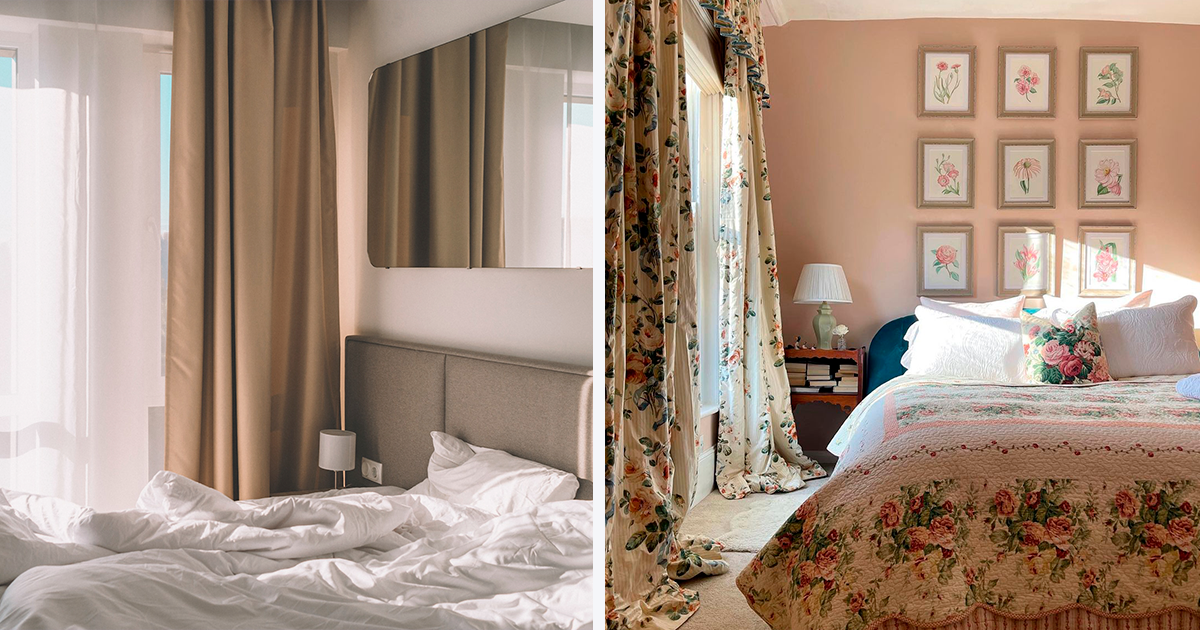

Bedroom curtains do far more than stop the neighbors from accidentally learning your bedtime routine. The right window treatments soften hard architectural lines, control morning glare, add privacy, balance the room’s color palette, and make the entire space feel finished. They can turn a plain white box into a cozy retreat without requiring new furniture, a construction permit, or a dramatic conversation with your bank account.
Function matters just as much as style. A darker bedroom can reduce unwanted nighttime and early-morning light, while blackout curtains can be especially useful for shift workers, light-sensitive sleepers, and rooms facing streetlights. Curtains and other window coverings can also help manage direct sunlight, drafts, and indoor comfort when used strategically.
Whether your dream bedroom is romantic, minimalist, modern, rustic, or delightfully difficult to categorize, these 25 bedroom curtain ideas offer practical ways to create a more charming slumber space.
How to Choose Curtains for a Bedroom
Before falling in love with a fabric sample under suspiciously flattering showroom lighting, consider four essentials: light control, privacy, proportion, and maintenance.
Decide How Dark the Room Should Be
Choose sheer curtains when you want diffused daylight, room-darkening panels when you need moderate control, and blackout-lined drapes when outside light regularly interrupts sleep. Blackout treatments do not always create complete darkness because light may enter around the top and sides, so careful measurement and generous coverage matter.
Measure Beyond the Window Frame
For an outside-mounted rod, extending the hardware beyond both sides of the frame allows panels to rest beside the glass instead of covering it when open. The Home Depot recommends adding roughly 8 to 10 inches per side in many installations, although the exact amount should suit the available wall space.
Use Enough Fabric
Two narrow panels stretched across a large window can look less like elegant drapery and more like fabric losing an argument. For a full appearance when closed, the combined curtain width is commonly about twice the window width.
Choose a Practical Length
Floor-length curtains are usually the safest choice for bedrooms. Panels that barely touch or hover about half an inch above the floor look tailored and are easier to clean than heavily puddled fabric. Longer puddled drapes can create romance and drama, but they also attract dust and may become a luxury lounging area for pets.
25 Inspiring Bedroom Curtain Ideas
-
1. Layer Airy Sheers With Blackout Panels
Layer translucent sheers beneath lined curtains to enjoy soft daylight without sacrificing nighttime privacy. During the day, close the sheers to reduce glare and blur the view from outside. At night, draw the heavier panels for darkness. A double rod makes both layers easy to operate and gives the bedroom a polished, hotel-inspired finish.
-
2. Match the Curtains to the Wall Color
Choose curtains within one or two shades of the wall color for a calm, continuous look. Warm beige panels against mushroom-colored walls, for example, make the room feel larger because the eye is not interrupted by strong contrast. This approach is particularly effective across wide windows where closed curtains occupy a large portion of the wall.
-
3. Create Contrast With Deep, Moody Drapes
Give a pale bedroom more character with navy, forest green, burgundy, charcoal, or chocolate-brown curtains. Rich colors visually frame the window and create a cocooning effect. Repeat the curtain shade in two or three smaller details, such as pillow piping, a bedside vase, or artwork, so the color feels intentional rather than randomly auditioning for attention.
-
4. Install Floor-to-Ceiling Curtains
Mount the rod closer to the ceiling and allow the curtains to reach the floor. The uninterrupted vertical line makes ordinary windows appear taller and gives the room a more architectural look. Hanging curtains high is widely recommended for improving perceived proportion, provided the placement works with the ceiling height and curtain length.
-
5. Choose Relaxed Linen for Casual Elegance
Linen curtains bring visible texture and gentle movement to a bedroom. Their slightly rumpled character feels comfortable rather than overly formal, making them ideal for coastal, Scandinavian, farmhouse, and organic-modern interiors. Select lined linen when privacy is important, since unlined natural linen can become surprisingly transparent when the room is illuminated at night.
-
6. Add Velvet Drapes for a Luxe Retreat
Velvet absorbs light visually and gives the bedroom a warm, enveloping quality. Jewel tones create drama, while taupe, camel, or dusty rose velvet feels softer. Keep the rest of the room relatively simple so the fabric’s sheen and weight can take center stage without making the space resemble a tiny theater waiting for opening night.
-
7. Use White Curtains in a Small Bedroom
White or ivory panels reflect daylight and minimize visual clutter, helping a compact bedroom feel open. Prevent the look from becoming flat by choosing a fabric with slubs, embroidery, a woven stripe, or a subtle border. Off-white is often easier to coordinate than brilliant white because it works comfortably with warm wood and cream-colored bedding.
-
8. Try Soft Botanical Prints
Botanical curtains can make the room feel fresh and connected to nature. Choose delicate branches, watercolor leaves, or small-scale florals for a restful result. Large tropical motifs create more energy and are best balanced with solid bedding. Pull one quiet background color from the print and repeat it on the walls or upholstered headboard.
-
9. Introduce Classic Stripes
Vertical stripes visually emphasize height, while narrow ticking stripes add casual farmhouse charm. Broad tonal stripes feel contemporary without overwhelming the space. Striped curtains also pair easily with florals, checks, and geometric pillows, provided the patterns share at least one color and vary in scale.
-
10. Frame the Bed With a Curtain Wall
When the bed sits in front of a window, extend the curtain rod across most or all of the wall. Full-width drapery disguises an awkward or off-center window and creates a dramatic backdrop behind the headboard. It can also make the bed feel more deliberately positioned rather than parked wherever the electrical outlets allowed.
-
11. Add a Decorative Border
Customize plain curtains with contrasting tape along the leading edge or hem. Black trim on ivory panels looks crisp and tailored; sage trim on beige linen feels understated and organic. This is an effective way to connect inexpensive ready-made panels with the colors already used in the bedroom.
-
12. Choose Pinch-Pleat Curtains
Pinch pleats create evenly spaced folds that look structured even when the curtains are open. They are well suited to traditional, transitional, and upscale contemporary bedrooms. Hang them from rings for smooth movement and select substantial hardware that can support the fabric without bowing in the center.
-
13. Keep It Casual With Back-Tab Panels
Back-tab curtains conceal most of the rod and create soft, clean folds. They offer a more tailored appearance than grommets but remain relaxed enough for everyday bedrooms. Because the tabs create friction, this header works best for panels that are opened occasionally rather than enthusiastically yanked twice a day.
-
14. Use Roman Shades With Side Panels
Combine a tailored Roman shade with stationary curtain panels. The shade handles privacy and light control, while the side panels contribute color and softness without requiring large amounts of fabric. This pairing works especially well above radiators, desks, window seats, and other areas where full moving curtains would be impractical.
-
15. Add a Subtle Geometric Pattern
Small diamonds, grids, dots, and abstract lines add visual interest without disturbing a restful atmosphere. Choose a low-contrast design, such as cream on beige or soft blue on gray. Geometric curtains are also useful for bridging modern furniture with more traditional bedding.
-
16. Embrace Romantic Floral Curtains
For a cottage-inspired bedroom, select florals with softened colors and plenty of breathing room between motifs. Pair them with painted furniture, natural wood, or simple iron hardware. Avoid repeating the exact same floral across every surface; coordinated solids and small checks keep the room charming instead of turning it into a gift-wrapped greenhouse.
-
17. Select Warm Neutrals Instead of Gray
Oatmeal, sand, clay, camel, and greige curtains add warmth while remaining easy to decorate around. These shades work beautifully with oak furniture, woven baskets, brass lamps, and cream bedding. A textured neutral fabric is also forgiving when future decorating decisions introduce new colors.
-
18. Add a Bedroom Canopy With Sheer Curtains
Drape lightweight fabric around a four-poster bed or suspend it from ceiling-mounted tracks to create an intimate sleeping zone. Keep the material airy so the canopy feels romantic rather than enclosed. Ensure ceiling hardware is securely anchored, particularly when long panels are placed near a bed where they may be pulled accidentally.
-
19. Use Café Curtains for Selective Privacy
Café curtains cover the lower portion of a window while leaving the top open for daylight. They are useful in upstairs bedrooms, garden-facing rooms, or spaces where the view from outside reaches only the lower glass. Pair them with a shade or full drapes when complete darkness is occasionally needed.
-
20. Add Decorative Tiebacks
Tiebacks introduce a small but noticeable detail. Use braided cord for traditional rooms, leather straps for rustic interiors, or simple metal holdbacks for modern spaces. Position them consistently on both sides and avoid pulling the curtains so tightly that the fabric resembles a tied bundle of laundry.
-
21. Choose Color-Blocked Panels
Color-blocked curtains can visually correct proportions. A darker section at the bottom grounds tall panels, while a contrasting band near the top draws attention upward. Create the effect by sewing additional fabric onto ready-made curtains or applying wide decorative textile tape.
-
22. Install Ceiling-Mounted Curtain Tracks
A ceiling track produces a clean, nearly floating appearance and works well for modern bedrooms or unusually wide window walls. Tracks can also navigate corners and bay windows more smoothly than standard rods. Select curtains with hooks or carriers designed for the track system and confirm the ceiling can support the combined weight.
-
23. Use Blackout Liners Behind Decorative Fabric
Do not abandon a beautiful fabric merely because it fails the flashlight test. A separate blackout liner can sit behind decorative panels, preserving their color and texture while improving room darkness. Removable liners are especially convenient because they can be detached when the outer curtains need cleaning.
-
24. Coordinate Curtains With the Headboard
Choose curtains and a headboard in related colors or textures to create visual rhythm around the bed. They need not match exactly. Rust-colored curtains might complement a tan leather headboard, while blue-gray panels can echo a navy upholstered frame. Slight variation gives the room depth.
-
25. Add Smart or Motorized Curtain Controls
Motorized rods and shades are useful for tall windows, hard-to-reach panels, or bedrooms where scheduled light control supports a regular routine. Program curtains to close in the evening and open gradually in the morning. Keep a manual control option available because even the smartest bedroom should remain functional when the Wi-Fi decides to take a personal day.
Bedroom Curtain Mistakes to Avoid
Avoid buying panels before measuring the intended rod position. Curtain length depends on where the hardware will be installed, not merely on the dimensions of the glass. Note nearby vents, outlets, radiators, switches, furniture, and sloped ceilings before drilling.
Do not assume that every dark-colored curtain is a blackout curtain. Light-blocking performance depends on the weave, lining, coating, construction, and fit around the window. When darkness is the priority, examine the product description and test a fabric sample against a bright window.
Finally, use hardware that suits the panel weight. A thin tension rod may hold sheers perfectly but surrender dramatically under lined velvet. Long rods and heavy treatments often need center brackets, wall anchors, or stud-mounted supports.
A Practical Bedroom Curtain Makeover Experience
The following composite makeover illustrates the small decisions that often make the biggest difference. The bedroom began with one average-size east-facing window, short gray grommet curtains, and a rod mounted directly above the trim. The panels technically covered the glass, but they stopped several inches above the floor and blocked part of the window even when fully open. Morning sunlight entered through the center seam and around both outer edges. The setup was functional in the same way a folding chair is technically dining-room furniture.
The first improvement was not purchasing new curtains. It was measuring the entire wall, the window trim, the distance to the ceiling, and the height from the proposed rod position to the floor. Moving the rod upward and extending it beyond the frame created room for the open panels to sit mostly against the wall. Before drilling, painter’s tape was used to mark the proposed rod line. This simple step revealed that the first placement was slightly crooked, proving that eyeballing level hardware is an activity best left to people with actual laser vision.
Next came the fabric decision. Heavy blackout panels alone made the modest room feel too dark during the day, while sheers alone provided insufficient nighttime privacy. The solution was a double-layer arrangement: warm-white textured sheers closest to the window and muted blue room-darkening panels in front. The blue connected with a small pattern in the bedding without matching it exactly. Because the walls were a warm off-white, the sheers blended quietly into the background.
The combined width of the new panels was generous enough to form full folds when closed. That extra fabric made a larger visual difference than expected. Instead of hanging flat like sheets pinned over a window, the curtains developed depth and shadow. Clip rings were tested initially, but the exposed clips looked too casual for the room, so simple drapery hooks and rings were used instead.
Light leakage remained around the upper corners. Rather than replacing everything, a wraparound rod and slightly wider front panels reduced the gaps. A small Roman shade would have provided even tighter control, but the adjusted setup was dark enough for the occupants’ normal sleep schedule. This is an important practical lesson: “blackout” does not have to mean laboratory darkness. The right target is the level of light control that makes the room comfortable for the person sleeping there.
The final change involved hemming the panels so they hovered just above the floor. The room immediately looked taller, cleaner, and more deliberate. Vacuuming also became easier because the hems no longer swept the floor. The makeover demonstrated that successful bedroom curtains depend less on chasing a fashionable fabric and more on coordinating dimensions, fullness, layers, hardware, and daily habits.
For anyone repeating the process, fabric samples are worth ordering before committing to multiple panels. Colors change with daylight, lamp temperature, wall paint, and flooring. A beige that looks sophisticated online can turn strangely pink at sunset, while a dramatic navy may appear nearly black at night. Hang samples near the window for at least a full day and view them with the curtains both open and closed.
Conclusion
The best curtains for a bedroom solve practical problems while supporting the atmosphere you want to create. Layered sheers and blackout panels deliver flexibility, floor-to-ceiling drapes improve proportions, and textured fabrics add warmth without crowding the room. Pattern, color, trim, and hardware can then personalize the design.
Begin with accurate measurements and an honest assessment of privacy and light. After those requirements are settled, have fun with the fabric. Bedroom curtains are among the rare decorating choices that can make a room look better, feel more comfortable, and help prevent the sunrise from behaving like an alarm clock nobody requested.
Note: Curtain dimensions, mounting requirements, and light-blocking performance vary by window and product. Confirm measurements and hardware weight limits before installation.