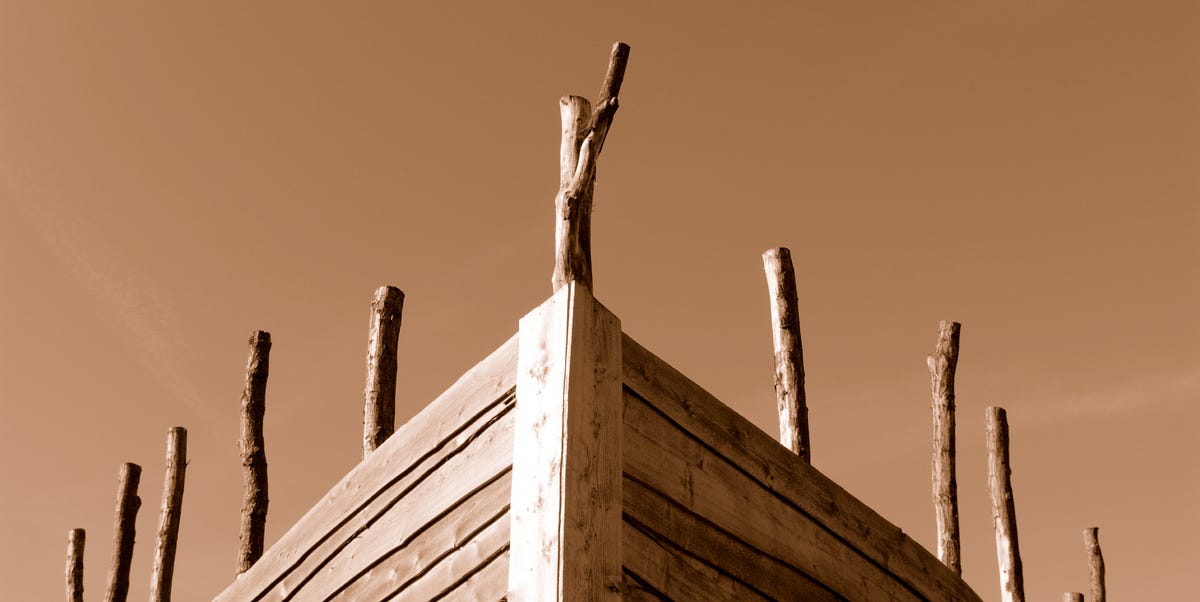

Every few years, the internet grabs a megaphone, climbs the nearest mountain, and announces that Noah’s Ark has finally been found. Again. This time, the spotlight is back on the Durupinar formation in eastern Turkey, a boat-shaped site near Mount Ararat that has attracted explorers, researchers, believers, skeptics, television crews, and more than a few headline writers with dramatic eyebrows.
So, did archaeologists find the real Noah’s Ark? The honest answer is more complicated than a viral headline. There is intriguing evidence around the site: unusual radar scans, soil chemistry differences, reported traces of ancient human activity, and a shape that looks suspiciously ark-like from above. But there is also strong scientific caution. Many geologists argue the Durupinar formation is a natural rock and mudflow structure, not the fossilized remains of a giant wooden vessel.
That makes the Noah’s Ark discovery debate fascinating. It sits right at the intersection of archaeology, geology, faith, ancient literature, tourism, and public imagination. It also reminds us of an important rule: a shape that looks like a boat is not automatically a boat. Otherwise, half the clouds in the sky would need maritime registration.
Why Mount Ararat Became the Center of the Noah’s Ark Search
The biblical Book of Genesis says the ark came to rest “on the mountains of Ararat.” That phrase does not necessarily mean the modern summit called Mount Ararat, but over centuries, the high volcanic massif in eastern Turkey became closely associated with the story. Today, Mount Ararat rises near the borders of Turkey, Armenia, and Iran, creating a dramatic setting that practically begs for mystery.
The area is rugged, remote, politically sensitive at times, and visually cinematic. Snow, volcanic slopes, high valleys, and legends make it an irresistible setting for ark hunters. For more than a century, explorers have reported sightings, fragments of wood, strange shadows, and mysterious shapes. Most claims either disappeared under scrutiny or turned out to be natural formations, misinterpretations, or unverified stories.
The most famous modern candidate is not on the summit itself. It is the Durupinar formation, located near Dogubayazit in Turkey’s Ağrı Province. Its long, curved outline resembles a ship’s hull from the air, and its length is often compared with the biblical ark’s dimensions. That visual similarity is the main reason the site keeps returning to public attention.
What Is the Durupinar Formation?
The Durupinar formation is a large, boat-shaped geological feature made largely of rock and hardened earth materials. It was identified in the mid-20th century and later promoted by several explorers as a possible ark site. Its estimated length is often reported at around 500-plus feet, close enough to some interpretations of the biblical cubit measurement to make ark enthusiasts lean forward in their chairs.
Supporters argue that the site’s shape, dimensions, internal patterns, and surrounding artifacts deserve serious investigation. Critics respond that the region contains other streamlined geological forms shaped by erosion, mudflows, volcanic activity, and sedimentary processes. In other words, nature is very good at making things that look designed. Ask anyone who has seen a face in a rock wall or a potato shaped like a celebrity.
The Evidence Supporters Point To
1. The Boat-Like Shape
The most obvious piece of evidence is the formation’s appearance. From above, it looks like a long, narrow outline with a tapered end, which has encouraged comparisons to a ship or buried hull. This is the kind of evidence that catches public attention immediately because people process shapes quickly. A photograph can persuade before the science even enters the room.
However, shape alone is weak evidence in archaeology. A real identification would require material proof: preserved wood, construction features, datable artifacts directly connected to the structure, tool marks, joinery, or other signs that humans built it. Without that, a boat-shaped landform remains just that: a landform that looks like a boat.
2. Ground-Penetrating Radar Claims
Recent claims have focused on ground-penetrating radar, often called GPR. This technology sends signals into the ground and records reflections from buried layers or objects. Supporters say scans at the Durupinar site show angular shapes, corridor-like patterns, layers, and possible internal divisions that may resemble a man-made structure.
That sounds exciting, and it is worth studying. But GPR is not an underground camera. It does not produce a crisp image labeled “ancient ark, please excavate here.” It produces data that specialists interpret. Different soil types, rock layers, moisture, mineral deposits, cracks, and natural bedding can create patterns that look organized. For the evidence to become stronger, researchers would need careful excavation, core samples, independent testing, peer-reviewed analysis, and repeatable results.
3. Soil Chemistry and Organic Matter
Some researchers have reported differences between soil samples taken inside and outside the Durupinar formation. These reports include claims of higher organic matter, different potassium levels, and other chemical variations that supporters interpret as possible traces of decayed wood or ancient human activity.
This is one of the more interesting areas of research, but it still does not prove the site is Noah’s Ark. Soil chemistry can vary for many reasons, including vegetation, water movement, minerals, animal activity, ancient settlement nearby, and modern contamination. To move from “unusual soil” to “giant biblical vessel,” the evidence has to pass a much higher bar.
4. Reported Pottery and Human Activity Nearby
Recent reporting has also highlighted ceramic fragments found near the broader area. Pottery can be meaningful because it may indicate human activity, settlement, travel, or ritual use. If ancient people lived near or visited the Durupinar site, that would make the area archaeologically interesting.
But pottery near a formation does not prove the formation is a ship. People have lived, migrated, traded, worshipped, and traveled across Anatolia for thousands of years. Finding ancient human traces in the region would be important, but it would not automatically connect those traces to Noah’s Ark.
Why Many Experts Remain Skeptical
Mainstream archaeology has not accepted the Durupinar formation as Noah’s Ark. The biggest reason is simple: there is no confirmed physical ark material. No verified ancient ship timbers have been excavated from the formation. No clear construction remains have been accepted by the wider scientific community. No peer-reviewed archaeological consensus supports the claim.
Geological studies have argued that the site is a natural formation. Some researchers have described supposed “metal brackets” as natural mineral concentrations and supposed fossilized wood as rock. The surrounding landscape also includes processes capable of producing streamlined shapes. Mudflows and erosion can form outlines that look surprisingly artificial, especially when people are already looking for a specific object.
This is where expectation matters. When people search for the ark, they may naturally interpret ambiguous evidence in ark-shaped ways. That does not mean they are dishonest. It means humans are pattern-seeking creatures. We see stories in stars, faces in toast, and occasionally, ships in mountains.
Noah’s Ark and Ancient Flood Stories
The Noah’s Ark story is not alone in the ancient world. Mesopotamian flood narratives, including the Epic of Gilgamesh and the story of Atrahasis, contain striking parallels: a great flood, a chosen survivor, a large vessel, animals, divine warning, and survival after catastrophe. These older flood traditions are important because they show that flood memory was deeply rooted in the cultures of the ancient Near East.
Some scholars suggest that the biblical flood story may have been shaped by older Mesopotamian traditions. Others believe the similarities reflect a shared memory of ancient regional floods. Large floods did happen in Mesopotamia, where rivers like the Tigris and Euphrates could transform life overnight. A devastating regional flood could easily become the kind of story grandparents repeated until it became part of civilization’s spiritual DNA.
This does not prove or disprove Noah’s Ark as a physical object. But it helps explain why flood stories matter so much. They are not just tales about water. They are stories about judgment, survival, renewal, human weakness, divine mercy, and the terrifying power of nature.
What Would Count as Real Proof?
For archaeologists, proof requires more than a dramatic outline and a good documentary soundtrack. To identify the real Noah’s Ark, researchers would need several kinds of evidence working together.
Verified Ancient Wood
Finding preserved wood would be major, especially if it showed signs of human shaping, joinery, pitch coating, or shipbuilding techniques. The wood would need reliable dating, secure excavation context, and independent testing by multiple laboratories.
Clear Structural Features
Archaeologists would look for patterns that cannot easily be explained by geology: repeated beams, planks, fasteners, compartments, tool marks, or engineered construction. The structure would need to make sense as a built object, not just as a suggestive radar image.
Peer-Reviewed Publication
Extraordinary claims need public, testable evidence. A discovery of this scale would require detailed peer-reviewed studies, transparent methods, open data, and critique from experts in archaeology, geology, ancient shipbuilding, and Near Eastern history.
Context That Fits the Ancient World
The site would also need to fit what is known about ancient environments, settlement, materials, and chronology. A single exciting sample would not be enough. The full context would have to hold together.
Why the Headlines Keep Coming Back
Noah’s Ark headlines work because they combine mystery, faith, science, and adventure. A possible ark discovery feels like Indiana Jones wandered into Sunday school and brought a radar scanner. It is easy to understand why people click.
The story also touches something deeper. Many readers want the past to be tangible. They want ancient texts to have footprints, fingerprints, wood grain, and GPS coordinates. Archaeology often does provide that thrill. It has confirmed cities, inscriptions, battles, trade routes, and everyday lives once known only from texts. But archaeology is also careful. It moves slowly, asks annoying questions, and refuses to call every interesting rock a miracle with a zip code.
So, Did Archaeologists Find the Real Noah’s Ark?
Based on the evidence currently available, the best answer is: not conclusively. The Durupinar formation remains an intriguing and controversial site, but it has not been proven to be Noah’s Ark. Recent radar scans, soil findings, and nearby pottery claims deserve careful investigation, yet they do not settle the question.
The strongest case for the site is circumstantial: its shape, size, location within a region associated with Ararat traditions, and unusual subsurface or soil features reported by supporters. The strongest case against it is geological: natural processes can explain the formation, and no confirmed ark material has been accepted by mainstream archaeology.
That does not make the story worthless. Quite the opposite. The search for Noah’s Ark reveals how humans connect faith and evidence, how legends attach themselves to landscapes, and how archaeology must balance curiosity with discipline. The mystery is not solved, but it is still worth discussing with clear eyes and maybe a sturdy pair of hiking boots.
Experience Section: Visiting the Noah’s Ark Mystery With an Open Mind
Imagine standing in eastern Turkey, where the air feels sharper, the mountains look ancient enough to remember secrets, and every ridge seems to have a story folded into it. For travelers drawn to biblical history, the region around Mount Ararat is more than scenery. It is a place where geography and imagination shake hands.
Visitors who come looking for the Durupinar formation often describe a strange emotional mix: excitement, doubt, reverence, and curiosity. The site does not need flashing lights to feel dramatic. Its outline alone is enough to make people pause. From certain angles, the shape looks so deliberate that even skeptics may understand why the claim gained attention. You do not have to believe it is the ark to understand why others want it to be.
The best experience begins with realistic expectations. This is not a museum display with a label reading, “Noah parked here.” It is a debated geological and archaeological site in a landscape layered with history. That means the most rewarding visit is not about snapping one photo and declaring the mystery solved. It is about asking better questions: What does the land actually show? What have researchers claimed? What do geologists see? How do ancient stories shape modern tourism? Why are humans so eager to find physical proof of sacred narratives?
For history lovers, the broader region offers a powerful lesson in how cultures preserve memory. Flood stories appear across the ancient Near East because water was both life and danger. Rivers fed crops, carried trade, and sometimes destroyed entire communities. A catastrophic flood in an ancient farming world was not just bad weather. It was the kind of event that could rearrange a society’s memory for generations.
For faith-based travelers, the site can be meaningful even without a final scientific verdict. Many people visit not because they expect to touch ancient timber, but because the landscape helps them reflect on endurance, judgment, mercy, and renewal. The ark story has survived because it speaks to human vulnerability. Everyone knows what it feels like to face a storm, literal or otherwise, and hope there is a way through.
For skeptics, the experience can be equally valuable. Durupinar is a case study in how evidence should be tested. It teaches the difference between possibility and proof, between pattern and construction, between a headline and a conclusion. It also shows why science is not the enemy of wonder. Careful investigation does not make the world less interesting. It makes the mystery more honest.
The most memorable way to approach the Noah’s Ark question is with humility. Let the believers bring their hope, let the scientists bring their instruments, let the geologists bring their maps, and let everyone bring water and comfortable shoes. The site may never produce the proof some people want. But it continues to invite one of humanity’s oldest habits: looking at the earth beneath our feet and wondering what stories it still holds.
Conclusion
The claim that archaeologists found the real Noah’s Ark remains unproven. The Durupinar formation is fascinating, visually compelling, and worthy of continued study, especially as new radar, soil, and regional archaeological data become available. However, current evidence does not meet the standard required to confirm the discovery of a massive ancient vessel. For now, Noah’s Ark remains one of history’s most powerful mysteries: part sacred story, part archaeological puzzle, part geological debate, and part reminder that humans love a good “what if.”
Maybe one day researchers will uncover definitive evidence. Until then, the smartest position is curiosity without overclaiming. The Durupinar site may be a natural formation, an ancient landmark, a place of human activity, or something still not fully understood. What it is notat least not yetis a confirmed discovery of Noah’s Ark.