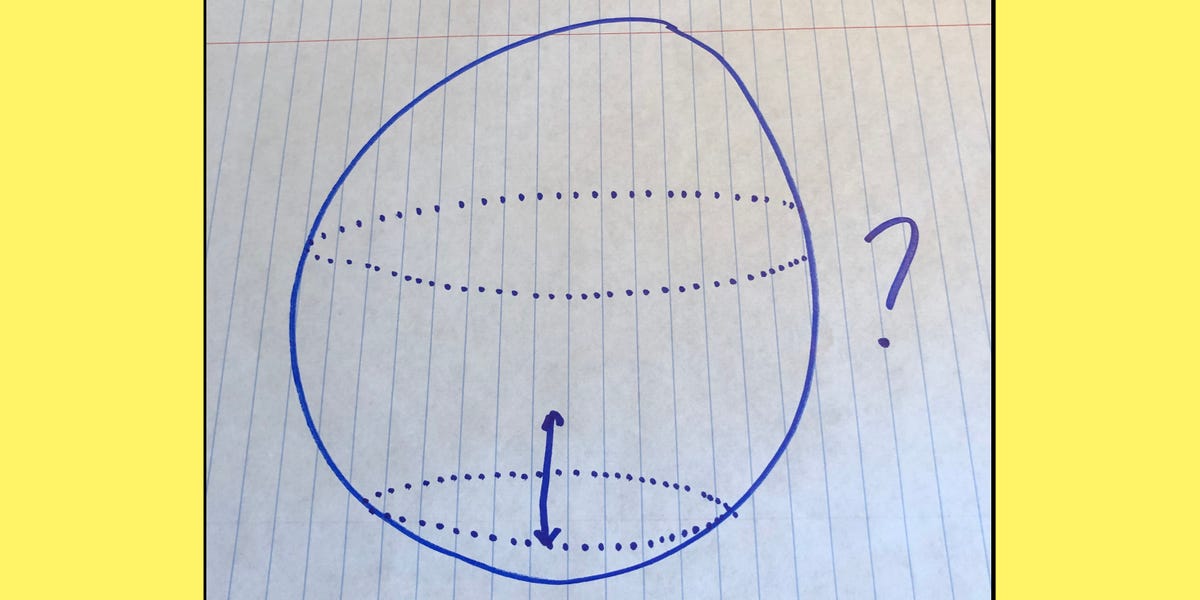

Some job interview questions ask where you see yourself in five years. Others ask whether you can “work well under pressure,” which usually means “Can you answer emails while your coffee is getting cold?” Then there is the famous Elon Musk job interview riddle: you walk one mile south, one mile west, and one mile north, and somehow end up exactly where you started.
At first glance, the one mile riddle sounds like a neat little geography trick. But the more you examine it, the more it becomes a lesson in assumptions, precision, and creative problem-solving. That is why the puzzle has lived such a long life in tech circles, math blogs, hiring discussions, and dinner tables where one person says, “I have a quick riddle,” and everyone else quietly prepares to suffer.
The popular version is often connected to Elon Musk and SpaceX interviews, especially through stories about how he liked to test whether candidates could reason beyond the obvious. Whether you are preparing for an interview, sharpening your critical thinking, or simply trying to win your next group chat argument, this guide breaks down the riddle step by step.
What Is the Elon Musk One Mile Riddle?
The riddle is usually phrased like this:
You are standing on the surface of the Earth. You walk one mile south, one mile west, and one mile north. You end up exactly where you started. Where are you?
The most common answer is the North Pole. That answer is correct, but it is not the complete answer. The real charm of the puzzle is that it rewards people who keep thinking after the “obvious” solution appears. In a job interview, that matters. The first answer proves you can recognize a familiar pattern. The second answer proves you can question the pattern.
That is where this brain teaser becomes more than a party trick. It tests spatial reasoning, comfort with ambiguity, and the ability to revise a solution when new possibilities appear. In other words, it checks whether your brain can do more than politely nod while your résumé does all the talking.
The Quick Answer
There are two main categories of correct answers:
1. The North Pole
If you start at the North Pole, walking one mile south takes you away from the pole. Then walking one mile west moves you along a circle of latitude. Finally, walking one mile north brings you right back to the North Pole. Congratulations: you have walked a tiny triangle on a giant planet and confused everyone at brunch.
2. Points Near the South Pole
There are also infinitely many starting points near the South Pole. These are points located one mile north of certain tiny circles of latitude around the South Pole. If walking one mile west around one of those circles returns you to the same point, then walking one mile north brings you back to where you began.
This second category is the twist. It is also the part that separates a good answer from a great answer.
How to Solve the North Pole Answer
Let’s begin with the friendly version, the one that does not require you to invite geometry to lunch.
Imagine standing directly on the North Pole. Every direction away from you is south. That sounds strange because most of us are used to maps, sidewalks, and GPS voices saying “turn right” with unjustified confidence. But at the North Pole, there is no farther north to go. South is everywhere around you.
Now follow the instructions:
Step 1: Walk One Mile South
You move from the North Pole to a point one mile away. You are now on a small circle of latitude around the pole.
Step 2: Walk One Mile West
You travel along that circle. You do not move closer to or farther from the North Pole. You simply move around it.
Step 3: Walk One Mile North
You return to the North Pole. Since you started there, you end exactly where you began.
This answer works beautifully because of how directions behave on a sphere. On a flat parking lot, the route would not close. On Earth, especially at the poles, direction gets weird in the most mathematically satisfying way.
Why the North Pole Answer Is Not Enough
Many people stop at the North Pole because it feels complete. It has the satisfying click of a puzzle solved. But the riddle asks, “Where are you?” It does not say there is only one possible place. That tiny difference is where the whole game changes.
The deeper solution asks a sharper question: Are there any other places on Earth where walking one mile west could bring you back to the exact same point?
The answer is yes, and they are hiding near the South Pole.
The South Pole Solution Explained Simply
Near the South Pole, circles of latitude become extremely small. If you stand close enough to the pole, you can walk around an entire line of latitude in a short distance. That is the key.
Suppose there is a tiny circle around the South Pole with a circumference of exactly one mile. If you walk one mile west along that circle, you complete one full loop and return to the same spot on the circle.
Now imagine starting one mile north of that tiny circle. Here is what happens:
Step 1: Walk One Mile South
You arrive on the tiny latitude circle whose circumference is exactly one mile.
Step 2: Walk One Mile West
You walk all the way around the circle and return to the same point on that circle.
Step 3: Walk One Mile North
You retrace your first step and end exactly where you started.
That is a complete solution. But there is more. If the circle’s circumference is half a mile, walking one mile west takes you around it twice. If the circumference is one-third of a mile, you loop around three times. If it is one-fourth of a mile, you loop around four times. You can keep going.
That means there are infinitely many rings of possible starting points near the South Pole. Each ring corresponds to a tiny circle of latitude whose circumference divides evenly into one mile.
The Math Without the Migraine
Do not worry. We are not about to throw a chalkboard at you.
The basic idea is this: the circumference of a circle is found with the formula:
If the tiny latitude circle near the South Pole has a circumference of one mile, then its radius is:
That is about 0.159 miles. So one simple South Pole solution is roughly 1.159 miles north of the South Pole. You walk one mile south to the one-mile circumference circle, walk one mile west around it, then walk one mile north back to the start.
For smaller circles, the pattern is:
In that formula, n can be 1, 2, 3, 4, and so on. If the circle’s circumference is 1/2 mile, you walk around twice. If it is 1/10 mile, you walk around ten times. The planet does not complain. It has been through worse.
On a real Earth, things are messier because Earth is not a perfect sphere. It is slightly flattened at the poles, and real-world terrain includes ice, slopes, and inconvenient things like weather. But brain teasers usually assume a smooth spherical Earth, because “assume ideal conditions” is how math politely asks reality to wait outside.
Why Interviewers Like Riddles Like This
The Elon Musk interview riddle is not just about geography. It is about how a candidate thinks. A good candidate may answer “the North Pole.” A stronger candidate may add, “There are also infinitely many points near the South Pole.” An exceptional candidate may explain the reasoning clearly enough that everyone in the room feels slightly smarter instead of personally attacked by geometry.
In interviews, the best problem-solvers tend to do three things:
They Clarify the Problem
They do not rush blindly into an answer. They check the wording, identify constraints, and ask what is being assumed. Is Earth a sphere? Are we walking along the surface? Does “west” mean along a line of latitude? These questions matter.
They Find the Obvious Answer
The North Pole answer is not wrong. It is the natural first solution. Finding it quickly shows pattern recognition and spatial awareness.
They Keep Looking
The strongest thinkers do not stop just because the first answer works. They ask, “What else could be true?” That habit is useful in engineering, programming, business, science, and basically any job where “good enough” has ever caused a meeting at 4:55 p.m.
Common Mistakes People Make
Mistake 1: Treating Earth Like a Flat Map
If you imagine the route on a flat grid, the riddle seems impossible. One mile south, one mile west, and one mile north would leave you one mile west of where you started. But Earth is curved, and the poles change everything.
Mistake 2: Thinking There Is Only One Answer
The North Pole is correct, but it is not exclusive. The riddle is designed to reward broader thinking.
Mistake 3: Forgetting About Tiny Latitude Circles
The South Pole solution depends on the fact that circles of latitude shrink as they approach the pole. If a circle is small enough, walking one mile west can loop around it once or many times.
Mistake 4: Overcomplicating the First Step
You do not need advanced calculus. You only need to understand that a one-mile westward walk can be a complete loop if the circle’s circumference is one mile or a fraction of one mile.
How to Answer This Riddle in a Job Interview
If an interviewer asks this puzzle, do not panic. The goal is not to prove that you were raised by mathematicians in a snow globe. The goal is to show your reasoning.
A strong answer could sound like this:
One answer is the North Pole. If I start there, walking south takes me away from the pole, walking west moves me along a latitude circle, and walking north returns me to the pole. But there are also solutions near the South Pole. If I start one mile north of a tiny latitude circle whose circumference is one mile, then walking west one mile takes me around the circle and back to the same point before I walk north to my start. The same idea works for circles with circumferences of 1/2 mile, 1/3 mile, and so on.
That response does three useful things. It gives the common answer, expands the solution, and explains the logic without sounding like you swallowed a textbook.
What This Riddle Teaches About Problem-Solving
The one mile riddle is memorable because it exposes a hidden assumption: most people picture a flat surface. Once you switch to a spherical model, the impossible becomes possible. That is a powerful lesson.
Many real problems work the same way. A product fails because a team assumes customers understand the interface. A marketing campaign underperforms because someone assumes traffic equals trust. A software bug survives because everyone assumes the input data is clean. The solution often begins when someone says, “Waitwhat are we assuming?”
That is why this riddle remains useful even if brain teasers are no longer the gold standard for hiring. It is less valuable as a test of talent and more valuable as a demonstration of thinking. It encourages candidates to slow down, map the problem, test edge cases, and communicate clearly.
Should Companies Use Brain Teasers in Interviews?
Brain teasers can be fun, but they should not be the entire interview process. A puzzle like this can reveal how someone approaches uncertainty, but it does not prove they can design a rocket engine, write clean code, manage a team, or survive the office printer.
Modern hiring tends to favor structured interviews, work samples, and job-related assessments because they connect more directly to actual performance. A riddle may be a useful warm-up, but it should not replace practical evaluation.
Still, as a learning tool, the Elon Musk one mile riddle is excellent. It is short, surprising, and easy to explain once the insight clicks. It also teaches a lesson every ambitious professional can use: the first correct answer is not always the best final answer.
Conclusion
The Elon Musk job interview riddle looks simple: walk one mile south, one mile west, and one mile north, then return to where you started. The obvious solution is the North Pole, and it works perfectly. But the richer answer includes infinitely many starting points near the South Pole, where tiny circles of latitude allow a one-mile westward walk to loop back to the same spot.
That twist is the heart of the puzzle. It reminds us that great problem-solving is not just about being fast. It is about being flexible. It is about noticing assumptions, exploring edge cases, and explaining complex ideas in plain language. In an interview, that kind of thinking is more impressive than simply blurting out “North Pole” and smiling like you just hacked NASA.
So the next time someone asks you the one mile riddle, you can give the classic answer, then add the South Pole twist. Just be gentle. Nobody likes being defeated by latitude before lunch.
Experiences and Practical Lessons from the One Mile Riddle
The best experience connected to the Elon Musk one mile riddle is not just solving it; it is watching how people solve it. In classrooms, offices, interviews, and casual conversations, this puzzle creates a tiny laboratory for human thinking. Some people answer instantly. Some sketch a map. Some argue with the wording. Some say, “This is impossible,” which is often the first step toward discovering that it is not.
One useful lesson is that confidence and correctness are not the same thing. A person may confidently declare the North Pole and be right, but incomplete. Another person may hesitate, ask questions, and eventually produce the fuller South Pole explanation. In real work, that second style is often more valuable. Complex problems rarely reward the person who grabs the first shiny answer and runs away with it like a raccoon stealing car keys.
The riddle also teaches the value of drawing. Many people struggle until they sketch Earth as a sphere and mark the poles. A simple diagram turns a confusing verbal puzzle into a visible route. This applies far beyond riddles. Engineers draw systems. Writers outline articles. Designers build wireframes. Entrepreneurs map customer journeys. When a problem feels foggy, put it on paper. The fog may not disappear completely, but at least it has to stand still.
Another experience is learning how to explain an answer without sounding smug. This matters in interviews. If you solve the riddle but cannot explain it clearly, the interviewer may see cleverness without communication. If you explain the North Pole answer first, then carefully introduce the South Pole family of solutions, you show both insight and empathy. You are not just solving the puzzle; you are bringing someone along for the walk.
The riddle is also a reminder that edge cases matter. The South Pole answer is basically an edge case hiding in a snow jacket. In software, edge cases break programs. In business, edge cases reveal overlooked customers. In science, edge cases challenge theories. The habit of asking “Where else could this work?” is a professional superpower.
Finally, the one mile riddle shows why curiosity beats memorization. Anyone can memorize “North Pole.” But understanding why the South Pole solutions work gives you a reusable thinking pattern. You learn to inspect assumptions, test limits, and look for unusual conditions. That is the real interview lesson. The riddle is not asking whether you know geography. It is asking whether your mind keeps exploring after the easy answer has already arrived.