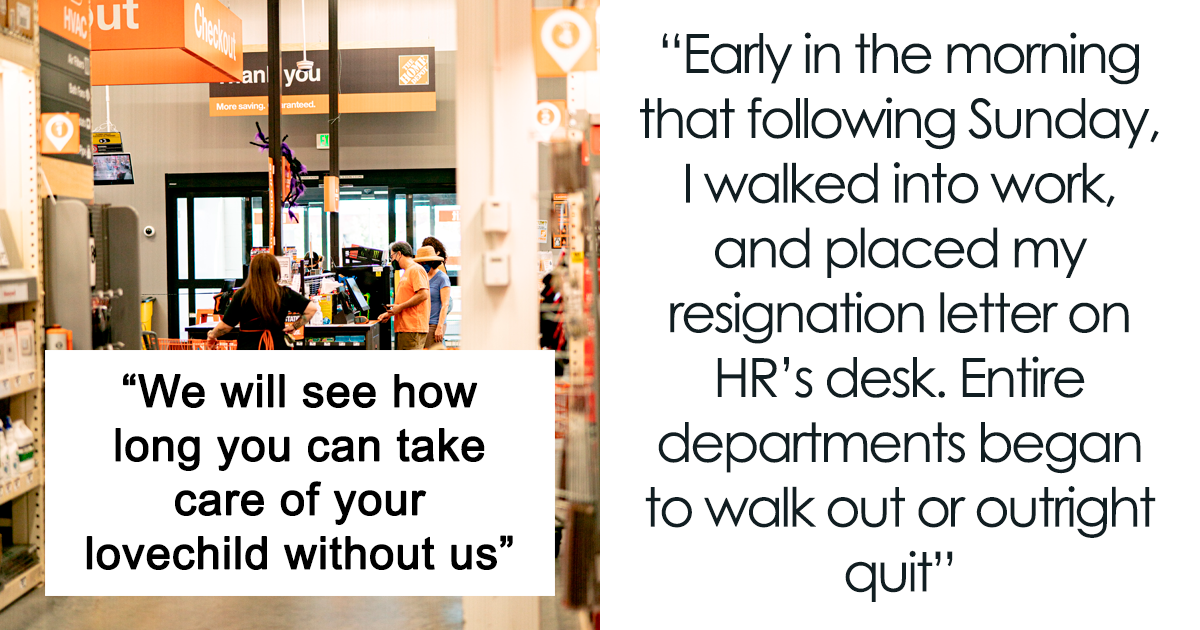
Employee Quits, Gets A Text From Manager Saying “We Will See How Long You Can Take Care Of Your Lovechild Without Us”, Drama Ensues

Some workplace stories begin with a resignation letter. Others begin with a manager choosing chaos, pressing “send,” and accidentally handing an ex-employee the corporate equivalent of a golden ticket. This viral workplace drama falls firmly into the second category.
The story centers on an employee who finally quit after dealing with a difficult management situation, only to receive a stunning text from a manager: “We will see how long you can take care of your lovechild without us.” The phrase was cruel, personal, and wildly unprofessional. It also turned a private resignation into a public workplace meltdown, complete with evidence, rumors, angry coworkers, and what reportedly became a wave of staff departures.
At first glance, the story reads like internet drama with popcorn included. But beneath the spicy headline is a serious workplace lesson: toxic managers do not just annoy employees; they can damage morale, trigger turnover, expose companies to legal risk, and turn one resignation into a full-blown organizational fire drill.
The Viral Story: When One Manager Text Became the Final Spark
According to the widely shared account, the employee had been helping care for a child connected to close friends. Coworkers apparently knew about this caregiving role, but management allegedly twisted it into gossip. The “lovechild” insult was not just a random jab; it appeared to lean into a rumor about the employee’s personal life and caregiving responsibilities.
That is where the situation went from “bad boss being bad” to “someone please unplug the manager from the power outlet.” Personal attacks after resignation are never a smart leadership strategy. If a worker has already quit, the professional response is simple: accept the resignation, confirm final pay and benefits information, collect company property if needed, and move on. No dramatic monologue required.
Instead, the manager allegedly sent a text that became evidence. The employee reportedly collected messages, call logs, and other documentation. Later, when management allegedly claimed the employee had been fired rather than having quit, HR records showed otherwise. From there, coworkers reportedly learned more about the situation, and several staff members in different departments walked out or resigned in protest.
In short, the manager tried to make one person feel powerless. The result was the opposite: the employee gained documentation, coworkers gained context, and the employer gained a staffing crisis with a side dish of reputational embarrassment.
Why the Text Was Such a Big Workplace Mistake
A manager’s words carry weight. A rude text from a friend might ruin brunch. A rude text from a supervisor can become evidence in an internal investigation, a legal complaint, or a public relations mess. When the message references a worker’s family situation, caregiving duties, or personal relationships, the risk grows even larger.
In the United States, not every rude comment is automatically illegal. A boss can be unpleasant without necessarily violating employment law. That is unfortunate, but true. However, workplace harassment, discrimination, retaliation, and interference with protected rights can become legal issues depending on the facts. When management behavior touches protected categories such as sex, pregnancy, religion, disability, national origin, or protected activity, employers should take it seriously immediately.
The “lovechild” comment is especially ugly because it mixes personal rumor, family shame, and economic threat. The message essentially suggested that the employee would not be able to care for the child without the employer. That is not leadership. That is a villain line accidentally typed into a company-related conversation.
Caregiving, Family Responsibilities, and Workplace Bias
Caregiving is a normal part of adult life. Employees care for children, parents, spouses, siblings, grandparents, friends, and sometimes people who are not legally related but are still deeply important to them. Modern workplaces cannot pretend that workers live in storage lockers between shifts.
U.S. workplace rules do not create a universal protected category called “caregiver” in every situation. Still, caregiver discrimination can overlap with protected traits. For example, treating a father worse because management believes men should not be responsible for childcare can raise sex-stereotyping concerns. Treating a worker differently because of pregnancy, disability-related caregiving assumptions, or religious clothing can raise other legal concerns.
The larger management lesson is simple: do not weaponize someone’s family life. If scheduling is a problem, discuss scheduling. If overtime coverage is a problem, discuss staffing. If attendance policies apply, apply them consistently. But turning someone’s caregiving role into gossip is like trying to fix a leak with a flamethrower: dramatic, memorable, and absolutely not recommended.
Rumors Are Not a Management Tool
Workplace rumors are often dismissed as “just gossip,” but gossip can become a real business problem. Rumors damage trust, isolate employees, and create a culture where people spend more time decoding drama than doing their jobs. When managers participate in rumors, the damage is worse because employees assume leadership either approves of the behavior or lacks the courage to stop it.
In this story, the rumor allegedly involved whether the child was secretly the employee’s own. That kind of personal speculation has no legitimate business purpose. It does not improve scheduling, customer service, safety, productivity, or morale. It only humiliates people.
Good managers shut down rumors with boring professionalism. They say things like, “That is personal and not appropriate for work,” or “Let’s focus on the schedule.” Boring professionalism may not go viral, but it also does not cause half the store to consider quitting before lunch.
Why Coworkers Sometimes Walk Out Together
One of the most dramatic parts of the story is the reported mass resignation or walkout. To outsiders, this can look sudden. Inside a workplace, it usually is not sudden at all. It is often the final domino after months of frustration.
Workers rarely leave only because of one sentence. They leave because that sentence confirms what they already suspected: leadership does not respect them. When several employees quit around the same time, management may call it disloyalty. Employees may call it Tuesday, if the culture has been bad long enough.
There is also a social element. When one employee leaves and explains why, coworkers compare notes. Someone says, “That happened to you too?” Another says, “Wait, I thought I was the only one.” Suddenly, the problem stops looking like an individual conflict and starts looking like a pattern.
That is why toxic management is expensive. It does not merely lose one worker. It can loosen the emotional glue holding an entire team together.
The Role of HR: Paper Trails Beat Rumor Trails
In the viral account, documentation mattered. The employee had a resignation letter. The text existed. Other workers apparently had their own experiences. When the manager allegedly claimed the worker had been fired, HR records helped contradict that version.
This is one reason employees should document serious workplace problems. Documentation does not have to be dramatic. It can be a simple timeline with dates, times, names, screenshots, policy references, and short descriptions of what happened. The goal is not to write a courtroom thriller. The goal is to preserve facts before memory gets fuzzy and everyone suddenly becomes allergic to accountability.
For employers, the lesson is equally direct: HR should not function as a decorative plant in the corner. When employees report harassment, threats, discrimination, retaliation, or policy violations, HR needs a clear process, consistent documentation, and enough independence to investigate fairly. If HR only appears after the building is metaphorically on fire, the sprinkler system has failed.
Retaliation: The Workplace Word Managers Should Understand Before They Text
Retaliation generally means punishing a worker for engaging in protected activity, such as reporting discrimination or harassment, participating in an investigation, requesting certain accommodations, or exercising legal workplace rights. Not every conflict after a complaint is unlawful retaliation, but threats, abuse, schedule punishment, reduced hours, or false rumors can become serious warning signs depending on the context.
In this story, the employee had already quit, so the facts would matter. Still, the manager’s text shows a classic problem: emotional punishment after an employee does something leadership dislikes. Whether or not a particular incident meets a legal standard, it is terrible management. A supervisor who cannot handle a resignation without insulting the employee should not be trusted with employee morale, scheduling power, or the group chat.
Managers should be trained to pause before reacting. Resignations can be stressful, especially in understaffed workplaces, but stress is not permission to threaten someone’s livelihood or mock their family responsibilities. A professional manager may feel annoyed. A professional manager does not put the annoyance into writing and gift-wrap it for an investigation.
What Employees Can Learn From This Drama
The first lesson is to keep records. Save important messages, resignation notices, schedules, policy documents, and emails. If something inappropriate happens verbally, write down what happened as soon as possible, including who was present. Documentation is not about being dramatic; it is about being accurate.
The second lesson is to know the difference between a bad boss and a potentially unlawful situation. A manager being rude, unfair, or unpleasant may violate company policy without violating the law. But comments tied to protected characteristics, protected complaints, medical leave, pregnancy, disability, religion, national origin, or other legally protected areas may require a more formal response.
The third lesson is to avoid responding with equal heat. It is tempting to fire back with the perfect insult. Do not. The best reply to an unprofessional manager is often calm, brief, and documentable. Something like, “Your message is inappropriate. Please direct any further communication about my resignation to HR,” is much better than a 900-word rage essay typed with both thumbs and pure adrenaline.
What Employers Should Learn Before Their Best Workers Leave
Employers should treat resignations as data. When one employee leaves, ask why. When several employees leave, stop pretending the coffee machine is the problem. Exit interviews, stay interviews, anonymous reporting channels, and manager training can all help identify issues before the workplace becomes a case study in “How Not to Lead Humans.”
Companies should also train managers on respectful communication. This includes texts, emails, messaging apps, and after-hours conversations. Many managers understand that official letters matter, but forget that a text can be just as damaging. If it is written down, assume it can be screenshotted. If it can be screenshotted, assume HR, legal, coworkers, and the internet may one day read it while silently judging your punctuation.
Most importantly, employers should create a culture where employees can raise concerns without fear. A workplace that punishes honesty teaches employees to stay silent until they quit. By then, it is usually too late.
Why This Story Resonates Online
This story went viral because it hits a nerve. Many people have worked under a manager who confused authority with superiority. Many have watched a boss act untouchable until documentation, witnesses, or mass turnover finally changed the power dynamic. The appeal of the story is not just revenge. It is recognition.
People enjoy seeing a toxic manager face consequences because real life often does not deliver neat endings. In many workplaces, the loudest manager survives while the quietest employees leave. A story where the employee quits, the manager’s own words backfire, and coworkers refuse to ignore the behavior feels satisfying because it reverses the usual script.
But the deeper takeaway is not “revenge is fun,” even though the internet certainly brought snacks. The takeaway is that dignity at work matters. People can tolerate busy shifts, imperfect schedules, and demanding customers. What they cannot tolerate forever is being mocked, threatened, or treated like their personal lives are office entertainment.
Practical Experiences and Lessons From Similar Workplace Situations
In many real workplaces, the most damaging moment is not the first bad comment. It is the moment employees realize leadership will not fix it. A cashier hears a supervisor make personal remarks. A warehouse employee gets pressured to skip family responsibilities for overtime. A receptionist reports a rumor and is told to “not be sensitive.” Each event may seem small to management, but employees collect these moments like receipts.
One common experience is the “final straw resignation.” The employee may have tolerated months of poor scheduling, rude comments, ignored complaints, and emotional exhaustion. Then one message arrives, one meeting goes badly, or one manager says the quiet part out loud. Suddenly, the employee is done. From the outside, leadership says, “They quit over one text.” From the inside, the employee knows they quit over the whole pattern.
Another common experience is the coworker chain reaction. When one person leaves and explains the reason clearly, others begin reevaluating their own situation. A team may have been holding together because everyone thought their experience was isolated. Once they discover the same manager has mistreated several people, loyalty shifts away from the company and toward each other. That is when a workplace can lose multiple employees faster than management can schedule an emergency meeting with stale donuts.
A third lesson involves documentation. Employees who save messages, write down timelines, and keep copies of resignation letters often have a stronger position when facts are disputed. Documentation helps separate “I felt targeted” from “On this date, this manager wrote this message after I submitted this resignation.” Specific facts matter. They help HR investigate, help attorneys evaluate claims, and help employees explain what happened without relying only on memory.
There is also an emotional lesson: leaving a toxic workplace can feel both freeing and frightening. Workers may worry about money, references, health insurance, or whether future employers will understand the gap. That fear is exactly why cruel managers sometimes make threats about survival after resignation. The best protection is preparation: build a savings cushion when possible, keep professional connections outside the company, update your resume before you urgently need it, and avoid letting one employer become your entire safety net.
For managers, similar stories should be required reading. A supervisor’s job is not to win personal battles. It is to keep the workplace functional, fair, and legally safer. When managers gossip, threaten, or mock employees, they teach the team that leadership cannot be trusted. Once trust is gone, even higher pay may not fully repair the damage.
The healthiest workplaces handle conflict early. They investigate complaints, coach managers, enforce policies consistently, and treat caregiving responsibilities with basic human respect. No workplace is perfect, but employees can usually tell the difference between a company that makes mistakes and a company that protects the people making them.
That is why this viral “employee quits” story continues to spread. It is dramatic, yes, but it also feels familiar. It reminds workers to document, reminds managers to think before texting, and reminds employers that culture is not what appears on a poster in the break room. Culture is what happens when someone with power is irritated and thinks nobody will hold them accountable.
Conclusion
The story of the employee who quit and received the “lovechild” text is more than workplace gossip with a dramatic soundtrack. It is a cautionary tale about toxic management, poor communication, careless retaliation, and the high cost of disrespect. A single message can expose a pattern. A single resignation can inspire others to speak up. A single manager can turn a staffing problem into a company-wide crisis.
For employees, the best takeaway is to protect yourself with documentation, professionalism, and support. For employers, the message is even simpler: train your managers before their thumbs start typing lawsuits into existence.
Note: This article is for general informational and workplace culture discussion purposes only. It is not legal advice. Employees facing harassment, discrimination, retaliation, or leave-related issues should review company policies and consider contacting HR, a relevant government agency, or a qualified employment professional.