
Everyone is irrational. Yes, even the friend who alphabetizes spices, tracks sleep with three apps, and says things like, “I only make data-driven decisions.” Give that person a flash sale, a bad night’s sleep, or a comment section with exactly one rude stranger, and suddenly the mighty brain becomes a raccoon in a vending machine.
But here is the comforting twist: irrationality does not mean stupidity. It means being human. Our brains were not built to behave like calm calculators with excellent posture. They were built to survive uncertainty, save energy, avoid danger, protect identity, and make fast choices before the metaphorical lion turns us into brunch. In modern life, those same shortcuts help us move quicklybut they also make us overreact, misjudge risk, cling to bad ideas, buy things we do not need, and argue online as if a keyboard were a sword.
The study of irrational behavior sits at the intersection of psychology, behavioral economics, neuroscience, consumer behavior, and decision science. Researchers have shown again and again that human decision-making is shaped by cognitive biases, emotions, framing effects, social pressure, limited attention, and mental shortcuts called heuristics. In simple English: we do not always choose what is best; we choose what feels right, familiar, urgent, easy, socially acceptable, or less painful in the moment.
This article explores why everyone is irrational, how irrational thinking shows up in daily life, and what we can do to make better decisions without pretending we have become robots in sensible shoes.
What Does “Everyone is Irrational” Really Mean?
To say “everyone is irrational” is not to say people are hopelessly chaotic. Most people are not wandering around making decisions by consulting a sandwich. Human irrationality is more predictable than that. In fact, one of the biggest insights from behavioral economics is that people often make errors in consistent patterns.
Traditional economic theory once leaned heavily on the idea of the rational actor: a person who weighs costs and benefits, has stable preferences, processes information objectively, and chooses the option that maximizes personal benefit. Charming idea. Unfortunately, actual humans keep walking into the laboratory and ruining it.
Real people are influenced by context. We may drive across town to save ten dollars on a cheap item but refuse to make the same drive to save ten dollars on an expensive item, even though ten dollars is still ten dollars. We may keep a losing investment because selling would make the loss feel “real.” We may believe a rumor because it supports what we already think. We may choose the middle-priced bottle of wine because the cheapest feels suspicious and the most expensive seems designed for people who say “mouthfeel.”
Irrationality means our judgment often departs from pure logic. It does not mean there is no logic at all. Usually, there is a reason behind the mistake: fear of loss, desire for belonging, emotional momentum, limited attention, habit, identity protection, or the simple fact that thinking deeply about everything would leave us too tired to locate our socks.
The Brain Loves Shortcuts
The human brain is powerful, but it is also energy-conscious. It does not want to hold a board meeting for every decision. Imagine pausing for a full cost-benefit analysis before choosing toothpaste. Mint intensity, enamel protection, whitening claims, price per ounce, packaging color, childhood associationsby the time you finished, your teeth would have formed a union.
So the brain uses heuristics, or mental shortcuts. These shortcuts help us make fast judgments with incomplete information. They are not automatically bad. If you smell smoke, you do not need a peer-reviewed paper before leaving the building. If a dark alley feels unsafe, your quick intuition may be useful. If a restaurant is empty at 7:30 p.m. on a Saturday, you are allowed to suspect the soup has a backstory.
The problem is that shortcuts can misfire. The availability heuristic makes vivid or recent information feel more common than it really is. After seeing news about a plane crash, flying may feel dangerous even though driving is statistically riskier. After hearing one dramatic story about a side effect, someone may overestimate its likelihood. The brain often treats “easy to remember” as “likely to happen,” which is convenient but not always accurate.
Another shortcut is anchoring. When we see an initial number, it can shape our later judgment. A jacket marked down from $300 to $99 feels like a steal, even if the jacket was never worth $300 and looks like it was designed by a bored curtain. The first number becomes an anchor, and our perception adjusts around it.
Cognitive Bias: The Brain’s Favorite Magic Trick
Cognitive biases are systematic patterns in thinking that can distort judgment. They are like invisible Instagram filters for reality. You think you are seeing the world as it is, but your brain has quietly added contrast, warmth, and a caption that says, “I was right all along.”
Confirmation Bias
Confirmation bias is the tendency to search for, notice, and believe information that supports what we already think. If you believe a certain diet is magical, you may collect success stories and ignore evidence that results vary. If you believe your coworker is lazy, you may notice every late email and overlook every completed project. Confirmation bias feels like research, but sometimes it is just your opinion wearing glasses.
This bias is especially powerful because being wrong can feel threatening. Our beliefs are not just files in a mental cabinet; they are often tied to identity, community, pride, and past choices. Changing your mind can feel like betraying a previous version of yourself. That is why people often defend weak arguments with the energy of someone protecting a castle from invading squirrels.
Loss Aversion
Loss aversion describes our tendency to feel losses more strongly than equivalent gains. Losing $100 usually hurts more than gaining $100 feels good. This explains why people may avoid reasonable risks, refuse to sell declining assets, or stick with a bad plan simply because they have already invested time, money, or dignity.
Loss aversion shows up everywhere. We keep clothes we never wear because getting rid of them feels like admitting we wasted money. We stay in subscriptions because canceling feels like losing access. We avoid difficult conversations because we fear losing comfort, even when honesty might improve the relationship. The brain is dramatic about loss. It treats “not anymore” like a tiny funeral.
Status Quo Bias
Status quo bias is the preference for keeping things as they are. Change requires effort, uncertainty, and the possibility of regret. Staying put feels safer, even when the current situation is not great. This is why people remain in poor routines, outdated systems, unhelpful jobs, and gym memberships that exist mainly as monthly donations to cardio equipment.
Status quo bias is not always foolish. Stability has value. But when “we have always done it this way” becomes the main argument, the brain may be protecting comfort rather than pursuing wisdom.
Overconfidence Bias
Overconfidence bias makes us believe our judgments, predictions, and abilities are more accurate than they are. Many people think they are above-average drivers, communicators, investors, managers, and judges of character. Mathematically, this creates a crowded penthouse.
Overconfidence is dangerous because it feels productive. The confident person looks decisive. The cautious person looks uncertain. But confidence and accuracy are not twins; sometimes they are not even cousins. A bad forecast delivered boldly is still a bad forecast, just wearing a better suit.
Emotion Is Not the Enemy of Reason
People often talk about emotion as if it is the villain in decision-making. “Be rational,” we say, meaning, “Please stop having feelings near the spreadsheet.” But research on decision-making suggests the relationship between emotion and reason is more complicated.
Emotion can distort judgment, especially under stress, anger, fear, or urgency. Angry people may take bigger risks or interpret neutral actions as hostile. Fearful people may overestimate danger. Sad people may seek comfort in choices that are not good for them long-term. Anyone who has grocery-shopped while hungry knows the stomach can become a persuasive lobbyist.
Yet emotion can also improve decisions. Feelings help us assign value, detect what matters, and act when logic alone would stall. A person with no emotional input may struggle to choose because every option becomes abstract. In many real decisionsrelationships, ethics, leadership, caregiving, creativityemotion is not a bug in the system. It is part of the system.
The goal is not to become emotionless. The goal is to notice which emotion is driving the car. Is fear warning you about a real risk, or is it making a small uncertainty look like a monster in a hat? Is excitement pointing toward opportunity, or is it selling you a treadmill at midnight? Emotions are useful passengers. Problems start when they grab the steering wheel and refuse to use turn signals.
Framing: Same Facts, Different Decision
Framing effects occur when the way information is presented changes how people interpret it. A medical treatment described as having a 90% survival rate feels more appealing than one described as having a 10% mortality rate. The numbers are equivalent, but the emotional frame is different.
Marketers, politicians, managers, and menu designers understand framing very well. “Only $3 a day” sounds tiny; “$1,095 a year” sounds like your wallet just gasped. “Limited time offer” creates urgency. “Most popular choice” adds social proof. “Premium” makes ordinary things feel as if they attended private school.
Framing matters because humans do not evaluate information in a vacuum. We respond to contrast, order, wording, defaults, and visual presentation. Put fruit at eye level and people may choose more fruit. Make retirement saving automatic and participation often rises. Put the recommended plan in the middle and it becomes the safe choice. The environment quietly shapes behavior before we feel like we have made a decision at all.
Social Pressure Makes Us Weird
Humans are social creatures. We want belonging, approval, status, affection, and not being the only person at a party who misunderstood the dress code. Because of this, social influence can make us irrational in very ordinary ways.
We buy products because others recommend them. We laugh at jokes that are only medium funny because the group laughs. We adopt opinions from people we admire. We hesitate to speak up in meetings when everyone else seems confident. We choose restaurants based on star ratings from strangers whose taste in tacos may be deeply untrustworthy.
Social proof is efficient. If many people choose something, it may be a good signal. But popularity is not the same as truth. A crowded belief can still be wrong. A trending product can still be junk with excellent lighting. A confident group can still march together into a ditch.
Why Smart People Are Still Irrational
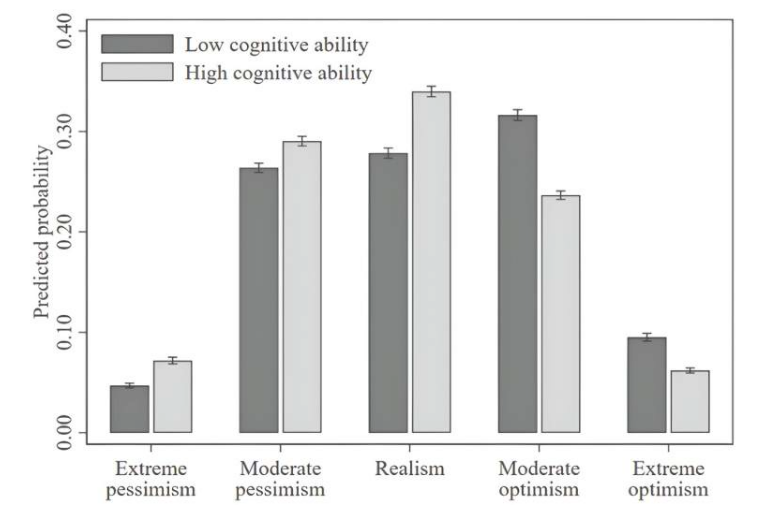
Intelligence does not erase irrationality. Smart people can be extremely good at defending bad ideas. In fact, intelligence may sometimes provide better tools for rationalization. A clever person can build a beautiful bridge from “I want this to be true” to “therefore it is definitely true,” complete with footnotes and dramatic lighting.
Expertise helps when a decision falls inside a well-learned domain with reliable feedback. A skilled firefighter may sense danger quickly because years of experience have trained pattern recognition. A doctor may spot a diagnosis faster because symptoms fit a known structure. But expertise can also create blind spots. Professionals may overvalue their own field, underestimate uncertainty, or dismiss outsiders too quickly.
Being smart is useful. Being aware of your limits is better. The most rational people are often not those who never make biased decisions, but those who build systems that catch mistakes before the mistakes become expensive.
How Irrationality Shows Up in Everyday Life
Money
Money decisions are a playground for irrational behavior. People treat money differently depending on where it came from. A tax refund may feel like “bonus money,” even though it is your money returning from a long government vacation. A casino win may be spent more freely than a paycheck. A gift card may encourage purchases you would never make with cash.
We also fall for sunk cost thinking. After paying for a movie, we may sit through it even if it is terrible, as if suffering will improve the financial outcome. Spoiler: it will not. The money is gone. Leaving early only saves your evening and possibly your faith in cinema.
Relationships
In relationships, irrationality often appears as mind reading, selective memory, emotional reasoning, and defensive storytelling. We assume we know what someone meant. We remember our sacrifices vividly and their sacrifices vaguely. We interpret a short text as rejection, a delayed reply as betrayal, and “k” as a war crime.
Healthy relationships require recognizing that our first interpretation is not always the truth. Sometimes a partner is not being cold; they are tired. Sometimes a friend is not ignoring you; they are overwhelmed. Sometimes the story your brain writes is less documentary and more low-budget thriller.
Health
Health choices are shaped by habit, fear, convenience, culture, and immediate reward. Most people know the basics: sleep, move, eat reasonably, manage stress, do not treat vegetables as decorative punishment. Yet knowledge does not automatically become behavior.
We discount the future. A healthier body next year feels abstract; the donut right now has frosting. We respond to fear unevenly. Some people ignore real risks because they are familiar, while others panic over rare risks because they are vivid. Better health decisions often require designing the environment, not just “trying harder.” Put walking shoes near the door. Keep healthier food visible. Make the better choice the easier choice.
Work
At work, irrationality appears in hiring, planning, meetings, strategy, and performance reviews. A manager may favor a candidate who “feels right” because they share similar interests. A team may continue a failing project because canceling it would be embarrassing. A company may overtrust a confident forecast because uncertainty makes executives itchy.
Good organizations do not assume people are perfectly rational. They create decision processes that reduce bias: clear criteria, pre-mortems, diverse perspectives, written assumptions, independent review, and permission to challenge the loudest voice in the room.
Can We Become Less Irrational?
We cannot remove irrationality entirely, but we can reduce its worst effects. The first step is humility. Assume your brain is useful, brilliant, and occasionally full of nonsense. This mindset is not self-insult; it is maintenance.
Slow Down Important Decisions
Not every decision deserves deep analysis. Nobody needs a six-page memo on which socks to wear. But for decisions involving money, health, relationships, career, or long-term consequences, slowing down helps. Time reduces emotional heat and creates space for better questions.
Consider the Opposite
Ask, “What evidence would prove me wrong?” or “How would I see this if I disagreed with myself?” This simple habit weakens confirmation bias. It also annoys your ego, which is usually a sign of progress.
Use Checklists
Checklists are not glamorous, but neither is preventable disaster. A checklist can force you to consider key factors before acting. Investors, doctors, pilots, managers, and writers all benefit from structured thinking. The brain loves shortcuts; a checklist makes the shortcut safer.
Change the Environment
Since choice architecture shapes behavior, design your surroundings to support your goals. Want to save money? Automate savings. Want to read more? Put a book where your phone usually sits. Want to eat better? Do not store snacks in the easiest possible location unless your goal is to become emotionally intimate with chips.
Ask for Outside Views
Other people can see patterns we miss, especially when they are not emotionally attached to the outcome. Ask someone thoughtful, not someone who simply agrees with you professionally. A good outside view can puncture overconfidence and reveal assumptions hiding in plain sight.
Personal Experiences: Everyday Proof That Everyone is Irrational
If you want proof that everyone is irrational, you do not need a laboratory. You need a Monday morning, a grocery store, a family group chat, or a person trying to assemble furniture while refusing to read instructions. Daily life is basically a traveling museum of questionable judgment, and admission is free.
One common experience is the “sale trap.” You walk into a store needing one practical item, perhaps toothpaste. Fifteen minutes later, you are holding discounted candles, a novelty mug, two throw pillows, and a kitchen gadget that solves a problem you have never had. Why? Because the word “sale” does something strange to the human brain. It shifts attention from “Do I need this?” to “How much am I saving?” This is how people go broke saving money. The receipt says victory; the bank account says comedy.
Another familiar experience is emotional texting. A message arrives. It is shorter than expected. Suddenly, your brain opens a courtroom. “Interesting,” it says, wearing a tiny judge robe. “They used a period instead of an exclamation point. Clearly, civilization is collapsing.” You draft three replies, delete them, show the text to a friend, and build a theory based on punctuation. Later, you learn the person was simply busy. This is irrationality powered by uncertainty. When information is missing, the brain does not leave a blank space. It hires a screenwriter.
Food decisions also reveal our irrational side. Many people have promised themselves they will eat healthier “starting tomorrow,” a magical land where vegetables sparkle and cravings retire. But tonight? Tonight is apparently sponsored by cheese. This does not happen because people lack intelligence. It happens because immediate rewards are emotionally loud while future benefits speak in a calm indoor voice. The future self wants energy, health, and confidence. The present self wants fries. Guess who has the microphone?
Work offers its own examples. A team may spend months defending a project everyone privately knows is failing. Nobody wants to be the person who says the emperor has no business model. Time, money, and reputation have already been invested, so the group keeps going. This is the sunk cost fallacy wearing a badge. The rational move would be to evaluate future costs and benefits. The human move is to whisper, “Maybe one more meeting will save it.”
Family arguments may be the richest source of irrational behavior. Two relatives can debate a tiny detail from 2009 with the intensity of constitutional scholars. Each remembers the event differently, and both are absolutely certain. Memory feels like a recording, but it is often more like a heavily edited highlight reel. We remember what supports our identity: when we were wronged, when we were generous, when someone else started it. Conveniently, our own tone is usually missing from the replay.
Even productivity culture is full of irrationality. People download apps to manage apps, buy planners to plan planning sessions, and watch videos about focus while avoiding the task that required focus in the first place. We love preparation because it feels like progress without the emotional risk of actually beginning. Buying running shoes is easier than running. Organizing files is easier than writing the report. Creating a color-coded schedule is easier than facing the terrifying blank page.
The good news is that noticing these patterns can make us kinder and wiser. When we admit that everyone is irrational, we stop acting shocked when people behave like people. We become less smug about others’ mistakes and more cautious about our own certainty. We learn to pause before reacting, question the first story our brain tells, and design better systems for the moments when willpower goes on vacation.
In everyday life, irrationality is not a rare malfunction. It is background music. Sometimes it is funny, sometimes expensive, sometimes painful, and sometimes surprisingly useful. The trick is not to eliminate it. The trick is to recognize the tune before we start dancing straight into a wall.
Conclusion: Rational Enough Is the Real Goal
Everyone is irrational because everyone is human. Our minds rely on shortcuts, emotions, habits, social signals, and imperfect memories. We are influenced by framing, fear, identity, convenience, and the deep desire to believe our past choices were excellent. This can lead to bad decisions, but it also helps us move through a complex world without analyzing every breath like a philosophy exam.
The goal is not perfect rationality. Perfect rationality is exhausting, unrealistic, and probably terrible at parties. The better goal is to become rational enough: aware enough to notice bias, humble enough to question certainty, disciplined enough to slow down when stakes are high, and practical enough to design environments that make good choices easier.
When we understand irrational behavior, we gain more than better decision-making skills. We gain patiencewith ourselves, with others, and with the wonderfully messy species that invented both space travel and “reply all.” Everyone is irrational. The wise person simply knows it, plans for it, and tries not to buy another discounted candle unless the house truly needs to smell like “Autumn Confidence.”