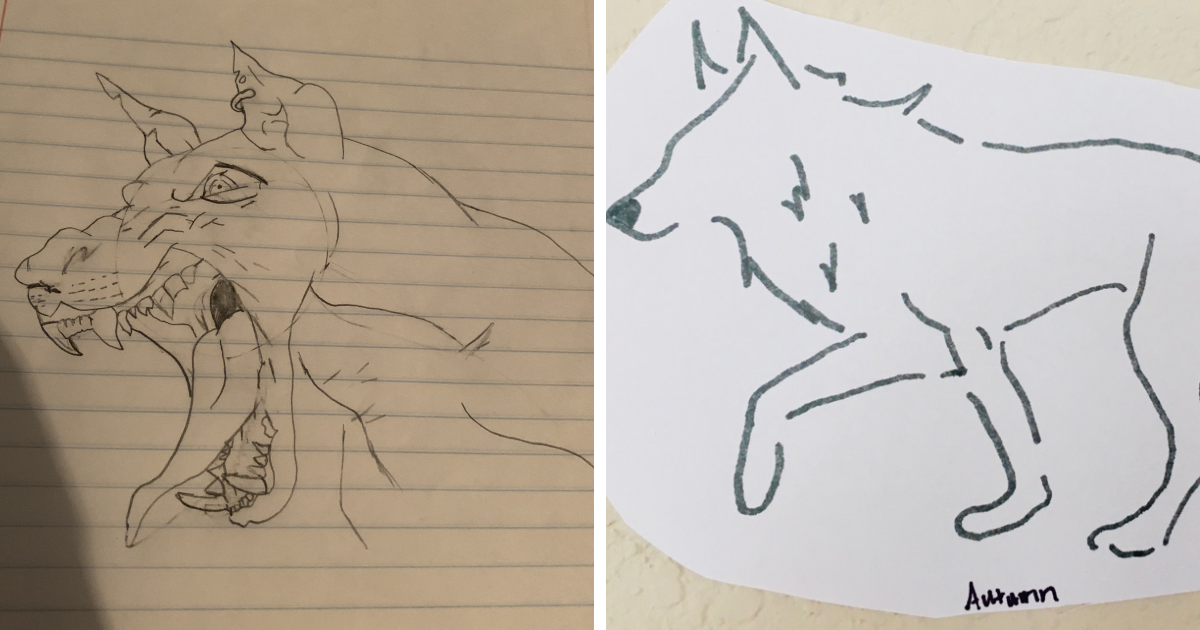

Some internet challenges ask people to run marathons, bake impossible cakes, or explain quantum physics before breakfast. This one is kinder, fuzzier, and far less likely to require emergency frosting: Hey Pandas, Draw Any Animal And Post The Result. It is the kind of creative prompt that sounds simple until you stare at a blank page and realize your “majestic wolf” currently resembles a confused potato wearing ears.
And that is exactly the charm. Animal drawing challenges are not only about polished artwork. They are about imagination, humor, observation, community, and the tiny thrill of saying, “Here is my raccoon. Please be gentle; he has seen things.” Whether someone sketches a realistic horse, a cartoon frog, a dramatic owl, a sleepy cat, or a capybara with the confidence of a retired CEO, the result becomes part of a shared online gallery where effort matters as much as elegance.
This article explores why an animal drawing prompt works so well, how beginners can join without fear, what makes animal art so engaging, and why posting the result can turn a private doodle into a surprisingly joyful community moment.
What Does “Hey Pandas, Draw Any Animal And Post The Result” Mean?
The phrase follows the playful community style often associated with “Hey Pandas” prompts, where readers are invited to respond with their own stories, photos, drawings, opinions, or creative results. In this case, the request is beautifully direct: choose any animal, draw it, and share what you made.
There is no need to produce museum-ready realism. The animal can be wild, domestic, extinct, imaginary, tiny, enormous, elegant, awkward, or suspiciously shaped like your breakfast. A participant might draw a golden retriever, a red fox, a sea turtle, a penguin, a bee, a dragonfly, a llama, or a mythical creature inspired by real animal anatomy. The point is participation.
Online creative prompts succeed because they lower the barrier to entry. Instead of saying, “Create a technically brilliant work of zoological illustration,” this challenge says, “Draw any animal.” That invitation feels open, friendly, and doable. It welcomes experts, hobbyists, kids, adults, casual doodlers, digital artists, pencil sketchers, and people who have not touched a sketchbook since their last school notebook gained a suspicious number of dinosaurs in the margins.
Why Animal Drawing Challenges Are So Popular Online
Animals are universal. Almost everyone has a favorite creature, a beloved pet, a wildlife memory, or at least one animal they find wonderfully ridiculous. Cats bring attitude. Dogs bring loyalty and chaos. Frogs bring tiny philosopher energy. Owls look like they know everyone’s secrets. Pandas, naturally, bring branding excellence.
Drawing animals also creates instant emotional connection. A portrait of a dog can feel personal. A sketch of a bird can feel peaceful. A cartoon possum can make people laugh before they have even had coffee. Animals give artists a subject that can be cute, dramatic, funny, mysterious, symbolic, or wildly expressive.
They Invite All Skill Levels
One of the best things about an animal drawing challenge is that it does not require one “correct” style. A beginner can use circles, triangles, and soft lines to make a simple bunny. A more advanced artist can study anatomy, fur texture, eye reflections, and movement. A cartoonist can exaggerate the ears, shrink the legs, and somehow make a hamster look like a tiny tax accountant.
Because animals can be simplified into shapes, they are ideal for beginners. A bird can start as an oval and a triangle. A cat can begin with a circle, two ears, and one expression of permanent judgment. A turtle can start with a dome and four little paddles. The result may be simple, but it still reads clearly as an animal.
They Encourage Community, Not Perfection
The strongest online art challenges are not built on perfection. They are built on participation. When people post their drawings, others can react, comment, encourage, and share their own attempts. That is how a simple prompt becomes a mini-community event.
Good community art spaces also encourage kindness. Not every drawing needs critique. Sometimes the best comment is, “This goose has personality,” or “I love that your lion looks emotionally available.” Positive feedback gives people confidence to keep creating, and confidence is often the difference between one abandoned sketch and a lifelong creative habit.
The Creative Power of Drawing Any Animal
At first, “any animal” sounds almost too broad. But that freedom is useful. It lets each artist choose a subject that matches their mood, skill level, and personality. Someone who wants a challenge might draw a horse in motion. Someone who wants comfort might draw their cat. Someone who wants comedy might draw a screaming goat. Someone who wants peace might draw a koi fish, a deer, or a sleeping fox.
Animals also help artists practice essential drawing skills without making the process feel like homework. Proportion, gesture, texture, silhouette, anatomy, expression, and composition all appear naturally when drawing animals. The artist learns while chasing something fun.
Observation Makes Better Animal Art
Great animal drawings often begin with observation. Look at how a cat’s spine curves before it jumps. Notice how a bird’s legs are thinner than expected. Study how a horse’s weight shifts when it stands. Pay attention to how a rabbit’s ears change its entire mood. A small detail can make a drawing feel alive.
This does not mean every sketch needs scientific accuracy. A cartoon animal can be successful because it captures character, not because every bone is in the correct place. But even stylized art improves when the artist understands how the real animal moves, balances, eats, rests, or reacts.
Silhouette Is Your Secret Weapon
A strong animal drawing should be recognizable even as a shadow. This is called silhouette, and it matters more than beginners may think. A giraffe’s long neck, an elephant’s trunk, a fox’s tail, a bat’s wings, and a turtle’s shell all create instantly readable shapes.
Before adding fur, feathers, scales, spots, stripes, or whiskers, ask a simple question: “Would someone know what animal this is if it were filled in black?” If yes, the drawing already has a strong foundation. If not, adjust the big shapes before decorating the details. Details are the sprinkles; structure is the cupcake. Nobody wants sprinkles floating in the void.
How To Join The Challenge Without Overthinking It
Many people hesitate to post artwork because they compare themselves to artists who have practiced for years. That is understandable, but it misses the spirit of the challenge. The goal is not to defeat the internet with your flamingo. The goal is to draw, share, and enjoy the process.
Step 1: Pick An Animal You Actually Like
Choose an animal that makes you curious. If you love dogs, draw a dog. If you adore marine life, draw an octopus, shark, jellyfish, or sea otter. If you want to be dramatic, draw a raven on a branch during a storm. If you want to be silly, draw a pigeon that looks like it just received bad financial news.
Interest matters because it keeps you engaged. When you care about the subject, you are more likely to notice its unique features and finish the drawing.
Step 2: Use A Reference
Using a reference is not cheating. It is learning. Artists use references to understand shape, proportion, texture, lighting, and movement. A photo of a fox can show how the muzzle narrows. A video of a horse can reveal how the legs bend. A picture of a frog can remind you that frogs are basically nature’s squishy punctuation marks.
If you use a photo directly, be mindful of copyright and ownership when posting. For a public challenge, it is often best to use your own pet photo, a public-domain reference, a licensed image, or a combination of references transformed into your own original drawing.
Step 3: Start With Basic Shapes
Break the animal into simple forms. Use circles for heads, ovals for bodies, cylinders for legs, triangles for ears, and curved lines for tails or spines. This method helps you avoid getting trapped in details too early.
For example, a cat can begin with a round head, bean-shaped body, two triangle ears, and a long tail. A bird can begin with a teardrop body, small circle head, wedge beak, and angled legs. A bear can begin as a large oval with smaller rounded shapes for paws and ears. Once the basic structure works, then you can add personality.
Step 4: Add One Memorable Detail
Every animal drawing benefits from a focal point. It might be bright eyes, fluffy ears, striped fur, oversized paws, a curled tail, a funny expression, or a tiny accessory. One memorable detail gives viewers something to love.
A raccoon with delicate paws feels clever. A penguin with a proud posture feels heroic. A bulldog with one raised eyebrow feels like it has opinions about your life choices. These details make the artwork more than an animal; they make it a character.
Step 5: Post The Result With Confidence
When your drawing is finished, post it. Add a short caption if you want: what animal you chose, why you picked it, what tools you used, or what went hilariously wrong. Captions make posts more engaging because they invite conversation.
You might write, “I tried to draw a wolf, but he slowly became a polite dog in a winter coat.” That kind of honesty makes the post relatable. People love seeing both the art and the human behind it.
Best Animals To Draw For Beginners
If you are new to animal drawing, start with creatures that have clear shapes and forgiving proportions. Some animals are easier because their bodies can be simplified quickly.
Cats
Cats are excellent for practicing curves, expressive eyes, and body language. They can look elegant, sleepy, annoyed, playful, or like they are plotting to push a glass off the table at 3:07 a.m.
Dogs
Dogs offer endless variety. A dachshund, husky, pug, poodle, and golden retriever all have different silhouettes. Drawing dogs is also emotionally rewarding because many people connect them with companionship and joy.
Birds
Birds teach shape, balance, feathers, and gesture. A small songbird can be built from simple ovals, while an eagle or owl gives more room for dramatic detail.
Fish
Fish are beginner-friendly because their shapes are smooth and flexible. They also invite color, pattern, and flowing lines. A koi fish, goldfish, clownfish, or betta can look beautiful without requiring complicated anatomy.
Frogs
Frogs are perfect for artists who enjoy humor. Their round eyes, wide mouths, and compact bodies make them naturally expressive. Even a simple frog sketch can look charming.
Foxes
Foxes are popular because they combine elegance and mischief. Their pointed ears, sharp muzzle, and fluffy tail create a strong silhouette. Add alert eyes and you have instant woodland drama.
Advanced Ideas For Artists Who Want A Bigger Challenge
Experienced artists can push the prompt further by experimenting with style, environment, movement, and storytelling. Instead of drawing a static animal portrait, try showing the animal doing something specific.
Draw a hawk diving, a horse running, a tiger stepping through tall grass, a crab defending a seashell, or a mouse building a tiny palace out of crumbs. Action creates narrative. It gives viewers a reason to stay with the image longer.
Try A Style Twist
Draw the animal as a vintage storybook illustration, a comic character, a scientific field sketch, a sticker design, a watercolor study, a bold ink drawing, or a digital painting. Style changes the mood dramatically.
A bear in realistic charcoal may feel powerful. The same bear in pastel cartoon style may feel huggable. A snake in decorative line art may feel elegant. A snake wearing glasses may feel like it teaches literature at a very small university.
Design A Creature Inspired By Real Animals
If “any animal” feels too ordinary, design a fictional creature based on real animal features. Combine a fox’s tail, an owl’s eyes, a lizard’s scales, and a deer’s posture. The trick is to make the creature feel believable. Ask what it eats, where it lives, how it moves, and why its body parts make sense.
Fantasy creature design becomes stronger when imagination works with logic. Wings should feel capable of lifting the body. Claws should match the creature’s behavior. Big eyes might suggest nighttime activity. Heavy limbs might suggest digging or strength. Even imaginary animals become more convincing when they seem built for a purpose.
Why Posting Your Drawing Matters
Posting art can feel vulnerable. A drawing made in private suddenly stands in public wearing tiny emotional shoes. But sharing creative work is part of how people grow. It helps artists receive encouragement, find community, and see their own progress over time.
Online drawing challenges also remind us that creativity is not reserved for professionals. It belongs to everyone. A person can work in accounting, nursing, teaching, retail, engineering, parenting, or full-time snack management and still enjoy drawing a panda on a Tuesday night.
When many people respond to the same prompt, the results become more interesting than any single drawing. You see different styles, skill levels, cultures, jokes, memories, and favorite animals. One prompt becomes a crowd-sourced celebration of imagination.
Kindness Rules For A Better Animal Art Challenge
A good creative challenge needs a good comment section. The best rule is simple: be helpful, be kind, or be quiet. Not every post needs technical feedback. If someone asks for critique, offer it gently and specifically. If they do not ask, encouragement is usually better.
Helpful comments might include:
- “The expression is adorable.”
- “I love how you drew the feathers.”
- “The pose feels really lively.”
- “This animal has so much personality.”
- “The colors make it feel warm and playful.”
These comments support the artist without turning the challenge into an exam. The internet has enough exams. Let the frog breathe.
Personal Experiences With “Hey Pandas, Draw Any Animal And Post The Result”
The best part of a prompt like Hey Pandas, Draw Any Animal And Post The Result is that it turns drawing into an experience rather than a performance. Imagine sitting down with a pencil, telling yourself you will draw a calm and noble deer, and then watching your hand create something closer to a startled goat who just remembered an unpaid bill. Oddly, that is not failure. That is the story of the drawing.
Many people discover that animal drawing is relaxing because it gives the mind a clear but gentle task. You are not solving the entire meaning of life. You are deciding whether a squirrel’s tail should be fluffier. That is a more manageable emotional workload. The focus shifts from daily stress to small visual choices: rounder eyes, softer ears, longer whiskers, darker shadows, a better paw shape. Little by little, the noise in the brain turns down.
There is also something funny about drawing animals because animals already seem halfway to comedy. A serious cat looks like a tiny judge. A frog looks like it knows gossip. A cow has the calm face of someone who has accepted every mystery in the universe. When artists lean into those personalities, their drawings become more engaging. Even beginners can create memorable work by exaggerating one trait: the rabbit’s nervous eyes, the duck’s confident walk, the owl’s intense stare, or the dog’s heroic devotion to absolutely nothing happening outside the window.
Posting the result adds another layer to the experience. A drawing that might have stayed hidden in a notebook becomes part of a shared creative thread. Someone else may comment that they also struggle with paws, or that your raccoon reminds them of a childhood pet, or that your turtle has “excellent grandpa energy.” These small interactions matter. They make creativity feel social instead of lonely.
For beginners, the experience can be surprisingly brave. Sharing an imperfect drawing says, “I made something, and I am letting it exist.” That is not a small thing. Many adults stop drawing because they believe art must be impressive to be worthwhile. A friendly animal drawing challenge pushes back against that idea. It says art can be playful, messy, personal, and still worth sharing.
For skilled artists, the prompt offers a different kind of joy. It becomes a chance to loosen up, practice gesture, explore a new medium, or create a quick character without pressure. A professional illustrator may spend hours on a detailed animal portrait, while another artist may post a five-minute doodle of a pigeon with dramatic eyebrows. Both belong. The variety is the point.
The most memorable drawings are not always the most technically perfect. Sometimes the standout is the sketch with the funniest caption, the most expressive eyes, or the boldest personality. A wobbly line can feel human. A slightly uneven paw can feel charming. A strange-looking bird can become the unofficial mascot of everyone having a weird week.
That is why this topic has lasting appeal. It combines animals, creativity, humor, and community in one easy invitation. Draw any animal. Post the result. Celebrate the attempt. Maybe your lion looks powerful. Maybe your panda looks like a marshmallow with ambition. Either way, you made something, and that is the whole wonderful point.
Conclusion
Hey Pandas, Draw Any Animal And Post The Result is more than a simple art prompt. It is an invitation to observe nature, practice creativity, laugh at imperfections, and connect with others through shared imagination. Animal drawing works because it welcomes everyone. You can be precise, silly, realistic, cartoonish, emotional, dramatic, or completely experimental.
Whether you sketch a cat, fox, frog, elephant, owl, turtle, or creature that science has not yet had the courage to classify, the challenge rewards effort and personality. Start with basic shapes, use references, add one memorable detail, and post your result with confidence. The world has room for more animal art, especially the kind that makes people smile.
Note: This article is written as original web content based on real community-art trends, animal drawing principles, and research-supported ideas about creativity, observation, and social connection. It does not include copied source text or unnecessary citation placeholders.