
Seeing one cockroach race across the kitchen floor can turn an ordinary midnight snack into an Olympic event. Unfortunately, the roach usually wins. Cockroaches are quick, secretive, adaptable, and perfectly happy to live behind appliances while homeowners argue over who must investigate the suspicious shadow near the toaster.
Effective cockroach pest control is not about spraying every baseboard until the house smells like a chemistry lab. The most reliable strategy is integrated pest management, or IPM: identify the pest, inspect the property, remove food and water, block hiding places, monitor activity, and use carefully targeted treatments when necessary.
This homeowner’s guide explains how to recognize common cockroach species, locate an infestation, choose effective control methods, avoid common mistakes, and determine when professional pest control is the smarter option.
Why Cockroaches Are More Than an Embarrassing Nuisance
A cockroach infestation does not automatically mean a home is dirty. Roaches can enter clean houses through grocery bags, cardboard boxes, plumbing openings, shared walls, drains, luggage, used appliances, and gaps around doors. Once inside, they need only a small amount of food, water, warmth, and shelter to settle in.
Cockroaches can contaminate food-preparation surfaces as they move through garbage, drains, wall voids, and other unsanitary areas. Their droppings, saliva, shed skins, and body fragments may also contribute to allergic reactions and aggravate asthma, particularly in sensitive children and adults.
That is why cockroach control should focus on eliminating the population and cleaning contaminated areasnot merely killing the occasional insect adventurous enough to appear in public.
Guidance synthesized from CDC asthma resources, EPA pest-control guidance, NPIC, Illinois public-health information, and North Carolina State Extension.
Identify the Cockroach Before Choosing a Treatment
Different cockroach species prefer different environments. Correct identification helps you decide whether the insects are breeding indoors, entering from outside, or traveling through a multi-unit building.
German Cockroaches
German cockroaches are among the most troublesome indoor species. Adults are relatively small, light brown or tan, and have two dark parallel stripes behind the head. They commonly gather near sinks, refrigerators, dishwashers, stoves, trash containers, and cabinets.
These roaches reproduce quickly and spend much of their time hidden in narrow cracks. Finding small nymphs in a kitchen or bathroom usually indicates that reproduction is occurring inside the home.
American Cockroaches
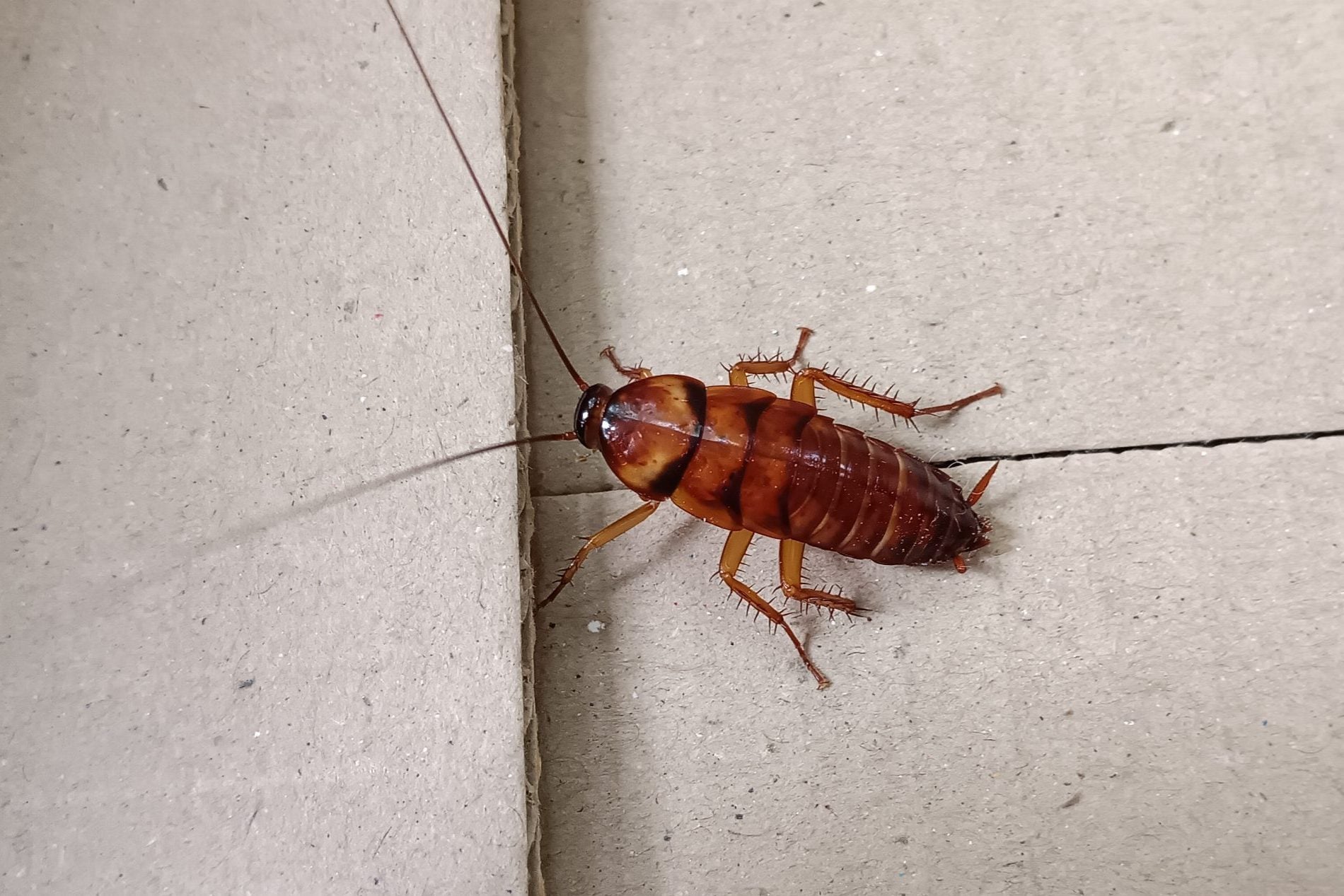
American cockroaches are much larger and usually reddish-brown. They often inhabit basements, crawl spaces, utility rooms, sewers, floor drains, boiler rooms, and other warm, damp environments. In warmer regions, they may live outdoors and occasionally wander indoors.
Oriental Cockroaches
Oriental cockroaches are dark brown to nearly black and favor cool, moist areas. They may appear near floor drains, leaking pipes, damp basements, foundations, garbage areas, and ground-level entrances.
Brown-Banded Cockroaches
Brown-banded cockroaches are small and marked with lighter bands across their wings or bodies. Unlike German cockroaches, they often occupy drier, warmer locations such as upper cabinets, closets, furniture, wall decorations, and electrical equipment.
Species and habitat information synthesized from UC IPM, Penn State Extension, Rutgers NJAES, Minnesota Extension, Mississippi State Extension, and NC State Extension.
How to Tell Whether You Have an Infestation
One large outdoor cockroach that slipped beneath a door does not necessarily indicate an indoor colony. Multiple roaches, tiny nymphs, egg cases, or repeated nighttime activity are more concerning.
Common signs of a cockroach infestation include:
- Live cockroaches seen at nightor during the day in a heavy infestation
- Small dark droppings resembling pepper or coffee grounds
- Dark smears along walls, cabinet hinges, or appliance edges
- Brown egg cases in cracks, drawers, boxes, or protected corners
- Shed skins and dead insects
- A persistent musty or oily odor in heavily infested areas
- Damage to food packages, paper, book bindings, or other organic materials
Use Sticky Traps as Detective Tools
Place cockroach sticky traps tightly against walls and edges because roaches prefer traveling beside solid surfaces. Useful locations include behind the refrigerator, beside the stove, under sinks, near the dishwasher, inside lower cabinets, beside trash containers, and near plumbing penetrations.
Write the date and location on each trap. Check them every few days. The goal is not simply to catch roaches; it is to create a map showing where the activity is concentrated. A trap behind the refrigerator holding twenty insects tells you far more than a lonely trap sitting in the middle of the pantry.
Monitoring recommendations synthesized from Rutgers NJAES, Penn State Extension, UC IPM, and Texas A&M AgriLife Extension.
The Integrated Cockroach Pest Control Plan
Cockroach control works best when several tactics are used together. Pesticides alone rarely correct the leaks, crumbs, clutter, and structural gaps that allow an infestation to rebound.
Step 1: Remove Food Sources
Roaches are not food critics. Grease behind a stove, crumbs under a toaster, pet kibble, cardboard glue, and residue inside a recycling bin can all support them.
- Store cereal, flour, snacks, and pet food in sealed containers.
- Wipe counters and sweep floors before bedtime.
- Clean grease from the stove, range hood, backsplash, and nearby walls.
- Empty crumbs from toasters and small appliances.
- Rinse food containers before placing them in recycling bins.
- Use trash cans with tight-fitting lids and empty them regularly.
- Do not leave dirty dishes or pet food out overnight.
You do not need to turn your kitchen into a surgical suite. Consistency matters more than polishing every spoon.
Step 2: Eliminate Water and Excess Moisture
Fix dripping faucets, leaking supply lines, sweating pipes, loose toilet seals, and moisture beneath sinks. Dry sinks and counters before bed when practical. Check refrigerator drip pans, dishwasher connections, water heaters, air-conditioning condensation lines, and floor drains.
In seldom-used drains, make sure the plumbing trap contains water. A dry trap may allow insects and odors to enter from the drain system.
Step 3: Reduce Clutter and Hiding Places
Cockroaches prefer tight, protected spaces. Corrugated cardboard, paper bags, old newspapers, crowded cabinets, and stacks of stored items provide excellent shelter.
Remove unnecessary cardboard promptly, especially boxes from grocery stores, warehouses, delivery shipments, and storage units. Store necessary belongings in sturdy, sealable plastic containers and leave enough space around items for inspection and cleaning.
Step 4: Seal Cracks and Entry Points
Use caulk or another appropriate sealant around cabinet seams, baseboards, wall cracks, backsplash gaps, and plumbing penetrations. Install escutcheon plates around pipes where useful. Repair window screens and add door sweeps to exterior doors.
In apartments and attached homes, seal gaps around shared plumbing, wiring, heating lines, and utility chases. A spotless apartment may continue receiving roaches from a neighboring unit if these travel routes remain open.
Sanitation, moisture control, decluttering, and exclusion guidance synthesized from EPA, Minnesota Extension, UC IPM, Texas A&M AgriLife, and Mississippi State Extension.
How to Use Cockroach Baits Effectively
Gel baits and enclosed bait stations are often more effective for indoor cockroach control than routine surface spraying. Roaches feed on the bait and return to hiding areas before dying. Other members of the population may be exposed indirectly through contaminated droppings or dead insects.
Place Baits Near Activity
Baits work best when placed close to harborages and travel routes. Good locations include cabinet corners, appliance voids, plumbing openings, wall-floor junctions, and protected spaces under sinks.
For gel products, many small placements are generally more useful than one heroic blob worthy of its own ZIP code. Follow the product label for placement size, spacing, permitted surfaces, and reapplication.
Keep Baits Fresh
Inspect bait placements periodically. Replace bait that has been eaten, contaminated, dried out, or ignored for an extended period. Results are not always immediate; noticeable improvement may take a week or longer.
Do Not Spray Over or Near the Bait
Repellent sprays can discourage cockroaches from approaching bait. Spraying an entire cabinet after placing gel inside it may turn your control plan into an expensive buffet nobody visits.
Protect Children and Pets
Use tamper-resistant stations or place gel only where children and animals cannot reach it. Never apply bait on food-contact surfaces, food-preparation areas, toys, pet dishes, or locations prohibited by the label.
Bait recommendations synthesized from UC IPM, Penn State Extension, Rutgers NJAES, Texas A&M AgriLife Extension, and UGA Extension.
Boric Acid, Desiccant Dusts, and Growth Regulators
Boric Acid Dust
Boric acid can be useful in dry, inaccessible cracks and voids, including spaces behind appliances or inside wall cavities. The application should be a very thin, barely visible layer. Cockroaches often avoid thick piles, and exposed powder creates unnecessary risk for people and pets.
Desiccant Dusts
Products containing silica-based desiccants or diatomaceous earth may damage the protective outer layer of insects, causing them to lose moisture. Use only products labeled for cockroach control in the intended indoor location. Do not substitute pool-grade diatomaceous earth or scatter dust across living spaces.
Insect Growth Regulators
Insect growth regulators interfere with cockroach development or reproduction. They are usually slower than baits and are often used as part of a professional program for persistent or widespread infestations.
Regardless of the product, read the entire pesticide label before use. The label determines where, how, and how much of the product may legally and safely be applied.
Dust and growth-regulator guidance synthesized from Rutgers NJAES, UC IPM, Penn State Extension, EPA, and UGA pesticide-safety resources.
Cockroach Control Methods to Avoid
Bug Bombs and Total-Release Foggers
Foggers generally do not penetrate the narrow cracks where cockroaches hide. They may expose residents and pets to unnecessary pesticide residue, create fire or explosion hazards when misused, and scatter roaches deeper into walls or neighboring rooms.
Random Baseboard Spraying
Broad spraying may kill exposed insects but miss hidden adults, nymphs, and egg cases. Some sprays can also interfere with bait programs. Targeted crack-and-crevice treatment is usually more useful than applying a chemical border around every room.
Unlabeled Home Remedies
Avoid using bleach mixtures, fuel, mothballs, outdoor pesticides, concentrated essential oils, or household cleaning products as improvised insecticides. “Natural” does not automatically mean effective, safe, or legal for indoor pest control.
Crushing the Roaches You See and Declaring Victory
Squashing one cockroach may be emotionally satisfying, but it does not address the population hiding behind the dishwasher. Continue monitoring after sightings decline.
Fogger and spray guidance synthesized from Rutgers NJAES, UC IPM, EPA IPM resources, and NC State Extension.
Controlling Large Cockroaches That Enter From Outdoors
American, Oriental, smokybrown, and other large cockroaches may live around foundations, drains, mulch, woodpiles, trees, sewer systems, and damp landscape areas. Indoor baiting alone may not solve an exterior source.
- Move firewood, lumber, cardboard, and debris away from the foundation.
- Remove heavy leaf litter and excessive mulch next to the house.
- Repair leaking outdoor faucets and irrigation systems.
- Keep garbage and pet food in pest-resistant containers.
- Screen vents and drains where appropriate.
- Seal foundation cracks and utility openings.
- Repair weather stripping and install snug door sweeps.
- Trim branches or dense vegetation touching the building.
Outdoor bait stations may help when used according to label directions near known hiding places. Avoid broadcasting indoor bait or pesticide where rain, pets, children, wildlife, or runoff may contact it.
Outdoor control guidance synthesized from Mississippi State Extension, UC IPM, Minnesota Extension, and Texas A&M AgriLife Extension.
Cockroach Control in Apartments and Condominiums
Multi-unit housing presents a special challenge because cockroaches can travel between apartments through shared walls, ceilings, hallways, pipe chases, and utility openings. Treating only one unit may temporarily push the infestation elsewhere without eliminating it.
Residents should document sightings, trap counts, dates, and locations, then report the problem promptly to property management. Effective control may require inspection and treatment of the affected unit, neighboring units, common areas, trash rooms, mechanical spaces, and plumbing routes.
Cooperation matters. One resident cannot seal a shared utility chase while another apartment provides unlimited crumbs, water, cardboard, and deluxe roach accommodations.
A Practical 30-Day Cockroach Control Schedule
Days 1–3: Inspect and Measure
Identify the cockroach, place sticky monitors, photograph evidence, clean major food residues, and inspect plumbing and appliance areas. Vacuum visible roaches, egg cases, droppings, and shed skins. A vacuum fitted with a high-efficiency filter can help reduce the amount of allergen-containing debris released during cleanup.
Days 4–7: Remove Resources and Treat
Fix leaks, reduce clutter, seal obvious gaps, and place labeled bait near active harborages. Avoid disturbing bait placements during routine cleaning.
Week 2: Review the Evidence
Count the insects in each trap. Replace full monitors and refresh depleted bait. A decline in adults with a few remaining nymphs does not mean the program failed; continue treatment and monitoring.
Weeks 3–4: Close Remaining Gaps
Deep-clean behind appliances, complete repairs, inspect rooms adjacent to the original activity, and replace ineffective or contaminated bait. If trap counts remain high or activity spreads, contact a licensed pest management professional.
After Day 30: Maintain Prevention
Keep several monitors in discreet locations. Check them monthly, especially after travel, deliveries, renovations, or the purchase of used furniture and appliances.
Cleanup and follow-up guidance synthesized from EPA housing IPM resources, Penn State Extension, Rutgers NJAES, and NC State Extension.
When to Call a Professional Exterminator
Professional cockroach pest control is appropriate when:
- Roaches appear in several rooms or during daylight hours.
- Sticky traps continue catching large numbers after several weeks.
- German cockroaches are established in multiple appliances or cabinets.
- The infestation affects an apartment building or attached housing.
- Someone in the home has asthma, severe allergies, or chemical sensitivities.
- Children or pets make safe DIY placement difficult.
- The source appears to be a sewer, crawl space, wall void, or inaccessible utility area.
Ask prospective companies how they inspect, monitor, identify species, select products, and measure results. A reputable professional should offer more than a monthly spray around the baseboards. Look for a program that includes sanitation recommendations, exclusion, targeted baiting, documentation, and follow-up visits.
Real-World Homeowner Experiences and Lessons
The following composite example reflects common experiences reported by homeowners and pest-management educators. It shows why successful cockroach control is usually a process rather than a dramatic one-night battle.
The “But My Kitchen Is Clean” Infestation
A homeowner notices a small tan cockroach near the coffee maker shortly after midnight. The kitchen looks clean, so the first assumption is that the insect entered through an open door. Two nights later, another one appears beside the dishwasher. A quick application of aerosol spray kills the visible roach, and everyone goes to bed feeling victorious.
The following week, three smaller cockroaches appear inside a cabinet. At this point, sticky traps are placed behind the refrigerator, beside the dishwasher, under the sink, and in the pantry. The trap behind the refrigerator catches several adults and nymphs, while the pantry trap remains empty. That pattern reveals the likely center of activity: a warm appliance area with moisture nearby.
Pulling the refrigerator forward exposes grease, crumbs, a stack of grocery bags, and condensation near the water line. The dishwasher connection also has a slow drip that is nearly invisible during the day. The homeowner repairs the leak, vacuums the debris, removes the paper bags, and stores pet food in a sealed container.
Small gel-bait placements are then applied in protected cracks around the refrigerator alcove, under the sink, and near the dishwasher. No repellent spray is used near the bait. During the first few days, a few additional roaches appear. This can feel discouraging, but it does not necessarily mean the bait is failing. Hungry insects may move around more while searching for resources.
By the second week, trap catches decline. A few nymphs remain, so the homeowner resists the temptation to stop early. Bait is refreshed where it has been consumed, cabinet gaps are sealed, and monitors stay in place. By the fourth week, the traps are empty.
The biggest lesson is that cleanliness is not a moral scorecard. Even a tidy kitchen can contain an overlooked leak, inaccessible grease, or roaches introduced in a shipping box. Inspectionnot embarrassmentsolves the puzzle.
The Giant Roach That Was an Outdoor Problem
In another common scenario, a homeowner finds one enormous reddish-brown cockroach near the front door after heavy rain. There are no nymphs, droppings, or repeated kitchen sightings. Indoor traps remain empty.
An exterior inspection reveals a worn door sweep, damp mulch against the foundation, and a stack of firewood beside the porch. The homeowner replaces the sweep, moves the firewood, reduces excess mulch, cleans the gutters, and seals a utility gap. Occasional invaders disappear without covering the kitchen in pesticide.
This experience highlights the value of species identification. Treating a reproducing German cockroach infestation requires intensive indoor monitoring and baiting. Preventing a large outdoor cockroach from wandering inside may require nothing more exciting than weather stripping and yard maintenance. Pest control is not always glamorous. Sometimes the hero of the story is a five-dollar door sweep.
What Experienced Homeowners Learn
People who successfully manage cockroaches tend to learn the same practical lessons:
- One dead roach is not proof that the infestation is gone.
- Trap placement provides better information than guessing.
- Moisture control can be as important as food cleanup.
- Many small bait placements outperform one large placement.
- Spraying everything can undermine a carefully placed bait program.
- Cardboard should not become permanent kitchen furniture.
- Follow-up monitoring prevents a small return from becoming a major infestation.
Conclusion: Make Your Home Difficult to Invade and Miserable to Occupy
The best cockroach pest control program does not rely on a single miracle product. It combines identification, inspection, sanitation, moisture repair, clutter reduction, exclusion, monitoring, and targeted treatment.
Start by locating the activity with sticky traps. Remove the food, water, and shelter that cockroaches need. Seal travel routes and use baits close to hiding places. Avoid bug bombs and unnecessary broad spraying. Continue monitoring long after the last dramatic kitchen encounter.
Cockroaches are persistent, but persistence is not the same as invincibility. A homeowner with a flashlight, a repair plan, fresh bait, and reasonable patience is a formidable opponenteven while wearing pajamas.