
A couch is not just furniture. It is the family landing pad, the movie-night headquarters, the accidental snack museum, the pet throne, and sometimes the place where laundry goes to “rest” before never being folded. So learning how to clean a couch is not a fancy housekeeping trick. It is basic home survival.
The good news? Most couches can be cleaned at home with simple tools, a little patience, and the emotional strength to discover what has been living between the cushions. The not-so-good news? You cannot attack every sofa with the same cleaner and hope for the best. Fabric, microfiber, leather, velvet, and performance upholstery all have different personalities. Some love water. Some hate water. Some behave like drama queens if you use the wrong product.
This complete guide explains how to clean a couch safely, remove stains, deodorize upholstery, freshen cushions, care for leather, handle pet hair, and know when it is time to call a professional. Whether your sofa has coffee spots, mystery smudges, popcorn crumbs, or that “we live here” smell, this step-by-step guide will help bring it back to a cleaner, fresher, more respectable version of itself.
Before You Clean: Check the Couch Cleaning Code
Before you mix anything, spray anything, or start scrubbing like you are training for a cleaning Olympics, look for the care label. It is usually under the seat cushions, underneath the frame, or attached to the platform beneath the couch. That tiny tag tells you what your upholstery can handle.
What Couch Cleaning Codes Mean
W means water-based cleaners are usually safe. A mild soap-and-water solution or upholstery shampoo may be appropriate.
S means solvent-based cleaners only. Water may leave rings, discoloration, or damage. For this code, use an upholstery-safe dry-cleaning solvent or call a professional.
WS or W/S means both water-based and solvent-based cleaners may be used, but you should still spot-test first.
X means vacuum only. Do not use water, foam, steam, or solvent cleaners at home. This code is basically the couch saying, “Please do not experiment on me.”
If there is no tag, treat the couch like a delicate guest at dinner: be polite, test everything in a hidden area, and do not assume it likes water.
Tools You Need to Clean a Couch
You do not need a garage full of gadgets to clean a sofa. Most of the time, the essentials are simple:
- Vacuum with upholstery and crevice attachments
- Soft-bristled brush
- Clean white microfiber cloths
- Mild dish soap
- Distilled water
- Baking soda
- Spray bottle
- Upholstery cleaner or solvent cleaner, depending on the fabric code
- Leather cleaner and conditioner for leather couches
- Portable upholstery cleaner, if suitable for your couch
- Fan for faster drying
White cloths are important because colored towels can transfer dye onto upholstery, especially when moisture or solvent is involved. That would turn a small stain into a design choice nobody asked for.
Step-by-Step: How to Clean a Fabric Couch
Fabric couches are common, comfortable, and very good at collecting crumbs. Here is the safest general process for cleaning a water-safe fabric couch.
Step 1: Remove Cushions and Loose Items
Take off pillows, throws, toys, remote controls, coins, socks, and whatever else your sofa has swallowed. Remove seat and back cushions if they are detachable. Check both sides of every cushion. This is where old popcorn and missing hair ties often retire.
Step 2: Vacuum Thoroughly
Vacuum the entire couch before applying any moisture. Start at the top and work down. Use the upholstery attachment for broad surfaces and the crevice tool for seams, corners, cushion gaps, and the back edge where crumbs seem to form tiny civilizations.
Vacuuming first is essential because loose dirt can turn muddy when wet. That makes stains harder to remove and can push grime deeper into the fibers.
Step 3: Brush Away Dry Soil
Use a soft-bristled brush to loosen dried dirt, dust, and pet dander. Be gentle. You are not sanding a deck. Brush lightly, then vacuum again if debris comes loose.
Step 4: Spot-Test Your Cleaner
Before cleaning visible areas, test your solution on a hidden spot, such as the back lower edge or underside of a cushion. Apply a small amount, wait until it dries, and check for discoloration, water rings, texture changes, or dye transfer.
If the fabric reacts badly, stop. The couch has spoken.
Step 5: Mix a Gentle Cleaning Solution
For W or WS fabrics, mix a small amount of mild dish soap with distilled water. Distilled water is often better than tap water because minerals in tap water can leave marks on some fabrics. The goal is light suds, not a bubble bath for your sofa.
A simple mixture is:
- 2 cups distilled warm water
- 1 teaspoon mild dish soap
- Optional: 1 teaspoon white vinegar for odor-prone spots, if the fabric tolerates it
Step 6: Blot, Do Not Scrub
Dampen a white microfiber cloth with the cleaning solution. The cloth should be damp, not dripping. Blot stained or dirty areas gently. Work from the outside of a stain toward the center to avoid spreading it.
Scrubbing can damage fibers, create fuzzy patches, and push stains deeper. Blotting is less dramatic, but much smarter.
Step 7: Rinse Lightly
Use another cloth dampened with plain distilled water to remove soap residue. Residue attracts dirt, so skipping this step can make your couch look dirty again faster.
Step 8: Dry Completely
Press the area with a dry microfiber cloth to absorb moisture. Then let the couch air dry fully. Open windows, turn on a fan, or improve airflow. Do not sit on damp cushions. Besides being uncomfortable, trapped moisture can create musty odors.
How to Deep Clean a Couch
A deep clean goes beyond spot cleaning. It refreshes the whole sofa, removes embedded dirt, and helps reduce odors. Most couches benefit from a deeper cleaning once or twice a year, depending on use. Homes with pets, kids, frequent guests, or snacks with suspicious orange dust may need it more often.
Using a Portable Upholstery Cleaner
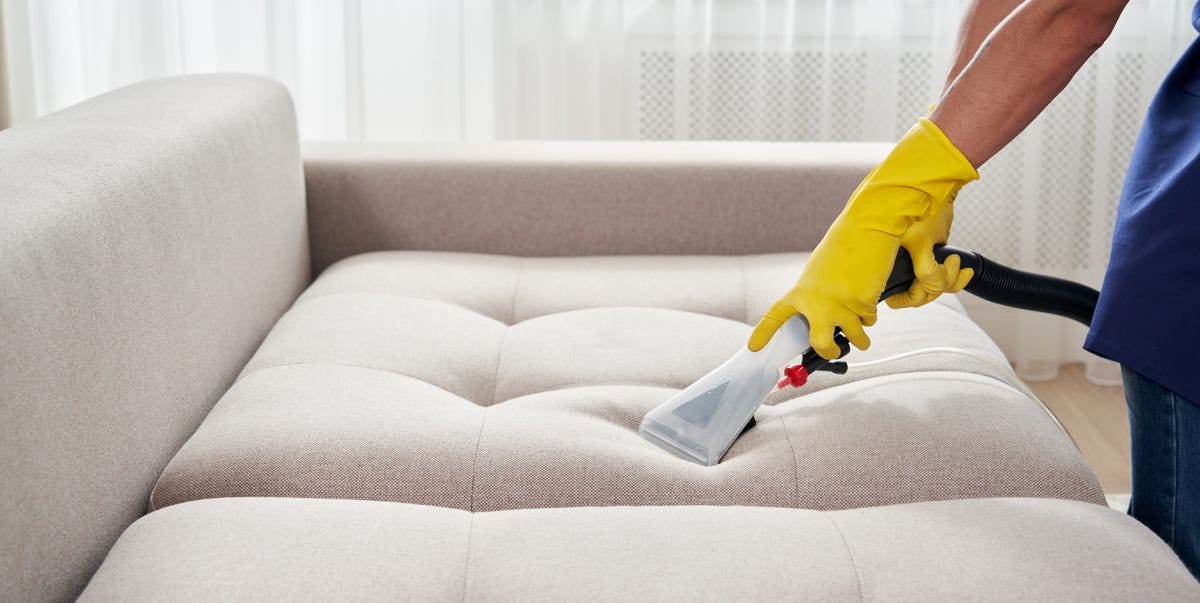
If your couch has a W or WS code, a portable upholstery cleaner can be helpful. Vacuum first, pretreat stains, fill the machine according to its instructions, and work in small sections. Do not oversaturate the fabric. Make slow passes, then use suction to extract as much moisture as possible.
After machine cleaning, let cushions dry completely before putting them back. Stand removable cushions upright if possible so air can circulate on both sides.
Can You Steam Clean a Couch?
Steam cleaning can work for some water-safe upholstery, but it is not right for every couch. Heat and moisture may damage delicate fabrics, glued details, certain trims, or materials that shrink or stain easily. Always check the care label first.
If steam cleaning is allowed, move slowly, avoid soaking one area, and keep the steam head moving. Use a fan afterward to speed drying. If your couch has an S or X code, skip the steam cleaner and choose a safer method.
How to Remove Common Couch Stains
Different stains need different tactics. The first rule is always the same: act quickly. Fresh stains are much easier to remove than old stains that have moved in, signed a lease, and decorated the place.
Coffee or Tea Stains
Blot immediately with a dry white cloth. Then use a mild soap-and-water solution if your fabric allows water. Blot gently, rinse with a barely damp cloth, and dry. Do not pour water directly onto the stain.
Grease or Oil Stains
Sprinkle baking soda over the oily area and let it sit for at least 20 to 30 minutes. Baking soda helps absorb oil. Vacuum it up, then spot-clean if the care code allows. For leather, use a leather-safe cleaner rather than water-heavy methods.
Wine Stains
Blot immediately. Do not rub. For water-safe fabric, use a mild cleaning solution and blot from the outer edge inward. Baking soda can help absorb lingering odor after the stain is treated and dry. If the stain remains, professional cleaning may be the safer option.
Pet Accidents
Blot up as much liquid as possible. Use an enzyme-based upholstery cleaner if the fabric code allows it. Enzyme cleaners help break down odor-causing residue. Avoid using steam on pet urine stains before treating them, because heat may set odors into fibers.
Ink Stains
Ink is tricky. For some solvent-safe fabrics, rubbing alcohol may help, but it must be tested first. Dab with a white cloth and avoid spreading the ink. If the mark is large, valuable, or on delicate upholstery, call a professional before turning one dot into modern art.
How to Deodorize a Couch
If your couch smells stale but is not visibly dirty, deodorizing may be enough. Baking soda is the classic option because it helps absorb odors without soaking the fabric.
Baking Soda Method
- Vacuum the couch thoroughly.
- Sprinkle a light layer of baking soda over the upholstery.
- Let it sit for 20 minutes to several hours.
- Vacuum slowly and thoroughly to remove all powder.
For stronger odors, let the baking soda sit longer. Just keep pets and small children away from the couch while it is working. Baking soda is helpful, but it should not become a snack station.
How to Clean a Microfiber Couch
Microfiber is durable, soft, and popular, but it can show water rings if cleaned incorrectly. Always check the cleaning code. Some microfiber couches are water-safe, while others need alcohol-based or solvent-based cleaning.
Start with a thorough vacuuming. For W-coded microfiber, use a small amount of mild soap and distilled water. For S-coded microfiber, use an approved solvent cleaner and work in a ventilated area. After cleaning, let the fabric dry, then brush lightly with a soft brush to restore the texture.
Avoid soaking microfiber. It may look tough, but too much liquid can leave marks that make the couch look like it lost a fight with a rain cloud.
How to Clean a Leather Couch
Leather requires a different approach. Do not clean it like fabric. Finished leather can usually be wiped gently, cleaned with leather-safe products, and conditioned occasionally to keep it supple.
Basic Leather Couch Cleaning
- Dust or vacuum with a soft brush attachment.
- Wipe with a slightly damp microfiber cloth.
- Use a leather cleaner for dirt or stains.
- Dry with a clean cloth.
- Apply leather conditioner according to product instructions.
Keep leather couches away from direct sunlight and heat sources when possible. Sun and heat can dry leather, causing fading and cracking over time.
How to Clean Couch Cushions
Removable cushion covers may look washable, but do not assume they belong in the washing machine. Check the label first. Some covers shrink, fade, or lose shape when machine-washed.
If covers are machine washable, use cold water, a gentle cycle, and mild detergent. Air drying is often safest because heat can shrink fabric. Put covers back on while slightly damp only if the manufacturer recommends it; otherwise, wait until they are fully dry.
For non-removable cushions, vacuum both sides, spot-clean carefully, deodorize with baking soda, and dry thoroughly before returning them to the couch.
How to Remove Pet Hair from a Couch
Pet hair has a magical ability to weave itself into upholstery like it pays rent. A vacuum helps, but it is not always enough.
Try these simple methods:
- Use a rubber glove and run your hand over the fabric to gather hair.
- Use a lint roller for quick touch-ups.
- Use a damp microfiber cloth on suitable fabrics.
- Use a pet hair upholstery tool or handheld vacuum.
- Wash pet blankets regularly if your pet has a favorite couch spot.
For best results, remove pet hair before using liquid cleaners. Wet pet hair is not a cleaning challenge. It is a lifestyle event.
Common Couch Cleaning Mistakes to Avoid
Cleaning a couch is not hard, but a few mistakes can cause damage.
Using Too Much Water
Too much moisture can cause water rings, mildew smells, fabric distortion, or cushion dampness. Always use as little liquid as possible.
Skipping the Spot Test
Even gentle cleaners can discolor some fabrics. A hidden test patch can save you from a very visible regret.
Scrubbing Stains Aggressively
Scrubbing can spread stains and damage fibers. Blot patiently. Your couch is not a frying pan.
Using the Wrong Cleaner
Water on an S-coded couch can cause damage. Solvents on the wrong fabric can also cause problems. Match the cleaner to the upholstery code.
Sitting Before the Couch Is Dry
Damp upholstery can trap odors and wrinkle fabric. Let everything dry completely before using the couch again.
How Often Should You Clean a Couch?
For a typical household, vacuum the couch weekly or at least every two weeks. Spot-clean spills immediately. Deodorize monthly if needed. Deep clean once or twice a year, depending on traffic and fabric type.
If you have pets, children, allergies, frequent guests, or a couch that doubles as a dining room, increase the schedule. No judgment. Many great life decisions happen on a couch with snacks.
When to Call a Professional Couch Cleaner
Some situations are better handled by a professional. Call an upholstery cleaning expert if your couch has an X code, delicate fabric, silk, suede, velvet with serious staining, unfinished leather, strong odors, old stains, or water damage. Professional cleaning is also smart for expensive furniture or heirloom pieces.
A professional can choose the right method, control moisture, extract soil properly, and reduce the risk of damage. Sometimes the most budget-friendly choice is not ruining the couch in the first place.
Real-Life Experiences: What Actually Works When Cleaning a Couch
After cleaning different types of couches over the years, one lesson becomes very clear: the boring steps are the steps that matter most. Everyone wants the miracle spray. Everyone wants the dramatic before-and-after moment. But the real secret is usually vacuuming well, testing first, using less moisture than you think, and giving the couch enough time to dry.
One of the most common experiences is discovering that a couch looks dull not because it is permanently stained, but because dust and body oils have slowly built up on the surface. A thorough vacuuming followed by gentle spot cleaning can make the fabric look brighter without a dramatic deep-cleaning session. This is especially true for family room couches that get daily use. The surface may not look “dirty” at first, but once you clean one cushion and compare it with the others, the difference can be surprisingly obvious.
Another practical experience: never underestimate the crevice tool. The space between couch cushions can hold crumbs, coins, pet fur, cereal, pencil shavings, and occasionally objects that make you question your household’s entire organizational system. Cleaning those hidden zones not only improves hygiene but also reduces odors. A couch can smell stale simply because old food particles and dust are hiding where normal vacuuming does not reach.
Pet owners often learn that hair removal works best when done in layers. First, use a rubber glove or pet hair tool to gather the fur. Then vacuum. Then use a lint roller for the stubborn leftovers. Going straight to the vacuum sometimes works, but on woven upholstery, pet hair can cling tightly to the fibers. Loosening it first saves time and frustration.
Stain cleaning also teaches patience. Blotting feels too gentle when you are staring at a coffee spill, but it works better than frantic rubbing. Rubbing usually spreads the stain and roughs up the fabric. The best approach is to blot, pause, apply a tiny amount of cleaner, blot again, rinse lightly, and dry. It is not glamorous, but neither is explaining why the couch now has a giant pale circle where a small coffee dot used to be.
For odor problems, baking soda is useful, but it is not magic. It works well for mild smells from everyday use, pets, and food. However, strong odors from urine, mildew, or deep spills usually need a targeted cleaner or professional extraction. If odor returns after the couch dries, the source may be inside the cushion, not just on the surface.
One final experience: drying time matters more than most people think. A couch may feel dry on the surface while moisture remains deeper in the cushion. Using fans, opening windows, and standing cushions upright can make a big difference. The faster and more completely the couch dries, the fresher it smells afterward.
The best couch cleaning routine is not complicated. Vacuum often. Treat spills quickly. Use the right cleaner for the fabric. Keep moisture under control. Rotate cushions. Wash throws and pillow covers. And, when the couch is finally clean, maybe declare it a snack-free zone for at least one heroic afternoon.
Conclusion
Knowing how to clean a couch properly can extend the life of your furniture, improve the look of your living room, and make your home feel fresher. The most important rule is simple: check the care code before doing anything. From there, vacuum thoroughly, spot-test cleaners, blot stains instead of scrubbing, use moisture carefully, and let the upholstery dry completely.
Fabric couches usually respond well to gentle cleaning when water is allowed. Microfiber needs careful handling to avoid water marks. Leather requires leather-safe products and occasional conditioning. Delicate or heavily stained sofas may need professional help. In every case, regular maintenance is easier than emergency stain warfare.
Your couch works hard. It supports naps, guests, pets, movie nights, snack sessions, and possibly a few life decisions made while wrapped in a blanket. Give it a little care, and it will reward you by looking better, smelling fresher, and no longer hiding quite so many crumbs from 2022.