
Flying with one cat can feel like taking a tiny, judgmental supervisor through airport security. Flying with two cats? That is a full-scale logistics mission featuring carrier measurements, reservation lima personal betrayal.
The good news is that taking two cats on a plane is absolutely possible when you plan around airline rules, your cats’ personalities, and the realities of traveling with two portable furballs. The best approach is not to “wing it,” because your cats will not appreciate aviation humor nearly as much as you do.
Note: Airline pet rules, fees, carrier measurements, and destination requirements can change. Confirm every detail directly with your airline, veterinarian, and destination authorities before booking.
Can You Take Two Cats on a Plane?
Yes, you can often take two cats on a plane, but the exact arrangement depends on the airline and your travel setup. Some airlines allow two compatible cats of similar size to share one approved carrier. Others require one cat per carrier. A few may allow one passenger to bring two pets only when an additional seat is purchased or when another adult traveler is available.
This means the first question is not, “Can my cats fly?” It is, “What does this airline allow on this specific route, aircraft, and date?” Airlines may limit the number of pets allowed in the cabin, restrict pets in premium cabins or exit rows, and apply different rules to domestic and international travel.
For many travelers, the easiest arrangement is:
- Two adult travelers
- One cat per traveler
- One airline-approved carrier per cat
- Adjacent seats with under-seat storage
If you are traveling alone with two cats, look for an airline that explicitly permits two compatible cats in one carrier or permits a second carrier with an extra purchased seat. Never assume that two cats can share a carrier simply because they share a couch, a sunny window, or your clean laundry basket at home.
Choose the Right Flight Before You Book
Book a Direct Flight Whenever Possible
A nonstop flight is usually the easiest option when traveling with cats. Every connection adds more noise, more people, more carrier shuffling, and more chances for your cats to wonder why their peaceful indoor empire has turned into a rolling suitcase convention.
Direct flights reduce the total travel time and minimize stressful transitions. They also make it easier to manage food, water, litter breaks, boarding, security screening, and unexpected delays.
Reserve Pet Space Early
Airlines often limit the number of pets allowed in the cabin. You may be able to book your human ticket online, but you may need to call, chat, or use the airline’s pet-travel process to reserve space for your cats.
Do this as soon as your flight is booked. Do not wait until the day before departure, when the only available pet space may have been claimed by a miniature poodle named Winston with a frequent-flyer attitude.
Ask the Airline These Questions
- Can two cats travel in one carrier?
- Can one passenger bring two carriers?
- Do I need to purchase an additional seat?
- What are the maximum carrier dimensions?
- Does the carrier count as a carry-on or personal item?
- Are pets allowed on my route and aircraft type?
- Are there restrictions for international destinations, Hawaii, Puerto Rico, Guam, or certain states?
- What documents are required at check-in?
Write down the answer, the date you asked, and the airline representative’s name if possible. Airline policies sometimes vary by route, partner airline, aircraft, and cabin configuration.
Decide Whether Your Cats Should Share a Carrier
Two cats sharing one carrier can sound convenient. One carrier means fewer bags, fewer handles, and fewer opportunities to resemble a very stressed luggage cart. However, it is only a good idea when the cats are genuinely compatible and the carrier is large enough for both cats to travel safely.
Two Cats May Share a Carrier When:
- They are similar in size.
- They are bonded or comfortably live together.
- They routinely nap, groom, or rest near each other.
- Neither cat becomes aggressive when nervous.
- The airline specifically allows two cats in one carrier.
- The carrier remains comfortable and well ventilated with both cats inside.
Use Separate Carriers When:
- One cat tends to bully or corner the other.
- Either cat becomes defensive in unfamiliar places.
- One cat is much larger than the other.
- One cat has a medical issue, mobility concern, or anxiety problem.
- Your airline requires one pet per carrier.
- The cats have never spent extended time together in a carrier.
Think of a shared carrier as a tiny studio apartment during a thunderstorm. Even best friends can become cranky when personal space disappears. Two separate carriers may be more expensive and awkward, but they can be kinder and safer for cats who prefer personal boundaries.
Pick an Airline-Approved Cat Carrier
Your cat carrier is not just luggage. It is your cats’ temporary hotel room, security blanket, snack bar, panic bunker, and airplane seatmate. Choose it carefully.
Most airlines require a soft-sided, leak-resistant, well-ventilated carrier that fits completely under the seat in front of you. Hard-sided carriers can work on some flights, but soft-sided versions usually fit under seats more easily because they have a little flexibility.
Look for These Carrier Features
- Airline-compliant dimensions
- Mesh ventilation on multiple sides
- A sturdy zipper or secure closure
- A leak-resistant bottom
- A removable, washable liner
- A comfortable shoulder strap or backpack-style carrying option
- Enough room for the cat to stand, turn, and lie down comfortably
Before traveling, line the carrier with an absorbent puppy pad or washable travel pad. Add a small towel or blanket that smells like home. Familiar scents can make the carrier feel less like a suspicious fabric cave purchased by a human with questionable ideas.
Bring extra pads, plastic bags, pet-safe wipes, and a spare towel in your carry-on. Travel with cats is mostly about preparation, and partly about accepting that one cat may choose the exact wrong moment to express an opinion about your planning.
Train Your Cats for Travel Before the Trip
The biggest mistake many cat owners make is bringing out the carrier only on travel day. To most cats, this teaches one clear lesson: “That box appears right before something terrible happens.”
Start carrier training at least several weeks before your trip. Leave the carrier open in a familiar room. Put a soft blanket, treats, toys, or part of a meal inside. Let your cats investigate it without pressure.
A Simple Carrier Practice Plan
- Leave the carrier open at home every day.
- Place treats or meals near the entrance.
- Move food gradually farther inside.
- Practice closing the carrier for a few seconds.
- Carry the cat around the home briefly.
- Take short car rides to build confidence.
- Practice with the exact travel setup you will use on flight day.
If two cats will share one carrier, practice that arrangement before the airport. Watch their body language. Calm lounging is promising. Hissing, swatting, flattening ears, or attempting a prison break suggests separate carriers may be the wiser choice.
Schedule a Veterinary Visit Before Flying
Schedule a veterinary appointment well before your trip, especially if you are traveling internationally or visiting a destination with strict animal-import rules. Your veterinarian can check each cat’s health, confirm vaccinations, discuss stress management, and help you understand paperwork requirements.
Domestic travel may require a health certificate depending on the airline and destination. International travel can involve much more: rabies vaccination records, microchip documentation, health certificates, parasite treatments, laboratory tests, import permits, and government endorsement.
Some destinations require paperwork weeks or months in advance. Hawaii, Guam, and many international locations have particularly strict entry requirements. Do not assume that your cats can simply land, stretch dramatically, and head straight to the hotel.
Ask Your Veterinarian About:
- Whether your cats are healthy enough to fly
- Required vaccines and health certificates
- Microchip information and identification
- Travel anxiety and motion sickness concerns
- Whether a calming plan is appropriate
- How to test any prescribed medication safely before travel
Do not give your cats unfamiliar sedatives or calming medication right before a flight. Some medications can affect balance, breathing, or behavior. Any medication should be prescribed by your veterinarian and tested at home before travel day.
Pack a Two-Cat Travel Kit
When traveling with two cats, packing becomes less “weekend getaway” and more “mobile feline operations center.” A good cat travel kit helps you handle delays, spills, nervous meowing, and the occasional mystery mess with dignity.
Essential Items to Pack
- Airline-approved carriers
- Collars with identification tags
- Secure harnesses for airport screening
- Microchip information
- Veterinary records and health certificates
- Absorbent carrier pads
- Extra towels or blankets
- Small food portions
- Water and collapsible bowls
- Disposable litter tray or travel litter box
- Plastic bags and pet-safe cleaning wipes
- Favorite treats and a small toy
- A recent photo of each cat
Keep all important cat items in one backpack or tote. You do not want to search through a suitcase for paperwork while one cat is meowing and the other is silently planning revenge.
How to Handle Airport Security With Two Cats
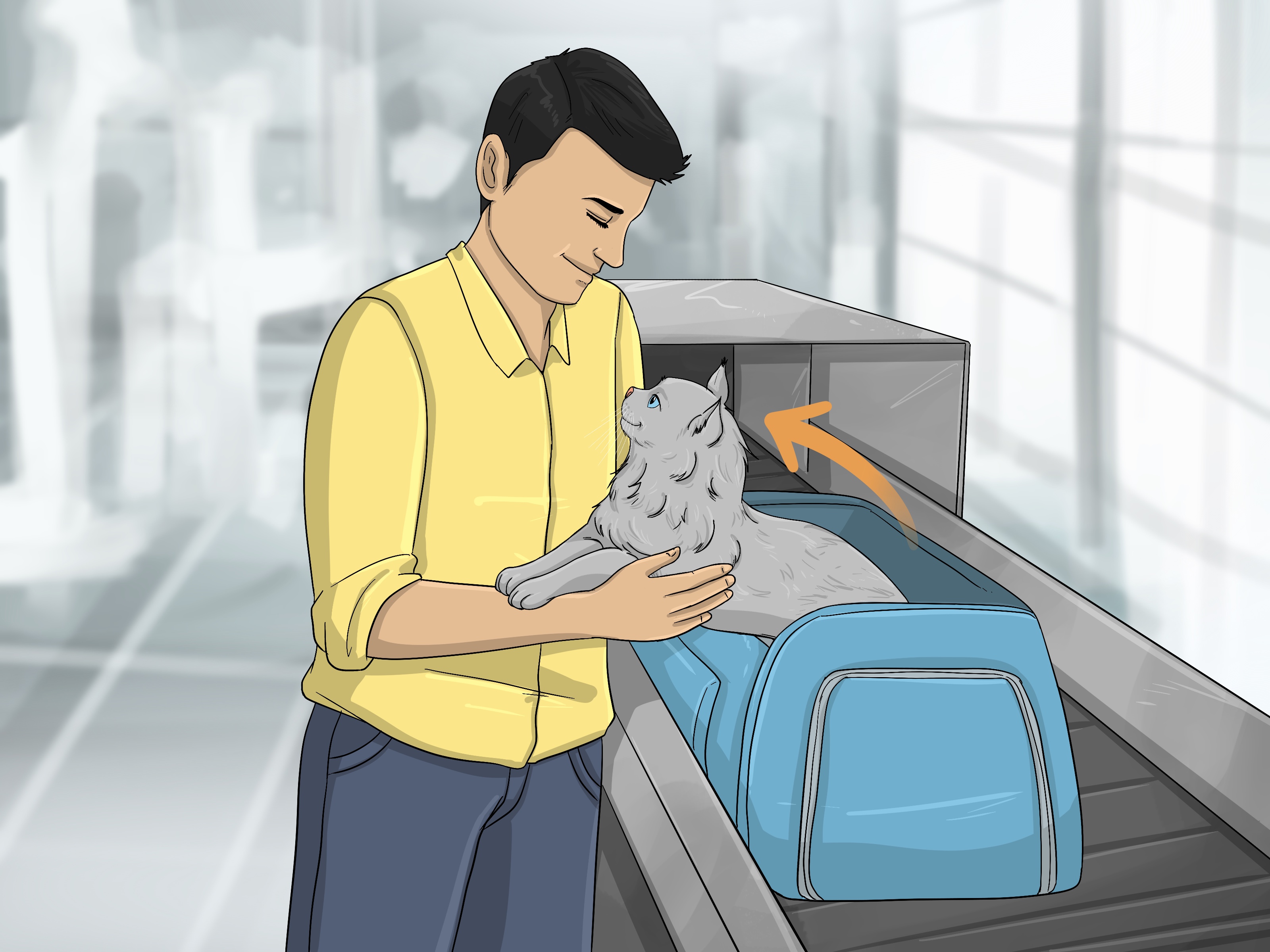
Airport security is usually the trickiest part of flying with cats. Carriers typically go through the X-ray machine, but cats do not. You will need to remove each cat from the carrier while holding them securely as you walk through screening.
For this reason, a properly fitted harness is extremely helpful. Put the harness on each cat before leaving home, not while standing in a noisy airport line surrounded by rolling bags and people who think your cat is there for a meet-and-greet.
If you are worried that a cat could escape, tell the security officer before screening begins. You may be able to request a private screening area. This can reduce the risk of a frightened cat bolting through a busy terminal.
Security Screening Tips
- Keep each cat securely harnessed.
- Use one adult per cat whenever possible.
- Ask about private screening if your cat is highly anxious.
- Keep carriers zipped and secure until instructed otherwise.
- Move calmly and avoid rushing.
- Return each cat to the correct carrier immediately after screening.
After security, find a quiet gate area away from barking dogs, crowded boarding lines, and children who may be tempted to investigate your “cute kitty backpacks.” Your cats need calm, not a preflight fan club.
Keep Your Cats Comfortable During the Flight
Once onboard, place the carriers under the seat in front of you as required by the airline. Cats usually need to remain inside the carrier for the entire flight, including boarding, taxiing, takeoff, landing, and deplaning.
Speak softly if your cats meow. A calm voice can be reassuring, especially when everything around them smells unfamiliar and makes loud airplane noises. Avoid opening the carrier during the flight, even if your cat gives you the saddest face ever created in the history of mammals.
For short flights, many cats do fine without eating or drinking. For longer travel days, offer small amounts of water during safe, quiet moments if your airline permits it and your cat can drink without escaping. Avoid large meals right before flying, especially for cats prone to nausea.
Remember that your cats may react differently. One may sleep like a tiny furry executive in first class. The other may narrate the entire flight in protest. Both reactions can be normal as long as your cats are safe, breathing comfortably, and not showing signs of severe distress.
Prepare Your Vacation Accommodation for Two Cats
Before you book your hotel, vacation rental, or family guest room, confirm that cats are allowed. Some properties welcome pets but only accept dogs. Others allow one pet but charge extra for a second. Read the rules carefully before arriving with two whiskered guests and a carrier full of opinions.
When you arrive, set up a safe room before releasing your cats. Choose a quiet bathroom, bedroom, or enclosed space with food, water, litter boxes, and bedding. Check for open windows, gaps behind furniture, exposed cords, toxic plants, and hiding places that would turn a simple checkout into a feline rescue operation.
Bring at least two litter boxes if possible. Even bonded cats may prefer separate bathroom arrangements when they are stressed or in a new environment. Give them time to settle before expecting them to act like confident vacation influencers.
What Traveling With Two Cats Actually Feels Like: Real-World Experience Tips
Traveling with two cats on a plane is less about perfection and more about creating enough calm around the chaos. The first major lesson many cat owners learn is that cats do not care how carefully you organized your itinerary. They care that the carrier suddenly appeared, the house smells like luggage, and their breakfast arrived at a suspiciously unusual time.
In real life, the smoothest two-cat trips start the night before. Pack your own suitcase early, because trying to fold shirts while two cats sit inside your open luggage is not productive. It is adorable, but not productive. Set out the carriers, documents, harnesses, towels, pads, and travel kit the night before so you are not searching for a rabies certificate while one cat is hiding behind the washing machine.
On departure morning, keep the home calm. Avoid chasing your cats around the house at the last minute. Put them in a quiet room with their carriers, then load them carefully when the car is ready. Cats are surprisingly skilled at detecting travel plans, and they may suddenly become invisible despite being approximately the size of a loaf of bread.
At the airport, extra time is worth everything. Arriving early gives you room for slower check-in, pet fee payment, carrier measurements, security screening, bathroom breaks, and unexpected gate changes. With two cats, every small task takes longer because you are managing two living creatures who may have very different feelings about public transportation.
One helpful experience-based tip is to assign roles when traveling with another adult. One person can manage documents, tickets, phones, and bags. The other can focus entirely on the cats. This is especially useful at security, where handling two carriers, two harnesses, boarding passes, shoes, and a laptop can make anyone feel like an airport circus performer.
During delays, stay calm even when your cats become vocal. Cats often respond to your energy. A soft voice, familiar blanket, and steady routine can help more than frantic carrier opening or repeated reassurance speeches. Your cats are not impressed by speeches. They are cats. They have already judged your performance.
At the destination, do not expect instant vacation behavior. Your cats may hide for several hours or even a day while they inspect their new surroundings. Let them emerge at their own pace. Set up food, water, litter, and cozy bedding in one quiet area. Avoid giving them access to the entire hotel room immediately, especially if there are spaces behind beds, under cabinets, or near doors that make escape too easy.
The return flight is usually easier because you know the routine. You already know which cat likes the carrier, which cat complains dramatically, and which cat believes airport security exists solely to inconvenience them. By the second leg of the trip, you will likely feel more confident, your cats will recognize the carriers, and everyone will have a better idea of what to expect.
Ultimately, traveling with two cats is manageable when you prepare early, respect airline rules, and prioritize your cats’ comfort over convenience. The goal is not to create a glamorous influencer vacation for your pets. The goal is to arrive safely with both cats, all paperwork, and at least a little of your sanity intact.
Final Thoughts on Flying With Two Cats
Taking two cats on a plane requires more planning than a normal vacation, but it can be done safely and successfully. Start with the airline’s pet policy, choose the right carrier arrangement, reserve pet space early, prepare travel documents, and practice carrier time well before departure.
The best two-cat travel plan is usually simple: choose a direct flight, give each cat enough safe space, arrive early, keep essential supplies close, and stay calm when your tiny passengers begin expressing their opinions. With thoughtful preparation, your cats can make it through the airport, the flight, and the vacation without turning the journey into a dramatic feline documentary.