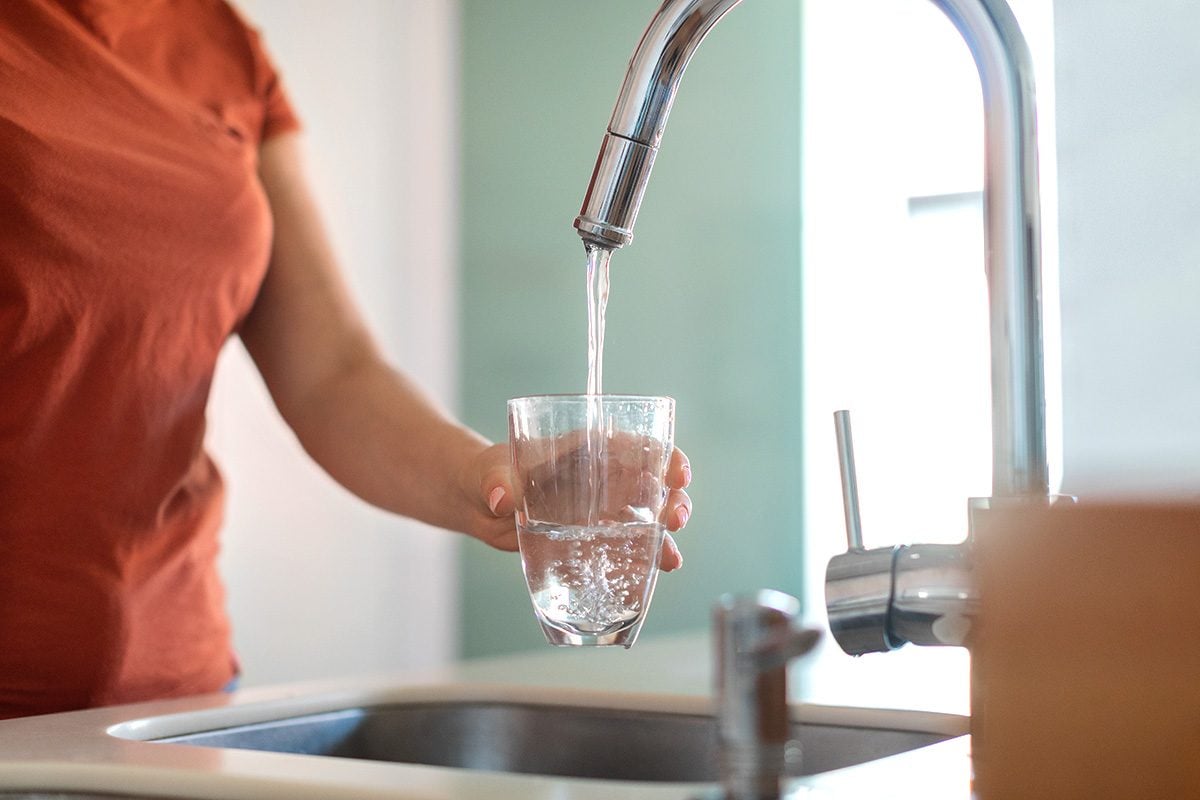

If the phrase forever chemicals makes you want to side-eye your kitchen faucet, you are not being dramatic. PFAS, short for per- and polyfluoroalkyl substances, earned that nickname because they are extremely persistent in the environment and in the human body. They do not show up with a weird color, funky smell, or suspicious sparkle. Your water can look perfectly innocent and still contain PFAS. That is exactly why testing matters.
The good news is that testing your drinking water for PFAS is absolutely doable. The less-good news is that it is not quite as simple as grabbing a generic “water purity” kit online and hoping science sorts itself out. PFAS testing works best when you use the right lab, the right method, and the right sample-collection routine. In other words, this is a “measure twice, panic never” situation.
This guide walks you through how to test your drinking water for forever chemicals, whether you get water from a public utility or a private well. We will cover how to decide if testing makes sense, how to choose a lab, how to collect a sample without accidentally sabotaging it, how to read the results, and what to do next if your numbers come back higher than you hoped.
What Are Forever Chemicals, Anyway?
PFAS are a large family of synthetic chemicals used for decades in products that resist heat, grease, stains, and water. Think nonstick cookware, stain-resistant fabric, some food packaging, certain industrial processes, and firefighting foam. Handy for products, not so charming when they wind up in groundwater, rivers, public water systems, or private wells.
When people talk about “testing for forever chemicals” in drinking water, they are usually talking about testing for a set of specific PFAS compounds that laboratories can measure reliably. Some of the names you will see most often are PFOA, PFOS, PFHxS, PFNA, PFBS, and GenX chemicals. That alphabet soup is annoying, but important: a lab report that only measures one or two PFAS may not tell the full story.
Do You Actually Need to Test Your Water?
If You Get Water From a Public Utility
Start by doing the cheapest, easiest thing first: check what your water supplier already knows. Public water systems are now under federal PFAS monitoring and notification requirements, and utilities publish annual water-quality information in Consumer Confidence Reports. So before paying for a homeowner PFAS test, look up your utility’s latest report, check the utility website, and search for recent PFAS notices or sampling updates.
If your water utility has recent PFAS results, you may not need your own tap-water test right away. For many households on regulated public water, the better first move is to learn what the system found, whether treatment is already in place, and whether your home receives the same source water as the published report.
If You Use a Private Well
Private wells are where testing becomes much more personal. The EPA does not regulate private wells the way it regulates public drinking water systems. That means no utility is automatically checking your water for you, mailing you a report, or putting a carefully worded notice in your inbox.
If you rely on a private well, PFAS testing is especially worth considering if your property is near an airport, military facility, industrial site, landfill, wastewater-related area, or a location with known contamination. It also makes sense if a neighbor’s well has had a PFAS problem, your state has mapped a nearby investigation, or you simply want a baseline because your well is your household’s whole water universe.
Step 1: Start With the Free Clues Before You Buy a Test
Before ordering anything, gather some context. This helps you decide whether you need a targeted PFAS test, a broader panel, or just more information from your water supplier.
- Look up your public water system’s latest Consumer Confidence Report if you are on municipal water.
- Search your state environmental or health department website for PFAS investigations, maps, advisories, or neighborhood data.
- Check whether your address is near a known source area or a cleanup site.
- Ask your county health department whether private wells in your area have been tested before.
- Find out whether your neighbors have already paid for PFAS testing and what they learned.
This step may save you money, or at least help you buy the right test the first time. Nobody enjoys paying premium prices for the wrong lab panel. That is a hobby nobody needs.
Step 2: Choose the Right Kind of PFAS Test
Not all PFAS tests are created equal. Some basic water kits check for bacteria, lead, hardness, or nitrates but do nothing for PFAS. Others market themselves as “at-home tests” but are really just mail-in sampling kits that send your water to a real lab. That second type can be useful. The first type may give you confidence without giving you answers.
For drinking water, the gold standard is lab-based analysis using EPA drinking-water methods. The two method names you want to know are EPA Method 533 and EPA Method 537.1. These are widely recognized methods for measuring PFAS in drinking water. If a seller cannot tell you what method the lab uses, that is your cue to back away slowly.
When comparing options, ask these questions:
- Is the sample analyzed by a state-certified or accredited laboratory?
- Does the lab use EPA Method 533, EPA Method 537.1, or another clearly identified drinking-water PFAS method?
- How many PFAS compounds are included in the panel?
- What are the reporting limits or detection limits?
- Will the lab provide a full report showing each analyte, not just a pass/fail summary?
That last point matters. A proper PFAS lab report should tell you what was tested, what was detected, and at what level. “Looks fine to us” is not a scientific unit.
Step 3: Pick a Certified Lab, Not Just a Convenient Listing
The best path is usually through your state. EPA advises homeowners to contact their state laboratory certification program to find out which laboratories are certified or recommended for PFAS drinking-water analysis. Many states publish lists of labs that accept homeowner samples, and some states even provide special instructions or test kits for residents.
When you contact a lab, ask for three things right away:
- The method used. Ideally, this is Method 533 or 537.1 for drinking water.
- The reporting limit. This tells you how low the lab can reliably report results.
- The sample kit instructions. PFAS can be measured at very tiny concentrations, so sloppy collection can ruin the test.
A smart follow-up question is: “If my result says not detected, what was the reporting limit?” That question is underrated. “Not detected” does not always mean zero. It may mean the substance was below the lab’s reporting threshold.
Step 4: Collect the Sample Carefully So You Do Not Contaminate It
This is the part where PFAS testing gets a little fussy. Because PFAS can appear at extremely low levels, the materials around you can sometimes interfere with the sample. Some state guidance warns homeowners to follow lab instructions closely and avoid materials advertised as waterproof, stain-resistant, or dirt-repellent when collecting samples. In plain English: this is not the day for your miracle rain jacket or your “coffee bounces right off” apron.
Here is the safe, practical playbook:
- Use the sample bottle the lab provides. Do not swap in your own bottle.
- Read the lab’s instructions before turning on the tap.
- Wash your hands and keep the bottle interior and cap interior untouched.
- Do not use random gloves unless the lab says they are acceptable.
- Avoid collecting the sample after using cosmetics, lotions, sunscreen, or products that might interfere.
- Use the tap the lab recommends, often the kitchen cold-water tap or a raw-well sampling point.
- Keep the chain-of-custody form, labels, and shipping instructions exactly as provided.
Some labs want the water to run for a short period first. Others want a first-draw sample from a specific location. Follow the instructions from the kit, because the correct procedure depends on the testing objective. This is one of those rare moments in adult life where being annoyingly obedient is the correct strategy.
Step 5: Learn How to Read the Lab Report Without Spiraling
PFAS results are usually reported in ppt (parts per trillion) or ng/L (nanograms per liter). In drinking water, those units are effectively the same. If your report lists 4 ng/L, that is 4 ppt.
Here is what to look for:
- Analyte name: Which PFAS compound was tested.
- Result: The amount found in your sample.
- Non-detect: The compound was not found above the reporting limit.
- Reporting limit: The level below which the lab cannot reliably report a result.
- Method: The testing method used.
Do not make the classic mistake of scanning for one scary chemical and ignoring the rest. PFAS are often found in mixtures, and the overall pattern can matter as much as an individual number.
What Numbers Matter Right Now?
For U.S. public drinking water systems, EPA’s current enforceable limits are very low. Even if you have a private well, these numbers are still useful reference points when you are trying to understand whether your results deserve urgent attention.
| PFAS | EPA Drinking Water Reference |
|---|---|
| PFOA | 4 ppt |
| PFOS | 4 ppt |
| PFHxS | 10 ppt |
| PFNA | 10 ppt |
| HFPO-DA (GenX chemicals) | 10 ppt |
| Mixtures containing PFHxS, PFNA, HFPO-DA, and PFBS | Hazard Index of 1 |
If you are on a private well, your state may use public-water standards or health-based guidance to help interpret your results. That is why the next call after an elevated result is often your state health or environmental agency, not your group chat.
What to Do If PFAS Are Detected
A detection is not the same thing as a full-scale household emergency, but it does mean you should move from guessing to action.
1. Confirm What the Result Means
Start by asking the lab or your state agency to help interpret the numbers. A single detection below a reporting concern is different from multiple PFAS above current benchmarks. Context matters.
2. Reduce Ingestion Exposure First
If levels are elevated, focus on the ways water gets swallowed: drinking, cooking, brushing teeth, making coffee, making soup, and mixing infant formula. EPA and ATSDR both point people toward alternate water or treatment when PFAS is a concern. Boiling is not the answer. It does not remove PFAS and can make a stressful situation feel productive without actually being productive.
3. Consider a Filter That Is Actually Certified
For home treatment, the most common options are granular activated carbon and reverse osmosis. EPA and state health agencies also point to anion exchange in some settings, but for households, GAC and RO are the most familiar paths.
When shopping, do not just look for the word “PFAS” in giant marketing font. Look for certification details. NSF’s listings let you search for products certified for PFOA reduction, PFOS reduction, and Total PFAS reduction. A certified claim is much more useful than a box that basically says, “Trust us, bro.”
4. Retest After Treatment
If you install a filter, test again after the system has been installed and running properly. That tells you whether the unit is doing what you paid for. Keep replacing cartridges or membranes on schedule, because even a great filter turns into an expensive paperweight if maintenance gets ignored.
How Often Should You Retest?
There is no one-size-fits-all PFAS retesting schedule for homeowners. Retesting makes sense when:
- your first sample showed detectable PFAS,
- a nearby contamination source is identified or expands,
- you install treatment and want to verify performance,
- your state agency recommends follow-up sampling, or
- there is a major change in your well, plumbing, or water source.
If your initial test is non-detect, that is encouraging, but it is not a forever guarantee. Conditions can change, nearby sources can be discovered later, and different labs may use different reporting limits. Think of a clean PFAS test as useful information, not a magical shield.
Common Mistakes People Make When Testing for Forever Chemicals
- Using a vague kit with no real lab behind it. If you cannot verify the lab and method, skip it.
- Ignoring the reporting limit. “Not detected” is only meaningful if you know how low the lab could measure.
- Testing blood before water. Blood testing has important limitations and does not identify the source of exposure. Water testing answers the practical household question first.
- Assuming public water means zero risk or private well means guaranteed contamination. Neither is automatically true.
- Buying a filter based on keywords alone. Certification and maintenance matter more than dramatic packaging.
- Collecting the sample casually. PFAS testing is sensitive enough that details matter.
Real-World Experiences People Commonly Have When Testing for PFAS
One reason PFAS testing feels confusing is that the experience differs wildly depending on where you live. A city renter on a large public water system usually starts with a utility report and a few web searches. A private well owner, on the other hand, may feel like they just got promoted to unpaid water utility manager of the year. Same faucet. Very different plot.
A common public-water experience goes like this: someone reads a headline about forever chemicals, gets alarmed, and immediately starts shopping for countertop filters at midnight. Then they discover their utility has already published PFAS sampling results, maybe even with a treatment plan or timeline. That does not mean the concern was silly. It means the smartest first move was information, not impulse buying. A lot of people feel better once they realize there is already system-level data available and that they are not starting from zero.
The private-well experience is often more stressful. Many homeowners report that the hardest part is not collecting the sample. It is figuring out whom to trust. One lab offers a cheaper panel, another offers a bigger panel, one says Method 533, another says modified method, and suddenly you are learning analytical chemistry against your will. That confusion is normal. It is also why state-certified lab lists are so helpful. They narrow the field from “the entire internet” to options that at least start in the grown-up section of the store.
Another frequent experience is sticker shock. PFAS testing is not usually priced like a basic bacteria check. Homeowners often expect a quick, cheap yes-or-no answer and instead discover that reliable PFAS analysis costs more because the chemistry is specialized and the concentrations are tiny. That cost can be frustrating, but most people who go through the process say the clarity is worth it. Not because the results are always dramatic, but because uncertainty is exhausting.
Then there is the emotional roller coaster of the report itself. People often brace for one giant scary result and are surprised to get a list of compounds, detection limits, abbreviations, and notes that read like they were written for a highly literate robot. A very common reaction is, “I have the results, but I do not yet have understanding.” That is why interpretation matters as much as testing. The report is the beginning of the conversation, not the end.
Homeowners who install treatment often describe a second phase: relief mixed with suspicion. Relief because they finally did something. Suspicion because now they want proof the filter is actually working. That follow-up instinct is a good one. Testing after installation gives people something precious in environmental health: a before-and-after comparison that is about their own water, not a brochure, not a neighbor, and not a brand promise.
There is also a quieter experience that does not get enough attention: sometimes the result is non-detect, and the homeowner still feels unsettled. That is understandable. People worry about whether the reporting limit was low enough, whether they sampled correctly, or whether conditions could change later. The healthiest response is usually neither total complacency nor endless doom-refreshing. It is to keep the report, note the lab and method used, stay aware of local developments, and retest when there is a good reason. Calm, documented vigilance beats panic every time.
In the end, most people who test their water for PFAS come away with the same lesson: the process is less about hunting for one terrifying number and more about getting reliable information so you can make better decisions. That might mean doing nothing right now, installing a certified filter, talking with your state agency, or planning a follow-up test. But once you have solid data, the faucet stops feeling like a mystery box. And that alone is a big deal.
Final Thoughts
If you want to test your drinking water for forever chemicals, the smartest path is also the least glamorous: start with existing public information, use a state-certified or accredited lab, ask for EPA Method 533 or 537.1 when appropriate, follow the sample instructions like they are sacred text, and read the results with an eye on reporting limits as well as detections.
PFAS testing is not about becoming a chemist overnight. It is about turning uncertainty into decisions you can actually use. Check the data. Ask sharper questions. Use certified treatment if needed. Retest when it makes sense. That is how you bring a stubborn modern contaminant problem down to a manageable household plan.
SEO Tags