
Writing a funny comic strip looks easy right up until you stare at a blank panel and realize your character has the charisma of a damp paper towel. The good news is that humor in comics is not magic. It is structure, timing, character, and a willingness to cut the line you thought was brilliant because your drawing of a confused pigeon is somehow funnier.
If you want to learn how to write a funny comic strip, start by thinking smaller, sharper, and weirder. A comic strip is not a giant movie squeezed into boxes. It is a short visual joke, moment, or mini-story that lands fast. The best strips usually combine a clear premise, readable panels, concise dialogue, and a punchline that arrives just a beat later than the reader expects. That tiny delay? That is where the laugh sneaks in wearing sunglasses.
In this guide, you will learn how to generate comic strip ideas, build characters people instantly recognize, write punchy dialogue, pace your panels, and revise your jokes until they finally do what they were hired to do: be funny.
What Makes a Comic Strip Funny?
A funny comic strip is usually built on surprise. Readers think they know where the strip is going, and then the final panel pulls the rug out from under them. Sometimes that surprise comes from a misunderstanding. Sometimes it comes from exaggeration, irony, visual contrast, or a character saying something with complete confidence that is obviously ridiculous.
Humor also works better when the strip is clear. If your reader has to decode who is speaking, what is happening, where they are standing, and why the toaster is wearing a crown, the joke may arrive long after the laugh has packed up and gone home. Clarity is not the enemy of creativity. It is the launch ramp.
Funny strips also tend to be specific. “A dog does something silly” is vague. “A therapy dog needs emotional support before entering the therapist’s office” is a comic premise. The more precise the situation, the easier it is to build a joke with shape.
Start with a Comic Premise, Not a Random Gag
Many beginners try to begin with a punchline. That can work, but it often produces a strip that feels backward or forced. A better method is to begin with a comic premise: a situation that already contains tension, contrast, or absurdity.
Strong comic premises often come from:
- Ordinary situations with one ridiculous twist
- Characters taking a small problem far too seriously
- Animals, objects, or children behaving with adult logic
- A clash between expectation and reality
- A character trait pushed one click past normal
For example, instead of “I need a joke about coffee,” try “A barista who treats every latte order like a dramatic courtroom case.” That idea already contains voice, conflict, and room for escalation.
When brainstorming, write at least ten bad ideas on purpose. This is not failure. This is comedy mining. Most funny strips are found by digging through a pile of unfunny ones and finding the one nugget that makes you mutter, “Okay, that one has potential.”
Create Characters with One Clear Trait and One Contradiction
Funny comic strips often rely on recurring characters because readers can laugh faster when they already understand who the people are. You do not need a giant backstory. You need a readable personality.
A useful shortcut is to give each character one dominant comic trait and one contradiction.
Examples:
- A wizard who is incredibly powerful but bad at basic errands
- A cat who believes it is the responsible adult in the household
- A pirate who is fearless at sea but terrified of group texts
- A superhero with amazing strength and terrible timing
The trait makes the character memorable. The contradiction makes the character funny. It also helps you write future strips without inventing a whole new comedic universe every time.
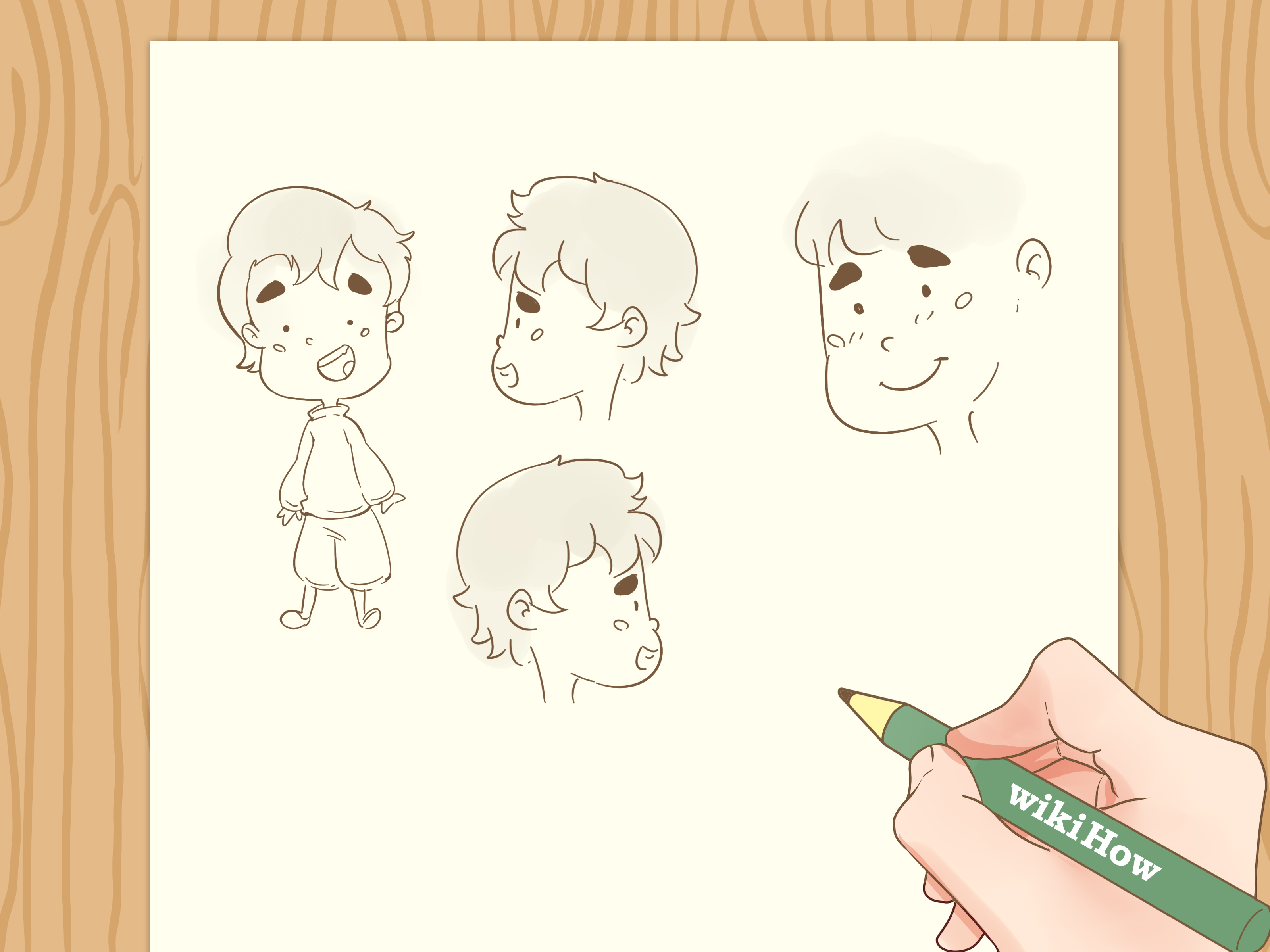
Visually, simple designs help. If your character can be recognized by silhouette, hairstyle, posture, or one repeated expression, you are already making your strip easier to read. And in comics, easier to read usually means easier to enjoy.
Choose a Structure That Fits the Joke
Structure matters because comic strips are short. You do not have room for wandering. Even chaos needs a floor plan.
The three-panel comic strip
This is the classic comedy machine:
- Panel 1: Setup
- Panel 2: Build or complicate
- Panel 3: Punchline or reveal
Example:
Panel 1: “I’ve finally become a minimalist.”
Panel 2: “I got rid of everything that did not spark joy.”
Panel 3: The character stands in an empty room, holding only a giant tub of cheese balls.
This structure works because the final image redefines everything that came before it.
The four-panel comic strip
If you want a little more breathing room, use four panels:
- Panel 1: Introduce the situation
- Panel 2: Reinforce the expectation
- Panel 3: Twist the angle
- Panel 4: Deliver the joke
Four panels are excellent when the humor depends on timing, awkward pauses, or a reaction shot. Never underestimate the comedy of one silent panel where a character simply stares into the middle distance like their soul just left to get snacks.
Write the Setup So the Punchline Can Breathe
One of the biggest mistakes in comic-strip writing is over-explaining the setup. If readers need a paragraph to understand the joke, the joke may be applying for retirement.
Your setup should do only what is necessary:
- Establish who is present
- Show the situation
- Point the reader in one likely direction
Then the punchline changes the meaning. It should not merely repeat the setup in louder clothing.
Say you are writing a strip about a vampire in a job interview. A weak version explains every detail. A stronger version moves quickly:
Panel 1: Interviewer: “Where do you see yourself in five years?”
Panel 2: Vampire: “Avoiding mirrors, as usual.”
Panel 3: Interviewer, scribbling notes: “Excellent long-term planning.”
The setup is lean. The joke lands because the final response twists the meaning.
Make the Visuals Carry Half the Joke
If the humor only exists in the dialogue, you may have written a skit wearing comic-strip shoes. Comics are visual storytelling. Let the drawings do some heavy lifting.
Funny visuals can come from:
- Facial expressions
- Body language
- Props
- Scale
- Background details
- Silent reactions
For example, if a character says, “I packed light,” the drawing is where the joke can explode. Maybe they are dragging twelve rolling suitcases, a lamp, and a framed oil portrait of their lizard. Now the line and the image are working together instead of fighting for custody of the laugh.
A good rule is this: if the drawing and the text say the exact same thing, cut one of them. Redundancy can flatten humor. Let the image surprise the text, or let the text reframe the image.
Keep Comic Dialogue Short, Clear, and Character-Specific
Dialogue in comic strips has to earn its place. Space is limited. Speech bubbles are not studio apartments for monologues.
Good comic dialogue usually does three things:
- Sounds natural enough to feel alive
- Is brief enough to keep the panel readable
- Matches the speaker’s personality
Each character should sound a little different. One may be dramatic. Another may be blunt. Another may always speak with suspicious confidence despite being wrong almost every time. Distinct voices make even simple exchanges funnier.
Read your lines aloud. If you run out of breath, trip over the rhythm, or sound like you are auditioning for the role of Overwritten Person #4, trim it down.
Often the funniest version of a line is not the cleverest one. It is the shortest one. Compare:
Too much: “I believe the circumstances surrounding this sandwich are, frankly, highly disappointing.”
Better: “This sandwich has betrayed me.”
The second line is faster, sharper, and more memorable. Also, it sounds like a comic character and not a disappointed regional manager.
Use Timing Like a Cartoon Surgeon
Comedy is timing, and timing in a comic strip comes from panel order, spacing, silence, and emphasis. The joke is not just what happens. It is when the reader discovers it.
You can slow a moment down with an extra panel, a pause, or a blank stare. You can speed it up with one shocking reveal. Bigger panels can give a moment importance. Tiny repeated panels can create a drumbeat of awkwardness.
Speech bubble placement matters too. Readers typically follow a visual flow, so make sure the order of dialogue is obvious. If someone speaks first, their bubble should appear first in the reading path. Confused reading order is a reliable way to turn a joke into a puzzle nobody asked for.
Silence is useful. A reaction panel with no words can be the funniest beat in the strip because it lets the reader participate. The brain fills in the emotional crash landing.
Try These Reliable Humor Techniques
1. Exaggeration
Take a normal feeling and push it too far. A mildly stressed student becomes someone color-coding their panic.
2. Incongruity
Put two things together that do not belong together. A knight at a drive-thru. A goldfish with a leadership podcast.
3. Reversal
Let the expected authority figure be clueless while the side character makes perfect sense.
4. Literal thinking
Have a character interpret a phrase exactly as spoken. “Break a leg” becomes a medical emergency.
5. Callback
Reuse a phrase, prop, or behavior later in the strip for a stronger payoff.
6. Reaction humor
Sometimes the joke is not the event. It is the expression on the face of the person forced to witness it.
Revise the Strip Until It Stops Wheezing
First drafts are where comic strips go to be awkward. That is normal. Funny writing usually gets funnier in revision.
When revising, ask:
- Can I cut any words?
- Is the premise clear by panel one?
- Does each panel add something new?
- Is the final panel surprising enough?
- Can the drawing replace a line of dialogue?
- Does the strip read in the right order instantly?
Try making three alternate punchlines. Then try one with no punchline at all, just a visual reveal. Then try a version where the same premise is given to a different character. Revision is not punishment. It is where the strip finds its real personality.
Also, save jokes that do not fit. A failed strip can become next week’s strong opening line. Comedy loves recycling almost as much as it loves embarrassing pigeons.
Common Mistakes That Flatten a Funny Comic Strip
- Too much text: If the balloon looks like a legal memo, reduce it.
- Unclear setup: Readers should understand the situation quickly.
- No escalation: The middle panel should increase tension or absurdity.
- Predictable ending: The last panel should add a new angle, not repeat the obvious.
- Generic characters: Funny voices beat placeholder dialogue every time.
- Visual clutter: Too many details can hide the actual joke.
If your strip is not working, do not just polish the final line. Check the entire machine. Sometimes the punchline is fine, but the setup is pointing at the wrong target.
A Simple Formula for Your First Funny Strip
If you want a practical starting point, use this:
- Pick a relatable topic: work, pets, school, family, technology, chores, dating, food.
- Give the topic a twist: treat it too seriously, too literally, or too emotionally.
- Create one strong character voice.
- Build a three-panel setup, escalation, and payoff.
- Cut ten percent of the words.
- Make the final image sharper than the text.
Example topic: online meetings.
Twist: the mute button acts like a jealous villain.
Character: a worker who believes technology is personally offended by them.
Now you have a strip worth drafting.
Final Thoughts
Learning how to write a funny comic strip is really about learning how to think in panels. You are not just writing jokes. You are designing the reader’s experience one beat at a time. The words matter. The drawings matter. The silence matters. The final reveal matters most of all.
Start with a small premise. Build around a clear character. Keep the dialogue lean. Let the art do real comic work. Revise until the strip reads smoothly and lands fast. Most of all, keep making them. Funny comic strips are rarely born perfect. They are sketched, trimmed, redrawn, reworded, and occasionally rescued by one excellent facial expression.
That is the beauty of the form. A few boxes, a few lines, one strange idea, and suddenly you have created a tiny machine for laughter. Not bad for a rectangle-based lifestyle.
Experience: What It Really Feels Like to Write a Funny Comic Strip
The experience of writing a funny comic strip is part creativity, part engineering, and part standing in your kitchen whispering, “Why is this goose not funny yet?” At first, most people assume the hard part is drawing. Then they discover the truly sneaky challenge: finding a joke that is clear, quick, and worth the ink. A comic strip gives you so little space that every choice feels louder. One extra word can make a balloon feel cramped. One unnecessary background detail can pull the eye away from the punchline. One weak middle panel can make the whole strip wobble like a folding table at a family reunion.
There is also a strange emotional rhythm to the process. The first moment is exciting because the idea seems hilarious in your head. Then you sketch it, and somehow the characters look like they are delivering tax advice. That is when experience starts to matter. Writers and cartoonists learn that the joke in your imagination is only version one. Once it hits the page, you begin seeing what the reader will actually see. Maybe the funniest part is not the final line after all. Maybe it is the tiny pause before it. Maybe it is the expression in panel two. Maybe the whole strip gets better when the dog says nothing and just judges everyone with his eyebrows.
Another common experience is realizing that humor becomes stronger when you stop trying so hard to sound funny. The strips that work best often come from observing real behavior: petty arguments, social awkwardness, inflated confidence, tiny disappointments, and the heroic drama people attach to ordinary life. The more honestly you capture those feelings, the funnier the comic can become. Readers laugh because they recognize themselves, their friends, their families, or the weird little monologue that lives in their own heads.
Over time, writing funny comic strips becomes less about waiting for inspiration and more about developing habits. You start collecting odd phrases, visual ideas, overheard conversations, and ridiculous “what if” scenarios. You learn to sketch quickly, cut ruthlessly, and test whether a joke works without explaining it. You also get better at surviving the fact that some strips simply do not land. That is not a disaster. It is the job. One day a joke falls flat, and the next day that same premise returns wearing a better hat and suddenly works.
In the end, the experience is deeply satisfying because a comic strip lets you create a complete little world in a very small space. It can be silly, sharp, warm, sarcastic, absurd, or surprisingly sweet. When the final panel clicks and the rhythm feels right, there is a distinct kind of joy to it. You are not just telling a joke. You are making a reader pause, look, connect the beats, and laugh. That is a pretty magical result for a handful of boxes and a couple of weird people arguing over cereal.