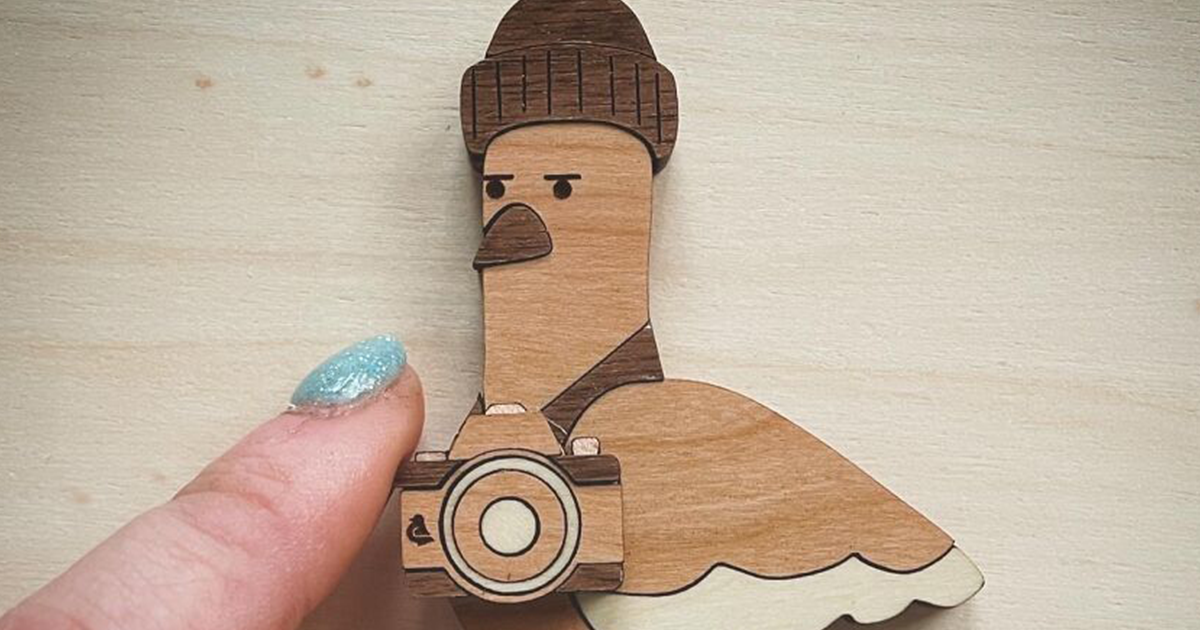

Some people buy a houseplant when they need a creative reset. Others download a meditation app and then forget the password. I, apparently, create tiny personality-packed animals with a laser cutter and assign them emotional baggage, side hustles, and suspiciously curated Spotify playlists.
The project started with one simple idea: what would animals look like if they were Millennials? Not just animals wearing glasses, although yes, there are glasses. I wanted to design a small collection of laser-cut creatures that captured the mood of a generation raised on dial-up internet, participation trophies, economic plot twists, iced coffee, and the deep belief that a tote bag can solve almost any organizational problem.
So I created six Millennial animals using a laser cutter: a fox, sloth, raccoon, cat, owl, and turtle. Each one became a miniature character with a tiny backstory, a visual style, and enough personality to make you wonder whether it has a LinkedIn profile. The result was part art project, part design experiment, and part group therapy session for anyone who has ever said, “I’ll just make coffee at home,” while holding a $7 latte.
Why Make Millennial Animals With A Laser Cutter?
Laser cutting is one of those technologies that feels futuristic and crafty at the same time. It can cut clean shapes, engrave fine details, and turn a flat sheet of acrylic, plywood, cardboard, or MDF into something with dimension and personality. For artists and makers, that combination is addictive. It gives you the precision of a machine and the charm of handmade design.
Millennial culture, meanwhile, is rich with visual storytelling. This generation is often associated with nostalgia, digital fluency, side hustles, wellness language, social awareness, financial anxiety, and a love of objects that feel personal rather than mass-produced. That makes it surprisingly perfect for character design. A Millennial animal can be cute, funny, anxious, ambitious, eco-conscious, and over-caffeinated all at once. In other words, extremely realistic.
I chose laser cutting because it allowed me to create crisp outlines, layered bodies, engraved facial expressions, and small accessories without losing detail. A hand-painted animal can be expressive, but a laser-cut animal has a wonderfully graphic quality. It looks like it belongs on a shelf, in a boutique gift shop, or beside a laptop covered in stickers that say things like “Mostly Thriving.”
The Creative Concept: Six Tiny Animals, Six Very Specific Vibes
The goal was not to make generic animal decorations. I wanted each creature to feel like a character you might meet at a farmers market, coworking space, or apartment with too many plants and not enough natural light. Each design needed three things: a strong silhouette, a recognizable Millennial personality, and enough detail to be fun without becoming a cutting-table nightmare.
Laser cutters are amazing, but they are not magic wands. Fine details can burn away if they are too thin. Pieces can warp if heat builds up. Engraving can look muddy if the artwork is overcomplicated. That meant every animal had to be designed with both storytelling and fabrication in mind. A tiny engraved laptop sticker? Great. A microscopic reusable straw? Adorable in theory, tragic in acrylic.
Meet The 6 Millennial Animals
1. The Fox Who Runs A Personal Brand
The fox was the first animal I designed, mostly because foxes already look like they know how to optimize a landing page. This little laser-cut fox wears a tiny scarf, has engraved eyebrows full of strategy, and carries a miniature phone for “content creation,” which is what we now call taking 47 photos of the same coffee.
Its backstory is simple: the fox left a corporate job to become a consultant, then accidentally became a motivational newsletter. It talks about boundaries, owns a ring light, and says “Let’s circle back” even when ordering tacos. The laser cutter helped bring out the sharpness of the character by cutting angular ears, a pointed tail, and small engraved details that give the face a clever, slightly exhausted look.
2. The Sloth With A Wellness Routine
The sloth was designed as the patron saint of burnout recovery. It has soft rounded shapes, sleepy engraved eyes, and a tiny yoga mat tucked under one arm. Unlike the fox, the sloth is not trying to scale anything. It is trying to drink enough water and make it through the week without downloading another productivity app.
This design used slower visual lines and layered shapes to suggest softness. I kept the outline simple and added personality through engraved details: a calm smile, a leafy snack, and a tiny patch that says “Rest Club.” The joke, of course, is that rest has become an achievement. The sloth knows this and has chosen not to attend the meeting.
3. The Raccoon Who Loves Vintage Everything
The raccoon is a thrift-store legend. It wears round glasses, carries a reusable tote, and has the expression of someone who found a mid-century lamp for $12 and will mention it for the next eight years. Raccoons already have a reputation for collecting things, so turning one into a vintage-obsessed Millennial felt almost too easy.
This was one of the most fun pieces to design because raccoons have strong graphic features. The mask, striped tail, and tiny paws gave me natural shapes to cut and engrave. I added a small record player accessory and engraved stars around it, because this raccoon absolutely owns vinyl and has opinions about pressing quality.
4. The Cat Who Works Remotely
The cat is the remote-work professional of the group. It sits beside a tiny laptop, wears headphones, and looks mildly annoyed, which is the official facial expression of video meetings. This cat has not worn real pants since 2020 and has no intention of changing its personal brand.
The design included a layered laptop, a coffee cup, and engraved keyboard lines. I had to simplify the keys because too many thin engravings made the laptop look like it had been attacked by a swarm of digital ants. Once simplified, the piece became charming and readable. The cat’s backstory is that it works in project management, has excellent Slack etiquette, and occasionally types “Sounds good!” while staring into the middle distance.
5. The Owl With A Graduate Degree And Student Loans
The owl became the intellectual of the collection. It wears tiny glasses, holds a stack of books, and has wings shaped like lecture notes. It is very wise, but not necessarily financially relaxed. This character represents the highly educated, over-researched, decision-fatigued Millennial who reads reviews before buying toothpaste.
From a laser-cutting perspective, the owl was all about symmetry. The feathers needed repetition, the eyes needed contrast, and the books had to be clear without becoming too delicate. I used engraved lines to suggest pages and layered acrylic to give the eyes more depth. The final owl looks like it could explain the housing market and then ask if anyone has a coupon code.
6. The Turtle Who Is Saving For A House
The turtle is slow, steady, and deeply aware of interest rates. It carries a tiny backpack, has a shell engraved with little apartment windows, and looks determined in the way only a creature with a 10-year plan can look. The turtle is not lazy. The turtle is budgeting.
This design allowed for the most texture. The shell became a place to engrave patterns, small symbols, and subtle jokes. I added a tiny key charm to represent the dream of homeownership, but kept it comically small because, well, realism. The turtle may be moving slowly, but at least it has a spreadsheet.
Designing For Laser Cutting: Cute Ideas Must Survive The Machine
Designing for a laser cutter is different from sketching in a notebook. Every line has a job. Some lines cut all the way through the material. Others score the surface. Others engrave texture or details. If those instructions are not clear, your charming fox can quickly become modern abstract confetti.
The first major design rule is understanding kerf. Kerf is the tiny amount of material removed by the laser beam as it cuts. It may seem minor, but it matters when pieces need to fit together. A slot that looks perfect on a screen can be too loose or too tight in real life. For layered animal designs, kerf affects tabs, stands, accessories, and interlocking pieces.
The second rule is choosing the right material. Acrylic can create smooth, polished-looking edges and bright engraved marks, especially when the settings are dialed in correctly. Plywood offers warmth and a handmade feel. MDF is affordable and consistent, although it needs careful ventilation. Cardboard is great for prototypes because it is cheap, fast, and humble enough to accept failure.
The third rule is testing before committing. I made small sample cuts before producing the final animals. This helped me check line thickness, engraving depth, fit, and overall scale. A detail that looks bold on a 15-inch artboard may disappear on a 3-inch animal. Laser cutting rewards patience. It also punishes optimism, usually with smoke.
Why Acrylic Worked So Well For These Characters
Acrylic was my favorite material for the final versions because it gave the animals a clean, modern look. It also matched the playful “designer object” feeling I wanted. Clear acrylic felt too sleek for some characters, while colored acrylic added personality immediately. A muted orange worked beautifully for the fox. A soft green suited the turtle. Smoky gray made the raccoon feel like it had definitely been inside a thrift shop basement.
Cast acrylic is often preferred for engraving because it can produce a frosty white mark with good contrast. That was useful for facial expressions, fur lines, tiny accessories, and little jokes hidden in the design. The engraved details made each animal feel intentional rather than flat.
However, acrylic also requires respect. Proper ventilation matters, material identification matters, and not every plastic belongs in a laser cutter. PVC, for example, should not be cut because it can release dangerous gases and damage equipment. A cute project is not worth turning your workspace into a villain origin story.
The Making Process: From Sketch To Tiny Existential Animal
Step 1: Sketching The Personality
I began each animal with a written personality profile before drawing the shape. That may sound excessive, but it helped. The fox was sharp and ambitious, so its ears and tail were angular. The sloth was soft and calm, so it needed rounded edges. The owl was academic, so symmetry and layered details made sense. The turtle needed a shell that could carry the joke visually.
Once the personality was clear, the design choices became easier. Accessories were not random decorations; they were clues. The reusable tote told you something about the raccoon. The laptop told you something about the cat. The tiny key told you everything about the turtle’s Zillow history.
Step 2: Creating Vector Artwork
Laser cutters rely on vector files for clean cutting paths. I converted the sketches into simplified shapes, then separated cutting lines from engraving lines. Clean vector artwork is essential because the laser follows the file exactly. It does not understand “vibes.” It understands paths, colors, line weights, and settings.
This is where I removed anything too fragile. Thin whiskers, tiny claws, and microscopic lettering had to be enlarged or simplified. Good laser-cut design often means knowing what to leave out. The best detail is the one that survives.
Step 3: Prototyping In Cardboard
Before cutting acrylic, I made cardboard prototypes. Cardboard is the creative equivalent of a rehearsal dinner: useful, slightly chaotic, and full of information. The prototypes showed me which animals felt balanced, which accessories were too small, and which stands needed adjustment.
The first cat prototype tipped backward because the laptop made the front too visually heavy but not physically balanced. The turtle’s shell pattern looked too busy. The fox’s scarf initially looked like a medical bandage, which was not the brand direction. These are the kinds of issues you only catch when the design leaves the screen.
Step 4: Cutting, Engraving, And Assembling
After testing, I cut the final pieces from acrylic sheets. I kept protective masking on during cutting to reduce surface marks, then peeled it away after the pieces cooled. This part is deeply satisfying. Removing masking from freshly cut acrylic is the maker version of peeling a phone screen protector, except you get to feel productive instead of just weirdly pleased.
Assembly was simple but careful. Some animals were single-piece silhouettes with engraved features. Others used layered parts for eyes, accessories, or stands. I used a light touch with adhesive because glue mistakes on acrylic are not shy. They appear immediately and judge you forever.
What These Millennial Animals Say About Modern Handmade Art
Projects like this sit in a fun space between digital fabrication and emotional storytelling. A laser cutter is a precision tool, but the final result does not have to feel cold. In fact, the contrast is part of the charm. The machine creates clean edges; the artist gives those edges meaning.
Millennial buyers and viewers often respond to objects that feel personal, humorous, nostalgic, and useful as conversation starters. These animals are not just decorations. They are tiny mirrors. The remote-work cat, the budget turtle, and the wellness sloth work because people recognize themselves in them. The joke lands because it is affectionate, not cruel.
That is the heart of good character design: specificity. “A cute owl” is fine. “An owl with a graduate degree, a tote full of library books, and quiet panic about loan repayment” is memorable. The more specific the story, the more universal the reaction becomes.
Tips For Making Your Own Laser-Cut Animal Characters
Start With A Strong Silhouette
If the animal is recognizable without details, the design is on the right track. A fox should read as a fox before you add eyes, fur, or accessories. Strong silhouettes make laser-cut pieces more durable and visually clear.
Use Engraving For Personality
Engraving is perfect for facial expressions, texture, labels, small symbols, and decorative patterns. It adds storytelling without requiring separate pieces. Just avoid overcrowding the surface. Your animal does not need every thought it has ever had engraved on its forehead.
Prototype With Cheap Material
Use cardboard or scrap material before cutting final acrylic or wood. Prototyping saves money, time, and dramatic sighs. It also helps you test scale, balance, and assembly.
Respect Material Limits
Thin details break. Tight slots fail. Unknown plastics are risky. Good laser cutting is not just about creativity; it is about understanding how heat, material thickness, focus, ventilation, and cut order affect the final result.
Give Every Character A Story
The backstory is what turns a shape into a character. Decide what the animal wants, fears, collects, drinks, avoids, or secretly loves. A small narrative can guide every design choice.
Extra Experience: What I Learned While Creating 6 Millennial Animals Using A Laser Cutter
The biggest lesson I learned from creating these six Millennial animals is that a laser cutter is both incredibly precise and hilariously unforgiving. It will cut exactly what you designed, including the mistakes you were hoping it would politely ignore. If a line is slightly misplaced, the laser will not ask whether you meant to do that. It will simply burn your questionable decision into reality.
At first, I treated the project like an illustration exercise. I focused on expressions, accessories, and jokes. The fox needed to look ambitious. The sloth needed to look spiritually unavailable. The raccoon needed the energy of someone who says, “This chair has good bones.” But once I moved from sketching to fabrication, I realized that every cute idea needed a structural plan. Could the ears survive handling? Would the engraved details stay visible? Would the stand support the body? Would the tiny coffee cup snap off if someone looked at it with too much enthusiasm?
That shift changed how I designed. Instead of asking only, “Is this funny?” I started asking, “Can this be cut cleanly, assembled easily, and displayed without panic?” That is where the project became more interesting. Constraints did not ruin the creativity; they sharpened it. The laser cutter forced me to simplify shapes, exaggerate important features, and remove details that were clever but impractical. The final animals were better because they were cleaner.
I also learned that material choice changes the personality of a piece. The same owl looked academic and polished in frosted acrylic, warm and storybook-like in birch plywood, and slightly too serious in black acrylic. The turtle felt optimistic in green acrylic but more rustic in wood. The raccoon looked best in smoky gray because it matched the character’s thrift-shop mystery. Color and surface finish became part of the storytelling, not just decoration.
Another surprise was how much emotion can come from tiny engraved details. A slight eyebrow angle changed the fox from confident to smug. A tiny curve in the cat’s mouth made it look either tired or judgmental. The sloth’s half-closed eyes carried the entire wellness joke. When working at a small scale, small details matter more than ever. A fraction of an inch can change the whole mood.
The process also made me appreciate the relationship between digital tools and handmade judgment. Yes, the laser cutter follows digital files. Yes, the cuts are machine-precise. But the project still required human decisions at every stage: choosing the material, adjusting the design, testing the scale, cleaning the pieces, assembling the layers, and deciding when a joke was funny enough to keep. Digital fabrication does not remove the maker from the process. It gives the maker a sharper pencil that happens to use concentrated light.
Most of all, I learned that people connect with objects that carry a story. When I showed the finished animals to friends, they did not just say, “Nice cut quality.” They said, “I am the turtle,” or “That cat has my exact work-from-home energy,” or “The raccoon definitely owns a film camera.” That reaction made the project feel successful. The animals were not just decorative shapes; they became little personality tests with paws.
If I made a second collection, I would push the storytelling even further. Maybe a hedgehog who runs a tiny podcast, a frog obsessed with houseplants, or a deer who moved to a small town and now makes sourdough. The possibilities are endless because animals are already expressive, and Millennials have generated enough cultural material to power an entire woodland coworking space.
Creating these six Millennial animals reminded me that art does not have to choose between technology and humor, precision and warmth, design and silliness. Sometimes the best projects happen when those things meet. Sometimes a laser cutter is not just a tool for signs, boxes, or prototypes. Sometimes it is the perfect way to make a tiny acrylic sloth who is doing its best. And honestly, aren’t we all?
Conclusion
Creating six Millennial animals with a laser cutter turned into more than a quirky craft project. It became a study in character design, digital fabrication, material behavior, and cultural humor. Each animal carried a small piece of generational identity: ambition, burnout, nostalgia, remote work, education, budgeting, sustainability, and the eternal search for a decent coffee-to-income ratio.
The laser cutter made the collection possible by turning digital drawings into crisp, physical objects. But the real charm came from the stories behind the shapes. A fox with a personal brand, a sloth with boundaries, a raccoon with vintage taste, a remote-work cat, a scholarly owl, and a financially strategic turtle all prove that handmade objects can be funny, relatable, and surprisingly thoughtful.
Whether you are a maker, artist, designer, small-business owner, or simply someone who enjoys highly specific animal humor, laser-cut character art offers a playful way to combine craft and storytelling. Just remember: test your cuts, respect your materials, ventilate properly, and never underestimate the emotional complexity of a tiny acrylic turtle.