
Note: SEO tags are provided in JSON format at the end of this article.
Some florists make bouquets. Louesa Roebuck makes weather systems, mood swings, and tiny botanical rebellions. That sounds dramatic, but in her world drama is part of the point. A branch is never just a branch. A seedpod is not “past its prime.” A half-wild vine sneaking over a fence may be more exciting than a dozen imported roses that arrived looking suspiciously perfect, like they just passed a corporate performance review.
That is why the phrase renegade florist sticks to Roebuck so well. She does not simply arrange flowers; she argues with conventional floral design and then wins the argument with fennel, magnolia, passion vine, and anything else the season is willing to hand over. Her style feels painterly, a little feral, deeply Californian, and gloriously uninterested in the old rulebook. If standard floristry often says, “Please behave,” Louesa Roebuck replies, “Absolutely not.”
And yet what makes her fascinating is not rebellion for rebellion’s sake. Her work has a real philosophy behind it: use what is local, honor the season, notice overlooked materials, and let beauty include imperfection, decay, asymmetry, and surprise. The result is a body of work that has helped reshape how many designers, gardeners, and flower lovers think about arrangements in the first place.
Who Is Louesa Roebuck?
Louesa Roebuck is an artist, floral designer, printmaker, painter, and author whose career has unfolded at the intersection of fine art, foraging, design, and ecological awareness. Before she became widely known for radically natural floral work, she studied painting and printmaking at the Rhode Island School of Design. That art-school foundation matters, because her arrangements do not read like traditional retail bouquets. They read like composition studies: line, negative space, movement, tension, and texture all matter as much as color.
Her path to floristry was not neat or linear, which is probably one reason the work feels so alive. Roebuck has spoken about moving from Ohio to Oakland, landing a job at Chez Panisse, and absorbing the restaurant’s hyper-seasonal philosophy. She also worked with Erica Tanov and ran her own shop, August, before fully stepping into foraged floral design. That résumé explains a lot. Chez Panisse gave her the seasonal instinct. Fashion gave her styling intelligence. Fine art gave her nerve. Put those together and you get floral work that behaves less like decoration and more like visual storytelling.
Over time, Roebuck became associated with the Bay Area’s design culture, then later with Ojai, where she now lives and works. Along the way she created installations for high-profile clients and collaborators, including names from fashion, food, publishing, design, and cultural institutions. But what makes her memorable is not just the guest list. It is the fact that she built a recognizable visual language from materials many people overlook entirely.
Why the “Renegade Florist” Label Actually Fits
She broke with formal floristry
Roebuck’s work pushes against the polished, tightly packed, bloom-heavy aesthetic that still dominates a lot of commercial floral design. Her arrangements are often loose, sculptural, asymmetrical, and full of materials that traditionalists might dismiss as too strange, too gangly, too dry, too wild, or too close to death. Naturally, that is precisely why they work.
In her hands, the so-called awkward elements become the stars: woody stems, seed heads, vines, fruiting branches, spent petals, and plants in transition. She does not chase a generic idea of pretty. She chases character. That difference is everything.
She treats flowers like ingredients
One of the sharpest ideas connected to Roebuck’s work is that flowers should be approached with the same seasonal intelligence we bring to food. That mindset came into focus in connection with Foraged Flora, the 2016 book she created with Sarah Lonsdale and photographer Laurie Frankel. Instead of telling readers to start with a fantasy Pinterest bouquet and then hunt down the pieces, the book encourages them to start with what is actually available nearby and now.
That sounds simple, but it is quietly radical. It asks people to stop thinking of floral design as consumption and start thinking of it as observation. What is flowering in your neighborhood? What branches are worth clipping after the rain? What weeds are secretly beautiful? What does your region naturally offer this month? Roebuck’s answer is rarely to buy your way out of the question.
She sees decay as part of beauty
Most floral design is obsessed with freshness in a narrow, cosmetic sense. Roebuck widens the frame. Buds matter. Full bloom matters. But she is also drawn to the later stages: curling edges, burnished magnolia petals, drying seed pods, and the elegant weirdness that appears when a plant stops trying to look youthful. In her universe, the aging stem does not get cut from the cast. It gets a close-up.
That attitude gives her work emotional range. It feels romantic, yes, but not sugary. Lush, but not slick. There is a little melancholy in it, and a little weather, and a reminder that the natural world does not freeze itself in the exact moment humans find most flattering.
From Foraged Flora to Punk Ikebana
Roebuck’s two best-known books map the development of her public influence. Foraged Flora introduced many readers to her month-by-month, locality-driven approach. Organized around seasonal availability, the book invited people to train their eyes differently. Instead of defaulting to florist-shop classics, readers were nudged toward roadside fennel, flowering branches, garden oddities, and humble materials that become extraordinary in the right hands.
Then came Punk Ikebana, published in 2022, which pushed the conversation further. The title alone tells you plenty. Roebuck was not mocking ikebana, nor casually borrowing it as a trendy buzzword. The project positioned itself around respect for the Japanese tradition while also exploring how its principles could meet West Coast freedom, thrifted vessels, environmental conscience, and a more rebellious sense of composition.
The phrase “punk ikebana” works because it captures a real tension in her art: restraint and unruliness, reverence and improvisation, discipline and instinct. She understands that structure matters. But she also believes rules are most interesting when they are understood well enough to be bent. In that sense, her work is not anti-tradition. It is anti-stagnation.
What a Louesa Roebuck Arrangement Looks Like
If you tried to identify a Roebuck arrangement from across the room, a few clues would give it away quickly. First, there is usually a strong line. Her work often reaches, arcs, spills, or leans in ways that create movement before the viewer even notices individual materials. Second, there is almost always a feeling of atmosphere. The arrangement seems to belong to a place and a season, not just to a tabletop.
Third, she is willing to let unconventional materials do the heavy lifting. A bowl of kumquats, bolting herbs, tomato vines, nasturtium, fennel, jasmine, magnolia branches, wild clematis, or fruiting stems can all become structural or emotional anchors. She is famous for helping people look beyond the obvious bloom and toward the whole life of the plant.
There is also a distinctive relationship between the arrangement and its vessel. Roebuck often works with containers that feel found, storied, handmade, or slightly offbeat. The vessel is not a silent assistant. It is part of the conversation. So is the room, the table, the architecture, the weather outside, and the time of year. Her installations do not feel dropped into a space. They feel as if they grew out of it after eavesdropping on the walls.
Why Designers, Gardeners, and Homeowners Love Her
Roebuck has appeal far beyond the floral world because she solves a problem many creative people feel without naming: the exhaustion of over-designed beauty. In a culture full of identical arrangements, imported stems, and polished sameness, her work offers relief. It looks specific. It looks lived-in. It looks as though somebody with actual eyes made it.
Designers love her because she understands space. Gardeners love her because she honors plants as they actually grow. Homeowners love her because she makes a room feel less staged and more awake. Readers love her because her books do not merely teach mechanics; they teach attention. She invites people to become better noticers, and that is a skill that improves more than centerpieces.
Her influence also lands at exactly the right cultural moment. Sustainability is no longer a niche concern. Water use, transport miles, seasonality, and ecological responsibility are part of how many people now think about beauty. Roebuck was early to that conversation in floristry. She challenged the assumption that luxury must mean flown-in abundance and showed that local materials can feel richer, stranger, and more moving than anything refrigerated into submission.
The California Factor
It is impossible to separate Roebuck’s style from California, though “California” in her work does not mean empty lifestyle branding or sunshine clichés. It means microclimates, drought awareness, fruit trees, wild edges, coastal influence, chaparral mood, edible gardens, and the visual drama of a landscape that is both generous and fragile. Her arrangements often feel rooted in that geography: sensual, scrappy, elegant, sun-struck, and just a little haunted.
That sense of place is one reason her work travels so well in magazines, books, museums, and beautifully designed homes. Even when you are not in California, you understand the principle. Work where you are. Know your region. Notice your seasons. Stop forcing peonies into a climate that wants to hand you something entirely different. In other words, collaborate with your environment instead of trying to boss it around.
What Louesa Roebuck Teaches Us About Beauty
The biggest lesson in Roebuck’s work may be that beauty is not a fixed template. It is a relationship. Between the maker and the land. Between season and material. Between intention and accident. Between bloom and decay. Her arrangements make a persuasive case that what is most beautiful is often what feels most alive, and what feels most alive is usually a little irregular.
That idea carries real freedom. You do not need a luxury floral budget to think more like Louesa Roebuck. You need curiosity. You need patience. You need the willingness to walk outside and notice that the vine on the fence has gone wild in an interesting way. You need to stop apologizing for asymmetry. You need to trust that a branch with attitude is more compelling than perfection with no pulse.
That is the renegade part. Not just breaking rules, but changing what counts as worthy in the first place.
Experiences Inspired by Louesa Roebuck’s World
To understand why Louesa Roebuck resonates so deeply, it helps to think about the experience of encountering her philosophy in ordinary life. Imagine walking through a farmer’s market early on a Saturday morning. Most people are looking for peaches, bread, maybe herbs. But after spending time with Roebuck’s work, your eye starts wandering in a different direction. Suddenly the fennel fronds look theatrical. The tomato vines seem almost calligraphic. A crate of kumquats becomes less snack and more still life. You are no longer shopping only for food. You are scanning the world for gesture, line, and mood.
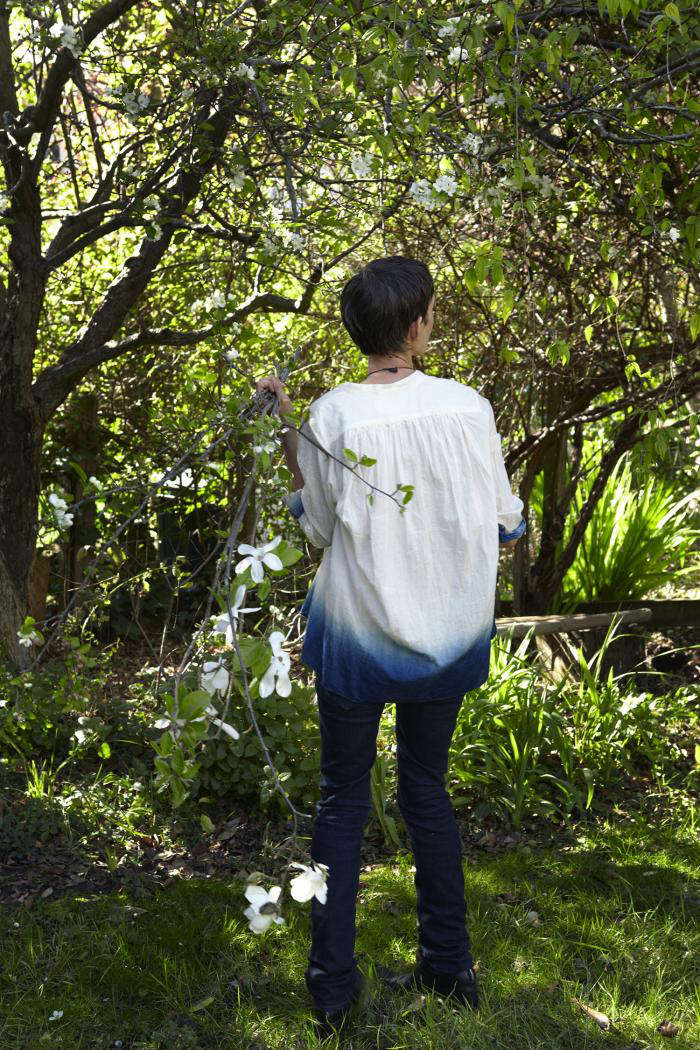
Or picture the small domestic moment of pruning something in the yard after a windy afternoon. In the old mindset, the cut branch is yard waste. In the Louesa mindset, it might be the opening move. You bring it inside, place it in a vessel, and the room changes instantly. Not because the branch is expensive, but because it carries the outside world in with it. It brings weather, scale, and a tiny bit of unpredictability. The house feels less sealed off from life.
There is also a particular pleasure in using plants that are not behaving politely. Seed heads, vines, bolting herbs, fruiting stems, and flowers that are slightly past their prime all have a tension that fresh-cut supermarket bouquets rarely possess. They suggest time passing. They suggest a season moving on. They suggest that beauty is not a still photo but a living process. That is one reason arrangements inspired by Roebuck often feel strangely emotional. They remind you that nature is generous, but never static.
Another experience tied to her influence is the quiet confidence it gives people who do not consider themselves “proper” florists. Her work opens the door for experiment. You can place a single wild branch in an old ceramic vase and call it enough. You can use herbs from a patio pot, citrus leaves from a yard tree, or a vine from the side fence. You can combine elegance with roughness and trust the contrast. Suddenly arranging flowers feels less like executing a formal assignment and more like participating in an ongoing conversation with your environment.
And then there is the sensory side of it all: the faint green smell of clipped stems on the kitchen counter, the sticky fingers from citrus leaves, the bruised perfume of magnolia, the dry rustle of seedpods, the visual thrill of something tall and irregular casting a shadow across the wall in late afternoon. Roebuck’s work reminds us that floristry is not only visual. It is tactile, seasonal, atmospheric, and memory-making.
In that sense, the real experience of Louesa Roebuck’s world is not copying one of her arrangements exactly. It is learning to feel more awake inside your own landscape. It is realizing that the backyard, roadside, market stall, and overgrown corner all contain materials for beauty if you are willing to look with more courage and less convention. Once that shift happens, a bouquet is no longer just a bouquet. It becomes evidence that attention itself can be an art form.
Conclusion
Louesa Roebuck stands out because she has managed to do something rare: make floral design feel intellectually alive, environmentally aware, artistically credible, and emotionally rich all at once. She is a renegade florist not because she rejects beauty, but because she expands it. Her arrangements honor locality, welcome imperfection, and prove that the wildest thing a designer can do may be to pay closer attention to what is already growing nearby.
In a world that often confuses polish with value, Roebuck makes a better offer. She gives us flowers with soul, branches with swagger, and the liberating suspicion that nature was always more stylish than we were.