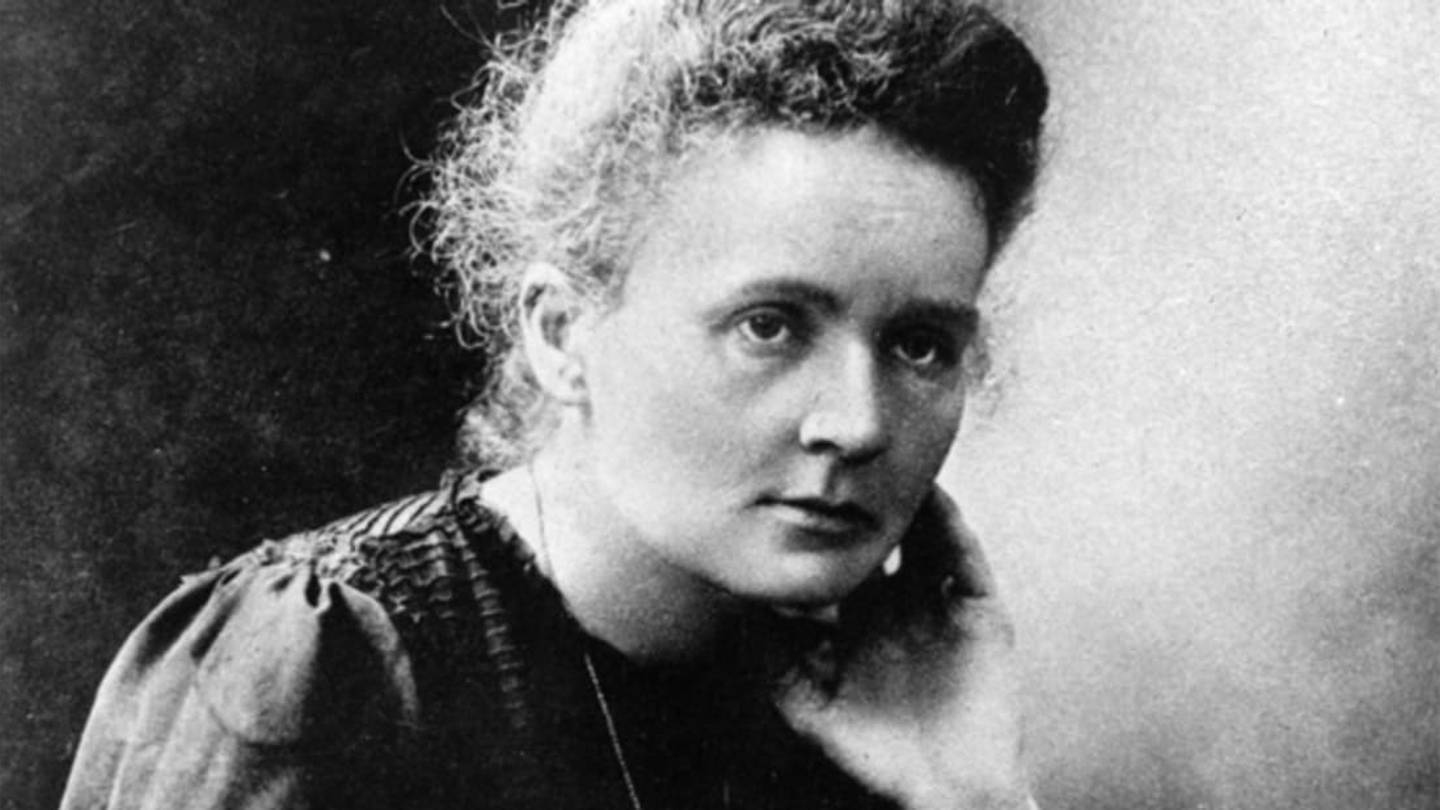

Marie Curie is usually remembered in a halo of radium-blue glory: pioneering physicist, chemistry legend, two-time Nobel Prize winner, and the woman who helped drag modern science into the atomic age. All true. But history, being history, also decided to hand her a lurid tabloid subplot. In 1911, Curie became the target of a roaring public scandal over her relationship with physicist Paul Langevin, a married colleague with a troubled home life. The affair was splashed across French newspapers, dressed up with xenophobia, moral panic, and enough melodrama to make a silent-film villain blush.
The result was not just gossip. The Marie Curie scandal collided with nationalism, sexism, celebrity culture, and the politics of science. It inspired threats, mobs, and at least one famous duel. It nearly overshadowed her second Nobel Prize. And it revealed a brutal truth about public life in the early 20th century: a male genius might be called passionate, but a female genius could be called dangerous before breakfast.
This is the story of Marie Curie’s so-called sex scandal, the duel it inspired, and why the episode still matters. Because beneath the deliciously chaotic headline is something much deeper: a portrait of a woman who refused to let other people’s moral theater rewrite her scientific legacy.
Before the Scandal, Curie Was Already Too Famous for Her Own Good
By the time the scandal erupted, Marie Curie was not some obscure academic minding her beakers in peace. She was world famous. She and Pierre Curie had discovered polonium and radium in 1898, and in 1903 they shared the Nobel Prize in Physics with Henri Becquerel for their work on radioactivity. After Pierre’s sudden death in a street accident in 1906, Marie did something quietly revolutionary: she continued. No tragic fade-out, no retreat into respectable widowhood, no polite surrender of the lab keys. She took over Pierre’s post at the Sorbonne and became its first female professor.
That alone made her a public symbol. She was admired, photographed, mythologized, and watched. The press loved her as long as she fit a flattering script: brilliant widow, tireless mother, foreign-born but useful, exceptional but not too disruptive. The problem was that Curie kept being more than symbolic. She was ambitious in a serious, inconvenient way. She wanted credit for her own work. She published major research. She isolated pure radium. She even ran for a seat in the French Academy of Sciences.
That Academy bid mattered. Curie lost the election in early 1911 by two votes, and the campaign around it was ugly. Critics attacked her not only as a woman, but as an outsider. She was Polish-born, secular, intellectually fearless, and associated with liberal scientific circles. In other words, she was perfect material for reactionary newspapers hunting a target. By the time her private life hit the front pages, parts of the public had already been primed to see her not as France’s scientific jewel, but as an intruder who needed to be put back in her place.
How a Private Relationship Became a Public Spectacle
Paul Langevin was a respected physicist, once a student of Pierre Curie, and a man trapped in a deeply unhappy marriage. He and Marie Curie grew close in the years after Pierre’s death. Whether people prefer to call it an affair, a romance, or a complicated human mess with too many newspapers involved, one fact is clear: it became public in the most explosive way possible.
Langevin’s wife, Jeanne, got hold of letters exchanged between the two. Accounts differ in the fine details, but the broad outline is consistent: letters were stolen from Langevin’s apartment, handed to the press, and used as ammunition in a smear campaign. French newspapers pounced like gulls spotting dropped fries. Curie was painted as a homewrecker, an immoral foreigner, and, bizarrely, even as Jewish, despite the claim being false. The point was not accuracy. The point was social demolition.
And yes, the headlines were as subtle as a cymbal crash. Papers framed the story as a scandal in the laboratory, a stain on French morality, and a threat to public order. Curie’s scientific stature did not protect her. In some ways it made the attack more vicious. The press loves a pedestal partly because it makes the fall easier to sell.
The timing was especially savage. Just as the scandal exploded in November 1911, Curie learned she had been awarded the Nobel Prize in Chemistry. Under ordinary circumstances, that news would have dominated everything. She had become the first person ever to win two Nobel Prizes in two different sciences. Instead, portions of the press shoved her achievement to the side and treated her personal life as the real event of the season. Imagine curing a hole in modern physics and still losing the week’s headlines to people behaving like they’d found celebrity text messages in a group chat.
Why the Public Reaction Was So Extreme
The Curie-Langevin affair was scandalous in the narrow, tabloid sense. But the fury around it came from larger tensions. Curie represented several things that made conservative critics nervous. She was a woman whose authority did not come from a husband. She was an immigrant who had become one of France’s most famous intellectual figures. She worked in a field so new and powerful that even the word radioactivity felt electric. She had admirers in elite scientific circles. And she did not apologize for having a mind that occupied public space.
So the scandal became a proxy war. The attacks on Curie mixed sexual judgment with xenophobia and anti-intellectual resentment. She was described not merely as improper, but as foreign, corrupting, and un-French. In other words, her critics were not just upset about romance. They were upset about status, gender, nation, and who gets to embody genius in public.
That helps explain why the scene turned frightening. Angry crowds gathered outside her home. Reports describe stones thrown at the house and people shouting at her to return to Poland. Friends had to move her to safety. She was not merely embarrassed. She was under siege.
The Duel That Turned Scientific Drama Into Public Theater
Then came the duel, because apparently this story did not feel dramatic enough yet.
After repeated insults and escalating press attacks, Paul Langevin challenged journalist Gustave Téry, editor of the paper that had published the letters, to a duel. This was not medieval cosplay. Duels still had symbolic power in France as a way for men to claim honor, even if by 1911 the whole ritual already had a faint whiff of overripe absurdity.
The most famous confrontation took place with pistols at a distance of 25 meters. Seconds were present, including the mathematician and future French prime minister Paul Painlevé. Journalists gathered, because of course they did. A scandal about science, sex, and national honor had now become live entertainment.
And then the grand climax fizzled magnificently. Téry did not raise his pistol. Langevin raised his, then lowered it. No shot was fired. The duel ended in silence. Newspapers described the tension, the stillness, even pigeons feeding nearby, as if nature itself had wandered in to ask whether everyone involved might consider getting a hobby.
Yet the duel mattered. It showed how far the scandal had spread beyond private correspondence into public ritual. It also revealed a strange irony: while Curie herself refused to perform theatrical remorse, the men around the scandal performed honor in the most theatrical way available. She was the one being judged, but they were the ones staging pistols-at-dawn melodrama.
Curie’s Boldest Move Was Not the Affair. It Was Refusing to Disappear.
The Nobel committee was uneasy. Some in Sweden suggested Curie should avoid attending the 1911 prize ceremony because of the scandal. That suggestion tells you everything about the moment. A woman’s private life was being treated as relevant to whether the world should honor her discovery of radium and polonium.
Curie refused to accept that logic. She argued that scientific work and private life were separate matters and that slander should not determine the value of research. It was one of the clearest statements of intellectual self-possession in modern scientific history. She went to Stockholm anyway.
That trip was not a victory lap. It came at enormous personal cost. Curie was exhausted, stressed, and physically worn down. But she did something quietly radical in her Nobel lecture: she made clear what her own scientific contributions had been. She honored Pierre Curie without allowing herself to vanish into his shadow. In effect, while the public tried to reduce her to a scandal, she used one of the grandest scientific stages in the world to restate who she was and what she had done.
That may be the real turning point of the entire episode. Not the letters. Not the duel. Not even the Nobel itself. The turning point was Curie refusing to let scandal define the terms of her identity.
Why This Marie Curie Controversy Still Matters
People often retell the Marie Curie sex scandal as a deliciously odd historical footnote, like, “Did you know the radium genius once inspired a duel?” And, to be fair, that is excellent trivia. But the deeper significance is larger and sharper.
This was an early modern case study in how media can weaponize a woman’s private life to challenge her public authority. Curie’s critics did not merely say she had made a romantic mistake. They used the affair to question whether she deserved her position, her honors, even her place in France. Her story shows how quickly admiration can turn conditional when a woman ceases to behave according to the script written for her.
It also reminds us that fame in science is not always protective. Curie’s celebrity amplified the attack. The same culture that had elevated her turned eager when it smelled vulnerability. That pattern has not exactly gone extinct. Replace penny papers with modern feeds, and the logic feels uncomfortably familiar.
Most importantly, the scandal invites a correction. Marie Curie was not “saved” by the public eventually calming down. She survived because she was brilliant, disciplined, stubborn, and unwilling to surrender her work to the moral tantrums of strangers. The scandal passed. The science stayed. That is the hierarchy history should remember.
The Human Experience Behind the Headlines
To understand this episode fully, it helps to move past the headline phrase Marie Curie sex scandal and ask a more human question: what did this period actually feel like for the people inside it?
For Curie, the experience seems to have been less glamorous scandal and more sustained emotional siege. She was already carrying grief from Pierre’s death, pressure from the scientific establishment, and the daily strain of high-level research. Then her private letters became public ammunition. Instead of being treated as a scientist with boundaries, she was treated like a public exhibit. She returned from Belgium to a Paris exploding with rumor. Crowds gathered near her home. Friends worried she might collapse. This was not a naughty society subplot. It was a public breakdown of privacy, safety, and dignity.
There was also the immigrant experience woven into it. Curie was attacked not just as a woman in love, but as a foreign woman in France. The insult “Go back to Poland” was doing a lot of work. It tried to turn her achievements into a loan France could revoke. That must have cut especially deep for someone who had built her career through sacrifice, discipline, and relentless labor. She had given France scientific glory, but in a moment of moral panic, parts of the country tried to remind her that belonging was conditional.
The experience for Curie’s friends was different but revealing. People like Émile and Marguerite Borel, Jean Perrin, and André Debierne were not dealing with abstract principles. They were scrambling to protect a colleague from a literal mob and from institutional cowardice. Their support mattered because it translated loyalty into action. They offered shelter, advocacy, and something the public had stopped offering: basic decency. In many historical scandals, the most memorable heroes are not the loudest ones, but the people who quietly open a door and say, “Stay here until this passes.”
Paul Langevin’s experience was tangled too. He was publicly humiliated and provoked, yet the social machinery did not crush him in the same way it crushed Curie. He got to perform masculine honor through the duel. Curie, by contrast, had no socially approved performance available except silence or disappearance. That difference matters. It shows how gender shaped not only the punishment, but the menu of acceptable responses.
Even the duel itself tells us something about experience. For spectators, it was drama. For journalists, copy. For the men involved, it was ritualized honor. But for Curie, it was probably one more grotesque sign that her life had become theater for other people. Pistols, editors, seconds, rumors, crowds, Swedish hesitation, Einstein’s supportive letter, and a Nobel ceremony hovering in the background like destiny refusing to miss its cue: the whole thing must have felt surreal.
And yet the most lasting experience from this chapter is not chaos. It is endurance. Curie kept going. She returned to science. She worked through collapse, recovery, and humiliation. The tabloids got their season. She got the century.
Conclusion
Marie Curie’s sex scandal and the duel it inspired make for a sensational title, but the real story is not cheap scandal. It is about how a brilliant woman became the target of a culture that loved her achievements only when they came wrapped in acceptable femininity. Once she stepped outside that frame, the knives came out.
Yet the final verdict did not belong to the tabloids, the mob, or the men with pistols. It belonged to history. Curie remains one of the greatest scientists who ever lived. Paul Langevin’s duel survives as a bizarre subplot. The press frenzy survives as a warning. And Curie’s refusal to let slander set the value of scientific work remains the most modern part of the whole affair.
If there is a lesson here, it is not that geniuses should be morally spotless to deserve respect. It is that public hysteria is often a poor judge of real worth. Marie Curie knew that. Thankfully, science did too.
Note: This HTML article is written in standard American English for web publication, omits inline source links by request, and removes stray citation artifacts or reference markup.