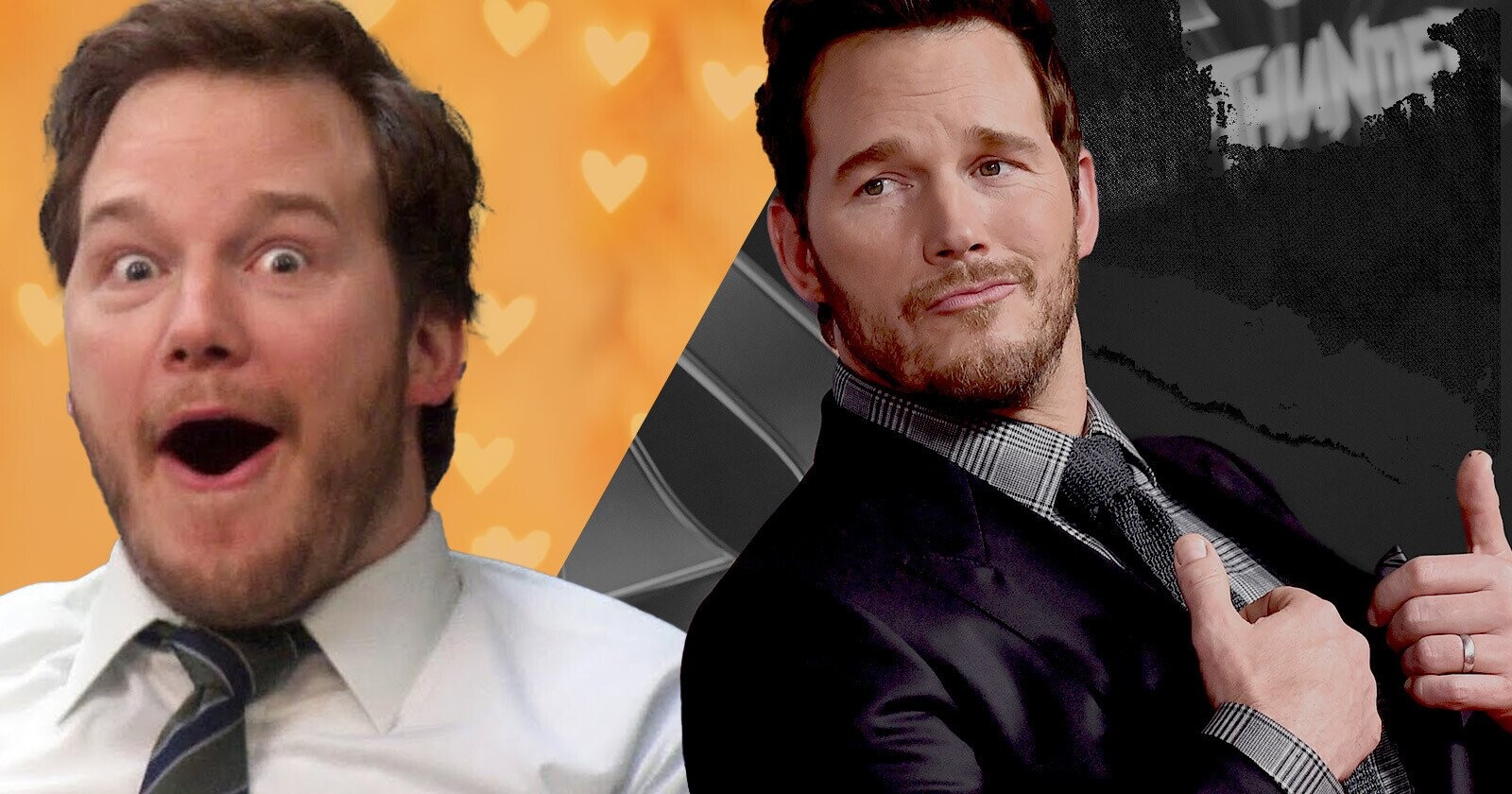

Chris Pratt backlash has become one of Hollywood’s strangest recurring rituals. Every few months, the internet gathers like a town council with unlimited Wi-Fi and asks the same question: why are people so annoyed by Chris Pratt? The answers usually arrive fast: religion, politics, Instagram captions, divorce discourse, “Worst Chris” rankings, Mario’s voice, Garfield’s voice, Star-Lord’s face, or the mysterious cultural crime of seeming too pleased to be invited.
But maybe the simpler answer is also the more useful one: perhaps audiences are not mad because Chris Pratt is everywhere. They are mad because Hollywood keeps insisting he is a great movie star, while many viewers only experience him as a pretty good franchise accessory. That is not the same thing. A movie star can sell a weak premise, deepen a thin role, or make a film feel alive just by walking into the frame. Pratt, at his best, is funny, likable, loose, and surprisingly vulnerable. At his worst, he looks like a man professionally hired to stand in front of expensive things while the intellectual property does the heavy lifting.
The Chris Pratt Problem Is Bigger Than Chris Pratt
To be fair, “lousy movie star” does not mean “bad actor.” Chris Pratt is not talentless. His early appeal was real, and anyone pretending otherwise probably needs to rewatch Parks and Recreation. As Andy Dwyer, Pratt had the rare gift of making stupidity feel warm instead of irritating. Andy was a golden retriever in human cargo shorts: chaotic, loyal, easily distracted, and somehow emotionally sincere. That performance worked because Pratt was not trying to dominate the room. He was reacting, improvising, and bouncing off a brilliant ensemble.
Then Guardians of the Galaxy happened, and Hollywood saw a new leading man. As Peter Quill, Pratt found a near-perfect lane: a swaggering space goofball with mommy issues, dance moves, and just enough sadness under the smirk. The role let him be charming without becoming too polished. He could joke, stumble, flex, flirt, and then suddenly look wounded. That is the Pratt sweet spot: comedy with a bruise underneath.
The problem began when studios tried to convert that specific flavor into a universal leading-man formula. Suddenly Pratt was not merely the funny guy in a weird Marvel ensemble. He was the guy who could headline dinosaur blockbusters, sci-fi adventures, military thrillers, animated franchises, and streaming megamovies. Hollywood appeared to look at his success and say, “Excellent, we have invented another Harrison Ford.” The audience looked back and said, “Have we, though?”
Box Office Success Does Not Always Equal Movie-Star Power
One reason the Chris Pratt debate never dies is that both sides have evidence. His defenders can point to enormous numbers. Jurassic World, the Guardians films, The Super Mario Bros. Movie, and now other major IP projects have put Pratt near the center of some gigantic commercial hits. By box office logic, he is obviously bankable. The man has ridden with raptors, saved the galaxy, voiced Mario, and collected checks from franchises that print money so efficiently they should probably be regulated by the Federal Reserve.
But box office is not the same as audience devotion to the person on the poster. People did not buy tickets to Jurassic World because they desperately needed to know what Owen Grady was thinking. They bought tickets because dinosaurs were back, the park was open, and nostalgia was wearing a very expensive Universal Studios lanyard. Likewise, The Super Mario Bros. Movie was not sold as “the latest Chris Pratt performance.” It was sold as Mario, Nintendo, childhood, Jack Black singing as Bowser, and enough bright colors to make a cereal aisle jealous.
This is where the phrase Chris Pratt movie star gets complicated. A true movie star carries an audience from one project to another because viewers want that person’s particular energy. Pratt often seems attached to things audiences already want. That distinction matters. He may be successful inside franchises, but the franchises are frequently more charismatic than he is.
Why Star-Lord Worked and Owen Grady Did Not
Peter Quill works because the character is allowed to be ridiculous. He is not cool in the traditional sense. He is a guy who thinks he is cool, which is much funnier. Pratt understands that gap. His Star-Lord is a walking mixtape of insecurity, bravado, and arrested development. He dances when he should run, flirts when he should listen, and turns emotional damage into punchlines. That gives him texture.
Owen Grady, his Jurassic World character, is almost the opposite. Owen is written as if someone fed “rugged animal expert action hero” into a blockbuster machine and accepted the first draft. He rides motorcycles. He holds up his hand to stop dinosaurs. He says serious things in a serious voice. He has chemistry with raptors, which is impressive, but less so with some humans. The role asks Pratt to be cool without letting him be foolish, and that drains away much of what makes him interesting.
That contrast reveals the central weakness in Pratt’s leading-man image. He is not naturally mysterious. He is not dangerous. He is not especially elegant. His gift is not untouchable charisma; it is accessible comic confusion. When movies let him be a lovable mess, he can shine. When they ask him to be a granite-jawed action monument, he often becomes oddly blank, like a gym membership wearing a vest.
The Internet Did Not Invent the Irritation; It Organized It
Of course, the internet loves turning mild annoyance into a federal investigation. Pratt’s public image has taken hits from the “Worst Chris” meme, criticism of social media posts, assumptions about his politics, and backlash tied to his public expressions of faith. Some of that criticism is fair game; some of it is overheated; some of it is the usual online sport of flattening a complicated human being into a mascot for everyone’s existing argument.
Still, the reason the backlash sticks is not only personal. If audiences were consistently thrilled by Pratt’s movies, many controversies would fade into background noise. Movie stars have survived worse by being too entertaining to dismiss. The public will forgive a lot when the screen presence is undeniable. With Pratt, the screen presence is often pleasant but not overwhelming. He is likable enough to keep getting cast, but not electric enough to make skeptics stop complaining.
That is why the anger sometimes feels disproportionate. People are not merely reacting to Chris Pratt the person. They are reacting to the Hollywood machine that keeps presenting him as the answer to every commercial question. Need a superhero? Pratt. Need a dinosaur wrangler? Pratt. Need Mario? Pratt. Need Garfield? Also Pratt. At some point, audiences begin to feel less entertained than managed.
Voice Acting Made the Problem Louder
The Mario casting backlash was a perfect example of modern celebrity fatigue. Fans wondered why one of the most recognizable video game characters in history needed to be voiced by a live-action movie star instead of a more specialized voice performer. Pratt acknowledged that fans were protective of the character, and the film became a monster hit anyway. Commercially, the decision worked. Artistically, the debate did not vanish.
Then came The Garfield Movie, and the same question returned wearing orange fur and demanding lasagna. Pratt as Garfield sounded, to many viewers, less like a bold interpretation than another case of celebrity casting as marketing insurance. The joke writes itself: a famously lazy cat voiced by a performance some critics felt was too relaxed. That is not a disaster, but it does feed the perception that Pratt’s name is being used as a brand sticker rather than because his voice unlocks some hidden emotional dimension of the character.
To be fair, animated family films have been celebrity-driven for decades. Pratt did not invent that system. He just became one of its most visible symptoms. When the same actor is attached to multiple beloved properties, the audience starts to notice the pattern. And once viewers notice a pattern, they begin sharpening knives, jokes, and Letterboxd reviews.
The “Regular Guy” Persona Has Limits
Part of Pratt’s appeal is that he seems normal. Not normal in the literal sense, because normal people do not headline billion-dollar franchises and marry into famous political-entertainment dynasties. But his brand is built around approachability: jokes, faith, family, workouts, hunting, gratitude, and a general vibe of “dude who would help you move a couch, then talk too long about elk meat.”
That can be charming. It can also become exhausting when paired with massive celebrity privilege. The regular-guy act works best when the star seems surprised by fame. After a decade of blockbuster dominance, surprise becomes harder to sell. Pratt’s sincerity, once refreshing, can read to some audiences as self-protective. His earnestness, once goofy, can feel strangely corporate. He wants to be relatable, but his career keeps placing him at the center of enormous, algorithm-friendly entertainment products.
This is not entirely his fault. Hollywood rarely knows how to preserve what made someone appealing in the first place. It finds a spark, builds a factory around it, then wonders why the spark looks tired under fluorescent lighting. Pratt’s goofball charm was charming because it felt accidental. His movie-star persona often feels engineered.
What Makes a Great Movie Star?
A great movie star does not need to be the best actor in the cast. Some of the biggest stars in film history had narrow ranges, but they had unmistakable presence. You watched them think. You watched them enter a room. You watched them do almost nothing, and that almost nothing became the scene. They created appetite. The audience wanted more of that particular person, not just more explosions around them.
Pratt’s challenge is that his best qualities are reactive. He is excellent when the role gives him friction: sarcasm against grief, bravado against insecurity, comedy against cosmic danger. But when a film simply points a camera at him and expects old-fashioned leading-man gravity, the result can feel underpowered. He can carry a backpack, a blaster, or a dinosaur plot. Carrying a movie’s soul is harder.
This is why Passengers remains such an important case study. On paper, pairing Pratt with Jennifer Lawrence in a glossy space romance should have been movie-star heaven. In practice, the film’s troubling premise required unusual emotional complexity. Pratt’s likability had to overcome a morally uncomfortable story, and it could not quite do it. The film did not prove he was useless; it proved that charm alone is not always enough.
The Electric State and the Problem of Expensive Blandness
The Electric State continued the conversation in a different form. Here was another huge, glossy project with major names, expensive imagery, and familiar adventure mechanics. Pratt’s role again leaned into his wisecracking, nostalgic, rough-around-the-edges comfort zone. Yet the broader criticism around the film centered on something that has haunted several modern Pratt vehicles: the sense of content rather than cinema.
That matters because the anger directed at Pratt is often really anger at a type of movie. Big-budget entertainment can feel increasingly pre-sold, pre-digested, and pre-approved by committees who fear surprise more than failure. Pratt’s persona fits too neatly into that system. He is safe. He is recognizable. He can joke. He can run. He can look dadly but still action-ready. For executives, that is useful. For viewers craving danger, mystery, or transformation, it can feel like beige paint with abs.
The odd thing is that Pratt might be more interesting if he stopped being pushed as a universal solution. Put him in smaller comedies, stranger supporting roles, darker character parts, or movies willing to puncture his own image, and the conversation could change. The problem is not that he lacks talent. The problem is that Hollywood often asks him to be least interesting version of himself.
So, Is Chris Pratt Actually a Lousy Movie Star?
As a pure movie star, Chris Pratt is shaky. As a comic actor, he can be terrific. As an ensemble player, he is often valuable. As a franchise mascot, he is extremely profitable. Those are different jobs. The frustration comes from Hollywood pretending they are all the same.
The fairest verdict may be this: Chris Pratt is not a lousy performer, but he is an incomplete movie star. He needs the right container. Give him a weird team, emotional insecurity, and jokes that undercut his own masculinity, and he can be wonderful. Put him alone at the center of a generic spectacle and ask him to radiate myth, and the wattage drops.
Maybe everyone is mad at Chris Pratt because he represents a bargain audiences never consciously agreed to. Studios gave viewers brands they loved, then attached Pratt so often that his presence began to feel mandatory. The resentment is not just about him. It is about being told that a familiar face equals personality, that box-office success equals charisma, and that a man who can headline a billion-dollar movie must automatically be a great movie star.
He may yet surprise people. Careers are long, and public opinion is a revolving door with a comments section. But if Pratt wants to escape the backlash cycle, the answer is probably not another giant franchise voice role or another square-jawed action hero. It is a role that makes him strange again, vulnerable again, funny in a way that feels dangerous, and human in a way that cannot be manufactured by an IP spreadsheet.
Experiences Related to the Chris Pratt Movie-Star Debate
The experience of watching Chris Pratt’s career unfold is oddly similar to ordering a favorite meal too many times. At first, it is delightful. You know the flavor, you know the comfort, and you are happy it exists. Then one day, the same meal appears everywhere: on billboards, in lunch boxes, on streaming banners, in trailers before unrelated movies, and somehow as the voice of a cartoon cat. Suddenly, what once felt charming begins to feel unavoidable.
Many viewers first experienced Pratt as a discovery. Andy Dwyer did not arrive with the pressure of stardom. He wandered into scenes like a lovable disaster who had misplaced both his job and his common sense. That kind of character creates affection because it feels unforced. You are not told to love him; you simply do. Later, when Star-Lord danced across an alien planet to vintage pop music, that same affection grew into movie-star excitement. It felt like Hollywood had found someone funny enough to puncture blockbuster self-seriousness.
But audience experience changes when discovery becomes obligation. By the time Pratt was leading dinosaur sequels, voicing Mario, voicing Garfield, starring in streaming spectacles, and appearing in one giant commercial ecosystem after another, the fun became more complicated. Viewers were no longer encountering him; they were being served him. There is a difference between a guest everyone enjoys at a party and a guest who somehow becomes the DJ, caterer, bartender, and keynote speaker.
That fatigue also affects how people interpret ordinary celebrity behavior. A clumsy Instagram caption from a less overexposed actor might pass quickly. From Pratt, it becomes evidence in a larger cultural trial. A bland performance is not just bland; it becomes proof that he was never a real star. A successful box-office weekend is not just success; it becomes a debate about whether audiences came for him or for the brand surrounding him. Once a performer becomes a symbol, every small moment gets drafted into the argument.
The most interesting viewer experience is the split reaction. Plenty of people still enjoy Pratt. They laugh at Star-Lord, take their kids to Mario, and do not spend their evenings ranking Hollywood Chrises like sports analysts with better hair. Others feel a persistent irritation they cannot entirely separate from the movies themselves. They may not hate him; they hate the feeling that Hollywood keeps trying to make them admire him more than they naturally do.
That is why the topic remains sticky. It is not simply celebrity gossip. It is a conversation about how modern stardom works when franchises are bigger than actors, voice roles are cast like marketing campaigns, and likability can curdle into fatigue. Watching Chris Pratt is watching Hollywood test an old theory in a new marketplace: can repeated exposure turn a charming actor into an undeniable movie star? The answer, at least so far, is complicated. Repetition can build familiarity, but it cannot manufacture magic. And movie-star magic, annoyingly for studio planners, is still the one thing no algorithm has figured out how to clone.
Conclusion
Chris Pratt’s backlash is not as simple as “the internet hates him.” The more revealing explanation is that audiences are arguing about what a movie star should be. Pratt has charm, timing, success, and an impressive blockbuster résumé. Yet he often seems strongest when protected by ensembles, brands, and characters that allow him to be goofy rather than grand. When Hollywood asks him to be a classic leading man, the illusion can wobble.
Maybe he is not a lousy actor. Maybe he is a miscast movie star: a gifted comic presence repeatedly installed in roles that flatten his best qualities. The anger around him says as much about modern Hollywood as it does about Chris Pratt. People are tired of being told that recognizable equals riveting. They want stars who surprise them, not just names attached to familiar logos. Pratt can still become that kind of star, but he may need to stop playing the safest version of Chris Pratt first.