
Note: This article is written as a web-ready, original SEO draft based on publicly available information about the Hackaday MIDI All The Things Hack Chat, MIDI technology, DIY synthesizer projects, Web MIDI, USB-MIDI, and modern MIDI 2.0 developments.
Introduction: When Music Gear Starts Talking Like a Tiny Robot Orchestra
If you have ever pressed a key on a digital keyboard and watched a computer obediently play a piano, a drum kit, or a sound that resembles a caffeinated space duck, you have already met MIDI. The “MIDI All The Things Hack Chat” is exactly the kind of phrase that makes hardware hackers sit up straighter, musicians reach for patch cables, and software developers quietly ask, “Can I control my coffee machine with this?” The answer, in true maker-community fashion, is: probably, but please label your wires first.
The title refers to a Hackaday Hack Chat centered on MIDI, electronics, synth hacking, microcontrollers, and the delightfully stubborn idea that almost anything can become a musical interface. Hosted through Hackaday.io’s live community chat format, the event featured Mitxela, also known as Tim Alex Jacobs, a maker known for absurdly tiny synthesizers, clever MIDI experiments, and projects that prove electronics can be both technically impressive and joyfully ridiculous.
At its core, MIDI All The Things Hack Chat is more than a discussion about old keyboards and 5-pin DIN cables. It is a snapshot of why MIDI has survived for decades: it is simple enough to learn, flexible enough to abuse creatively, and durable enough to connect vintage gear from the 1980s to browser-based synths and modern music software. That is rare in technology. Most standards from the early 1980s are now museum exhibits, landfill archaeology, or mysterious ports on your dad’s old stereo. MIDI, however, is still jamming.
What Is the MIDI All The Things Hack Chat?
The MIDI All The Things Hack Chat was a live Hackaday.io community event focused on MIDI as a playground for makers, musicians, coders, and hardware experimenters. Hackaday’s Hack Chats are informal but information-rich sessions where a guest joins the community for an hour of questions, project talk, problem-solving, and occasional jokes that only people with too many jumper wires truly understand.
In this case, the guest was Mitxela, whose work includes small MIDI synthesizers, MIDI interceptors, hacked keyboards, and USB-MIDI experiments. The conversation covered classic MIDI wiring, microcontroller choices, AVR assembly, STM32 chips, USB descriptors, Web Audio, Web MIDI, old Yamaha keyboards, capacitive touch controls, physical interface design, and the creative motivation behind finishing complicated side projects.
That range matters because MIDI is not just a “music producer” topic. It sits at the intersection of embedded systems, interface design, digital audio, vintage hardware, live performance, accessibility, robotics, lighting control, and browser-based creativity. One minute you are sending a note-on message. The next minute you are wondering whether a banana, a jacket sleeve, or a hacked toy keyboard should trigger a modular synth. This is how hobbies become lifestyles. Also how workbenches become unrecognizable.
Why MIDI Still Matters After More Than 40 Years
MIDI stands for Musical Instrument Digital Interface. It was created to let electronic instruments and related devices exchange performance information such as notes, velocity, control changes, pitch bends, program changes, and timing data. Importantly, MIDI does not transmit sound. It transmits instructions. Think of it as sheet music with electrical manners: “Play this note, at this intensity, right now, on this channel.”
That distinction is what made MIDI so powerful. A tiny stream of MIDI data can control a synthesizer, drum machine, software instrument, lighting rig, visual effects system, or custom device. A keyboard from the 1980s can still communicate with a modern computer because MIDI was designed around practical interoperability. It did not try to be glamorous. It tried to be useful. In technology, that is basically immortality with better cable management.
MIDI Is Small, Fast Enough, and Understandable
Classic MIDI messages are compact. A note-on event generally says what channel is being used, what note is being played, and how hard it was played. Control Change messages can move filters, faders, effects, expression pedals, and other parameters. Program Change messages can switch sounds. Pitch Bend can glide notes. System messages can synchronize timing and transport. None of this requires sending large audio files or streaming waveforms.
For hackers, this is golden. MIDI is structured, visible, and friendly to experimentation. You can sniff messages, generate them with a microcontroller, route them through software, or modify them in real time. The Hack Chat transcript captures that spirit: MIDI is approachable enough that someone can begin with a cheap MIDI keyboard and USB adapter, then eventually build a device that intercepts and transforms messages with millisecond-level attention to latency.
The Maker Appeal: Why Hackers Love MIDI
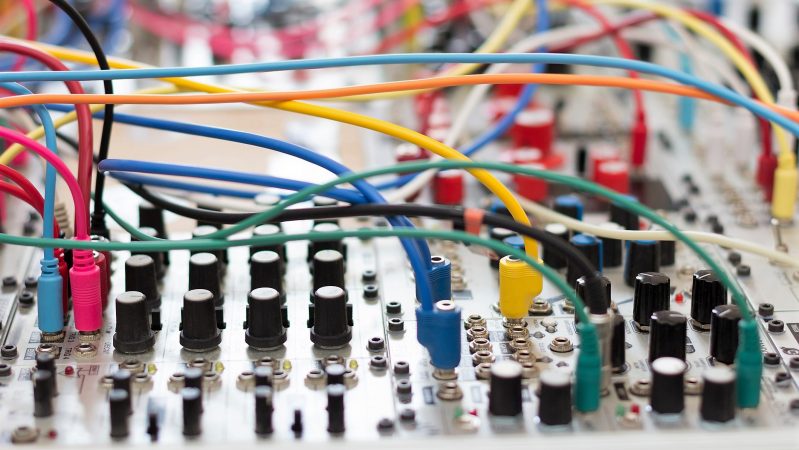
MIDI offers a satisfying balance between constraint and freedom. The constraint is that MIDI messages follow a standard. The freedom is that once you understand the standard, you can make wonderfully strange things with it. A homemade foot pedal can become a looper controller. A row of arcade buttons can become a drum machine. A glove can control a filter sweep. A 3D-printed box with knobs can become a DAW controller. A tiny board crammed inside a connector can become a synth, because apparently normal-sized instruments were too easy.
This is why the phrase “MIDI all the things” works so well. It captures the impulse to add musical control to objects that were never invited to band practice. The result can be practical, experimental, or completely silly. All three are valid. In fact, the silly projects often teach the most because they force the builder to solve real problems under ridiculous constraints.
Microcontrollers and the Joy of Making Notes Happen
The Hack Chat touched on microcontrollers such as AVR and STM32, along with tools like Arduino libraries and Teensy audio capabilities. For beginners, Arduino-compatible boards can make MIDI projects less intimidating. Libraries such as MIDIUSB allow boards with native USB support to appear as MIDI devices to a computer. Traditional serial MIDI can be handled with simple circuits and libraries, while more advanced builders can dig into registers, descriptors, timers, and USB internals.
Teensy boards are especially popular in audio and music projects because they offer strong performance, USB capabilities, and an audio library with a graphical design tool. That makes it possible to sketch an audio signal chain visually and export code. For the maker who wants to build a synth, sampler, looper, effects unit, or MIDI-controlled audio gadget, that is a generous head start. It is not magic, but it does reduce the number of evenings spent whispering “why” at a compiler.
Classic MIDI, USB-MIDI, and Web MIDI: Three Doors Into the Same Party
There are several ways to work with MIDI today. The classic image is a 5-pin DIN cable running from a keyboard to a synth module. That is still real and still useful. But modern MIDI also travels over USB, Bluetooth, network connections, and even through web browsers using the Web MIDI API.
Classic DIN MIDI
Classic MIDI uses a serial connection that is easy to understand compared with many modern protocols. It is one-directional per cable, so sending data both ways usually requires separate input and output paths. For many DIY projects, that simplicity is an advantage. With an opto-isolator, a few resistors, and a microcontroller UART, you can build a safe MIDI input. With a basic output circuit, you can send notes to hardware. It feels refreshingly direct: wire, byte, sound.
USB-MIDI
USB-MIDI is more convenient for computers because one cable can carry data and power. It can also eliminate the need for a separate MIDI interface. However, USB introduces descriptors, endpoints, device classes, and host-device roles. In other words, it gives you convenience in exchange for a paperwork department. Mitxela’s projects show the fun side of that challenge, including tiny USB-MIDI synth experiments and software USB stacks on very small microcontrollers.
Web MIDI
Web MIDI is one of the most interesting developments for browser-based music tools. It lets a web application interact with MIDI devices connected to the user’s computer, subject to browser support, secure contexts, and permission requirements. This means a browser can become a synth editor, controller surface, music-learning tool, or experimental performance system. Suddenly, the website is not just showing you buttons. It is listening to your keyboard. Politely, of course, after asking permission.
MIDI 2.0: The Sequel That Took Its Time
One reason MIDI inspires so much respect is that MIDI 1.0 worked astonishingly well for a very long time. Still, musicians and developers eventually wanted higher-resolution control, better device discovery, bidirectional communication, per-note expression, improved timing, and a more modern data structure. That is where MIDI 2.0 enters the stage, wearing sensible shoes and carrying a much bigger clipboard.
MIDI 2.0 introduces concepts such as the Universal MIDI Packet, improved resolution, automatic device discovery, protocol negotiation, profiles, property exchange, and richer expressive control. For performers, that can mean more nuanced instruments. For developers, it can mean devices that describe themselves more clearly. For hardware makers, it opens new possibilities while preserving compatibility with older MIDI workflows.
Modern operating systems are also catching up. Windows MIDI Services, for example, brings MIDI 1.0 improvements and MIDI 2.0 support to Windows 11, including multi-client access, loopback options, better endpoint naming, translation between MIDI 1.0 and MIDI 2.0 devices, and improved timing support. That is excellent news for anyone who has ever tried to route one MIDI keyboard into three applications and discovered that their computer had chosen violence.
Project Ideas Inspired by MIDI All The Things Hack Chat
The best way to understand MIDI is to build something with it. Reading specifications is useful, but the “aha” moment usually arrives when pressing a button on a breadboard triggers a synth note. Below are practical project ideas inspired by the Hack Chat spirit.
1. Build a Simple USB-MIDI Button Controller
Start with a microcontroller that supports native USB, such as an Arduino Leonardo, Micro, compatible SAMD board, or Teensy. Add a few push buttons. Use a USB-MIDI library to send note-on and note-off messages. Map those notes to drum sounds in a DAW such as Ableton Live, GarageBand, Reaper, Bitwig, or another music program. Congratulations: your button box is now a percussion instrument, and your desk has become slightly more dramatic.
2. Make a Knob Box for Software Instruments
Use potentiometers to send MIDI Control Change messages. Assign them to filter cutoff, resonance, delay feedback, reverb level, or synth parameters. This project teaches analog reading, smoothing, scaling, MIDI message formatting, and user interface design. It also teaches humility because noisy potentiometers are tiny chaos wheels.
3. Hack an Old Keyboard
Vintage keyboards often have great keybeds but limited features. A MIDI interceptor or add-on controller can transpose notes, add arpeggiation, create new controller data, or route messages differently without destroying the original instrument. The key lesson is respect: modify in a way that can be reversed, document everything, and do not gut a classic keyboard unless you enjoy angry comments from future collectors.
4. Connect MIDI to Visuals
MIDI does not have to control sound. It can control lights, projection visuals, animation parameters, camera switching, or stage effects. A note can trigger a color. A fader can move a visual effect. A drum pad can launch video clips. This is where musicians, VJs, theater designers, and installation artists meet in one big cable nest.
5. Build a Browser-Based Synth
Combine the Web MIDI API with the Web Audio API. Let a connected MIDI keyboard play oscillators in the browser. Add envelopes, filters, and a small interface. Then add a “save preset” button and pretend you are not already planning version 2 before version 1 works. Browser-based music tools are especially exciting because they reduce installation friction and can be shared instantly.
Lessons from Mitxela’s Approach
One of the most valuable parts of the Hack Chat is not just the technical detail; it is the attitude. Mitxela’s projects often start with curiosity rather than market research. What if a MIDI synth could fit inside a DIN connector? What if USB-MIDI could be squeezed into something smaller? What if an old keyboard could be upgraded without ruining it? These questions are small doors into deep engineering problems.
There is also a strong preference for understanding what is really happening under the abstraction layer. Arduino is useful, especially for getting started quickly, but the Hack Chat discussion repeatedly returns to the value of registers, memory-mapped peripherals, assembly, timing, UART behavior, and reading specifications. That does not mean every beginner must immediately write AVR assembly by candlelight. It means curiosity pays off. The more you understand the layer below your code, the easier it is to fix weird behavior at the layer above.
Another lesson is documentation. Posting project notes, photos, code, and explanations turns a private experiment into a public resource. It also gives the maker a sense of completion. That is not a minor point. The world is full of unfinished projects living in plastic bins, waiting for “one more weekend.” A written project log can be the difference between “I should finish that someday” and “I made this; here is what I learned.”
Common Mistakes Beginners Make With MIDI Projects
Confusing MIDI With Audio
MIDI is not sound. It is control data. If your MIDI controller is “silent,” that may be normal. It needs something else to produce audio, such as a software instrument, hardware synth, sampler, or sound module.
Choosing the Wrong Board
Not every microcontroller can appear as a USB-MIDI device directly. Some boards have native USB support; others only use USB for serial programming through a separate chip. Check before buying parts, unless you enjoy learning compatibility lessons through sadness.
Ignoring Latency
MIDI is lightweight, but your full system still matters. Bad routing, overloaded software, slow polling, noisy inputs, and poor code structure can make a controller feel mushy. For performance tools, responsiveness is part of the instrument.
Forgetting the Human Interface
A MIDI controller is not just electronics. It is something a person touches. Knobs should feel good. Buttons should be placed logically. Labels should make sense. If your controller requires a 17-page legend, congratulations: you built a spaceship cockpit, not a groove box.
Experience Section: Building and Learning From MIDI Projects
The best experience related to MIDI All The Things Hack Chat is the moment a homemade device sends its first successful message. It is rarely glamorous. Usually, the first note is wrong, too loud, stuck forever, or mapped to a cowbell sample you forgot was loaded. But that moment is powerful because it proves the chain works: physical action, electrical signal, code, MIDI message, software response, sound. That chain is the whole magic trick.
In a beginner MIDI controller project, the first practical challenge is input stability. A push button seems simple until it bounces. A potentiometer seems simple until its analog value jitters. A velocity-sensitive pad seems simple until you realize commercial drum pads are engineering sorcery disguised as rubber squares. The solution is not to panic. Debounce buttons. Smooth analog readings. Add thresholds. Print incoming values to a serial monitor. Watch the data before blaming the music software. Data tells the truth, though sometimes in hexadecimal.
The second experience is learning how much mapping matters. Sending MIDI notes is easy. Designing a controller that feels musical is harder. A row of buttons can trigger samples, but which samples? Should the bottom row be drums and the top row be loops? Should a knob control volume, filter cutoff, or effect send? Good MIDI design starts with the performer’s body. Hands want patterns. Feet want large targets. Eyes want labels. Brains want fewer modes. If a device is fun to play without looking at the manual, you are on the right track.
The third experience is debugging routing. MIDI can travel through hardware ports, virtual ports, DAWs, plugins, browser permissions, loopback drivers, and operating-system settings. When something fails, trace the route step by step. Is the device recognized? Is the app receiving messages? Is the channel correct? Is the instrument armed? Is the track monitoring input? Is the browser allowed to access MIDI? Is another app hogging the device? MIDI troubleshooting is detective work, except the suspect is often a dropdown menu.
The fourth experience is realizing that constraints make better projects. A tiny controller with four buttons can be more useful than a giant panel with 64 mysterious controls. A simple MIDI clock display can teach timing. A one-knob filter controller can teach smoothing and scaling. A small Web MIDI synth can teach browser permissions, note handling, envelopes, and audio output. The Hack Chat mindset encourages starting small, learning deeply, and letting weird ideas evolve naturally.
Finally, MIDI projects teach respect for standards. It is easy to complain about old technology, but MIDI’s staying power comes from doing a focused job well. A vintage keyboard, a modern DAW, a browser app, and a homemade microcontroller can still participate in the same conversation. That is extraordinary. MIDI is not perfect, but it is generous. It invites people to build, bend, remix, and connect things that were never designed to meet. That is why “MIDI all the things” remains both a joke and a serious creative philosophy.
Conclusion: MIDI Is the Tiny Language That Keeps Making Big Ideas
The MIDI All The Things Hack Chat shows why MIDI remains beloved in music technology and maker culture. It is old enough to have vintage charm, simple enough for beginners to explore, and flexible enough for experts to stretch into strange new shapes. From classic DIN cables to USB-MIDI devices, from Web MIDI apps to MIDI 2.0 systems, the standard continues to connect instruments, computers, browsers, controllers, and homemade inventions.
For musicians, MIDI is a creative control system. For hackers, it is a friendly protocol with endless project potential. For educators, it is a practical way to teach signals, timing, interfaces, and digital communication. For the rest of us, it is a reminder that good technology does not always need to be flashy. Sometimes it just needs to work, survive, and let someone turn a tiny circuit board into a synthesizer that definitely should not fit where it fits.
If you want to begin, start small. Make one button send one note. Make one knob control one parameter. Watch the messages. Change the code. Break something harmless. Fix it. Then add another feature. Before long, you will understand why the maker community keeps returning to MIDI: it turns electronics into performance, code into expression, and ordinary objects into instruments. That is a pretty good deal for a few bytes and a dream.