
Note: This article is written for web publication and synthesized from reputable U.S. conveyor manufacturers, material handling resources, and workplace safety guidance without embedding source links.
A modular portable conveyor belt sounds like something only a warehouse manager could loveuntil you see one save a production line from chaos. Then suddenly, this humble moving belt becomes the workplace hero nobody put on the company poster. It moves boxes, parts, packaged food, molded plastics, small components, recyclables, parcels, and sometimes the entire mood of a facility from “we are doomed” to “we might actually ship on time.”
At its core, a modular portable conveyor belt is a flexible material handling system built from interchangeable sections or modules. Unlike a fixed conveyor that is bolted into one layout and forced to live there forever like office furniture nobody likes, a modular portable conveyor can be moved, expanded, shortened, angled, adjusted, and reconfigured as production needs change. That makes it especially valuable for manufacturers, warehouses, packaging lines, e-commerce operations, food processors, injection molding shops, assembly cells, and temporary loading areas.
The biggest advantage is simple: it lets businesses move materials efficiently without locking themselves into one permanent design. In a world where product sizes change, seasonal demand spikes, labor is expensive, and floor space is always mysteriously “almost enough,” that flexibility matters.
What Is a Modular Portable Conveyor Belt?
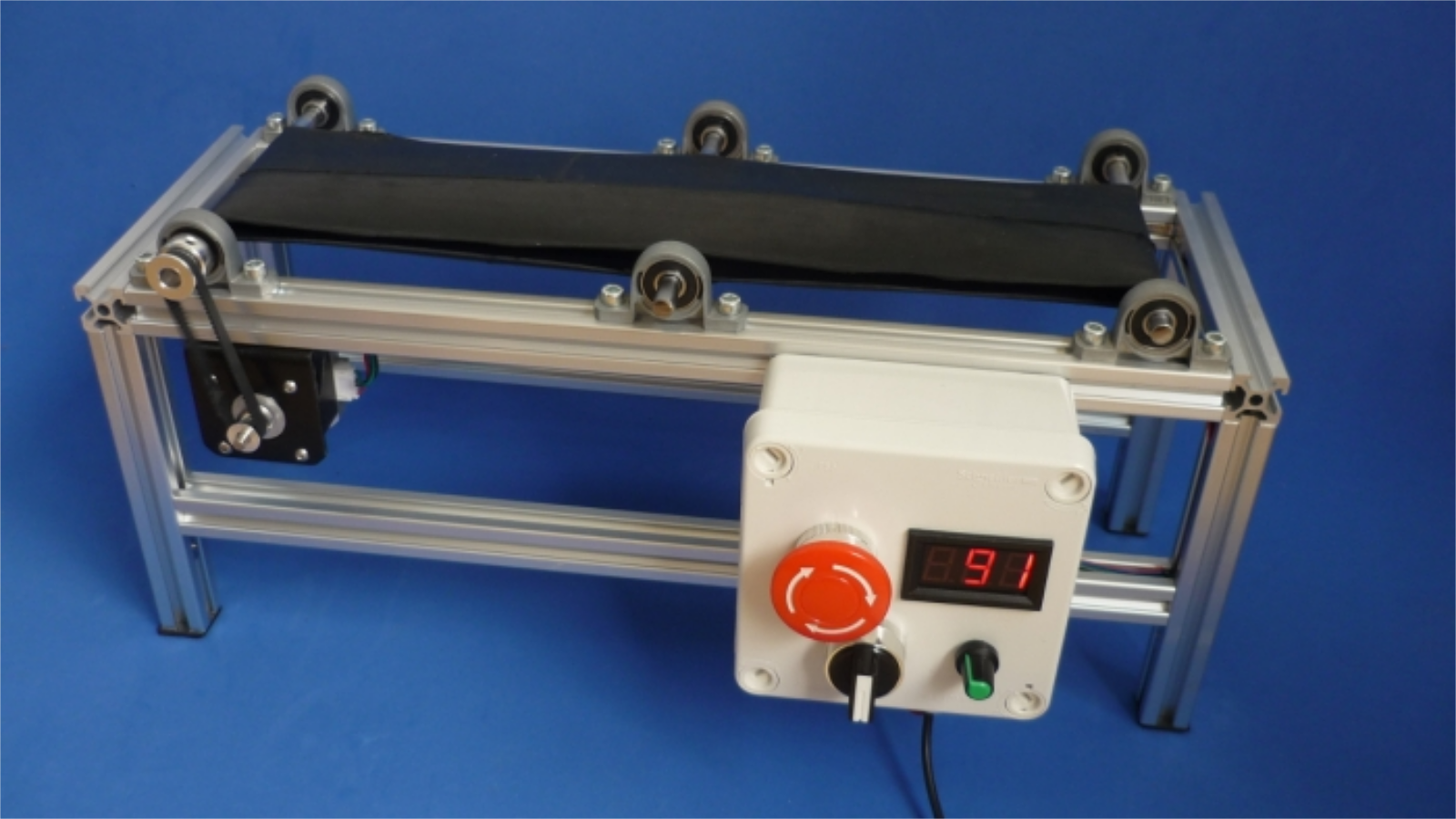
A modular portable conveyor belt is a conveyor system made with standardized, connectable parts that can be moved or reconfigured. The belt itself may be a plastic modular belt, fabric belt, rubber belt, chain-style belt, cleated belt, or mesh-style belt depending on the application. The frame may include caster wheels, adjustable supports, lightweight sections, aluminum or steel construction, and plug-and-play controls.
“Modular” means the conveyor is built in sections. Those sections may include straight modules, incline modules, decline modules, curved modules, transfer units, guide rails, side guards, drive units, tail sections, and support legs. “Portable” means the unit can be relocated, usually with casters or a lightweight frame. “Conveyor belt” describes the moving surface that carries products from one point to another.
Put all three ideas together and you get a conveyor that behaves less like a permanent highway and more like a well-organized set of building blocks. Need a 10-foot line today and a 20-foot line next month? Add modules. Need to move from a molding machine to a bin, then later from a packing table to a carton sealer? Reconfigure the layout. Need to load a truck during peak season and then reclaim the floor space afterward? Roll it away like a very productive shopping cart.
Why Businesses Choose Modular Portable Conveyors
Companies choose modular portable conveyor belts because they solve several common problems at once: labor strain, slow product movement, awkward layouts, temporary processes, and changing production requirements. In many facilities, the distance between “we need this moved” and “someone is carrying it by hand again” is dangerously short. A portable conveyor closes that gap.
1. Layout Flexibility
Traditional fixed conveyors are excellent when a process is stable, high-volume, and unlikely to change. But many modern operations are not that predictable. A warehouse may handle different product categories by season. A manufacturer may run short batches. A packaging line may switch between cartons, bags, pouches, trays, and totes.
A modular portable conveyor belt gives teams the ability to adapt. Sections can often be added, removed, or repositioned to match the workflow. This flexibility is useful in lean manufacturing cells, temporary assembly areas, pilot production lines, maintenance departments, and fast-changing fulfillment operations.
2. Better Use of Floor Space
Floor space is expensive, and conveyors that cannot move can become obstacles when they are not in use. Portable conveyor systems can be rolled into position for a production run, then stored or moved aside. This is especially helpful in small facilities where every square foot has a job and no one wants a conveyor permanently blocking the coffee machine, the forklift path, or the emergency exit.
3. Faster Material Flow
A conveyor does not get tired, distracted, or suddenly remember it left a forklift key somewhere mysterious. When properly designed, it creates steady product movement. That consistency can improve throughput, reduce bottlenecks, and help workers focus on higher-value tasks such as inspection, packing, assembly, labeling, or quality control.
4. Reduced Manual Handling
Manual lifting, carrying, pushing, and dragging can increase fatigue and injury risk. A portable belt conveyor can reduce unnecessary walking and repetitive handling. For example, instead of carrying cartons from a worktable to a palletizing area, employees can place items on the conveyor and let the system do the traveling. The worker still controls the process, but the conveyor handles the boring commute.
5. Lower Long-Term Adaptation Costs
A fixed conveyor may require expensive modification when the process changes. A modular system can often be adjusted with fewer structural changes. If a line needs a different discharge height, another belt style, side rails, cleats, or a new angle, modular components can make those changes more practical.
Common Types of Modular Portable Conveyor Belts
Not every conveyor belt is designed for the same job. Choosing the right belt style is like choosing shoes: sneakers, boots, and dress shoes all technically go on feet, but only one belongs in a muddy loading dock.
Modular Plastic Belt Conveyors
Modular plastic belts are made from interlocking plastic segments connected by rods. They are durable, easy to repair in sections, and suitable for many manufacturing and packaging environments. Because damaged sections can often be replaced without changing the entire belt, they are popular where maintenance speed matters.
These belts can also be designed for drainage, cooling, airflow, curves, inclines, or washdown applications. Food processing, bakery operations, medical products, consumer goods, and parts manufacturing frequently use modular plastic belt conveyors because they combine strength with sanitation and flexibility.
Fabric Belt Conveyors
Fabric belt conveyors use a continuous belt made from materials such as PVC, polyurethane, or rubber-coated fabric. They are often used for packages, small parts, light manufacturing, and general transport. Fabric belts usually provide a smooth carrying surface and can be a cost-effective option for straight-line conveying.
Cleated Belt Conveyors
Cleated belts include raised sections that help hold products in place, especially on inclines or declines. They are useful for moving loose items, small parts, bags, food products, recyclables, or components that might slide backward on a plain belt. If your product likes to roll downhill like it has weekend plans, cleats are your friend.
Incline and Z-Frame Conveyors
Incline conveyors move products from a lower elevation to a higher one. Z-frame conveyors include horizontal and angled sections, making them useful for feeding hoppers, bins, packaging machines, or inspection stations. Portable incline conveyors are common in manufacturing, recycling, agriculture, packaging, and material transfer applications.
Expandable and Flexible Conveyors
Some portable conveyors can expand, contract, and curve. These are often used for truck loading, unloading, temporary sortation, or distribution areas. While many flexible conveyors use rollers instead of belts, they belong in the same conversation because they solve similar mobility and layout challenges.
Where Modular Portable Conveyor Belts Are Used
One reason modular portable conveyor belts are so popular is that they are not limited to one industry. If something needs to move from Point A to Point B and workers are tired of being the transportation department, a conveyor may help.
Warehousing and Distribution
In warehouses, portable conveyors support receiving, sorting, order fulfillment, packing, returns, and shipping. They can help move cartons from dock doors, connect picking zones, feed sortation systems, or create temporary lanes during busy seasons. E-commerce operations especially benefit because order profiles change quickly and peak seasons can turn a calm warehouse into a cardboard thunderstorm.
Manufacturing and Assembly
Manufacturers use portable belt conveyors to move parts between machines, workstations, inspection areas, and packaging cells. In assembly environments, conveyors can improve rhythm and reduce wasted motion. In injection molding, they are often used to carry finished plastic parts away from molding machines and into containers or secondary operations.
Food and Beverage Processing
Food-grade conveyor systems may require stainless steel frames, easy-clean surfaces, washdown-ready components, and belts designed for hygiene. Modular plastic belts can be especially useful because they can support drainage, airflow, and easier cleaning. Applications include bakery goods, packaged foods, produce, frozen products, snacks, and ready-to-eat items.
Packaging Lines
Portable conveyors are excellent partners for packaging equipment such as carton sealers, baggers, labelers, checkweighers, metal detectors, shrink wrappers, and palletizing areas. They can act as accumulation zones, transfer points, inspection lines, or simple bridges between machines that were clearly not designed to be friends.
Recycling and Waste Handling
Recycling operations use belt conveyors to move materials such as plastics, paper, cardboard, metals, and mixed recyclables. Portable incline conveyors can feed sorting stations, balers, shredders, or containers. In these applications, durability and easy cleaning are important because the material is rarely polite.
Construction, Landscaping, and Temporary Material Movement
Portable belt conveyors can be used for moving soil, gravel, debris, mulch, sand, and other bulk materials. These systems are often rugged, easy to reposition, and useful where wheelbarrows would be slow or physically demanding. For short-term projects, portability can be more valuable than permanent automation.
How to Choose the Right Modular Portable Conveyor Belt
Buying a conveyor without understanding the application is like buying a truck because it is red. It might work, but that is not exactly engineering. The right conveyor depends on the product, environment, speed, distance, weight, sanitation requirements, and future flexibility needs.
Product Size, Shape, and Weight
Start with the item being conveyed. Is it a carton, bag, tray, bottle, molded part, food product, loose material, or palletized load? Is it fragile, oily, wet, hot, dusty, sharp, or irregularly shaped? Small parts may need close transfer points and side guides. Heavy loads may require stronger frames, roller beds, or specialized belt materials. Loose products may need cleats or sidewalls.
Conveyor Length and Width
The conveyor should be wide enough to support the product without allowing excessive side overhang. Length should match the process flow, but modular systems allow future changes. If your operation may expand, choose a system that can accept additional sections without requiring a total redesign.
Speed and Throughput
Conveyor speed should match the operation. Too slow, and it becomes a moving traffic jam. Too fast, and employees start chasing boxes like contestants on an industrial game show. Variable-speed controls are useful because they allow operators to fine-tune movement for different products and processes.
Incline, Decline, and Transfer Needs
If products must move between elevations, belt grip, cleat height, angle, and product stability become important. For transfers between conveyors or machines, pay attention to pulley diameter, nose bars, powered transfers, and gap size. Small products can fall into poorly designed transfer points, and nobody enjoys fishing parts out of the conveyor underworld.
Mobility and Adjustability
For true portability, look for quality casters, locking wheels, manageable frame weight, adjustable height, and stable supports. A conveyor should be easy to move, but not so light that it feels like it might wander off during operation. Stability matters, especially when moving heavier products or using incline sections.
Cleaning and Maintenance
Food, pharmaceutical, and medical applications may require washdown construction, stainless steel, sanitary belting, minimal catch points, and tool-free access. General industrial applications may focus more on belt tracking, motor access, replacement parts, and resistance to impact or abrasion.
Safety Considerations for Portable Conveyor Systems
Conveyors make work easier, but they are still moving machinery. Safety should never be treated like an accessory that can be added later, right next to cup holders. A safe modular portable conveyor belt should include proper guarding, emergency stops, clear operating procedures, and lockout/tagout practices during maintenance.
Guarding and Pinch Points
Moving belts, pulleys, chains, sprockets, rollers, and transfer points can create pinch or entanglement hazards. Guards should prevent accidental contact with hazardous areas while still allowing inspection and maintenance when the equipment is properly shut down.
Emergency Stops
Emergency stop buttons or pull cords may be needed depending on conveyor length, layout, and risk assessment. Operators should know where emergency controls are located and how to use them. The best emergency stop is the one a worker can reach before a small problem becomes a very loud problem.
Lockout/Tagout During Maintenance
Before cleaning, servicing, clearing jams, or replacing parts, conveyors should be de-energized according to the facility’s lockout/tagout procedures. This helps prevent unexpected startup and protects workers from hazardous energy.
Training and Housekeeping
Employees should be trained on safe loading, unloading, startup, shutdown, emergency stops, and jam-clearing procedures. The area around portable conveyors should remain clear of trip hazards, loose cords, packaging debris, and anything else that turns a normal shift into slapstick comedy.
Maintenance Tips for Longer Conveyor Life
A modular portable conveyor belt does not need constant pampering, but it does need regular attention. Preventive maintenance protects uptime, reduces repair costs, and keeps small problems from becoming expensive surprises.
Inspect the Belt Regularly
Look for cracks, cuts, missing belt links, frayed edges, damaged cleats, uneven wear, and signs of slipping or tracking problems. With modular plastic belts, damaged sections may often be replaced individually, which can reduce downtime.
Check Fasteners, Supports, and Casters
Portable systems move around, so vibration and relocation can loosen hardware over time. Check bolts, brackets, side guides, leg supports, wheel locks, and frame connections. A conveyor that rolls smoothly when you want it to move and stays firmly in place when you do not is doing its job.
Keep the Conveyor Clean
Dust, food residue, oil, labels, tape, and debris can affect belt performance. Cleaning schedules should match the application. Food-grade systems may require more frequent sanitation, while industrial conveyors may need regular removal of chips, scraps, or packaging waste.
Monitor Motor and Drive Components
Listen for unusual noises, overheating, inconsistent speed, or vibration. Motors, gearboxes, drive pulleys, bearings, and controls should be inspected according to the manufacturer’s recommendations. If a conveyor starts making a sound like a blender full of bolts, do not call that “character.” Investigate it.
Cost Factors and Return on Investment
The cost of a modular portable conveyor belt depends on length, width, belt type, frame material, load capacity, motor type, controls, accessories, safety features, and customization. A simple portable belt conveyor for cartons may be relatively affordable, while a sanitary washdown modular system with special belting, controls, and custom transfers will cost more.
However, price should not be evaluated only by the purchase order. Consider labor savings, reduced product damage, faster throughput, fewer bottlenecks, lower injury risk, and future reconfiguration value. A modular conveyor that can be reused in five different layouts may deliver more long-term value than a cheaper fixed system that becomes obsolete after one process change.
Return on investment often comes from reducing manual transport, improving line balance, supporting automation, and preventing downtime. In high-volume operations, even small improvements in product flow can create meaningful savings over time.
Practical Experience Notes: What Real Conveyor Use Teaches You
After working around modular portable conveyor belt systems, one lesson becomes obvious: the best conveyor is not always the biggest, fastest, or most expensive one. It is the one that fits the workflow so naturally that workers stop thinking about it. A good conveyor quietly removes friction from the day. A bad one creates new chores, new hazards, and new vocabulary from frustrated employees.
One common experience is that portability matters more than people expect. On paper, a conveyor may be “portable” because it has wheels. In real life, those wheels need to roll smoothly over the actual floor, lock securely, and survive being moved by busy workers who may not treat equipment like museum art. Heavy-duty casters, stable legs, and simple height adjustment can make the difference between a conveyor that gets used daily and one that becomes an expensive shelf.
Another practical lesson is that transfers deserve extra attention. Many conveyor problems happen where one machine hands the product to another. If the gap is too large, small parts tip, jam, bounce, or disappear. If the height is slightly off, cartons may hesitate or collide. If the belt speed does not match the next machine, products can bunch up. During planning, teams should test real productsnot just perfect samples from a conference room table. Real products have dents, tape, labels, odd centers of gravity, and a talent for exposing design flaws.
Maintenance access is also a big deal. A conveyor that is technically repairable but requires three tools, two people, and the patience of a saint will not be maintained as often as it should. Modular belts with replaceable sections, accessible drives, clear belt paths, and easy-clean surfaces make daily life easier. In food or dusty environments, cleaning access is not a luxury; it is the difference between smooth operation and a growing collection of mysterious residue.
Workers usually know where the real bottlenecks are. Before buying or reconfiguring a portable conveyor, ask the people who load, unload, clean, and fix the line. They will often point out details that drawings miss: “This side needs room for totes,” “The labeler jams when boxes arrive too close together,” or “We need the discharge six inches higher because the bin lip catches parts.” That kind of practical feedback can save money and embarrassment.
Finally, do not underestimate training. A modular portable conveyor belt may look simple, but employees still need to understand loading limits, safe zones, emergency stops, wheel locks, cleaning rules, and jam-clearing procedures. When a conveyor is moved to a new area, treat it like a new setup. Confirm power, guards, traffic paths, height, stability, and workflow. Flexibility is the point of modular equipment, but every new layout deserves a quick safety and performance check.
The best experience with these systems comes when they are treated as part of the process, not just equipment placed between two tasks. When properly selected, positioned, and maintained, a modular portable conveyor belt can make a facility feel faster, safer, and far less dependent on heroic manual effort. And honestly, the less heroism required to move boxes, the better.
Conclusion
A modular portable conveyor belt is more than a moving surface. It is a flexible material handling tool that helps businesses improve flow, reduce manual handling, adapt layouts, and support changing production demands. Whether used in warehousing, manufacturing, food processing, packaging, recycling, or temporary loading areas, the right conveyor can turn awkward movement into smooth, repeatable motion.
The key is choosing a system based on real application needs: product type, load weight, belt material, speed, incline, sanitation, safety, and future flexibility. A well-designed modular portable conveyor can grow with the operation, shift between tasks, and reduce the cost of constant process changes. In a business environment where speed and adaptability matter, that is not just convenientit is competitive.