“My Dad Might Be Alive”: 50 Things People Are 100% Certain Are True Despite Having No Evidence

Note: This article is an original, research-informed exploration of why people feel absolutely sure about some beliefs even when they cannot prove them. The examples below are written as cultural observations and conversation starters, not as verified claims.
Everybody has a private little “I know this is true” folder in the back of the mind. It contains things we cannot prove, cannot submit to a lab, cannot win an argument with, and yetsomehowwe would still defend them with the emotional intensity of someone protecting the last slice of pizza.
The viral-style title “My Dad Might Be Alive” hits so hard because it sits right at the crossroads of grief, uncertainty, memory, and hope. When evidence is missing, the human brain does not simply shrug and say, “Insufficient data, please try again later.” It fills the silence. It builds a bridge. Sometimes that bridge is comforting. Sometimes it is ridiculous. Sometimes it is a conspiracy theory wearing a trench coat and sunglasses.
People become 100% certain without evidence for many reasons: confirmation bias, emotional need, pattern recognition, family stories, intuition, personal experience, mistrust of institutions, and the plain old fact that life is weird. A coincidence happens once and we call it chance. It happens twice and suddenly Aunt Linda is convinced her microwave can sense sadness.
Why We Believe Things Without Proof
Belief is not always a courtroom. Most of the time, it is a living room. We believe things because they feel coherent with what we have seen, heard, feared, or hoped for. Evidence matters, of course, but human certainty is often built from smaller materials: a look someone gave us, a memory that refuses to fade, a pattern that seems too strange to ignore, or a gut feeling that keeps knocking on the door.
Confirmation Bias: The Brain’s Favorite Intern
Confirmation bias is the tendency to notice information that supports what we already believe while casually escorting contradictory details out the back door. If someone believes their cat knocks things over on purpose, every shattered mug becomes Exhibit A. The hundreds of times the cat simply walked past the mug? Strangely unavailable for comment.
False Memory and the Confidence Problem
Human memory is not a security camera. It is more like a group chat where details get edited, reordered, dramatized, and occasionally sent to the wrong person. People can be deeply sincere and still remember incorrectly. Confidence does not automatically equal accuracy, which explains why family arguments about “what really happened at Thanksgiving in 2007” can become more intense than international diplomacy.
Ambiguous Loss: When Not Knowing Becomes a Life Sentence
The phrase “my dad might be alive” points to a painful kind of uncertainty. When someone disappears, leaves, becomes estranged, or dies under circumstances that feel unresolved, loved ones may live with a gap that refuses to close. The mind tries to protect itself by keeping possibilities alive. That does not mean the belief is proven. It means the heart is still looking for a place to put the pain.
50 Things People Are Certain Are True Despite Having No Evidence
Here are 50 common, strange, funny, emotional, and oddly believable things people often swear are truedespite having little or no solid proof.
Personal and Family Mysteries
- A missing relative is still alive somewhere. Sometimes hope survives longer than documentation.
- Grandma had a secret romance nobody talks about. Every family has one mysterious photograph and three suspicious silences.
- A parent had a favorite child but will never admit it. The evidence is usually “vibes,” birthday gifts, and casserole portions.
- Someone in the family changed their name to hide a scandal. Family trees are basically detective novels with better snacks.
- An old house has a history nobody told the kids. A locked attic door can do more for imagination than any horror movie.
Pets, Animals, and Nature
- Cats knock things over on purpose. Science may debate it, but the cat’s face says, “And I would do it again.”
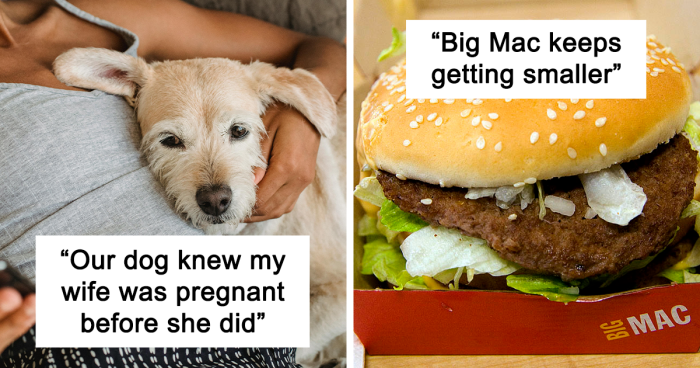
- Dogs can sense pregnancy, sickness, or sadness before humans do. Many pet owners are absolutely convinced their animals know first.
- Crows remember people who wronged them. Honestly, this one feels emotionally correct even before research enters the room.
- Some animals can sense earthquakes or storms early. People have told these stories for generations.
- There is still a giant unknown creature in the deep ocean. The ocean is huge, dark, and suspiciously dramatic.
Food, Taste, and Everyday Life
- Soda tastes better from a glass bottle. Many people would defend this claim like it appears in the Constitution.
- Food made by someone else tastes better. A sandwich you did not assemble has spiritual advantages.
- Restaurant fries are better because they know a secret. The secret may be oil, salt, timing, or wizardry.
- Leftovers taste better the next day. Especially pasta, soup, curry, and anything that had time to think about itself.
- Recipes from older relatives are missing one ingredient on purpose. Nobody writes “love,” but sometimes they also forget paprika.
Technology and Modern Paranoia
- Phones listen to conversations for ads. Many people believe this because the timing of certain ads feels personal.
- Software updates slow old devices intentionally. Even when the reasons are technical, the suspicion is powerful.
- Printers know when you are in a hurry. This is not evidence-based, but spiritually, yes.
- Autocorrect waits until the worst possible moment to betray you. One typo can destroy a professional email and your will to live.
- Social media shows you emotional content to keep you scrolling. People may not know the mechanics, but they feel the pull.
Work, School, and Public Life
- Some meetings exist only because someone loves hearing themselves talk. The agenda is three bullets; the meeting is 90 minutes. Suspicious.
- Group projects reveal the true moral condition of society. One person works, one person vanishes, one person says “looks good!”
- Bosses schedule Friday afternoon meetings to test loyalty. No evidence, just trauma.
- Some people get promoted because they sound confident, not because they are right. Office life often rewards volume before wisdom.
- School rumors travel faster than official announcements. The student grapevine should honestly run emergency communications.
Culture, Media, and Conspiratorial Thinking
- Some celebrity relationships are publicity arrangements. Fans can turn two red-carpet photos into a congressional inquiry.
- Reality shows are more scripted than they admit. Nobody flips a table with that perfect camera angle by accident.
- Brands make old products smaller while keeping prices high. Shrinkflation has made everyone suspicious of snack bags.
- Trends are manufactured before they become “organic.” Suddenly everyone loves the same color? We noticed.
- Some online arguments are fueled by fake accounts. When 12 usernames say the same awkward sentence, people get curious.
Intuition, Coincidence, and the Unexplainable
- Thinking of someone right before they text means something. Maybe coincidence. Maybe timing. Maybe the universe has notifications.
- Some dreams predict real events. People remember the hits and forget the 400 dreams about being late to math class.
- Full moons make people act stranger. Many nurses, teachers, and parents swear by this.
- Bad energy is real in certain rooms. Sometimes a place just feels like it has unpaid emotional rent.
- Lucky objects actually help. The object may not change reality, but confidence can change behavior.
Big Questions With No Easy Proof
- Aliens exist somewhere in the universe. Many people see the size of space and consider loneliness statistically rude.
- This is not the first universe. The idea feels huge, strange, and impossible to disprove at the dinner table.
- Time sometimes feels different because it is different. Monday afternoons support this theory aggressively.
- Déjà vu means something more than brain processing. It feels like a glitch, and humans love a glitch.
- There are places humans are not meant to find. This belief is why forests, caves, and abandoned malls remain undefeated.
Small Domestic Certainties
- The dryer eats socks. Nobody has proved it, but where are they, Karen?
- Car keys hide when you are already late. They develop survival instincts at 8:03 a.m.
- The best parking spot appears only after you give up. Surrender is apparently part of the algorithm.
- Kids know exactly when adults need quiet. Their timing is elite.
- Appliances break right after the warranty ends. A coincidence so common it feels like a business model.
Human Nature
- People reveal who they are when they think nobody important is watching. The shopping cart test has entered modern folklore for a reason.
- Some apologies are just reputation management. The words are there, but the humility is on backorder.
- Most people have one secret they hope never becomes small talk. Not necessarily dramaticjust deeply private.
- Children notice more than adults think. They may not understand everything, but they are always collecting clues.
- Everyone has at least one belief they cannot defend but refuses to abandon. And that belief probably involves food, pets, family, or the government.
Why These Beliefs Feel So True
The interesting question is not simply whether these beliefs are true. Some may be partly true. Some are probably false. Some are impossible to test without a submarine, a therapist, a family historian, and access to someone’s phone microphone settings.
The better question is: why do they feel true? Many evidence-free beliefs are powered by emotional logic. A person who believes a missing father might be alive may not be making a scientific claim. They may be preserving a relationship with possibility. Someone who believes their dog knew they were pregnant may be honoring a bond that felt real in the moment. Someone who believes their phone is listening may be reacting to the eerie precision of modern advertising, even if the explanation is more complicated than a tiny marketer living inside the speaker.
Beliefs without evidence also give people a sense of control. If the world feels random, the brain prefers a patterneven a strange oneto chaos. “The dryer eats socks” is more satisfying than “small objects disappear because life is poorly organized.” “The full moon makes people weird” is more fun than “humans are complex and emergency rooms are stressful.”
Humor plays a role too. Some beliefs are not meant to be serious claims; they are tiny acts of storytelling. Saying “printers smell fear” is not a technology theory. It is a poem written by someone who has been personally attacked by a paper jam.
The Difference Between Harmless Hunches and Harmful Certainty
Not every unproven belief is dangerous. Believing your grandmother’s soup cured your cold is usually harmless, especially if you still drink water and see a doctor when needed. Believing hummingbirds are tiny magical messengers may even make life brighter. The problem begins when certainty becomes immune to correction, especially in areas that affect health, safety, relationships, money, or public trust.
A harmless hunch says, “I can’t prove it, but I wonder.” Harmful certainty says, “I don’t need proof, and nothing could change my mind.” That second version can damage relationships, spread misinformation, or push people toward bad decisions. It can turn suspicion into accusation, grief into obsession, or curiosity into a rabbit hole with no exit sign.
The healthiest approach is not to mock every weird belief. People are not robots, and life would be unbearable if we demanded peer-reviewed evidence for every family story, lucky shirt, or pet theory. The better approach is to ask: What would count as evidence? Could I be wrong? Does this belief help me live better, or does it make me more afraid, angry, or isolated?
Experiences Related to Believing Without Evidence
Nearly everyone has experienced a moment where logic and feeling refused to sit at the same table. You may have known, with absurd certainty, that a friend was about to call. Then the phone rang. You may have walked into a room and instantly felt that something was off, even before anyone spoke. You may have kept an object because it felt lucky, avoided saying good news out loud because you did not want to jinx it, or believed a loved one visited you in a dream because the dream felt too vivid to dismiss.
These experiences are powerful because they are personal. Outside observers can call them coincidence, memory bias, or emotional interpretation, and they may be right. But from inside the experience, the feeling can be enormous. The human brain is not only designed to calculate; it is designed to survive, attach, remember, and make meaning. That means it sometimes treats emotional intensity as a form of truth.
Consider the person who believes their father might still be alive. To outsiders, the claim may sound unlikely. But inside that person’s life, there may be missing details, unreliable witnesses, family silence, confusing behavior before the supposed death, or years of unanswered questions. In that kind of emotional weather, “maybe” can become a shelter. The belief is not just about facts. It is about unfinished grief.
Or think about the pet owner who insists their dog sensed illness before anyone else. Maybe the dog noticed a change in smell, movement, routine, or mood. Maybe the owner noticed the dog’s behavior only after learning the news and connected the dots backward. Either way, the story becomes meaningful because it says something beautiful: “I was not alone. Something close to me knew.”
Everyday life is full of these private certainties. A teacher believes a student is struggling before grades show it. A parent senses their child is hiding something before the confession arrives. A friend knows a relationship is ending long before the breakup. These moments may not qualify as proof, but they often come from careful observation, emotional memory, and pattern recognition gathered over time.
The danger is when we stop separating intuition from conclusion. A gut feeling can be useful, but it should be treated like a smoke alarm, not a final report. It tells us to pay attention. It does not always tell us exactly what is burning. The wisest people listen to their instincts, then check the facts before acting as though the case is closed.
That is the charm and chaos of being human. We are meaning-making creatures walking around with imperfect memories, hungry imaginations, emotional histories, and a deep dislike of uncertainty. Sometimes our evidence-free beliefs are silly. Sometimes they are tender. Sometimes they are warning signs. And sometimes they are simply the mind’s way of saying, “I need this story to make the world feel less random.”
Conclusion
“My Dad Might Be Alive”: 50 Things People Are 100% Certain Are True Despite Having No Evidence is more than a funny list title. It captures something deeply human: our need to believe before the evidence arrives, after the evidence disappears, or when evidence may never come at all.
Some unproven beliefs are harmless little sparks of personality. Others are emotional survival tools. A few can become dangerous when they harden into certainty and reject reality altogether. The goal is not to erase mystery from life. Mystery is part of what makes stories, families, pets, dreams, and late-night conversations so compelling. The goal is to keep one foot on the ground while the other wanders through possibility.
So yes, maybe the cat did knock over the glass on purpose. Maybe the sandwich really does taste better when someone else makes it. Maybe the dream meant something. Maybe it did not. The trick is learning to enjoy the wonder without letting it steal the steering wheel.
SEO Tags