
Note: This publish-ready guide is based on widely used U.S. DIY, home-decor, fabric-care, and bed-skirt installation practices.
A bed can be beautifully made, piled high with pillows, and dressed in a duvet worthy of a boutique hotel. But if the space beneath it looks like a garage sale hosted by dust bunnies, the whole room can lose its magic.
That is where a no sew drop cloth bedskirt comes in. This simple DIY project turns an inexpensive canvas painter’s drop cloth into a tailored-looking bed skirt without a sewing machine, advanced crafting skills, or the emotional trauma of threading a needle at 11 p.m.
A canvas drop cloth has a relaxed, linen-like appearance that works especially well in farmhouse, cottage, coastal, rustic, neutral, vintage, and casual bedroom styles. It can hide a box spring, metal frame, bed risers, storage bins, spare bedding, and the mysterious collection of items that somehow migrate under every bed.
Best of all, a no sew bedskirt can be customized for nearly any bed height. Instead of buying a ready-made dust ruffle and hoping the drop length is not awkwardly short or dramatically puddled on the floor, you can create one that fits your bed like it was invited to live there.
Why Use a Drop Cloth for a No Sew Bedskirt?
Canvas painter’s drop cloths are popular for DIY home projects because they are sturdy, affordable, easy to cut, and usually available in useful sizes. Many are made from cotton canvas and come with finished edges, which is excellent news for anyone whose relationship with hemming can best be described as “complicated.”
The natural tan or ivory color of a drop cloth resembles relaxed linen, but at a friendlier price point. Once washed, canvas often softens and drapes more naturally. It will not suddenly become silk pajamas for your bed, but it can look charmingly casual and collected.
A DIY drop cloth bedskirt also gives you more flexibility than a traditional platform bed skirt. You can create a three-sided skirt for a bed against the wall, add extra fullness with soft pleats, leave room for under-bed storage, or make removable panels that are easier to wash.
Benefits of a No Sew Drop Cloth Bedskirt
- It hides box springs, metal frames, bed risers, and storage containers.
- It creates a softer, more finished bedroom look.
- It can cost less than a custom bed skirt.
- It works without a sewing machine.
- It can be adjusted as your bed, mattress, or decor changes.
- It gives plain beds a cozy, layered look without requiring a full bedroom makeover.
Choose the Right Drop Cloth Before You Start
Not every drop cloth belongs near a bed. Skip plastic painter’s sheets, rubber-backed cloths, and anything that has already survived a dramatic paint-project incident. You want a clean, untreated cotton canvas drop cloth that feels flexible enough to drape around the bed.
For most projects, a medium-weight canvas drop cloth works well. Heavy canvas can look structured and durable, but it may create bulkier folds. Lightweight canvas drapes more easily, although it may wrinkle more quickly and show storage-bin outlines beneath the bed.
Look for a drop cloth with finished hems on all sides. Those factory-sewn edges are the quiet heroes of this project. They can become the visible bottom edge of your bedskirt, saving you from needing to hem fabric yourself.
How Much Fabric Do You Need?
Measure the sides of the bed that will be visible. For a bed against a wall, you may only need the two sides and foot of the bed. For a freestanding bed, measure all four sides.
Add the visible side lengths together, then include extra fabric for corner folds, overlap, and fullness. A simple flat bedskirt needs only a small amount of extra fabric. A gathered or pleated look needs more. As a general rule, add at least 10% extra for a relaxed skirt and closer to 25% extra if you want soft pleats.
Also measure the drop length: the distance from the point where the bedskirt will attach down to the floor. Measure in several places because beds, floors, and old houses do not always agree on what “level” means.
For a tidy appearance, allow the bedskirt to hover about one-quarter inch above the floor or barely brush it. A skirt that floats several inches above the floor can look accidental. A skirt that drags on the floor can collect dust, pet hair, and enough lint to form a small civilization.
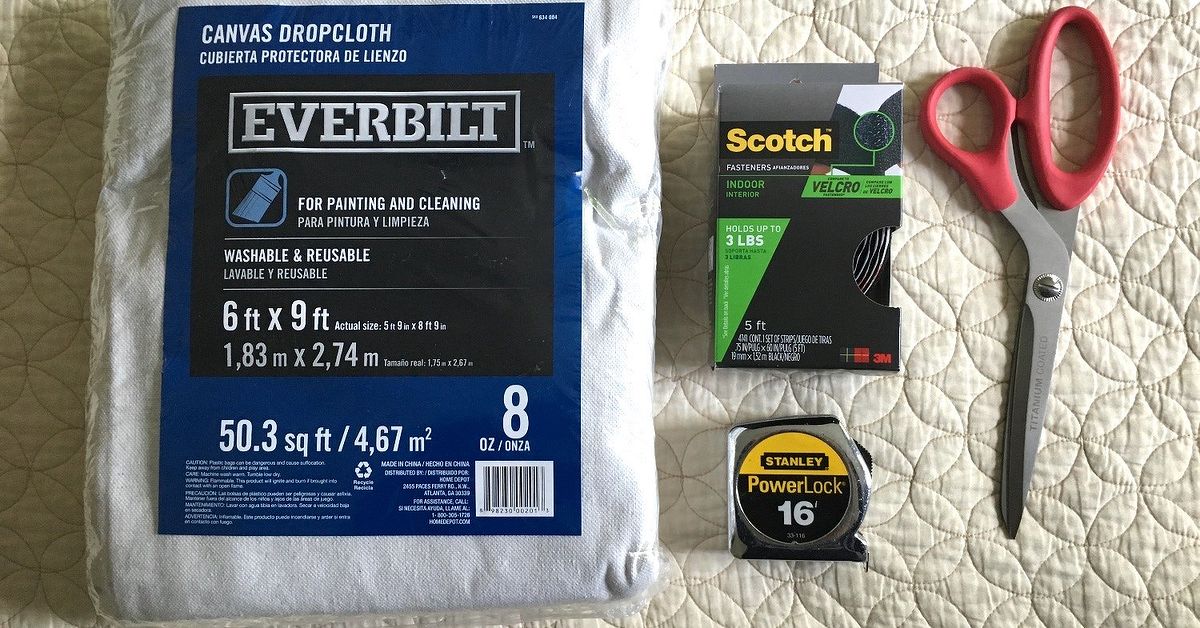
Supplies for a No Sew Drop Cloth Bedskirt
- Clean cotton canvas drop cloth
- Measuring tape
- Fabric scissors or sharp utility scissors
- Iron or garment steamer
- Upholstery twist pins, bedskirt pins, safety pins, hook-and-loop strips, or a staple gun
- Painter’s tape or fabric clips for temporary placement
- Optional iron-on hem tape for raw edges
- Optional fabric glue for light finishing work
Wash and Prep the Drop Cloth First
Wash the drop cloth before measuring or cutting it. Cotton canvas can shrink slightly after its first wash, and it often becomes softer afterward. Washing first prevents the unpleasant surprise of making a perfectly fitted bedskirt that later decides to become a high-water curtain.
Use the care instructions on the label whenever possible. If the drop cloth is machine washable, wash it separately for the first cycle. Dry it according to the manufacturer’s guidance, then iron or steam the visible sections. You do not need every inch to be wrinkle-free, but large creases can make measuring and draping less accurate.
Before attaching anything, place your mattress and box spring exactly as they will sit during everyday use. Bedskirts are not particularly forgiving when measurements are taken on a half-assembled bed.
How to Make a No Sew Drop Cloth Bedskirt
Step 1: Decide Where the Bedskirt Will Attach
Your attachment point depends on the bed style. For a box spring bed, attach the fabric near the top edge of the box spring so the mattress hides the fasteners. For a platform bed with a wooden rail, attach the panel to the inside or top edge of the rail. For a metal frame, hook-and-loop strips, clips, or carefully placed ties may be more practical than staples.
Choose an attachment method before cutting your fabric. A removable method, such as upholstery pins or hook-and-loop tape, is best when you want to wash the bedskirt regularly. A staple gun works well for a more permanent installation on a hidden wooden base.
Step 2: Cut Panels With Finished Edges at the Bottom
Lay the washed drop cloth on a clean floor. Cut strips that are slightly longer than each visible side of the bed. Position the factory-finished hem along the bottom edge whenever possible. This gives the bedskirt a neat finish without requiring a single stitch.
If a cut edge will show at a corner, fold it inward and secure it with iron-on hem tape or a narrow strip of fabric glue. Keep the glue light. A bedskirt should hang like fabric, not behave like a cardboard science fair display.
Step 3: Test the Length Before Securing Anything
Hold a panel against the bed frame with clips or painter’s tape. Check the length from several angles. Step back across the room, then crouch down and inspect the hem near the floor. This is the moment to make small adjustments before attaching the fabric permanently.
Check the corners, too. A bedskirt can look perfect from the front and suddenly become a fabric traffic jam at the side of the bed. Adjust the panel until the hemline looks even and the fabric hangs naturally.
Step 4: Attach the Fabric
For upholstery pins: Fold the top edge of the panel over the box spring and insert pins through the folded fabric into the softer top area of the box spring. Space them evenly so the fabric stays secure without sagging.
For hook-and-loop strips: Apply one side to the hidden bed frame or box spring cover and the other side to the top back edge of the fabric. Use several short sections instead of one long strip, especially if you plan to remove the skirt for washing.
For staples: Use this method only on a hidden wooden rail, plywood base, or upholstered foundation where staples will not damage the visible frame. Start in the center of each side, then work outward. Keep the fabric taut but not stretched.
For safety pins: This is a budget-friendly temporary option. Use sturdy, large pins and keep them hidden beneath the mattress. They are best for lightweight canvas or guest-room beds that are not moved often.
Step 5: Create Corners and Pleats
For a simple tailored bedskirt, overlap the side panel and foot panel at each corner. Fold the top edge inward, then secure it behind the mattress with pins or hook-and-loop tape.
For a more relaxed farmhouse look, create one or two soft folds near the corner. Do not overthink the pleats. Perfectly symmetrical pleats can look formal, but slightly loose folds make a drop cloth bedskirt feel softer and more intentional.
If the fabric bunches at a corner, remove one fastener and redistribute the fullness. Bedskirts are wonderfully forgiving once you accept that no guest has ever entered a bedroom, dropped to the floor, and demanded a forensic investigation of your corner pleats.
Style Ideas for a Drop Cloth Bedskirt
A natural canvas bedskirt is a neutral foundation, which means you can style it in many directions. Pair it with white bedding and warm wood for a farmhouse bedroom. Add striped sheets and blue pillows for a coastal look. Use black metal accents and linen bedding for a modern rustic room.
For a more customized appearance, add trim along the bottom edge. A narrow black ribbon creates contrast. Cotton pom-pom trim adds playful texture to a child’s room. Frayed fabric strips can create a relaxed boho look. You can also stencil a subtle stripe, border, or monogram on the canvas, but test your paint technique on a scrap first.
Because drop cloths are naturally neutral, they also help busy bedding look calmer. Patterned quilts, floral comforters, bold throw pillows, and colorful rugs all have room to shine when the bed base is simple and understated.
Common No Sew Bedskirt Mistakes to Avoid
Skipping the Prewash
Canvas may change slightly after washing. Prewash before cutting so the finished bedskirt keeps its intended length.
Measuring Only Once
Measure the height at the foot, side, and corners. Even a small difference can make the hemline look uneven.
Using Too Little Fabric
A bedskirt that barely reaches the corners can look strained. Give yourself enough extra fabric for overlap and gentle folds.
Attaching Fabric Too Tightly
Pulling canvas tight can create a stiff, flat appearance. A bedskirt should hang smoothly, not look like it is trying to win a tug-of-war contest.
Ignoring Under-Bed Storage Access
If you regularly use storage bins under the bed, consider separate panels instead of one continuous skirt. Individual panels make it easier to reach what you need without wrestling the entire bedskirt into submission.
How to Care for a Drop Cloth Bedskirt
Vacuum or shake out the lower edge occasionally, especially if you have pets or hardwood floors that collect dust. Wash the bedskirt when it looks dusty, after seasonal bedding changes, or whenever it has absorbed the scent of life happening in a busy bedroom.
Removable panels are easier to maintain than permanently stapled fabric. If you use hook-and-loop strips or upholstery pins, label the panels lightly on the hidden upper edge so they go back in the correct places after washing.
After laundering, reattach the panels while they are freshly steamed or lightly pressed. This is much easier than trying to smooth wrinkles after the fabric is already pinned beneath a mattress that weighs approximately as much as a sleepy housecat made of bricks.
Real-World Experiences With a No Sew Drop Cloth Bedskirt
The most useful lessons from no sew drop cloth bedskirt projects tend to appear after the first attempt, usually sometime between “this looks amazing” and “why is one corner suddenly six inches longer?” The first experience most DIYers have is realizing that the project is less about complicated craftsmanship and more about patient measuring. A drop cloth is forgiving, but gravity is brutally honest. If one side is too long, it will announce itself every time you walk into the room.
Many people discover that washing the canvas makes a bigger difference than expected. Straight from the package, a drop cloth can feel stiff, folded, and determined to remember every warehouse crease it has ever had. After washing and drying, it often becomes softer and easier to manipulate. The fabric begins to look less like a painting supply and more like an intentional bedroom textile. This is why skipping the prewash is one of those shortcuts that seems clever until it becomes inconvenient.
Another common experience involves storage. A bedskirt can hide plastic bins, extra blankets, seasonal clothes, books, gift wrap, and the occasional exercise mat that has not been used since the last burst of optimism. That hidden storage is wonderful, but it changes how the bedskirt should be installed. People who use the space under the bed often prefer separate side panels secured with pins or hook-and-loop tape. It is much easier to lift one panel than to pull an entire continuous skirt away from the bed every time you need a spare pillowcase.
Fasteners also teach valuable lessons. Upholstery pins are popular because they are easy to use and can be removed for washing. However, they work best when spaced consistently. Too few pins can allow the fabric to sag in the middle, while too many can make the installation feel unnecessarily fussy. Hook-and-loop strips can create a clean removable setup, but they should be placed on a clean, dry surface and pressed firmly before the weight of the fabric is added. Staples are quick and secure on a wooden base, but they are not ideal for renters, antique frames, or anyone likely to redesign the bedroom every other Tuesday.
Corner treatment is another area where experience matters. The first instinct is often to pull every panel tight and make each fold perfectly crisp. In practice, a little softness looks better. Canvas has texture and personality, so allowing a relaxed fold near the corners often creates a more natural result. A drop cloth bedskirt does not need to pretend it came from a luxury showroom. Its charm is that it looks tailored enough to feel finished while still being practical enough for real life.
Finally, the best experience is the visual payoff. A bed that once exposed a box spring, metal legs, and random storage suddenly looks grounded and complete. The room feels calmer because the eye is no longer interrupted by clutter beneath the mattress. For a relatively simple project, a no sew drop cloth bedskirt can make the entire bedroom feel more intentional. It is one of those DIY upgrades that quietly proves good design does not always require a giant budget, a sewing machine, or a dramatic before-and-after television reveal.
Final Thoughts
A no sew drop cloth bedskirt is an affordable way to hide under-bed clutter, soften a plain bed frame, and give your bedroom a more polished look. With a washed canvas drop cloth, accurate measurements, and the right attachment method, you can create a custom-looking dust ruffle in an afternoon.
Keep the design simple, let the finished hems do the hard work, and remember that a slightly relaxed fold is not a mistake. It is texture. It is charm. It is also significantly easier than learning how to sew a gathered ruffle while watching tutorial videos at midnight.