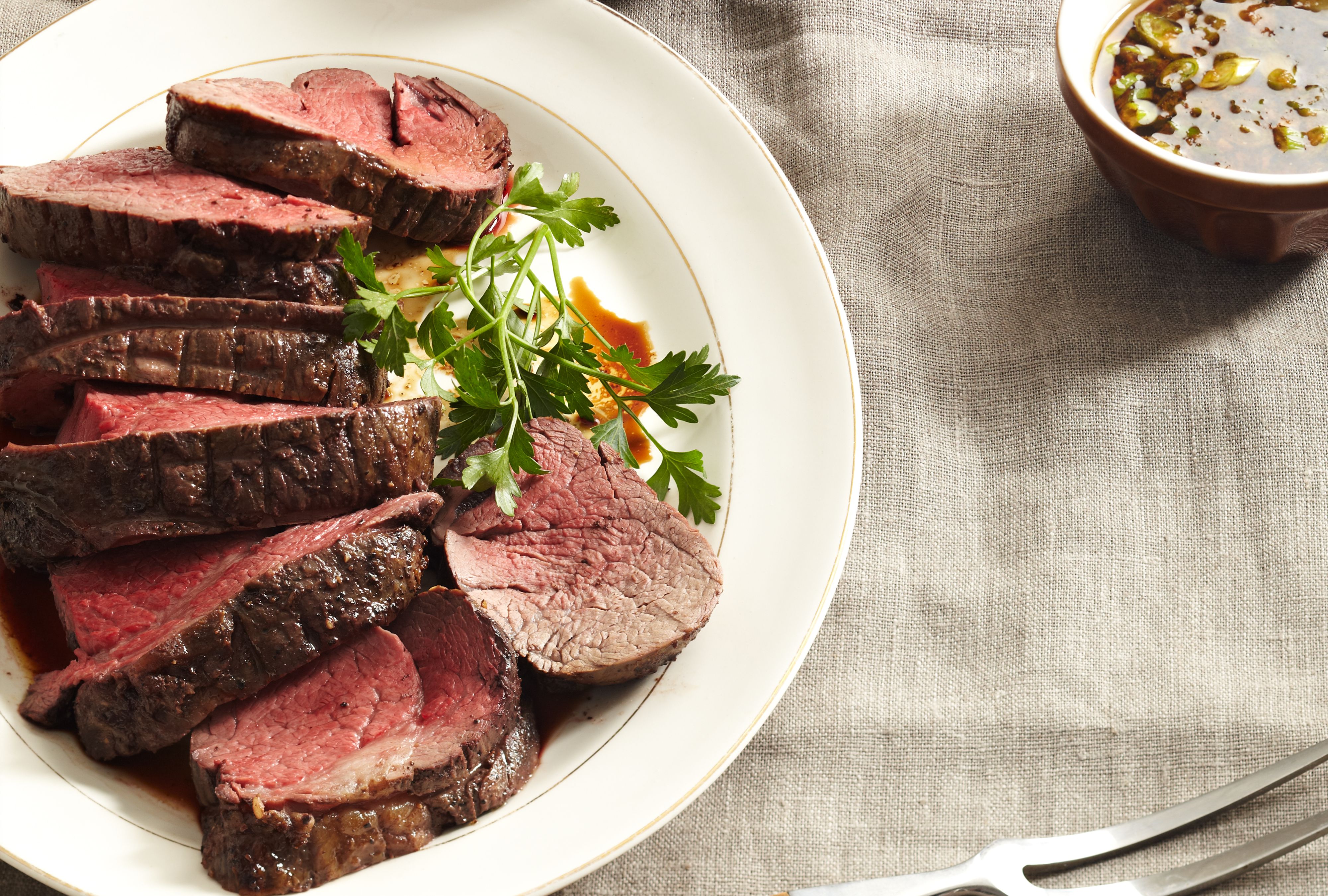

Oven-roasted beef tenderloin is the kind of dinner that walks into the room wearing a tuxedo, but secretly only needs a baking sheet, salt, pepper, butter, and a thermometer to look impressive. It is elegant enough for Christmas, New Year’s Eve, anniversaries, dinner parties, or any night when you want guests to think you casually operate a five-star steakhouse out of your kitchen.
The beauty of a beef tenderloin roast is its tenderness. This cut comes from a muscle that does very little work, which means the meat is naturally buttery, lean, and fine-grained. That also means it can dry out if treated like a tough pot roast. The secret is simple: season it well, tie it evenly, roast it with care, use a meat thermometer, and let it rest before slicing. In other words, do not guess. Beef tenderloin is not the place for “I feel like it’s done.” That is how expensive meat becomes very fancy shoe leather.
This oven-roasted beef tenderloin recipe uses a practical two-stage approach: moderate roasting for even cooking, followed by a short high-heat finish for a savory crust. You can also sear first and roast low, but the method below is friendly for home cooks and easy to manage when side dishes, sauces, and hungry relatives are circling the kitchen.
Why This Oven-Roasted Beef Tenderloin Recipe Works
A great beef tenderloin recipe should deliver three things: a deeply seasoned crust, a juicy pink center, and slices that look beautiful on a platter. This version checks all three boxes without requiring restaurant equipment or heroic bravery.
It uses simple seasoning
Beef tenderloin has a delicate flavor, so it does not need to be buried under a mountain of spices. Kosher salt, black pepper, garlic, rosemary, thyme, olive oil, and butter are enough to enhance the beef without turning dinner into a herb garden wrestling match.
It roasts evenly
Tying the tenderloin with kitchen twine helps create an even shape. The thin tail end can be folded under so the roast cooks at the same pace from end to end. This one small step prevents the classic tragedy of one end being perfect and the other end being cooked into a sad gray pencil.
It relies on temperature, not hope
The most important tool for oven-roasted beef tenderloin is an instant-read or probe thermometer. Time estimates are helpful, but every oven and roast is slightly different. Temperature tells the truth.
Ingredients
- 1 whole beef tenderloin roast, 3 to 4 pounds, trimmed and tied
- 2 tablespoons olive oil
- 2 teaspoons kosher salt, plus more as needed
- 1 1/2 teaspoons freshly ground black pepper
- 4 tablespoons unsalted butter, softened
- 3 garlic cloves, finely minced or grated
- 1 tablespoon chopped fresh rosemary
- 1 tablespoon chopped fresh thyme
- 1 teaspoon Dijon mustard, optional
- 1 teaspoon Worcestershire sauce, optional
Recommended Equipment
- Rimmed baking sheet or shallow roasting pan
- Wire rack
- Kitchen twine
- Instant-read thermometer or leave-in probe thermometer
- Sharp carving knife
- Cutting board with a juice groove
How to Prepare Beef Tenderloin Before Roasting
1. Trim the silver skin
If your butcher has not already trimmed the tenderloin, remove the silver skin, which is the shiny, tough connective tissue on the surface. Slide a sharp knife under it, angle the blade slightly upward, and pull the silver skin away as you cut. Removing it improves texture because silver skin does not melt during cooking.
2. Tie the roast
Use kitchen twine to tie the tenderloin every 1 1/2 to 2 inches. If one end is much thinner, fold it under before tying. The goal is a roast with a consistent thickness, because even shape equals even cooking.
3. Season ahead if possible
For best flavor, season the beef with kosher salt at least 1 hour before roasting. If you have time, season it the night before and refrigerate it uncovered on a rack. This dry-brining step helps the surface dry slightly, which encourages better browning and allows the salt to season the meat more deeply.
Step-by-Step Oven-Roasted Beef Tenderloin Recipe
Step 1: Bring the beef closer to room temperature
Remove the tied beef tenderloin from the refrigerator 45 to 60 minutes before roasting. This helps it cook more evenly. Do not leave it out all afternoon while you reorganize your spice drawer; just give it enough time to take the refrigerator chill off.
Step 2: Heat the oven
Preheat the oven to 425°F. Place a wire rack inside a rimmed baking sheet or roasting pan. The rack allows hot air to circulate around the roast, helping the exterior cook evenly instead of steaming on the bottom.
Step 3: Make the garlic herb butter
In a small bowl, stir together softened butter, minced garlic, rosemary, thyme, Dijon mustard, and Worcestershire sauce. The mustard and Worcestershire are optional, but they add a savory background note that makes people ask, “What did you put on this?” which is cook-speak for victory.
Step 4: Season the roast
Pat the beef very dry with paper towels. Rub it with olive oil, then season all over with kosher salt and black pepper. Spread the garlic herb butter across the top and sides of the roast. It does not have to look perfect. Butter is forgiving. Butter believes in second chances.
Step 5: Roast
Place the tenderloin on the prepared rack and roast at 425°F until the thickest part reaches your preferred doneness. For medium-rare, begin checking around 25 minutes for a 3-pound roast and around 35 minutes for a 4-pound roast. Depending on the shape of the tenderloin and your oven, total roasting time may range from 25 to 45 minutes.
Step 6: Rest the beef
Transfer the roast to a cutting board and loosely tent it with foil. Let it rest for 10 to 15 minutes before slicing. Resting gives the juices time to redistribute, so they stay in the meat instead of running dramatically across the cutting board like a culinary soap opera.
Step 7: Slice and serve
Remove the twine, then slice the beef into thick medallions, about 1/2 to 1 inch thick. Arrange on a platter and spoon any resting juices over the top. Serve with horseradish cream, red wine sauce, garlic butter, or a bright chimichurri.
Beef Tenderloin Temperature Guide
For food safety, whole beef roasts should reach a minimum internal temperature of 145°F followed by a 3-minute rest. Many cooks prefer beef tenderloin at medium-rare for texture and flavor, but anyone serving children, older adults, pregnant guests, or people with compromised immune systems should follow safe minimum temperature guidance.
| Doneness | Pull From Oven Around | Final Temperature After Rest | Appearance |
|---|---|---|---|
| Rare | 120°F to 125°F | 125°F to 130°F | Cool red center |
| Medium-rare | 130°F to 135°F | 135°F to 140°F | Warm red to pink center |
| Medium | 140°F to 145°F | 145°F to 150°F | Warm pink center |
| Medium-well | 150°F to 155°F | 155°F to 160°F | Slightly pink center |
Remember that carryover cooking can raise the internal temperature by 5°F or more while the roast rests. Pulling the tenderloin slightly before your target temperature helps prevent overcooking.
Best Sauces for Oven-Roasted Beef Tenderloin
Horseradish cream
Mix sour cream, prepared horseradish, lemon juice, salt, pepper, and a little chopped chive. This sauce is cool, sharp, and classic. It cuts through the richness of the beef beautifully.
Red wine pan sauce
Simmer red wine with beef stock, shallots, thyme, and a pat of butter until glossy. A red wine sauce makes the meal feel restaurant-worthy, especially if you serve it from a little pitcher like you know exactly what you are doing.
Garlic herb butter
Compound butter is the easiest luxury upgrade. Stir softened butter with garlic, parsley, rosemary, salt, and pepper. Add a slice over warm beef and let it melt into the meat.
Chimichurri
For a fresher, punchier pairing, serve beef tenderloin with chimichurri made from parsley, garlic, vinegar, olive oil, oregano, and red pepper flakes. It is bright, herby, and especially good if your side dishes are rich.
What to Serve With Beef Tenderloin
Oven-roasted beef tenderloin pairs well with both classic steakhouse sides and lighter vegetable dishes. For a holiday menu, try creamy mashed potatoes, roasted garlic potatoes, green beans almondine, honey-glazed carrots, or Brussels sprouts with balsamic glaze. For a dinner party, add a crisp salad, warm dinner rolls, and a sauce that can be made ahead.
If you want a lighter plate, serve the beef with roasted asparagus, a mixed greens salad, cauliflower puree, or sautéed mushrooms. Mushrooms are especially good because they bring earthy flavor that complements the mild tenderness of the beef.
Make-Ahead Tips
You can trim and tie the tenderloin one day ahead. Season it with salt, place it on a rack over a baking sheet, and refrigerate it uncovered overnight. The next day, remove it from the refrigerator about an hour before roasting, pat it dry, add the herb butter, and cook.
Sauces can also be prepared ahead. Horseradish cream can be mixed a day in advance and stored in the refrigerator. Red wine sauce can be simmered ahead and gently reheated before serving. This is helpful because once beef tenderloin comes out of the oven, your main job is to protect it from overcooking and from that one guest who keeps asking, “Can I just taste the end piece?”
How to Store and Reheat Leftovers
Store leftover beef tenderloin in an airtight container in the refrigerator for up to 3 to 4 days. For the best texture, reheat it gently. Place slices in a covered skillet over low heat with a splash of beef broth, or warm them in a low oven just until heated through. Avoid microwaving thick slices for too long because tenderloin can become tough when overheated.
Leftover beef tenderloin is excellent in steak sandwiches, breakfast hash, salads, tacos, and creamy pasta. Thin slices with horseradish mayo on toasted bread may cause lunch envy. Proceed responsibly.
Common Mistakes to Avoid
Overcooking the roast
Because beef tenderloin is lean, it can go from perfect to dry quickly. Use a thermometer and check early. You can always cook it a little longer, but you cannot politely ask the roast to become medium-rare again.
Skipping the rest
Cutting immediately after roasting releases too many juices. Resting is not optional; it is part of the cooking process.
Underseasoning
Tenderloin is tender but mild. Salt the entire surface generously, and do not forget the sides and ends. A bland tenderloin is still expensive, which somehow makes it taste even sadder.
Using a dull knife
A sharp carving knife gives clean, beautiful slices. A dull knife tears the meat and makes your elegant roast look like it lost an argument.
Recipe Summary
- Prep time: 20 minutes
- Resting time before roasting: 45 to 60 minutes
- Cook time: 25 to 45 minutes
- Resting time after roasting: 10 to 15 minutes
- Total time: About 1 hour 45 minutes
- Servings: 6 to 8
- Main keyword: oven-roasted beef tenderloin recipe
Experience Notes: What Cooking Beef Tenderloin Teaches You
The first time you roast a beef tenderloin, it can feel a little dramatic. The roast is beautiful, the price tag is memorable, and suddenly everyone in the house becomes very interested in whether you “know what you’re doing.” The good news is that beef tenderloin rewards calm cooking. It does not need constant flipping, poking, basting, or emotional support. Most of the work happens before it goes into the oven.
One of the biggest lessons is that preparation builds confidence. When the tenderloin is trimmed, tied, seasoned, and sitting on a rack before guests arrive, the whole meal feels under control. That is why seasoning ahead is so useful. Not only does it improve flavor, but it also removes one stressful task from the final hour before dinner. Your future self, probably wearing an apron and answering the doorbell with one hand, will be grateful.
Another real-world lesson is that a thermometer changes everything. Without one, roasting beef tenderloin can feel like trying to land a plane by vibes. With one, the process becomes straightforward. You watch the temperature climb, pull the roast at the right moment, and let carryover heat finish the job. It is the difference between guessing and cooking with confidence.
Serving beef tenderloin also teaches you the value of contrast. The meat is soft, rich, and delicate, so it loves sauces and sides with personality. A sharp horseradish cream wakes it up. A red wine sauce adds depth. Roasted vegetables bring caramelized edges. A crisp salad keeps the plate from feeling too heavy. The best tenderloin dinners are balanced, not just luxurious.
Timing matters, too. Beef tenderloin is actually a friendly centerpiece because it rests well. Those 10 to 15 minutes after roasting give you time to finish mashed potatoes, toss a salad, warm rolls, or pretend the kitchen has looked clean the whole time. If the roast finishes a little early, do not panic. Keep it loosely tented, avoid trapping too much steam, and slice right before serving.
Finally, oven-roasted beef tenderloin is a reminder that impressive food does not always need complicated technique. The magic is in respecting the ingredient. Buy good beef, season it properly, cook it gently, monitor the temperature, and slice it with care. That is the whole performance. No smoke machines, no culinary gymnastics, no shouting “Yes, chef!” at your oven. Just a beautifully roasted tenderloin, a proud cook, and a table of people suddenly very quiet because the first bite has arrived.
Conclusion
This oven-roasted beef tenderloin recipe is proof that a showstopping dinner can be simple when the method is clear. Start with a trimmed and tied roast, season it generously, coat it with garlic herb butter, roast it carefully, and let it rest before slicing. The result is tender, juicy beef with a savory crust and a presentation that feels special without becoming stressful.
Whether you serve it for a holiday, birthday, romantic dinner, or weekend feast, beef tenderloin brings elegance to the table. Add a bold sauce, a few classic sides, and a good carving knife, and you have a meal that feels polished, generous, and deeply satisfying. Best of all, once you master the thermometer method, this recipe becomes less intimidating every time you make it.