
There are shops you enter because you need something, and then there are shops you enter because your curiosity grabs you by the sleeve and says, “Come on, don’t be boring.” Arxe belongs to the second category. In the original Barcelona design-world conversation around Arxe, the studio stood out not because it screamed for attention, but because it whispered in reclaimed wood, worn linen, and salvaged metal. That is a dangerous whisper for anyone who loves objects with a past. Your suitcase may never forgive you.
Set against Barcelona’s famously layered shopping culture, Arxe feels less like a conventional store and more like a design diary written in materials. This is a city where shopping is rarely just about buying; it is about wandering, noticing, tasting, touching, comparing, and occasionally pretending you are “just looking” while mentally rearranging your living room. Barcelona is built for this kind of romance. Between stylish neighborhoods, old markets, independent boutiques, and design-forward concept stores, the city turns even a casual browse into an event. And Arxe, with its one-off pieces and salvaged sensibility, fits that mood almost suspiciously well.
Why Arxe Became a Design Insider Favorite
Arxe first made waves as a Barcelona-based design studio focused on furniture and home textiles made from salvaged industrial materials. Founded in 2008 by Gloria Margenat, the studio developed a clear point of view: beauty does not need to come factory-fresh to feel special. In fact, Arxe’s charm depends on the opposite. Old wood, weathered leather, office drawers past their original glory, iron with a little history in its bones, and textiles with visible character all become part of the story. The result is not polished perfection. It is warmer than that. It is design with fingerprints.
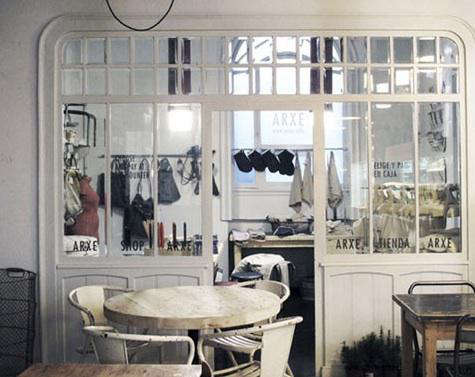
That approach explains why Arxe felt so memorable in the original “shopper’s diary” treatment. The Barcelona annex highlighted pieces made from salvaged office furniture, wall-mounted utility items, bags cut from vintage flour sacks, and baskets lined with reclaimed linen. Even the signage leaned into the handmade spirit, with clipboards doing the job without fuss. Nothing about it felt over-styled. It felt edited, considered, and quietly confident, which is much harder to pull off than simply being expensive. Plenty of stores can sell you “luxury.” Far fewer can sell you restraint with personality.
Barcelona Is the Perfect Backdrop for Arxe
What makes Arxe especially interesting is that it does not sit in cultural isolation. Barcelona itself primes you to appreciate a place like this. American travel and design publications keep returning to the city for the same reason: Barcelona balances cosmopolitan polish with neighborhood intimacy. One minute you are passing Gothic stone, the next you are looking at a sleek concept store, and shortly after that you are eating something excellent in a market that predates several countries. It is a city with very little patience for boring surfaces.
Shopping here also works by district, not just by destination. El Born is widely praised for stylish boutiques, artisan workshops, and medieval streets that somehow make browsing feel more cinematic. El Raval offers a grittier, more character-rich kind of hunt, especially for vintage and secondhand shopping, with streets like Carrer dels Tallers and Carrer de la Riera Baixa often singled out for treasure-seeking. Eixample, meanwhile, brings a broader retail rhythm, from luxury avenues to beloved neighborhood markets. This matters because Arxe makes the most sense in a city where shoppers already understand that personality beats uniformity.
The Market Mentality Matters
Barcelona’s market culture also helps explain Arxe’s appeal. La Boqueria may be the headline act, and for good reason: it is old, dazzling, packed with sensory overload, and still central to the city’s food identity. But the market mentality stretches beyond produce and jamón. Mercat de Sant Antoni remains a neighborhood favorite, and on Sundays it transforms at the edges into a major open-air book market. Els Encants brings its own flea-market thrill, where timing, patience, and a little stamina can reward the browser. In Barcelona, the best shopping often feels like discovery rather than transaction. Arxe speaks that language fluently.
That spirit has become even more important as travelers look for Barcelona experiences beyond the obvious tourist loop. Recent U.S. travel coverage has emphasized exploring the city through local businesses, emerging enclaves, artisan workshops, and smaller-scale retail rather than treating shopping as a chain-store marathon. That is exactly where Arxe lives conceptually. It rewards the shopper who wants story over sameness, provenance over polish, and objects that look like they earned the right to exist.
What Shopping at Arxe Feels Like
Imagine stepping into a space where nothing is shouting “buy me now,” yet everything has enough character to make your brain linger. That is the Arxe effect. The reclaimed drawers are not merely storage; they look like they survived a previous life with excellent gossip. The baskets lined in old linen feel useful, but also oddly noble, like they have opinions about your entryway. The bags made from vintage flour sacks land somewhere between practical object and conversation starter. If a tote bag can gently imply that your current lifestyle lacks European restraint, this one can.
What I love about the Arxe approach is that it resists the dead-eyed perfection of overly coordinated interiors. So much modern retail feels like it was assembled by an algorithm that learned the words “minimal,” “curated,” and “serene,” then used them to build a room no human has actually lived in. Arxe is different. Its objects suggest use, repair, adaptation, and memory. That makes them feel personal before you even take them home.
There is also something deeply Barcelona about this. The city’s design identity has long mixed bold creativity with material intelligence. You see it in architecture, in ateliers, in concept stores, in neighborhood markets, and in the way local shopping culture blurs food, craft, design, and daily life. Arxe does not try to be a universal showroom that could exist anywhere. It feels rooted. That rootedness is exactly what stylish travelers increasingly want. Nobody flies across an ocean hoping to buy the same soulless thing they could find near an airport back home.
Luxury Without the Drama
Barcelona can certainly do high-gloss shopping. Passeig de Gràcia proves that with grand facades, luxury retail, and a polished avenue that practically begs for well-behaved credit cards. But Arxe represents another kind of luxury: the luxury of discernment. It is the pleasure of buying fewer things, better things, and stranger things in the best possible sense. Not strange as in “what is that?” Strange as in “I have never seen one of these done this way before.”
That distinction matters in an era of mass sameness. The real thrill of a shopper’s diary is not documenting how much you bought; it is remembering how a place made you look more carefully. Arxe seems designed for that slower attention. You notice textures. You think about origin. You start seeing age as an asset instead of a flaw. You may even start saying things like “patina” without irony, which is either personal growth or a warning sign. Possibly both.
How Arxe Changes the Way You Shop Barcelona
After encountering Arxe, it becomes harder to shop the city lazily. You stop scanning only for labels and start scanning for evidence of local imagination. In El Born, that means peeking into smaller ateliers and home decor shops instead of marching straight toward the most photographed storefront. In El Raval, it means embracing the hunt, knowing vintage finds rarely announce themselves with perfect lighting. In neighborhood markets, it means paying attention to display, utility, and material culture, not just souvenirs with postcard energy.
Arxe also nudges you toward a more thoughtful souvenir philosophy. The best Barcelona keepsake is not always the most obvious one. Yes, olive oil, vermouth, and market treats are wonderful. Yes, artisan jewelry and locally made fashion can be irresistible. But something for the home often lasts the longest emotionally. A basket, a small stool, a textile, a utility object with visible age: these pieces keep telling the story long after your tan leaves and your inbox becomes rude again.
The Real Lesson of Arxe
If I had to sum up Arxe in one sentence, it would be this: it makes reuse feel chic without becoming preachy. That is harder than it sounds. Plenty of brands talk about sustainability while still selling bland objects in moralizing packaging. Arxe’s strength is that it begins with good taste. The salvaged story matters, but the design still has to seduce you first. That is why the work lingers. It is thoughtful, yes. Responsible, yes. But above all, it is desirable.
And maybe that is why “Shopper’s Diary: Arxe in Barcelona” remains such a compelling idea. It captures a version of shopping that feels smarter, slower, and more intimate than the usual retail checklist. It reminds us that great shopping cities are not just full of stores. They are full of points of view. Barcelona has many of them, but Arxe’s may be one of the most quietly persuasive: make it useful, make it beautiful, make it last, and for heaven’s sake give it a little soul.
Extended Diary Notes: 500 More Words from a Barcelona Shopping Day
By the time I left the Arxe mood in my imagination and stepped back into the wider Barcelona shopping map, I realized the city had changed tempo on me. Or maybe I had changed tempo on the city. Before, I might have chased the obvious highlights: the famous boulevard, the recognizable names, the places everyone tags before the receipt ink is dry. After Arxe, I wanted corners. I wanted shops that looked like they had keys older than my apartment. I wanted places where someone had argued passionately over a drawer pull, a linen stripe, or the exact right shelf height. In other words, I wanted the Barcelona that still feels hand-touched.
So the rest of the day practically wrote itself. A market first, because Barcelona always makes a strong case for beginning with appetite. You walk in for a snack and leave with a stronger opinion on olives than you had an hour ago. Then a slow drift through streets where the storefronts are narrower, the sidewalks are busier, and the browsing feels less like consumerism and more like urban anthropology. A ceramics studio here. A stationery shop there. A boutique with better lighting than some people’s emotional support systems. Somewhere in the middle of it all, the city reminds you that style is not a department. It is a way of arranging daily life.
That is why Arxe sticks. It trains your eye to look for the intelligence behind objects. Once that switch flips, Barcelona becomes one long design lesson. The bentwood chair outside a neighborhood café suddenly matters. The market signage matters. The old hardware on a painted door matters. Even the way produce is stacked at a stall starts to feel like visual merchandising with a PhD in color theory. You become, for better or worse, the kind of traveler who squints approvingly at storage solutions.
There is humor in this, of course. Nothing reveals your vulnerability quite like trying to justify an oversized home object while traveling internationally. “Do I need this?” is replaced by “Could this fit in checked luggage if I roll three sweaters into the shoes and stop buying snacks?” Barcelona encourages this fantasy because it is a city that makes beautiful practicality look normal. You see a handsome basket and think, “That would improve my life.” You see an old textile reborn as something useful and think, “That would improve my character.” A dangerous city, really.
Still, the best takeaway from Arxe is not the urge to buy more. It is the urge to buy with more feeling. To choose things with texture, biography, and a little wit. To let your home reflect places you have truly noticed, not just places you have passed through. Barcelona offers plenty of ways to spend money, but Arxe represents one of the most satisfying: spending it on objects that make memory visible. And that, in the end, is the real souvenir. Not proof that you were there, but proof that you were paying attention.
Conclusion
Arxe in Barcelona is not just a shopping stop; it is a lesson in how a city’s design culture can show up in the humblest, smartest objects. Rooted in reclaimed materials, shaped by Barcelona’s market-minded creativity, and aligned with the city’s neighborhood-by-neighborhood approach to discovery, Arxe turns browsing into a more meaningful act. It is the kind of place that reminds you good shopping is never only about acquisition. It is about taste, context, memory, and that wonderful moment when an object feels like it has chosen you. Barcelona is full of temptations, but Arxe offers one of the rarest: a reason to shop with both style and conscience, without sacrificing the thrill of the find.