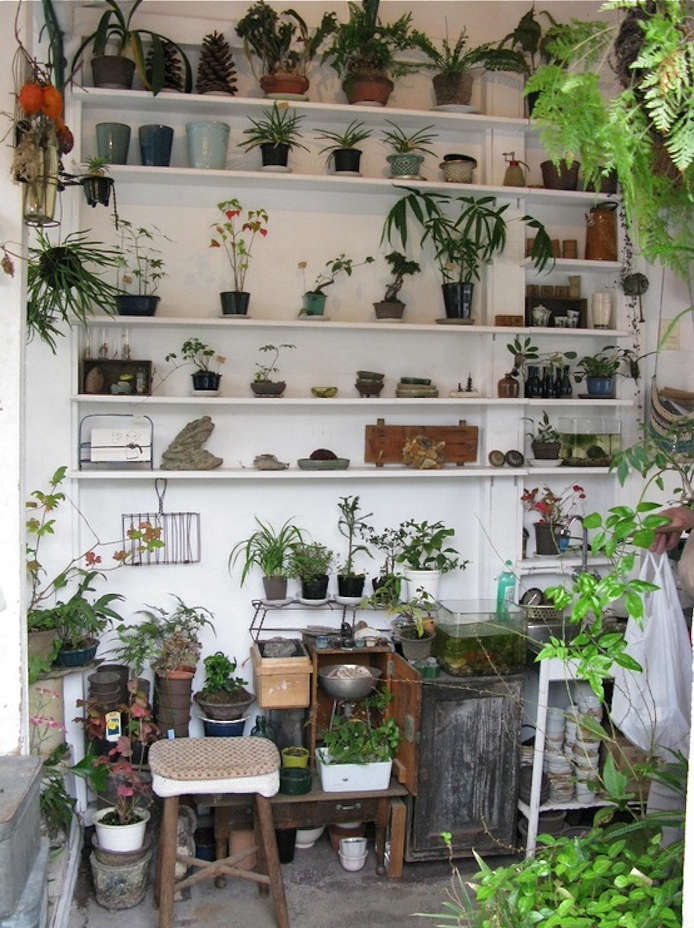

Some shops announce themselves with neon, polished windows, and a marketing budget large enough to make your wallet nervous. Shokubututen Kohii in Kyoto did something much more dangerous: it quietly filled a tiny corner of the city with plants, coffee beans, mossy oddities, and the kind of atmosphere that makes travelers whisper, “Wait, is this a shop or did we just step into someone’s dream journal?”
Known in Japanese as Tanaka Miho Shokubutsuten Coffee Shop, and romanized in different ways as Shokubututen, Shokubuteten, or Shokubutsuten Kohii, this Kyoto plant shop became a small legend among design lovers, slow travelers, and people who believe a fern can have main-character energy. It was located in Sakyo Ward near the Philosopher’s Path, close to Ginkakuji and Honen-in, in an area where Kyoto’s temple hush meets neighborhood life.
Before we lace up our imaginary walking shoes, one important note: the original storefront is no longer a regular stop-in shop. Public posts and listings indicate that the Kyoto shop closed after April 8, 2024. So this diary is not a “go tomorrow and buy a moss ball” guide. It is a love letter, a shopper’s archive, and a practical meditation on why this little plant-and-coffee world still matters.
Why Shokubututen Kohii Became a Kyoto Cult Favorite
Shokubututen Kohii was never the sort of place that tried to be everything to everyone. That was the charm. It was small, green, slightly mysterious, and proudly specific. Instead of shelves packed with glossy souvenirs, visitors found potted orchids, ferns, vines, miniature bonsai, moss balls, wreaths, dried arrangements, and coffee beans. In other words: the essentials, assuming your essentials include chlorophyll and caffeine.
The “coffee shop” part of the name could be delightfully misleading for first-time visitors. Many travelers hear “coffee shop” and imagine a table, a latte, a pastry, and Wi-Fi that may or may not require a password written on a chalkboard shaped like a cat. Shokubututen Kohii was different. It was not primarily a sit-down café. It was a plant shop that also sold coffee beans, giving the whole place a hybrid personality: florist, curiosity cabinet, neighborhood errand, and tiny design museum rolled into one.
That combination was deeply Kyoto. The city has a talent for making everyday objects feel ceremonial without turning them stiff. A cup of coffee, a hand-thrown pot, a garden stone, a crooked branch, a paper charm, a plant with unruly rootsKyoto knows how to give small things a long shadow. Shokubututen Kohii fit that rhythm beautifully.
The Setting: A Green Pause Near the Philosopher’s Path
The shop’s address in Kyoto’s Sakyo Ward placed it near one of the city’s most reflective walking areas. The Philosopher’s Path runs through northern Higashiyama, connecting the atmosphere of Ginkakuji, Honen-in, and canal-side streets where cherry trees, cats, students, and tourists all seem to be having separate but equally important thoughts.
That location mattered. Shokubututen Kohii was not simply a store with plants; it was part of a walking mood. Kyoto is best understood at foot speed. You pass a temple wall, then a drainage canal, then an old wooden house, then a bicycle with a basket full of vegetables, then suddenly a shop where plants appear to be plotting a very peaceful takeover. The city rewards wandering, and Shokubututen Kohii rewarded the kind of shopper who notices moss before billboards.
In travel writing, Kyoto often gets reduced to the same famous scenes: torii gates, bamboo groves, geisha districts, golden temples, and matcha parfaits that look engineered for social media. Those are wonderful, of course. But the deeper Kyoto is often hiding in small shops like this one, where local taste is expressed through selection rather than spectacle.
What You Might Have Found Inside
Based on archived descriptions and shopper accounts, Shokubututen Kohii specialized in plants with character. Not the perfectly symmetrical supermarket houseplant that looks like it was raised by a strict life coach, but plants with personality: ferns clinging to bark, moss balls with quiet gravity, small potted arrangements, mountain grasses, vines, succulents, orchids, and plants that seemed more like companions than décor.
There was an emphasis on nuance. The shop’s plants were not loud. They were textural, irregular, delicate, and sometimes a little strange. That strangeness was part of the appeal. A shopper could look at one arrangement and see a tiny forest; another might see an old Kyoto garden reduced to the size of a palm. Either way, the message was clear: you do not need a mansion to live with landscape. Sometimes you only need a windowsill and the emotional courage to keep a fern alive.
Moss Balls, Wreaths, and Botanical Objects
One of the shop’s most memorable offerings was the use of moss balls and botanical arrangements that blurred the line between plant and object. Kokedama, the Japanese moss-ball planting style, is especially suited to small spaces because it turns the root system into part of the design. Instead of hiding the plant’s base in a pot, the moss sphere becomes a sculptural element.
Shokubututen Kohii also became associated with wreaths, dried plant pieces, and seasonal decorations. These were not the over-fluffed wreaths of suburban holiday catalogs. They had a more restrained, handmade feeling: seed pods, dried stems, vines, and subtle materials that seemed gathered from the edge of a path rather than ordered by the crate. The effect was poetic but not precious.
Coffee Beans, Not Café Theater
The coffee element added another layer to the experience. Coffee in Japan has a long and serious culture, from kissaten-style cafés to meticulous pour-over counters. At Shokubututen Kohii, the coffee beans functioned less like a café menu and more like a carefully chosen product alongside the plants. The pairing made sense. Both plants and coffee ask for attention to origin, handling, and daily ritual. Both can be ruined by impatience. Both make mornings better. Coincidence? Absolutely not.
For shoppers, the combination created an intimate kind of luxury. You might leave not with a giant purchase, but with beans for tomorrow morning and a small plant that makes your apartment look like it has developed emotional depth.
The Design Lesson: Small, Specific, Unforgettable
Shokubututen Kohii is a reminder that memorable retail does not always require a massive concept store, a scented candle wall, or someone saying “curated” twelve times before lunch. Its power came from focus. The shop had a clear point of view: living plants, handmade botanical objects, coffee, and a slightly offbeat selection that felt deeply personal.
That is why design-minded travelers remembered it. A great shop teaches you how to see. After visiting, you might notice the fern growing from a stone wall, the difference between glossy leaves and matte leaves, the way a crooked stem can be more interesting than a perfect bouquet. Shokubututen Kohii invited shoppers to look closely, which is also the best way to travel in Kyoto.
How It Fits Into Kyoto’s Shopping Culture
Kyoto shopping is not only about buying things. It is about encountering taste. The city’s best small stores often feel like extensions of an individual life rather than retail strategies. A ceramics shop might sell one bowl that makes you rethink breakfast. A paper store might convince you that envelopes deserve respect. A plant shop like Shokubututen Kohii could make you believe that a mossy root ball contains more drama than most television finales.
This is especially true around northern Higashiyama and Sakyo Ward, where temples, student neighborhoods, cafés, craft stores, secondhand bookshops, and old houses create a slower shopping rhythm. You do not rush from attraction to attraction. You drift, stop, inspect, hesitate, and occasionally buy something you have no suitcase plan for. That is how Kyoto gets you. Politely. With excellent packaging.
What to Know Before Planning a Similar Kyoto Plant-Shop Day
Because the original Shokubututen Kohii storefront has closed, travelers should treat it as an inspiration point rather than a fixed itinerary stop. If you are planning a Kyoto shopping day around plants, crafts, and design, build your route around nearby areas instead of one address. Start near Ginkakuji, walk part of the Philosopher’s Path, detour toward small cafés and independent shops, and leave time for the kind of place that does not appear in every travel guide.
Also, remember the practical side of plant shopping abroad. Bringing live plants, soil, seeds, or botanical materials across borders can be restricted. For U.S. travelers, it is usually safer to buy inspiration, photographs, books, ceramics, tools, or dried goods that meet customs rules rather than attempting to smuggle home a tiny fern like a leafy international criminal.
Best Souvenir Alternatives
If you love the Shokubututen Kohii aesthetic, look for portable objects that carry the same feeling: handmade plant pots, small vases, botanical postcards, local craft books, incense, coffee beans, garden tools, linen towels, or ceramics in muted earth tones. These items are easier to pack and still bring home the spirit of Kyoto’s quiet green world.
Why the Shop Still Matters After Closing
Some shops matter because they expand into chains. Others matter because they remain stubbornly small and leave a strong memory. Shokubututen Kohii belongs to the second group. Its influence continues through photographs, archived shop diaries, exhibitions, and the ongoing work of Tanaka Miho as a plant-focused creator. The closing of the physical storefront does not erase the idea it represented.
That idea is simple but powerful: retail can be intimate. A shop can be a personality. Plants can be art without becoming pretentious. Coffee can be part of a botanical story. And a tiny Kyoto storefront can travel far beyond its neighborhood through the memories of people who walked in, looked around, and felt their pace change.
Experience Notes: A Shopper’s Walk Inspired by Shokubututen Kohii
Imagine beginning the day near Ginkakuji, before the crowd has fully stretched awake. The air has that Kyoto morning softness, as if the city has been steamed lightly and served with restraint. You walk toward the Philosopher’s Path, where the canal catches bits of sky and the trees lean over the water like they are trying to read it. There are tourists, yes, but also bicycles, neighborhood dogs, and residents who move through the area with the calm authority of people who know which side streets are worth taking.
This is the right mood for understanding Shokubututen Kohii. You would not visit a shop like this in a hurry. You would not burst in demanding “top ten must-buy items.” The whole point is to arrive with your attention intact. A plant shop of this kind asks you to slow down enough to notice scale: the size of a leaf, the bend of a stem, the way moss changes color in shadow. In a world where shopping often feels like a competitive sport, this is refreshingly unathletic.
Inside, the experience would have been part browsing, part decoding. You might first notice the density of green, then the oddness of the forms. Some plants would look familiar, others almost prehistoric. A moss ball might seem shy. A fern might look like it knows secrets. A hanging plant might make you wonder whether your ceiling at home has been underperforming for years. The humor of the place was subtle, but real: a shop called a coffee shop where the plants were the divas and the coffee beans were the supporting cast.
The best purchase would not necessarily be the most dramatic one. It might be a small arrangement with a rough pot and an uneven silhouette. Something that looks better because it is not perfect. Kyoto is full of this lesson. The chipped edge, the weathered wood, the faded sign, the garden that does not explain itselfthese are not flaws in the experience. They are the experience.
Afterward, you would continue walking, perhaps toward Honen-in or a nearby café, carrying your purchase carefully and feeling slightly more responsible as a human being. A plant does that. It turns a tourist into a caretaker. Even coffee beans have a similar effect: tomorrow morning is suddenly part of today’s souvenir. You are not just bringing home an object; you are bringing home a ritual.
That is the lasting beauty of Shokubututen Kohii in Kyoto. It was never merely about buying plants. It was about learning to shop with patience, to value small makers, to notice living details, and to let a city reveal itself one quiet storefront at a time. The shop may have closed, but the diary remains open for anyone who wants to travel more slowly, look more closely, and give moss the respect it has frankly always deserved.
Conclusion
Shokubututen Kohii in Kyoto was a tiny shop with a surprisingly large afterlife. It combined plants, coffee beans, handmade botanical objects, and Kyoto’s talent for quiet atmosphere into a retail experience that felt personal rather than performative. For travelers and design lovers, its story is still useful: the best shopping in Kyoto is not always about famous markets or luxury streets. Sometimes it is about finding one small place that changes the way you look at leaves, coffee, craft, and time.
Although the original storefront has closed, the spirit of Tanaka Miho’s plant world continues to inspire anyone drawn to moss balls, ferns, handmade wreaths, and slow Kyoto wandering. Use this diary as a starting point, not a map pin. Walk near the Philosopher’s Path, visit independent shops, respect local neighborhoods, and leave room in your day for the unexpected. Kyoto is very good at rewarding people who do not over-schedule it.