
In January 2018, two processor vulnerabilities turned an obscure hardware optimization into international news. Spectre and Meltdown did not break passwords, install ransomware, or smash through a firewall. Instead, they exploited tiny timing differences inside modern CPUs. The attacks essentially asked the processor, “Which memory location did you visit?” and let the cache answer with a suspiciously quick response.
Understanding these vulnerabilities begins with understanding CPU cache, speculative execution, and the awkward gap between what a processor officially does and what it temporarily does while trying to save time. That gap is measured in nanoseconds, but it can expose secrets.
Why Modern Processors Need a Cache
A CPU can execute instructions much faster than main system memory can deliver data. Without a cache, the processor would spend an embarrassing amount of time waiting for RAMlike a race-car driver repeatedly stopping to ask a librarian for the next page of the manual.
Cache memory solves this problem by keeping recently or frequently used instructions and data close to the processor. It is smaller and more expensive than RAM, but dramatically faster.
The CPU Cache Hierarchy
Most modern processors use several cache levels:
- L1 cache: The smallest and fastest level, typically located within each processor core. It is often divided into instruction and data caches.
- L2 cache: Larger but slightly slower. Depending on the processor design, it may be private to a core or shared by a small group of cores.
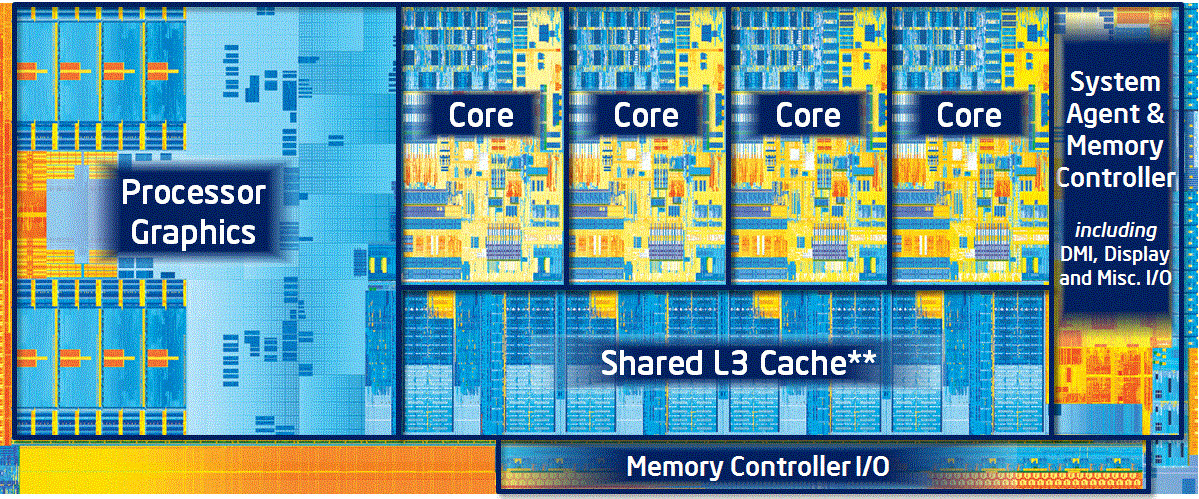
- L3 cache: Larger again and commonly shared across multiple cores. It is slower than L1 and L2 but still much faster than RAM.
- Main memory: System RAM offers far greater capacity, although reaching it costs considerably more processor cycles.
When a program requests data, the CPU first looks in nearby cache levels. Finding it is a cache hit. If it is absent, the processor experiences a cache miss and must search a lower cache level or main memory.
Processors generally transfer data in fixed-size blocks called cache lines, often 64 bytes on mainstream architectures. Requesting one byte may therefore bring its neighboring bytes into the cache as well. This works beautifully because programs tend to reuse nearby dataa behavior known as spatial locality.
Why Cache Timing Reveals Information
A cache hit completes faster than a trip to RAM. Software equipped with a sufficiently accurate timer can measure that difference. One measurement may be noisy, but repeated measurements can reveal a reliable pattern.
This creates a cache timing side channel. A side channel does not usually hand an attacker the secret directly. It exposes an indirect clue, such as execution time, power consumption, or cache activity. The attacker then uses those clues to infer protected information.
Imagine someone secretly opening one book in a large archive. You cannot see which book they chose, but you can later request each candidate and observe which one arrives unusually quickly because it is already sitting on the return desk. The archive followed every access rule, yet its response time betrayed the earlier choice.
Speculative Execution: The CPU’s Educated Guess
Cache alone does not explain Spectre and Meltdown. The second ingredient is speculative execution, a performance technique used by modern processors.
Programs contain branches: if a condition is true, perform one operation; otherwise, perform another. Waiting for every condition to be resolved would leave processing units idle, so the CPU predicts which path the program will take and begins executing instructions ahead of time.
If the prediction is correct, useful work has already been completed. If it is wrong, the processor discards the speculative results and returns to the correct path. This is usually a major performance win.
The problem discovered by security researchers was that “discarded” did not always mean “never happened.” The processor could roll back architectural changesthe official register values and program-visible resultswhile leaving microarchitectural traces in caches and prediction structures.
Architectural State Versus Microarchitectural State
The distinction is central to speculative execution attacks:
- Architectural state is the behavior software is promised: register values, committed instructions, exceptions, and memory results.
- Microarchitectural state describes internal implementation details, including cache contents, translation lookaside buffers, predictors, and execution queues.
After a mistaken prediction, the architectural result disappears. A cache line loaded during that temporary execution may remain, however. Spectre and Meltdown turn that leftover footprint into a message.
How a Cache Side Channel Encodes a Secret
A simplified attack uses a probe array containing many widely separated entries. Before the test, the attacker evicts those entries from the cache. During transient execution, a secret value influences which probe-array entry the processor accesses.
Suppose the secret byte has a numerical value of 83. Transient code might access the probe entry associated with 83. Although the CPU later cancels the unauthorized or mispredicted operation, that entry may remain cached.
The attacker then times access to every candidate entry. Entry 83 responds faster, indirectly revealing the secret byte. Repeating the procedure can reconstruct additional data.
Flush+Reload and Prime+Probe
Security research commonly describes several cache-observation techniques:
- Flush+Reload: The attacker removes selected shared-memory lines from the cache, allows the victim or transient sequence to run, and reloads the lines while measuring their access times.
- Prime+Probe: The attacker fills selected cache sets, lets the target execute, and then checks which entries became slower because the target displaced them.
- Evict+Reload: The attacker evicts a cache line through conflicting accesses rather than using a dedicated flush instruction, then tests whether it was reloaded.
These methods differ in their hardware requirements and need for shared memory, but they exploit the same principle: cached data leaves a measurable timing footprint.
How Meltdown Works
Meltdown, originally tracked as CVE-2017-5754, targeted the boundary between ordinary applications and privileged kernel memory on affected processors. Operating systems depend on that boundary to prevent a user program from reading passwords, encryption material, and data belonging to other processes.
In the classic Meltdown sequence, an unprivileged instruction attempts to read a protected kernel address. Architecturally, the access is forbidden and eventually raises a fault. On vulnerable processor designs, however, subsequent operations may transiently use the protected value before the permission failure is fully handled.
The transient sequence converts that value into a cache footprint. The fault prevents the program from receiving the secret normally, but timing the probe array can reveal it indirectly. In other words, the front door remains locked while the floorboards tap out what is inside.
What Made Meltdown Distinct?
Classic Meltdown did not depend on training a branch predictor in the same way as the original Spectre variants. It exploited transient out-of-order execution around a privilege check. Its practical impact depended heavily on the processor architecture and implementation, so vulnerability status was never identical across every Intel, AMD, and Arm chip.
Meltdown was comparatively direct to mitigate at the operating-system level. Kernel Page-Table Isolation, commonly abbreviated KPTI, separates most kernel mappings from a user process’s active page tables. If sensitive kernel memory is not mapped during ordinary user execution, the classic attack has far less useful material within reach.
How Spectre Works
Spectre is broader than one processor bug. It describes a class of attacks that manipulate speculative execution so a victim transiently accesses data it should not expose. The attacker then extracts the resulting microarchitectural clues.
Spectre Variant 1: Bounds Check Bypass
Consider code that checks whether an array index is within bounds before reading an element. After observing many valid indexes, the branch predictor expects the check to pass. An attacker then supplies an invalid index.
While the true array size is still being retrieved, the CPU may predict that the index is valid and transiently read beyond the array. If the out-of-bounds value controls an access to a probe array, its cache footprint can reveal the value even though the processor later recognizes its mistake.
The source code contains a bounds check, and the final architectural execution respects it. The leak occurs during the brief speculative interval before the check catches up.
Spectre Variant 2: Branch Target Injection
Spectre Variant 2, identified as CVE-2017-5715, targets the prediction of indirect branches. Instead of merely predicting whether a conditional branch will be taken, the CPU predicts where an indirect jump or call will go.
An attacker may manipulate prediction history so the victim speculatively jumps to a useful instruction sequence, sometimes called a disclosure gadget. That gadget processes a secret and leaves an observable trace. The CPU eventually corrects the destination, but once again, the cache remembers more than it should.
Why Spectre Is Harder to Eliminate
Spectre abuses a fundamental performance behavior rather than one isolated permission-checking mistake. Potential gadgets can appear in applications, operating systems, hypervisors, browsers, runtimes, and compiled code. Defending against it therefore requires a combination of hardware, firmware, compiler, operating-system, and application changes.
Spectre Versus Meltdown
| Feature | Spectre | Meltdown |
|---|---|---|
| Core technique | Mistrains or exploits speculative prediction | Exploits transient execution around a privilege failure |
| Typical boundary | Can cross isolation boundaries or expose data within a victim process | Classically targets the user-to-kernel memory boundary |
| Original variants | Bounds Check Bypass and Branch Target Injection | Rogue Data Cache Load |
| Main early defenses | Code changes, fences, retpolines, microcode, browser hardening | Kernel Page-Table Isolation plus platform updates |
| Long-term challenge | A continuing family of transient-execution attacks | Classic form is more narrowly defined and broadly mitigated |
How Systems Defend Against These Attacks
Operating-System Isolation
KPTI reduces the amount of kernel memory mapped while user applications execute. Context switches may require extra page-table work, so the performance cost varies by processor, workload, and hardware support.
Retpolines and Prediction Controls
A retpoline is a compiler-generated instruction sequence designed to prevent vulnerable indirect branches from being speculated toward attacker-chosen targets. Processor vendors also introduced microcode and hardware controls for restricting or flushing certain prediction state across security boundaries.
Speculation Barriers and Safer Code
Developers can place serialization or speculation-barrier instructions around sensitive operations. Compilers may apply index masking or speculative-load hardening so an invalid value cannot steer transient execution toward secret data. These defenses must be used carefully because excessive barriers can remove valuable CPU parallelism.
Browser and Timer Defenses
Browsers strengthened process isolation, reduced timer precision, and restricted access to certain shared-memory capabilities after Spectre became public. Timing restrictions do not repair the processor, but they make high-quality cache measurements more difficult for hostile web code.
Newer Hardware Designs
Modern processors include additional defenses for known transient-execution vulnerabilities. Hardware support can make mitigations more efficient, but it does not justify ignoring operating-system, browser, firmware, or application updates. Processor security is now a layered job, not a single magic checkbox.
Do Spectre and Meltdown Still Matter?
Yes, although the practical risk is different from the panic of early 2018. Fully updated consumer devices receive extensive protection through operating systems, browser isolation, microcode, and newer processor designs. Exploitation also requires favorable conditions and is usually more complicated than ordinary malware techniques.
The vulnerabilities still matter because they changed how the industry defines correct execution. It is no longer sufficient to say that an invalid instruction never officially completed. Security analysis must also ask what it touched transiently, which shared structures changed, and whether those changes can be measured.
For users, the sensible response is pleasantly boring: install operating-system and browser updates, apply trusted firmware updates, replace unsupported devices when practical, and avoid disabling mitigations merely to chase a benchmark score. Server administrators should also verify hypervisor, guest operating-system, and microcode status because cloud and virtualized environments create additional isolation boundaries.
Conclusion
Spectre and Meltdown revealed an uncomfortable truth: a processor can erase a wrong answer without erasing every clue that it calculated one. CPU cache makes computers fast by remembering useful data, while speculative execution keeps processing units busy by predicting future work. Together, those features created a timing channel capable of exposing information that normal software permissions were supposed to protect.
Meltdown exploited transient behavior around privileged memory access on affected processors. Spectre manipulated prediction so victim code briefly followed a dangerous path. Their mechanisms differ, but both depend on measurable microarchitectural evidenceespecially the difference between a cache hit and a cache miss.
The lasting lesson is not that caching or speculation is inherently bad. Both are essential to modern performance. The lesson is that optimization state cannot be treated as invisible when attackers can observe it. In processor security, even a discarded guess may leave fingerprints.
Practical Experiences and Lessons From the Spectre and Meltdown Era
One of the most useful experiences when learning about these vulnerabilities is running a harmless cache-timing demonstration in a controlled laboratory. The exercise does not need to read protected memory. Simply compare repeated access times for cached and deliberately evicted data. The first surprise is how visible the difference can become after collecting enough samples. Individual timings wobble because of interrupts, power management, background software, and scheduling, but the distributions still separate. The cache is not speaking loudly; it is whispering the same clue many times.
A second lesson arrives when trying the demonstration on different computers. Results vary with processor generation, cache topology, timer availability, operating-system behavior, and virtualization. Code that produces a neat timing gap on a physical workstation may become noisy inside a virtual machine. A laptop may change behavior when switching between battery power and an AC adapter because frequency scaling affects timing. This variability helps explain why a vulnerability can be real without every proof of concept working reliably on every device.
Patch testing offers another practical lesson: security performance is workload-specific. Early public discussion sometimes reduced mitigation costs to one frightening percentage, as if every computer would slow down by precisely that amount. Real results were more complicated. Applications making frequent system calls or crossing privilege boundaries could experience a more noticeable effect from page-table isolation. Many everyday workloads barely changed. Newer processors and improved operating systems reduced costs further. Meaningful evaluation therefore requires measuring the actual workload, not borrowing a dramatic number from somebody else’s server benchmark.
Administrators also learned that patching one layer was not always sufficient. An operating-system update could provide mitigation code, but some protections depended on processor microcode delivered through firmware or the OS. Virtualized systems introduced another layer: the host, hypervisor, guest, and exposed virtual CPU features all influenced the final status. Vulnerability scanners sometimes reported confusing results when an update was installed but a mitigation was disabled, unavailable to the guest, or awaiting a reboot. The practical cure was disciplined inventory workidentify the processor, firmware, operating system, hypervisor, configuration, and reboot state before declaring victory.
Developers encountered a subtler experience. Source code that looked perfectly safe under ordinary language rules could still contain a speculative disclosure gadget. A bounds check might be logically correct, yet the processor could transiently operate as though it had passed. Fixing such code required thinking below the programming-language abstraction: What can execute before this condition resolves? Can a secret influence an address? Will that access modify measurable cache state? This mindset eventually became part of compiler hardening and secure-code review.
Perhaps the most enduring experience was cultural. Spectre and Meltdown forced hardware vendors, operating-system teams, cloud providers, browser developers, compiler engineers, and researchers to coordinate under intense pressure. The fixes were not always elegant, and some early firmware releases caused instability. Nevertheless, the industry converted a surprising hardware behavior into deployable layers of defense. That history is a reminder that complex security incidents rarely end with one patch. They end through measurement, revision, cooperation, and occasionally a reboot nobody scheduled.