
Imagine opening your garage one morning and finding a moth the size of a golden retriever politely chewing through your lawn chair. Terrifying? Absolutely. Scientifically interesting? Also yes. The idea of super-sizing insects sounds like the plot of a 1950s creature feature, but it leads to a surprisingly useful question: why did prehistoric insects get so large, and why do animals with bones usually win the size contest today?
The short answer is that insects are engineering marvels with some inconvenient fine print. Their bodies are protected by exoskeletons, they breathe through branching air tubes instead of lungs, and they grow by molting out of their old outer armor. That system works brilliantly when you are ant-sized, beetle-sized, or even “please get that thing out of my bathroom” sized. But scale it up too far, and nature starts asking for receipts.
Bones, meanwhile, may look less glamorous than a shiny beetle shell, but they offer a big advantage: they grow inside the body, remodel under stress, protect organs, help movement, store minerals, and even produce blood cells. In the long-running design competition between exoskeletons and internal skeletons, bones are not just structural beams. They are living tissue with a side hustle in chemistry, repair, and survival.
Why Were Some Prehistoric Insects So Huge?
During the Carboniferous Period, roughly 359 to 299 million years ago, Earth looked like a swampy dreamscape. Vast forests spread across tropical regions, dead plant material accumulated into the coal deposits that later gave the period its name, and oxygen levels were likely higher than they are today. In that ancient world, giant arthropods had their moment on the main stage.
Some dragonfly-like insects, such as Meganeuropsis permiana, reached wingspans often described at around 28 inches. The millipede-like Arthropleura could grow longer than a person, possibly stretching more than eight feet. If modern insects make you nervous, the Carboniferous would not have been your favorite camping destination. It was less “cute picnic in the woods” and more “the woods have legs.”
The Oxygen Theory: Helpful, But Not the Whole Story
One of the most popular explanations for giant insects is oxygen. Insects do not breathe the way mammals do. Instead of lungs pumping air into blood-rich tissue, insects use spiracles, tiny openings along the body, connected to tracheae, a network of air tubes that deliver oxygen directly to cells. This system is efficient for small bodies, but it becomes harder to scale as the distance between the outside air and deep tissues increases.
Higher oxygen levels could have made it easier for larger insects to move enough oxygen through their tracheal systems. That does not mean oxygen was a magic “make bugs enormous” button. Size is shaped by many pressures, including climate, predators, food supply, competition, development, and biomechanics. Oxygen opened the door, but it did not personally carry a giant dragonfly through it wearing a tiny lab coat.
Predators Changed the Game
Another reason insects may have shrunk over evolutionary time is the rise of flying vertebrate predators, especially birds. Once birds took to the skies, large flying insects faced faster, smarter, bone-supported competition. Big wings can be impressive, but being easy to spot and delicious is not a long-term business plan.
Large insects also have to handle the mechanical demands of flight. Wings, muscles, oxygen delivery, heat control, and body weight all need to cooperate. When vertebrates entered the aerial arena with internal skeletons, powerful muscles, and advanced respiratory systems, the sky became a much tougher neighborhood.
How Modern Insects Can Be “Super-Sized”
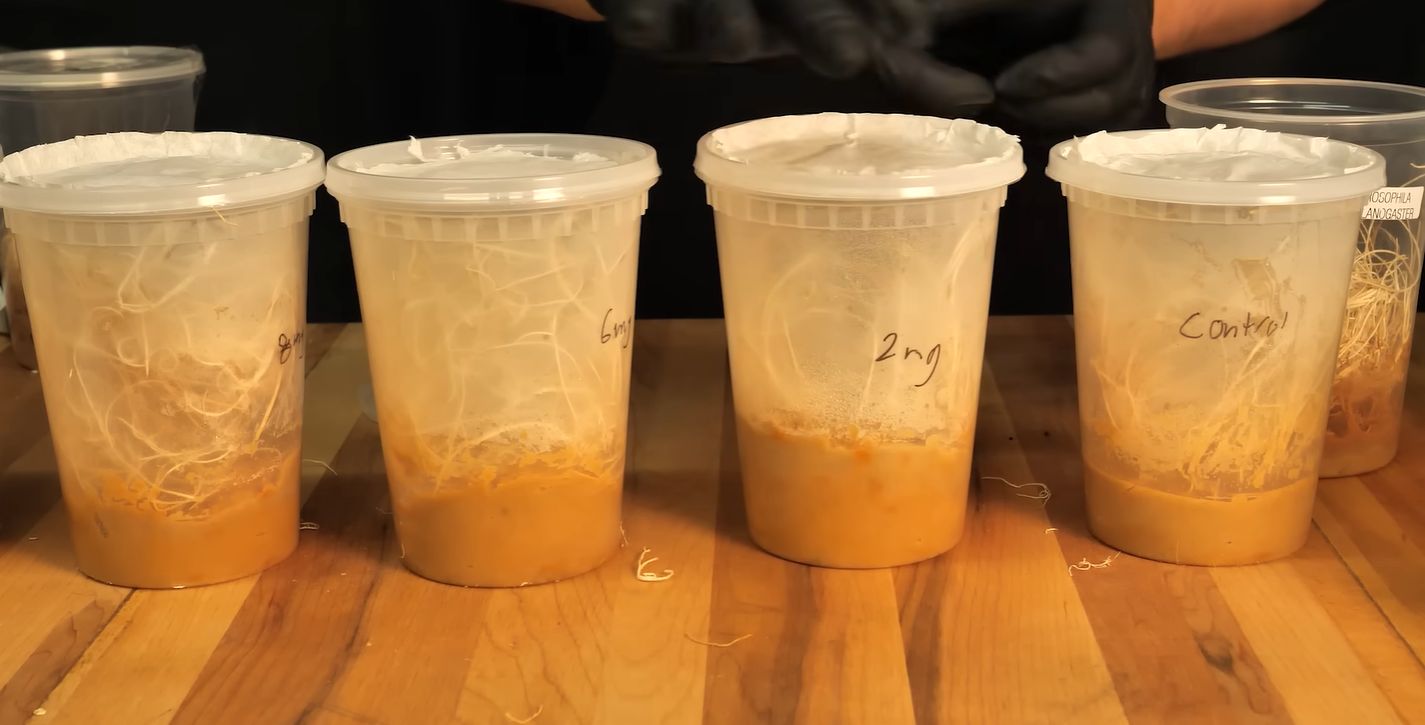
Recent online science experiments have revived public interest in growing larger insects, especially mealworms. Mealworms are the larval stage of darkling beetles, and like many insects, they pass through several growth stages called instars. During these stages, hormones help control when larvae molt, when they keep growing, and when they transform into pupae and adults.
One hormone-related trick involves juvenile hormone, which keeps insects in a larval state. Certain compounds can mimic this signal. If the final transformation is delayed, larvae may continue growing longer than usual. That is the basic idea behind some “giant mealworm” experiments: interrupt the developmental schedule and see whether the insect gets bigger before it becomes an adult.
This sounds simple in the way “just build a rocket” sounds simple. In practice, insect development is delicate. Too much interference can kill the animal, cause deformities, reduce feeding, or create a larger larva that still does not become a stable, oversized adult. Biology is not a video game character creator. You cannot slide “bug size” from small to Mothra and click save.
Molting: The Awkward Growth Strategy
Insects grow by molting, which means they shed their old exoskeleton and form a new one. This is one of the biggest limitations on insect size. The exoskeleton is a tough outer suit made largely of chitin and proteins. It protects the insect, provides attachment points for muscles, and helps prevent water loss. It is a brilliant piece of natural armor.
But armor has a problem: it does not stretch much. When an insect grows too large for its outer shell, it must break free and expand before the new cuticle hardens. During this period, the insect is soft, vulnerable, and about as well defended as a peeled grape. The larger the insect, the more dramatic and risky that process becomes.
Molting is already stressful for small insects. For giant insects, the challenge grows. Imagine trying to remove a full-body suit of medieval armor while also inflating your body, avoiding predators, keeping your organs working, and not getting stuck halfway. That is not a growth strategy; that is an extreme sport.
Why Exoskeletons Are AmazingUntil They Aren’t
An exoskeleton is not a bad design. In fact, it is one of evolution’s greatest hits. It gives insects protection, shape, waterproofing, camouflage potential, and a solid surface for muscle attachment. It helps explain why insects are the most diverse group of animals on land. For tiny bodies, an external skeleton is light, strong, and economical.
However, exoskeletons face scaling problems. As an animal gets bigger, body volume increases faster than surface area. This means weight rises rapidly, while the external shell must become thicker and heavier to support the body. At some point, a giant exoskeleton risks becoming a walking suitcase with legs.
That does not mean large arthropods are impossible. Crabs and lobsters can grow impressively large in water, where buoyancy helps support body weight. On land, though, gravity is rude. It does not care about your dreams of becoming a sedan-sized beetle. The bigger a terrestrial exoskeleton becomes, the more it must fight weight, molting risk, and oxygen delivery.
The Benefits of Bones: Nature’s Internal Engineering Team
Bones solve many of the problems that limit super-sized insects. Instead of wearing the skeleton outside, vertebrates carry it inside. This allows the body to grow continuously without repeatedly crawling out of its own support system. Muscles, blood vessels, nerves, and organs develop around the skeleton as part of one integrated structure.
Bone is also living tissue. It is not a dry, lifeless stick inside the body. It contains cells, blood vessels, minerals, collagen, and marrow. It can repair itself after injury, respond to mechanical stress, and change shape over time. When you exercise, heal, grow, or adapt, your bones participate in the process.
Bones Support Bigger Bodies
One major advantage of bones is support. Internal skeletons can become thick, dense, and load-bearing without trapping the animal inside a rigid shell. Large mammals, birds, reptiles, and extinct dinosaurs all relied on internal skeletons to support bodies that would be impractical with insect-style armor.
A femur, for example, is not just a stick holding up a thigh. It is a carefully shaped column that balances strength and weight. Long bones provide leverage for movement. Flat bones protect organs. Irregular bones, such as vertebrae, create flexible but protective structures. The skeleton is a full-body architecture project, and unlike most construction projects, it does not leave orange cones in the hallway.
Bones Protect Organs
Bones also protect delicate tissues. The skull shields the brain. The rib cage protects the heart and lungs. The vertebral column surrounds the spinal cord. This internal protection lets vertebrates carry vulnerable organs inside a moving, flexible frame.
Exoskeletons protect from the outside, which is excellent against small threats. But an internal skeleton allows softer tissues, larger organs, and more complex movement to develop without requiring the whole body to be locked in a hard shell. Bones make room for complexity.
Bones Help Make Movement Powerful
Muscles need something to pull against. In insects, muscles attach to the inside of the exoskeleton. In vertebrates, muscles attach to bones through tendons. Both systems work, but internal bones offer enormous potential for leverage, stride length, jumping, running, swimming, climbing, and flight.
Think about a horse running, an eagle diving, or a human throwing a baseball. These movements depend on bones acting as levers, joints acting as pivots, and muscles applying force in coordinated patterns. Bones make large, powerful, repeatable motion possible without requiring the animal to molt after a growth spurt.
Bones Are Also Chemical Warehouses
Bones do not merely hold the body upright. They store minerals, especially calcium and phosphorus, which are essential for nerves, muscles, blood clotting, and cellular activity. When the body needs minerals, bone can release them into the bloodstream. When minerals are available, bone can store them for later use.
This is one reason bone health matters throughout life. Strong bones are not just about avoiding fractures. They are part of the body’s mineral economy. If your body were a small city, bones would be the bridges, warehouses, factories, and emergency supply depots. Very efficient. Slightly creepy if you think about it too long.
Bone Marrow Makes Blood Cells
Inside many bones is marrow, where blood cells are produced. Red blood cells carry oxygen. White blood cells help defend against infection. Platelets help blood clot. That means bones contribute to circulation and immunity, not just posture.
This is one of the most underappreciated benefits of bones. A skeleton is not merely scaffolding. It is a living organ system connected to movement, metabolism, immunity, and repair. Insects may have incredible exoskeletons, but they do not have bone marrow quietly running a blood-cell workshop inside their limbs.
Why Bones Make Giant Animals More Practical
If you want to build a truly large land animal, bones are a better long-term strategy. They can thicken in response to load, heal after stress, and grow with the body. They can support large muscles and protect complex organs. They allow animals to become tall, heavy, fast, flexible, or all of the above.
Insects, by contrast, must balance the strengths of their exoskeleton with the costs of molting, oxygen delivery, and weight. This is why the world has elephants, giraffes, moose, bears, and people who insist on carrying all groceries in one tripbut no elephant-sized ants marching down Main Street.
Could We Ever Have Dog-Sized Moths?
In theory, selective breeding, hormone manipulation, or genetic editing might increase the size of certain insects. But creating healthy, stable, giant insects would be much harder than making a larva temporarily larger. Scientists would need to manage oxygen delivery, molting, tissue growth, reproduction, immune function, and environmental safety.
There are also ethical and ecological concerns. Insects are not toys with antennae. They are living animals. Releasing oversized or altered insects into the environment could create problems for food webs, agriculture, native species, and disease dynamics. Even if the result were only a very large moth, the neighborhood group chat would never recover.
Useful Lessons Without Building Monster Bugs
The science behind insect size still has value. Studying insect growth helps agriculture, pest management, animal feed production, biotechnology, and developmental biology. Mealworms and other insects are already researched as sustainable protein sources, composting helpers, and models for growth regulation.
Likewise, studying bones helps medicine, sports science, aging research, prosthetics, robotics, and materials engineering. Bone’s combination of strength, lightness, repair, and adaptability inspires better designs. A beetle shell and a femur may seem unrelated, but both are nature’s answers to the same question: how do you build a body that survives the world?
Experience Section: What Super-Sized Insects Teach Us in Real Life
The easiest way to understand this topic is not to begin with a fossil chart. Start with a backyard bug. Watch an ant carry a crumb many times its apparent body size, and it is tempting to think insects are tiny superheroes. Then watch a beetle flip onto its back and wave its legs like a panicked wind-up toy, and the engineering suddenly looks less perfect. That contrast is the fun of insect biology: brilliant design, obvious trade-offs, and occasional slapstick.
In classrooms, museum exhibits, and home science discussions, giant insects are an instant attention grabber. Students who might politely nap through a lecture on atmospheric oxygen usually wake up when someone says, “There used to be dragonfly-like insects with wingspans wider than a skateboard.” The fossil record makes deep time feel less abstract. Suddenly, Earth is not a fixed stage but a changing laboratory where air, climate, plants, predators, and body plans keep rewriting the rules.
Keeping mealworms or observing insect molts can also make the limits of exoskeletons feel real. A molting insect is not just changing clothes. It is surviving a vulnerable biological reset. The animal must escape the old cuticle, expand, harden, and continue functioning. One bad molt can be fatal. Seeing that process makes the “benefits of bones” easier to appreciate. Humans complain about growth spurts, but at least teenagers do not have to unzip their skin and hide under a leaf until their new body shell dries.
The bone side of the story becomes personal just as quickly. Anyone who has broken a bone knows the skeleton is alive because healing is not passive. Swelling, pain, repair, remodeling, and gradual strength return all show that bone responds. Athletes learn that bones adapt to repeated stress. Older adults learn that bone density matters. Parents learn that children’s skeletons are constantly changing. Even a simple X-ray can feel like seeing the hidden architecture that makes everyday movement possible.
This comparison is especially useful for writers, teachers, and science communicators because it turns a strange headline into a memorable lesson. Super-sized insects are the hook. Bones are the payoff. Together, they explain scaling, respiration, evolution, anatomy, and why bigger is not always better. A giant insect sounds powerful until you consider oxygen delivery, molting risk, and the weight of armor. A skeleton sounds ordinary until you realize it grows, heals, stores minerals, protects organs, and manufactures blood cells.
The practical takeaway is wonderfully humbling: every body plan is a compromise. Insects dominate the world by staying small, efficient, numerous, and adaptable. Vertebrates conquered large body size by putting the support beams inside. Nature did not choose one perfect design. It built a crowded toolbox, handed different creatures different equipment, and let evolution test everything for hundreds of millions of years. That is better than a monster movie. It is a monster movie with peer review.
Conclusion: Big Bugs, Better Bones, and Nature’s Trade-Offs
Super-sizing insects is a fascinating idea because it sits at the crossroads of ancient Earth, modern biology, and pure creature-feature imagination. Prehistoric oxygen-rich environments may have helped some arthropods grow larger, but insect gigantism was never about oxygen alone. Exoskeletons, molting, predators, development, and flight mechanics all mattered.
Bones reveal a different solution to the challenge of size. Internal skeletons can grow with the body, support heavy tissues, protect organs, power movement, store minerals, and produce blood cells. That is why bones are more than the leftovers in a cartoon dog bowl. They are one of evolution’s best tools for building large, active, complex animals.
So, could science someday produce larger insects? Maybe, within limits. Should we rush to create dog-sized moths? Probably not, unless someone has a very large porch light and an even larger insurance policy. But by asking why insects do not usually become giants, we gain a clearer view of why bones are such a biological triumph.