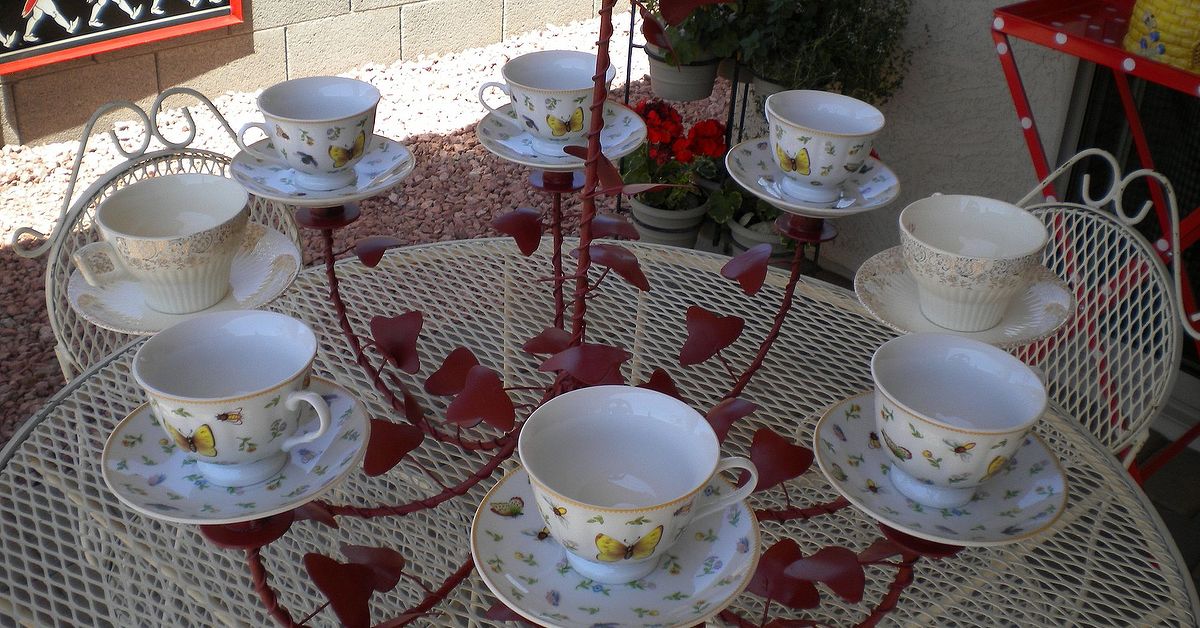

A tea cup chandelier is what happens when afternoon tea develops theatrical ambitions. Instead of keeping pretty china hidden behind cabinet doors, this imaginative light fixture sends cups, saucers, floral patterns, gilded rims, and vintage charm floating overhead.
Part functional lighting and part decorative sculpture, a tea cup chandelier can transform a breakfast nook, dining room, bakery, boutique, or cozy reading corner. It works beautifully in cottage-style interiors, but it can also look surprisingly sophisticated in an eclectic or contemporary room. The secret is thoughtful composition. Without a plan, charming mismatched china can quickly resemble a yard sale caught in a ceiling fan.
This guide explores tea cup chandelier styles, safe construction principles, sizing, lighting choices, installation considerations, and practical lessons from living with such an unusual statement fixture.
What Is a Tea Cup Chandelier?
A tea cup chandelier is a ceiling-mounted decorative light that incorporates tea cups, saucers, small plates, teapots, or related china pieces into its structure. Some designs use cups as miniature shades around individual bulbs. Others suspend china around a conventional chandelier frame, allowing the dishes to serve as ornaments rather than electrical components.
The concept fits naturally into the broader tradition of creative reuse. Vintage china often survives as incomplete sets: one lonely cup, three unrelated saucers, and a sugar bowl whose lid disappeared during a mysterious family event in 1987. Repurposing these pieces gives them a second life without requiring a perfectly matched service for twelve. Design and craft publications frequently recommend displaying inherited or orphaned china creatively instead of leaving it crowded in storage.
Why Tea Cup Chandeliers Make Such Memorable Decor
They Turn Everyday Objects Into Art
Tea cups are small functional objects, but many feature remarkably detailed decoration. Roses, violets, birds, geometric borders, hand-painted scenes, and metallic trim become much more noticeable when displayed at eye level or overhead. A chandelier lets those patterns interact as one larger composition.
The fixture also creates a sense of occasion. Chandeliers naturally attract attention, define gathering spaces, and add visual drama. A china-based design takes that familiar effect and gives it a playful, personal twist.
They Can Preserve Family Stories
An inherited cup may be too fragile for daily use but too meaningful to donate. Displaying it in a chandelier can preserve the memory attached to it. A finished fixture might combine a grandmother’s floral cup, a flea-market saucer, and a modern reproduction purchased because its color completes the arrangement.
However, rare, valuable, or emotionally irreplaceable china should not be drilled or permanently altered. Porcelain is durable in ordinary use, but drilling changes the object forever and can cause sudden cracking. Museum collections demonstrate that ceramic pieces may carry historical and artistic value far beyond their original function.
They Work With Several Decorating Styles
The phrase “tea cup chandelier” may suggest a sugar-sweet cottage interior, yet the idea is much more flexible:
- English cottage: Choose floral china, cream-colored metal, and gently curved chandelier arms.
- French country: Combine white porcelain, faded blue patterns, bronze hardware, and linen textures.
- Shabby chic: Use mismatched pastel cups, distressed paint, pearls, and small crystal drops.
- Bohemian: Mix saturated colors, varied cup shapes, brass chain, and intentionally uneven suspension heights.
- Modern eclectic: Pair crisp white cups with a black frame and exposed globe bulbs.
- Maximalist: Embrace pattern, color, decorative saucers, and unapologetic visual abundance.
Popular Tea Cup Chandelier Designs
The Cup-as-Shade Chandelier
In this classic version, each tea cup surrounds a small lamp socket and functions like a shade. A hole must usually be drilled through the base of every cup so that a socket, threaded tube, or wire assembly can pass through it.
This style produces the clearest connection between the china and the light source. When illuminated, pale porcelain may glow softly while painted details remain visible. It is also the most technically demanding design because every cup becomes part of the fixture’s electrical and mechanical system.
The Suspended China Chandelier
A safer and more adaptable approach is to begin with a complete, properly rated chandelier and suspend cups or saucers around it as decorative ornaments. Wire cradles, securely fastened chains, purpose-built plate holders, or custom metal supports can hold the china without routing electrical components through it.
This arrangement also makes replacement easier. Should one flea-market cup suffer an unfortunate encounter with gravity, it can be replaced without rewiring the chandelier or conducting a formal inquiry.
The Teapot Centerpiece Design
Some chandeliers use a teapot, coffee pot, or large serving piece as the visual center. Cups hang around it like small satellites. The teapot may conceal a junction, decorate the lower finial, or simply provide a strong focal point.
Because teapots are heavier than cups, their support should be mechanical rather than decorative. Glue alone should never be expected to hold a heavy ceramic object overhead.
The Upside-Down Cup Cluster
For a compact kitchen or breakfast corner, several cups can be grouped at different heights around one canopy. Uniform white cups create a clean sculptural effect, while mismatched patterns produce a cheerful collected-over-time appearance.
A clustered arrangement often looks best when the cords or stems follow a deliberate rhythm. Random height differences should still feel composed rather than accidental.
The No-Light Decorative Mobile
Not every tea cup “chandelier” must provide primary illumination. A non-electrified china mobile can be suspended in a sunroom, window, enclosed porch, event space, or retail display. Eliminating the wiring simplifies the project, although the ceiling attachment must still safely support the total weight.
How to Select Cups and Saucers
Start With a Color Story
Mismatched does not have to mean chaotic. Choose one visual link that repeats throughout the collection. It might be a common background color, gold trim, botanical imagery, blue-and-white decoration, or similar cup shapes.
For example, six unrelated floral patterns can feel harmonious when every cup contains shades of pink and green. Alternatively, identical white cups in different shapes can create variety without introducing competing colors.
Check Every Piece for Damage
Inspect cups and saucers under bright light. Avoid pieces with deep cracks, unstable repairs, loose handles, or networks of fine fractures near the area that will bear weight. A tiny rim chip may be acceptable for a purely decorative project, but structural cracks are a different story.
Tap each piece gently with a fingernail. A clear ring often indicates intact ceramic, while a dull sound may suggest hidden damage. This informal check is not a professional inspection, but it can help identify obviously compromised pieces.
Think About Weight Early
Weigh the china, frame, bulbs, sockets, chain, canopy, wiring, and decorative accessories together. A chandelier with twelve cups and saucers can become surprisingly heavy. Ceiling fixtures require an electrical box and structural attachment capable of supporting the finished load. Heavy chandeliers may need a brace installed between ceiling joists rather than relying on an ordinary box.
Drilling Tea Cups Without Inviting Disaster
Drilling glazed ceramic is one of the most intimidating parts of a traditional DIY tea cup chandelier. The surface is hard and slippery, while the cup itself may be thin and brittle. A standard wood bit is not the correct tool.
Diamond-coated accessories are manufactured for drilling or shaping glass, tile, stone, and ceramic. The selected bit must create an opening compatible with the intended socket or threaded hardware.
Basic Drilling Principles
- Practice first on inexpensive cups that have no sentimental or collector value.
- Mark the center and confirm the hardware diameter before drilling.
- Support the cup on a padded, stable surface so it cannot roll or vibrate.
- Use the bit and speed recommended by the tool manufacturer.
- Apply light, controlled pressure instead of forcing the tool.
- Keep the work area controlled and manage dust according to the tool instructions.
- Wear appropriate eye protection and avoid touching your face while working.
- Stop if the ceramic begins to chatter, overheat, or develop visible cracks.
Older glazed ceramics may contain materials that are not present in modern dinnerware. The safest choice is to avoid drilling questionable antique pieces, keep dust out of living and food-preparation areas, wash thoroughly after the task, and reserve altered dishes for decoration rather than food service. The EPA advises careful hygiene when working with materials that may contain lead, while public-health guidance documents risks associated with some traditional glazed ceramic ware.
Electrical Safety Comes Before Whimsy
A tea cup chandelier may look like a craft project, but once it is wired to household power, it becomes electrical equipment. Decorative ingenuity does not cancel physics, building requirements, or the possibility of shock and fire.
Use listed or appropriately rated sockets, wire, canopy components, connectors, chain, and mounting hardware. Do not improvise electrical insulation with craft glue, tape intended for wrapping presents, or optimistic thinking.
Power should be turned off at the circuit breaker before an existing ceiling fixture is removed or wiring is handled. The electrical box should be inspected for damage and secure attachment. Anyone who is uncertain about the wiring, grounding, ceiling support, or local requirements should hire a qualified electrician. Installation guidance from home-improvement authorities consistently emphasizes shutting off power, using secure supports, and following the fixture manufacturer’s directions.
Use Low-Heat LED Bulbs
LED bulbs are a sensible choice for a china chandelier because they use substantially less energy and produce less heat than traditional incandescent bulbs. Choose lamps that match the socket, fixture rating, dimmer, and enclosed-fixture requirements. Never exceed the maximum wattage or lamp rating specified for the electrical components.
Warm-white light around 2700K to 3000K generally complements cream porcelain, floral decoration, brass, and wood. A high color-rendering bulb can also help painted china appear rich rather than gray or washed out.
Choosing the Right Chandelier Size
A memorable chandelier still needs to fit the room. One widely used starting point is to add the room’s length and width in feet and use the total as an approximate chandelier diameter in inches. A 10-by-12-foot room, for example, suggests a fixture around 22 inches wide. This is a guideline rather than a law delivered on stone tablets by the Department of Chandeliers.
When the fixture hangs above a dining table, its width should also relate to the tabletop. A chandelier measuring roughly one-half to two-thirds of the table’s width often feels balanced. A long table may suit an elongated frame or a pair of smaller clustered fixtures.
Recommended Hanging Height
Over a dining table beneath a standard eight-foot ceiling, the bottom of the chandelier commonly hangs about 30 to 36 inches above the tabletop. Higher ceilings may require a slightly greater distance. The final position should allow seated guests to see one another without staring directly into a bulb or wearing a tea cup as a forehead accessory.
In an open walkway, maintain comfortable head clearance and account for every suspended cup, saucer, crystal, and chain. A ceramic element hanging lower than the main frame is still part of the chandelier, especially when someone walks into it.
Styling a Tea Cup Chandelier in Your Home
Let It Be the Main Character
A tea cup chandelier already provides pattern, shape, texture, and conversation. Keep nearby accessories selective. One coordinated table runner, a simple vase, or a restrained wallpaper pattern may be enough.
In a maximalist room, repetition can create order. Echo one chandelier color in the curtains, rug, seat cushions, or artwork instead of introducing five unrelated palettes that all demand to speak with the manager.
Layer the Lighting
Even a multi-bulb chandelier may not provide all the light a room needs. Combine it with sconces, lamps, under-cabinet lighting, or subtle recessed fixtures. Layered illumination allows the chandelier to create atmosphere without being forced to perform every lighting task alone.
Add a Compatible Dimmer
A dimmer can shift the fixture from bright breakfast lighting to a soft evening glow. Confirm that the bulbs, dimmer, and electrical system are mutually compatible; mismatched LED components can produce flicker, buzzing, poor low-end performance, or incomplete dimming.
Cleaning and Maintaining the Fixture
Turn the light off, allow the bulbs to cool, and use a stable ladder positioned on a level surface. Support each cup with one hand while dusting it with a soft microfiber cloth. Do not twist suspended ceramic pieces or place sideways pressure on handles.
For more thorough cleaning, remove detachable china one piece at a time if the design allows it. Photograph the arrangement first so the chandelier can be reassembled correctly. Avoid spraying cleaner directly overhead, where liquid may reach sockets, wiring, or metal finishes.
Inspect suspension wires, chains, hooks, cup handles, drilled openings, socket rings, and mounting points periodically. Stop using the fixture if a cup becomes loose, a crack appears, the chandelier tilts, the canopy moves, or the electrical components show discoloration or damage.
Common Tea Cup Chandelier Mistakes
- Using valuable antiques: Practice with inexpensive, replaceable pieces rather than museum-worthy porcelain or treasured heirlooms.
- Ignoring total weight: The finished chandelier is heavier than its empty frame.
- Relying on glue overhead: Adhesive may supplement a mechanical connection but should not replace one.
- Using hot bulbs: Select appropriately rated LED lamps and respect all component limits.
- Choosing patterns without a plan: Repeat at least one color, motif, finish, or silhouette.
- Hanging it too low: Beautiful lighting should encourage conversation, not interrupt it physically.
- Skipping professional help: Hiring an electrician is much cheaper than repairing unsafe wiring, a damaged ceiling, or a chandelier-shaped crater in the dining table.
Experiences From Designing and Living With a Tea Cup Chandelier
The first surprise is usually the weight. A single tea cup feels almost weightless in your hand, so it is easy to assume that eight or ten of them will remain dainty. Add saucers, metal arms, socket hardware, chain, and a central canopy, however, and the fixture begins behaving less like jewelry and more like a small ceramic moon. Weighing every component before installation prevents an uncomfortable discovery at the top of a ladder.
The second lesson is that “random” arrangements require a great deal of planning. The most attractive mismatched chandeliers rarely result from grabbing cups blindly from a box. Cups with large handles may need to alternate with slimmer designs. Dark patterns should be distributed across the frame rather than grouped on one side. A boldly striped cup can provide charming contrast, but three bold cups together may make the chandelier look visually lopsided.
Laying the entire arrangement on a table before assembly helps enormously. Place cups where the chandelier arms will be, step back, and take a photograph. Black-and-white phone photos are especially useful because they reveal differences in visual weight that bright colors sometimes disguise. If one side appears darker or busier, swap a few pieces before any permanent attachment begins.
Lighting changes the china more than expected. A cup that looks creamy white in daylight may appear yellow beneath an overly warm bulb. Cool light can make antique floral decoration look strangely clinical, as though the roses have arrived for a dental appointment. Testing one bulb beside the selected china before buying the full set saves money and disappointment.
Reflections also deserve attention. Gold rims and glossy glaze can create bright points when bulbs are exposed. Frosted or clear bulbs, filament-style LEDs, and different lumen levels produce noticeably different effects. A dimmer becomes useful not only for mood but also for controlling glare when people are seated directly beneath the fixture.
Maintenance is easier when the cups are removable. Permanent assemblies may look tidy, but detachable mechanical supports make it possible to clean, inspect, and replace individual pieces. Keeping two or three spare cups from the original color palette is surprisingly practical. Vintage finds are unique, and locating an exact replacement after an accident can become a treasure hunt without the treasure.
Guests will notice the chandelier. They will ask where it came from, whether the cups belonged to someone special, and whether you made it yourself. This conversational quality is one of the fixture’s greatest strengths. Unlike generic lighting, a tea cup chandelier can hold memories, travel souvenirs, thrift-store victories, and evidence that you once entered a flea market intending to buy nothing.
The best experience comes from balancing sentiment with restraint. Not every inherited cup must join the chandelier. Some pieces are too fragile, too valuable, or simply too heavy. Selecting only the cups that contribute to the composition often creates a stronger tribute than using the entire collection.
Most importantly, the finished fixture should feel secure. There is no relaxing beneath a chandelier that rattles whenever someone closes a door. Proper structural support, reliable hardware, careful electrical work, and regular inspection allow the decorative elements to feel playful without making the room feel risky.
A successful tea cup chandelier is therefore more than an upcycling idea. It is a carefully engineered display of color, memory, light, and personality. When the proportions are right and the installation is sound, forgotten china becomes the centerpiece of the roomand afternoon tea finally receives the dramatic lighting it always believed it deserved.