Ted Cruz Had The Best Defense of “Profoundly Unfunny” Jimmy Kimmel During The FCC Senate Hearing

In American politics, strange alliances are not exactly rare. Washington is the kind of place where sworn enemies can suddenly agree on one sentence, then spend the next ten minutes arguing over the comma. Still, the Senate FCC hearing involving Ted Cruz, Jimmy Kimmel, and FCC Chair Brendan Carr produced one of the more fascinating free-speech moments of the year: Cruz managed to roast Kimmel like a Thanksgiving turkey and defend him like a constitutional law professor at the same time.
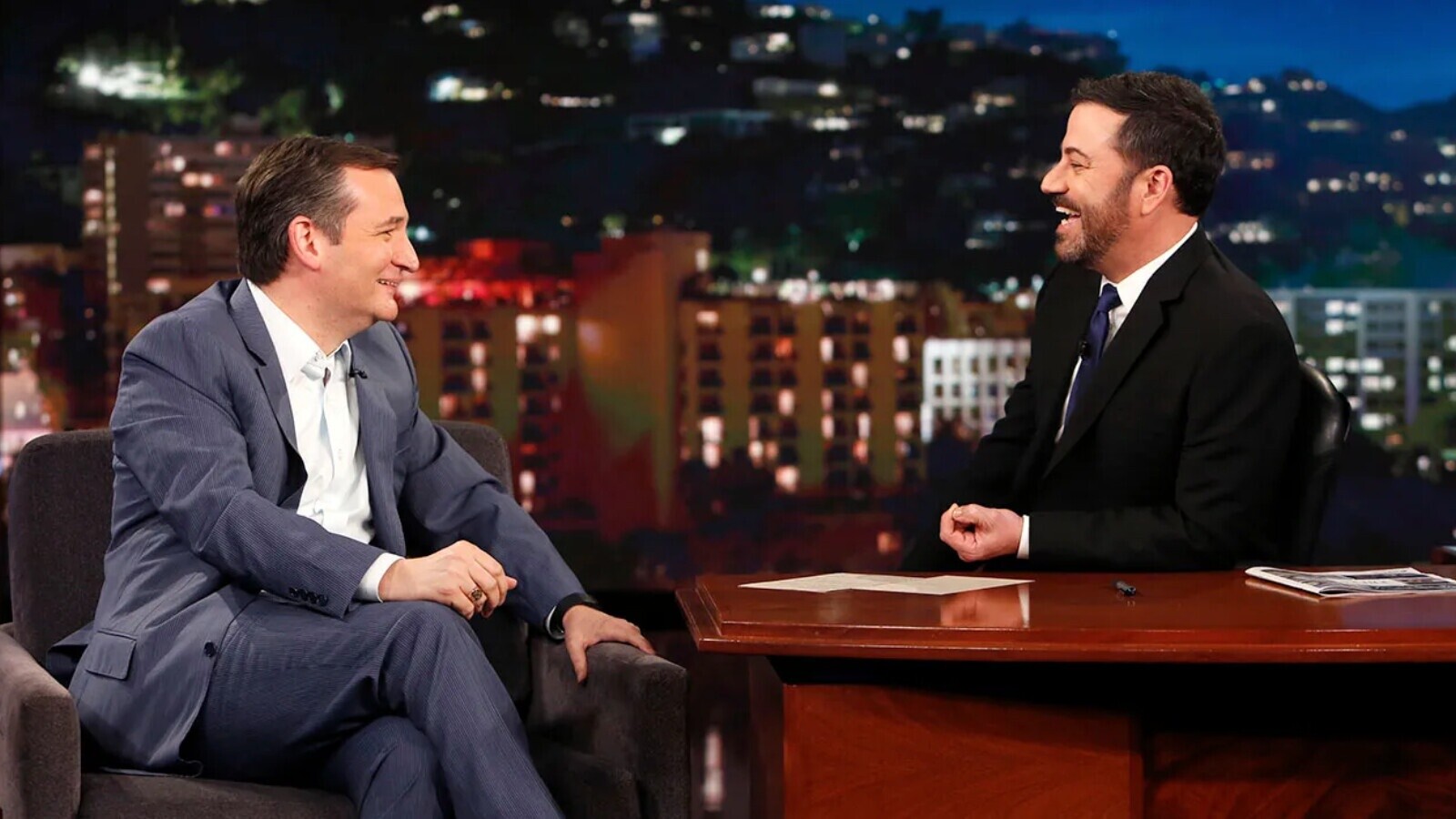
That is why the phrase “Ted Cruz Jimmy Kimmel FCC Senate hearing” became such a hot topic. It was not because Cruz suddenly joined the Jimmy Kimmel fan club. Spoiler alert: he did not. In fact, Cruz called Kimmel “angry, overtly partisan, and profoundly unfunny,” which is not exactly the kind of blurb ABC would put on a billboard. But then Cruz did something more important than trading late-night insults. He made the case that the government cannot pressure broadcasters to punish speech it dislikes.
The result was a sharp, almost comic contradiction: a senator who openly disliked the speech still defended the right to say it. And in a media environment where everyone seems to want free speech for their team and duct tape for the other side, that mattered.
What Happened Before The FCC Senate Hearing?
The controversy began in September 2025, after Jimmy Kimmel made remarks on Jimmy Kimmel Live! about the killing of conservative activist Charlie Kirk. The comments triggered immediate backlash from conservatives, including President Donald Trump and FCC Chair Brendan Carr. Kimmel’s critics argued that his monologue mischaracterized the political context of the assassination. His defenders argued that offensive or clumsy political commentary is still protected speech.
ABC, owned by Disney, temporarily suspended Jimmy Kimmel Live! on September 17, 2025. Around the same time, major ABC affiliate owners Nexstar and Sinclair announced they would preempt the show on their stations. That detail mattered because local broadcast affiliates operate under FCC licenses, and Carr had publicly discussed the responsibilities of licensed broadcasters before the preemptions happened.
Carr’s most controversial line was his warning that companies could handle the matter “the easy way or the hard way.” He also suggested there could be “additional work for the FCC ahead” if broadcasters did not act. To critics, that sounded less like regulatory guidance and more like a government official tapping a baseball bat into his palm.
ABC later brought Kimmel back, and the affiliate holdouts eventually resumed airing the show. But the larger issue did not disappear. Instead, it rolled straight into congressional oversight, where FCC power, political speech, broadcast licenses, and late-night comedy all got shoved into the same constitutional blender.
The Senate Hearing: Why Brendan Carr Was In The Hot Seat
On December 17, 2025, the Senate Committee on Commerce, Science, and Transportation held an FCC oversight hearing. The witnesses included FCC Chair Brendan Carr, Commissioner Olivia Trusty, and Commissioner Anna Gomez. Ted Cruz, the Republican senator from Texas, chaired the committee.
Democratic senators pressed Carr over whether he had used the power of the FCC to intimidate broadcasters into dropping Kimmel. They questioned whether the agency was being politicized and whether Carr’s public statements chilled speech protected by the First Amendment. Carr denied that he had explicitly threatened broadcasters and framed his position as an enforcement of the FCC’s public interest obligations.
The hearing also produced another eyebrow-raising moment when Carr said the FCC was not an independent agency in the way critics described it. That statement drew attention because the FCC has traditionally been understood as an expert regulatory body with congressional oversight and some insulation from direct political pressure. During the hearing, language on the FCC website describing the agency as independent was reportedly changed, which only poured more gasoline on the already smoky grill.
Still, for many viewers, the most memorable exchange came from Cruz. He did not present himself as a Kimmel defender in the personal sense. Quite the opposite. He made clear that he found Kimmel’s political comedy bitter, partisan, and painfully unfunny. But then he separated taste from rights, and that separation was the whole point.
Why Ted Cruz’s Defense Worked
Ted Cruz’s defense of Jimmy Kimmel worked because it was not sentimental. He did not say Kimmel was brave, hilarious, misunderstood, or the Mark Twain of monologues. He basically said: “I think this guy is terrible at comedy, but the government still cannot bully broadcasters into punishing him.” That is a cleaner constitutional argument than many polished speeches because it removes the temptation to defend only speech we enjoy.
He Defended The Principle, Not The Person
The strongest part of Cruz’s argument was that he separated the speaker from the rule. In free-speech debates, people often get stuck on whether the speaker is likable. Was the joke funny? Was the comment fair? Was the timing terrible? Did the host deserve criticism? Those questions may matter culturally, commercially, and ethically. But they are not the same as asking whether government officials can use regulatory power to push media companies toward punishment.
Cruz essentially argued that ABC and its affiliates had every right to fire Kimmel, suspend him, replace him, or decide that America needed more reruns and fewer monologues. Private companies can make programming decisions. Advertisers can object. Viewers can change the channel. Critics can criticize. That is the noisy marketplace of speech, and yes, sometimes the marketplace sounds like a food court during a fire drill.
But the government is different. When a federal regulator reminds broadcasters that their licenses depend on public-interest obligations while also demanding “action” against a specific comedian, the pressure carries a different weight. A viewer saying “I hate this show” is opinion. A federal chair saying “easy way or hard way” is a weather forecast broadcasters cannot ignore.
He Warned Conservatives About Future Blowback
Cruz’s warning was also strategic. He said that if Republicans accept government pressure against Kimmel today, conservatives could regret it tomorrow when a Democratic administration uses the same logic against right-leaning hosts, religious broadcasters, talk radio, podcasters, or local stations airing unpopular commentary.
This is the boomerang problem in politics. Every power a party cheers when it controls Washington becomes a weapon the other party may use later. If the FCC can pressure a network because officials dislike a liberal comedian’s comments, what stops a future FCC from pressuring a broadcaster over a conservative commentator’s remarks on immigration, abortion, guns, gender, war, or religion?
That question is bigger than Jimmy Kimmel. It is bigger than Ted Cruz. It is bigger than whether late-night comedy has become a collection of political therapy sessions with applause signs. The real issue is whether federal licensing power should become a remote control for political taste.
Was Jimmy Kimmel Actually Protected From Consequences?
No. This is where the debate often gets sloppy. Free speech does not mean freedom from criticism, ratings declines, advertiser pressure, public backlash, or network discipline. Kimmel could be mocked, boycotted, suspended, or fired by his employer. That is not automatically a First Amendment violation because ABC is not the government.
The constitutional concern appears when government power enters the room. The FCC does not need to formally revoke a license to create pressure. Sometimes the hint is enough. Broadcast licenses are valuable, complicated, and essential to local stations. If station owners believe their regulatory future may depend on pleasing political officials, they may start self-censoring long before any formal order arrives.
That is why critics used terms like “jawboning” and “coercion.” Jawboning happens when government officials pressure private actors to do something the government cannot directly command. It is especially sensitive when the topic is political speech. In plain English: the government cannot put on sunglasses, lean over the counter, and say, “Nice broadcast license you’ve got there.”
Brendan Carr’s Argument: The FCC And The Public Interest Standard
Carr’s defense centered on the FCC’s responsibility to ensure broadcasters operate in the public interest. Broadcast television is different from cable, streaming, podcasts, and social media because broadcasters use public airwaves under FCC licenses. Carr argued that those licenses come with obligations and that the agency has not always enforced them aggressively enough.
There is a real legal framework behind the public interest standard. Broadcasters are not completely unregulated. The FCC has authority in areas such as licensing, indecency rules, political broadcasting requirements, emergency alerts, technical standards, and certain forms of broadcast misconduct.
But the public interest standard is not a magic wand that lets regulators punish opinions they dislike. That is where critics say Carr’s argument became dangerous. Political satire, commentary, and even tasteless jokes usually sit close to the core of First Amendment protection. The government may have regulatory authority over broadcasters, but that does not mean it can become America’s national joke inspector. Honestly, imagine the paperwork.
Why This Hearing Was Bigger Than Late-Night TV
The Kimmel controversy arrived at a moment when trust in media, government, and tech platforms was already fragile. Many conservatives believe major networks are biased against them. Many liberals believe the Trump administration has used government power to pressure media companies. Many Americans simply believe everyone on television is yelling too much and nobody has discovered the mute button.
That is why the hearing mattered. It forced lawmakers to confront a difficult question: How should government respond when political speech is ugly, misleading, offensive, or irresponsible? The answer cannot be “only punish the side I dislike.” That answer is not a principle. It is a mood swing with a congressional letterhead.
The better answer is that private consequences are allowed, counterspeech is encouraged, lawsuits may exist for genuine defamation, and viewers have power. But federal agencies should not threaten regulatory consequences because a political joke angered the administration.
The Late-Night Comedy Angle: When Jokes Become Political Ammunition
Late-night television has changed dramatically over the past decade. Once built around celebrity interviews, silly games, and monologues that tried to needle both sides, much of late-night comedy has become openly political. That shift has won loyal audiences and lost others. It has also made hosts like Kimmel, Stephen Colbert, Seth Meyers, and others recurring characters in partisan battles.
Cruz’s “profoundly unfunny” jab captured a common conservative critique: that late-night comedy has become predictable anti-Trump commentary with punchlines attached like decorative parsley. Kimmel’s supporters would argue that political satire has always targeted powerful figures and that Trump’s dominance of the news naturally made him a frequent subject.
Both points can be true. Late-night comedy can be partisan and still protected. A joke can be lazy and still legal. A monologue can be unfair and still outside the FCC’s policing role. The Constitution does not require comedians to be funny, which is fortunate for several open-mic nights across the country.
What Ted Cruz Got Right
The most important thing Cruz got right was the distinction between criticism and coercion. He criticized Kimmel harshly, but he also warned that government officials cannot threaten adverse consequences for disfavored speech. That is the core of the issue.
He also understood the precedent problem. Political power changes hands. A censorship tool created for one emergency rarely stays locked in the original box. Once the government claims authority to pressure broadcasters over political commentary, every future administration will be tempted to define “public interest” as “content that makes us look good.”
Finally, Cruz’s argument was persuasive because it was ideologically inconvenient. It is easy for liberals to defend Kimmel and easy for conservatives to attack him. It is harder for a conservative senator who dislikes Kimmel to defend the rule that protects him. That inconvenience is what made the defense meaningful.
What Critics Still Question About Cruz’s Position
Some critics argued that Cruz’s hearing performance was softer than his earlier podcast criticism. In September, he compared Carr’s language to a scene from Goodfellas and called it “dangerous as hell.” At the hearing, he repeated the principle but also spent considerable time criticizing Democrats and the Biden administration over alleged pressure on speech in other contexts.
That approach may have been politically useful, but it also gave Carr room to shift the conversation. For viewers who wanted a direct cross-examination of Carr over Kimmel, the hearing may have felt like watching someone start a courtroom drama and then wander into a group project about broadband policy.
Still, even with partisan framing, Cruz placed an important sentence on the record: government should not arbitrate truth or opinion. In a hearing full of deflection, that line mattered.
Experience And Takeaways: What This Moment Teaches Media Teams, Viewers, And Writers
For anyone who works with public content, the Ted Cruz Jimmy Kimmel FCC Senate hearing offers a practical lesson: controversy does not begin when someone says something offensive. It begins when institutions react. A late-night monologue can be angry, sloppy, or badly timed, but the real chain reaction starts when advertisers, affiliates, regulators, politicians, and audiences all rush in at once.
Media teams can learn from this episode by building clearer internal standards before a crisis hits. Networks should know when a host’s comments require correction, apology, suspension, or no action at all. Waiting until political pressure arrives is a terrible strategy. It is like installing smoke detectors after the kitchen is already doing its impression of a volcano.
Writers and hosts can also take away a lesson about precision. Political comedy thrives on exaggeration, but when the subject involves death, violence, or a national tragedy, vague phrasing can become combustible. A joke that sounds sharp in a writers’ room can sound reckless to grieving audiences. That does not mean comedians should avoid hard topics. It does mean they should understand when the joke is carrying more weight than the punchline can support.
Viewers, meanwhile, should remember that changing the channel is still powerful. So is criticism. So is refusing to support a program. Democratic culture does not require everyone to clap politely through content they find offensive. But it does require caution when people start asking government agencies to solve their outrage for them.
For publishers covering this story, the best angle is not “Ted Cruz loves Jimmy Kimmel.” He clearly does not. The stronger and more accurate angle is that Cruz defended a constitutional boundary even while mocking the person standing near it. That is the kind of contradiction readers understand because it mirrors real life. You can dislike someone’s opinion and still oppose government punishment of that opinion. In fact, that is when the principle actually counts.
This is also a useful reminder for businesses and creators outside politics. If your brand publishes commentary, social posts, videos, podcasts, or newsletters, you need a crisis response plan that separates reputational judgment from legal rights. Ask three questions: Was the statement false? Was it harmful? Was the response voluntary, or did it come after government pressure? Those answers matter.
The Kimmel-Cruz-Carr moment will likely be remembered less for the joke itself than for the uncomfortable principle it exposed. Free speech is easy when the speaker is charming. It is harder when the speaker is annoying, partisan, or, as Cruz put it, profoundly unfunny. But that is the stress test. The First Amendment is not a VIP lounge for agreeable people. It is more like public transportation: loud, imperfect, occasionally unpleasant, but absolutely necessary if the system is going to work.
Conclusion: The Best Defense Was Also The Most Honest One
Ted Cruz’s defense of Jimmy Kimmel during the FCC Senate hearing stood out because it did not pretend Kimmel was universally beloved or even particularly funny. Cruz made the opposite point. He disliked the remarks, disliked the show, and still warned against government coercion. That is what made the argument powerful.
In a healthier political culture, this would not be shocking. Defending speech you dislike is supposed to be the basic exercise. But in today’s media environment, where every controversy instantly becomes a team sport, Cruz’s position felt almost old-fashioned: criticize the speaker, punish bad content through private choices if necessary, but keep the federal government out of the business of deciding which jokes survive.
The FCC hearing was not just about Jimmy Kimmel. It was about whether broadcast regulation can become political leverage. It was about whether public-interest rules can be stretched into content policing. And it was about whether Americans still believe free speech protects more than their favorite side.
So yes, Ted Cruz had one of the best defenses of “profoundly unfunny” Jimmy Kimmel. Not because it was warm. Not because it was flattering. But because it was principled, practical, and a little bit funny in spite of itself.
Note: This article is written from publicly reported information about the FCC Senate hearing, Jimmy Kimmel’s temporary ABC suspension, Brendan Carr’s comments, and Ted Cruz’s free-speech argument. Before publication, editors should verify final names, dates, and any developing FCC actions for the latest updates.