
Knee pads rarely inspire excitementuntil the first time you kneel on a hidden screw, sharp stone, or particularly unforgiving patch of concrete. At that moment, good knee protection feels less like an accessory and more like a brilliant life decision.
Bob Vila’s product-testing team evaluated eight popular work knee pads after researching roughly 40 models. The pads were worn while kneeling, squatting, climbing, walking, and working across surfaces such as concrete, brick, soil, grass, underlayment, tile, and wood flooring. Comfort, fit, stability, durability, mobility, and overall value all contributed to the final results.
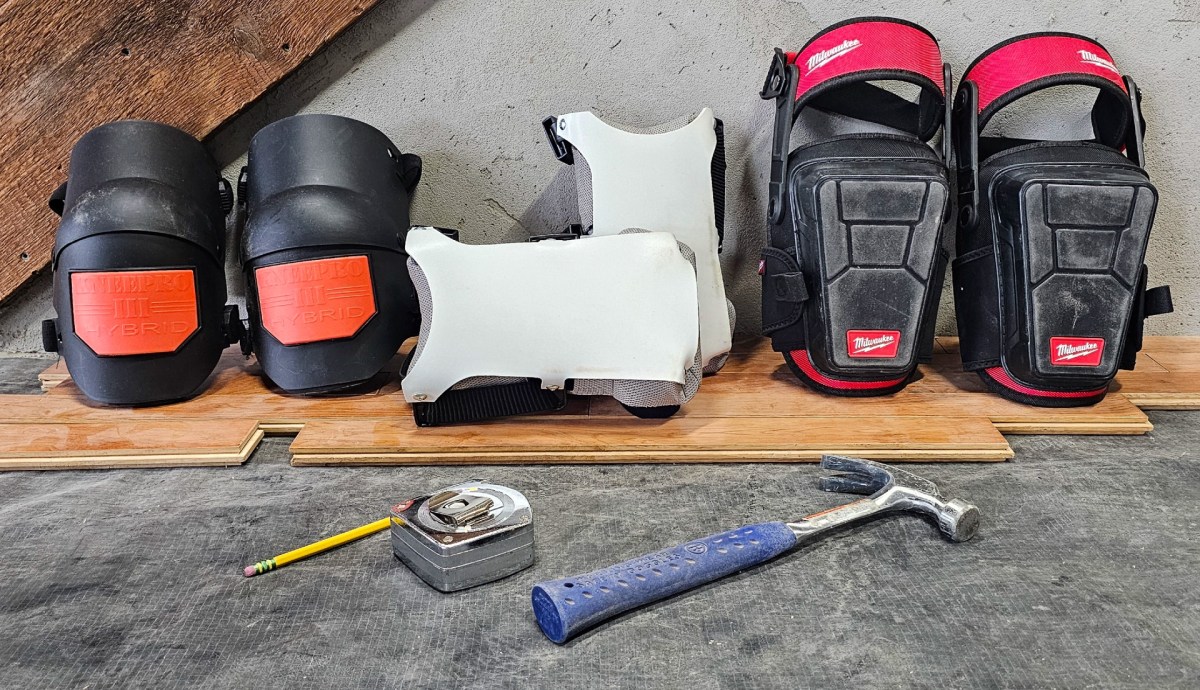
The Sellstrom Hybrid Ultra Flex III KneePro Knee Pads earned the best-overall position. Their hinged construction, rugged outer shells, generous cushioning, and secure fit created an unusually practical balance of protection and mobility. However, flooring installers, construction professionals, gardeners, and occasional DIYers may prefer one of the more specialized options below.
Best Knee Pads at a Glance
| Category | Knee Pads | Best Feature |
|---|---|---|
| Best Overall | Sellstrom Hybrid Ultra Flex III KneePro | Secure hinged protection |
| Best Value | WorkPro Knee Pads | Affordable gel cushioning |
| Best for Flooring | ProKnee AP16 ⅝-Inch | Dense, supportive foam |
| Best for Construction | Milwaukee Stabilizer | Stable flat cap |
| Best Heavy-Duty | Klein Tools Heavy-Duty Hinged | Thick gel-and-foam protection |
| Best Lightweight | DeWalt Flooring Knee Pads | Easy movement and traction |
| Best for Comfort | NoCry GelGuard Pro | Layered EVA foam and gel |
| Best for Stability | ToughBuilt GelFit Stabilizer | Wide, removable flat caps |
How Bob Vila Tested the Best Knee Pads
The testing process extended beyond briefly kneeling on a showroom floor and declaring everything “pretty comfortable.” Eight pairs were evaluated over two rounds of hands-on testing. Each set was worn for at least an hour per day during the primary test period.
Testers repeatedly transitioned between standing, kneeling, squatting, walking, and climbing. This exposed slipping straps, rolling caps, pressure points, and other annoyances that may not appear during a five-minute fitting. The pads were also used on soft ground and abrasive masonry surfaces before being inspected for damage.
Scores covered comfort and fit, durability, and value. That distinction matters because the thickest knee pad is not automatically the best. A heavily padded model that slides down every six steps may become an expensive pair of shin guards.
The Best Knee Pads Tested by Bob Vila
1. Best Overall: Sellstrom Hybrid Ultra Flex III KneePro
The Sellstrom Hybrid Ultra Flex III combines a hard outer shell with EVA foam and an integrated gel pack. Its hinged design allows the upper and lower portions to follow the leg as the wearer stands, kneels, or walks. During testing, the pads remained centered without frequent readjustment and protected both the kneecap and surrounding areas.
Dense cushioning absorbed pressure and minor impacts, while adjustable clip closures made the fit easier to repeat from one workday to the next. Despite their armored appearance, the pads felt lighter than expected. Their main weakness is ventilation: the generous coverage can trap heat during warm-weather projects.
Best for: Construction, remodeling, landscaping, and general-purpose work requiring dependable protection.
2. Best Value: WorkPro Knee Pads
WorkPro’s soft-cap knee pads provide thick gel cushioning at a price suited to homeowners who do not spend every weekday installing floors. The combination of a lower hook-and-loop strap and an upper quick-release strap makes them simple to put on and remove.
The rounded caps allow comfortable movement, but they do not feel as planted as wide, rubberized stabilizer caps. Some shifting occurred while walking and moving laterally. The fabric exterior may also wear more quickly on gravel or rough concrete. For occasional gardening, painting, assembly, or home repairs, however, the value is difficult to ignore.
Best for: Budget-conscious DIYers and occasional household projects.
3. Best for Flooring: ProKnee AP16 ⅝-Inch Knee Pads
The ProKnee AP16 uses a broad contact surface and dense, replaceable polyurethane cushioning. The resulting support feels closer to kneeling on a compact floor mat than balancing on a small pad. Shock-absorbing foam makes the AP16 especially appealing for flooring professionals who remain on their knees for long stretches.
Quick-release buckles resist the lint buildup that can weaken hook-and-loop closures. The design is comfortable and durable, but it is specialized. It provides limited protection around the sides of the knee, and the porous interior is not ideal for muddy landscaping. The premium price makes the most sense for frequent flooring work.
Best for: Hardwood, laminate, vinyl, and tile installation.
4. Best for Construction: Milwaukee Stabilizer Knee Pads
Milwaukee’s Stabilizer pads are designed for workers who alternate between standing, squatting, and kneeling. A hinged thigh strap helps prevent migration, while the large, flat cap creates a steady platform. That stability is useful when pushing, pulling, drilling, or reaching from a kneeling position.
Layered gel and foam distribute pressure, although testers felt that additional padding would improve comfort during marathon floor-level projects. For general construction, where mobility and stability often matter as much as maximum softness, the compromise works well.
Best for: Contractors, remodelers, plumbers, electricians, and serious DIYers.
5. Best Heavy-Duty: Klein Tools Heavy-Duty Hinged Knee Pads
Klein Tools pairs a rugged plastic exterior with substantial gel-and-foam padding, heavy stitching, durable fasteners, and a hinged thigh section. The pads look bulky, but the articulation prevents much of that bulk from restricting normal movement.
The large rubberized contact area supplies traction on smooth surfaces, while the interior cushioning spreads pressure across a wider area. These pads even remained secure during faster movement in Bob Vila’s testing. The trade-off is size: they are more knee armor than minimalist accessory, which may be unnecessary for light gardening.
Best for: Demolition, construction, electrical work, concrete, and demanding jobsites.
6. Best Lightweight: DeWalt Flooring Knee Pads with Gel
DeWalt’s flooring pads use a soft, rubberized face rather than a slick hard shell. This improves grip and reduces the risk of marking finished floors. Their relatively light construction also makes walking and repeated position changes less cumbersome.
Quick-release buckles simplify adjustments, and a keeper helps control loose strap ends. Cushioning is adequate for extended work, though it does not feel as plush as the largest gel models. Testers also noticed pressure from the straps behind the legs after prolonged wear.
Best for: Finish carpentry, flooring installation, painting, and mobile indoor work.
7. Best for Comfort: NoCry GelGuard Pro Knee Pads
NoCry’s GelGuard Pro pads layer EVA foam around a gel core and cover the front with durable thermoplastic rubber. A raised lower edge helps resist rolling, particularly on uneven ground. The cushioning performed well during prolonged kneeling on hard and rough surfaces.
The catch is fit. Securing the straps can take patience, and the pads may slide during frequent walking. The available strap adjustment may also be restrictive for users with larger thighs. They perform best when excellent cushioning matters more than rapid movement.
Best for: Gardening, landscaping, masonry, and stationary projects on hard ground.
8. Best for Stability: ToughBuilt GelFit Stabilizer Knee Pads
The ToughBuilt GelFit Stabilizer features wide, flat shells covered with a gripping surface. This creates a planted feeling on tile and hardwood, helping the wearer remain balanced while applying force to a tool or material.
Thick gel-and-foam padding cradles the knees, and the removable SnapShell design allows the pads to function as softer protection when the rigid caps are detached. Unfortunately, the single-strap configuration is less secure while walking. These pads are at their best when work stays within a relatively small area.
Best for: Tile work, stationary floor projects, and tasks requiring a stable kneeling base.
How to Choose the Right Work Knee Pads
Match the Cap to the Surface
Hard-shell knee pads resist punctures, sharp debris, gravel, shingles, and abrasive concrete. Their smooth surfaces can also make lateral movement easier. However, hard plastic may scratch hardwood, vinyl, or other finished materials.
Soft and non-marring caps are better for indoor flooring, gardening, and surfaces that must remain pristine. A wide, flat cap increases stability, while a rounded or rocker-shaped cap favors movement. There is no universal winner; the floor gets a vote too.
Consider Foam, Gel, and Layered Cushioning
Foam is lightweight, relatively breathable, and affordable. Its quality varies, and inexpensive foam may flatten with repeated use. Gel conforms around the kneecap and distributes concentrated pressure effectively, though it adds weight and may retain heat.
Many of the best construction knee pads combine the two materials: foam supplies structure while gel cushions the highest-pressure area. For long work sessions, pressure distribution is more important than simply having the thickest possible pad.
Pay Attention to Straps and Hinges
A pad should remain centered over the kneecap without requiring circulation-stopping tension. Two-strap systems generally resist rotation better than single straps. Hinged thigh supports can be particularly effective for workers who repeatedly stand and kneel because the pad moves with the leg.
Hook-and-loop straps offer convenient adjustment but collect lint and jobsite debris. Buckles provide a repeatable fit and quick removal. Whatever the system, check the manufacturer’s sizing range rather than trusting the phrase “one size fits most.” Sometimes “most” has a suspiciously narrow social circle.
Think About Mobility and Work Duration
A heavily armored knee pad may excel during demolition yet feel excessive when assembling furniture. Lightweight pads favor walking and frequent transitions, while broad, thickly cushioned models are better for hours of continuous kneeling.
For stationary tasks such as weeding a small garden bed or repairing plumbing beneath one sink, a portable kneeling mat may be more comfortable than strapped pads. Mobile work usually favors wearable protection.
Why Knee Protection Matters
Repeated or prolonged kneeling places concentrated pressure on the front of the knee and can reduce circulation in the lower legs. OSHA’s ergonomic guidance recommends knee pads or foam padding for prolonged kneeling tasks and suggests using a stool when the job allows it. NIOSH guidance similarly emphasizes that knee protection should be part of a broader effort to reduce stress from restricted or kneeling work positions.
Knee pads reduce contact pressure, soften minor impacts, and create a barrier against rough surfaces and debris. They do not make unlimited kneeling harmless, nor do they replace breaks, position changes, appropriate tools, or medical care for persistent pain.
Frequently Asked Questions
Should knee pads feel tight?
They should feel secure but not restrictive. The protective center must remain over the kneecap as you move. Loosen the straps if you notice numbness, tingling, throbbing, deep strap marks, or reduced circulation.
Are gel knee pads better than foam?
Gel generally distributes pressure well and feels comfortable during long kneeling sessions. Foam weighs less and may breathe better. A layered gel-and-foam design often provides the best balance for demanding work.
Can hard-shell knee pads damage floors?
Yes. Hard plastic can scratch or scuff sensitive flooring, especially if grit becomes trapped beneath the shell. Use clean, non-marring caps for hardwood, laminate, vinyl, and finished tile.
How should work knee pads be cleaned?
Follow the manufacturer’s instructions. Many models can be wiped or hand-washed with mild soap and water, but gel inserts, rivets, foam, and removable shells may require special handling. Air-dry the pads completely before storage to discourage odors and mildew.
Real-World Experiences: What Knee-Pad Specs Do Not Tell You
The first lesson from using work knee pads is that comfort changes with time. A pair can feel heavenly during an initial test and become irritating after 45 minutes. Straps warm up, elastic stretches, sweat accumulates, and the pad gradually reveals whether it truly matches the shape of the wearer’s leg. Whenever possible, test new pads through a complete work cycle before committing them to an all-day project.
The second lesson is that slipping usually appears during transitions, not while kneeling still. Stand up, walk across a room, climb a short ladder, squat, and kneel again. If the cap has rotated toward the shin, the fit or design is wrong for that type of movement. Tightening the straps until they resemble tourniquets is not a clever repair. A hinged pad, thigh-supported model, or compression-style sleeve may suit the job better.
Surface contamination also makes a surprising difference. A non-marring cap may be perfectly safe on clean hardwood, but one grain of sand trapped underneath can turn it into a tiny floor sander. Installers should wipe both the floor and the pad regularly. Hard shells used during demolition should never move directly to finished-floor duty without a thorough cleaningand ideally should be replaced by a dedicated soft-cap pair.
Heat is another overlooked factor. Dense foam and gel feel luxurious in an air-conditioned workshop but noticeably warmer during summer landscaping. Breathable materials help, but every knee pad covers an area where fabric, straps, and skin already compete for airflow. Short breaks provide a chance to loosen the pads, dry the interior, and inspect the skin for irritation.
Experienced users also learn that bulk is not automatically bad. Large hinged pads may look as though they were borrowed from a science-fiction costume department, yet their structure can prevent slipping and spread force more effectively. Conversely, a slim pad is pleasant for walking but may compress too quickly during hours of tile installation. The correct choice depends on whether the workday involves constant movement or continuous kneeling.
Finally, knee pads should be treated like other protective equipment. Inspect shells for cracks, padding for permanent compression, straps for stretching, and rivets or buckles for damage. Allow wet pads to dry before dropping them into a sealed toolbox. If the cushioning remains flattened or the cap no longer stays centered, the pads have reached retirement ageeven if they still look respectable from across the garage.
Final Verdict
The Sellstrom Hybrid Ultra Flex III KneePro is the strongest all-purpose choice from Bob Vila’s tested group. Its hinged structure, secure fit, extensive coverage, and shock-absorbing cushioning make it suitable for demanding DIY and professional work.
The WorkPro Knee Pads offer better value for occasional projects, while the ProKnee AP16 is the standout specialist for flooring. Milwaukee and Klein Tools provide dependable solutions for construction and heavy-duty environments, and DeWalt’s lightweight, non-marring design is a sensible choice around finished surfaces.
The best knee pads are ultimately the pair matched to the surface, movement, duration, and wearer. Choose protection you can comfortably keep on, because knee pads abandoned beside the toolbox have roughly the same safety value as a decorative throw pillow.