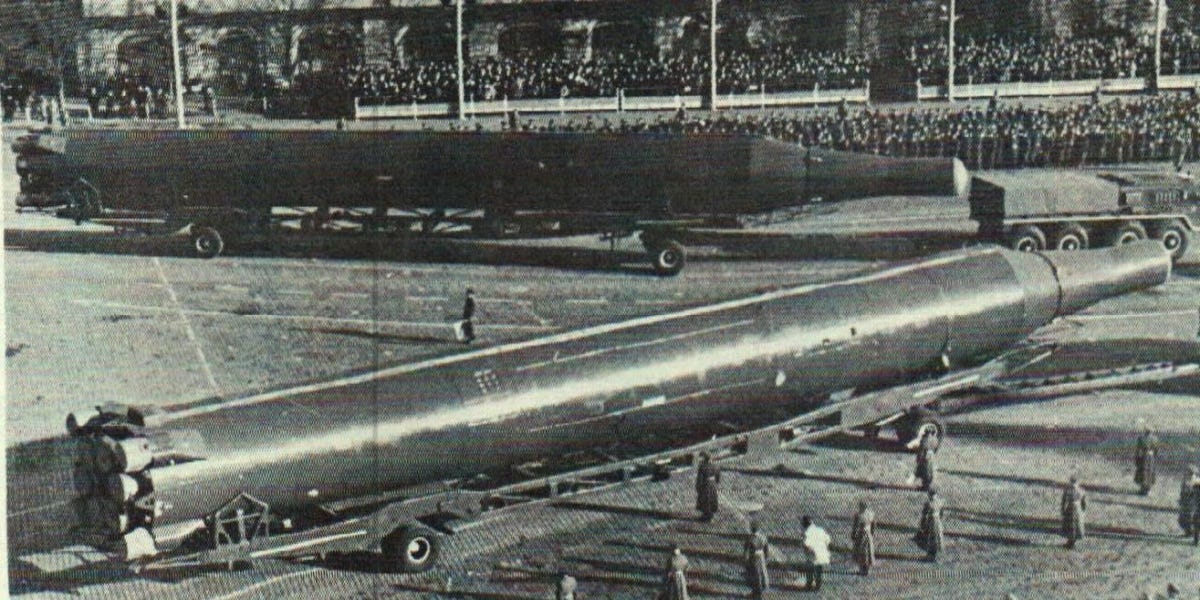

Cold War history is full of ideas that sound like they were pitched by a sleep-deprived screenwriter at 2 a.m. Build a city-killing weapon, send it into space, swing it around the planet, and drop it on the United States from the direction nobody was watching. Ridiculous? Absolutely. Real? Also yes.
The weapon at the center of this story was the Soviet Fractional Orbital Bombardment System, better known as FOBS, and its best-known version was the R-36 Orb. It was not a laser, not a flying saucer, and not a shiny alien frisbee with dramatic background music. It was, instead, a deeply unnerving nuclear delivery system that blurred the line between missile warfare and spaceflight. In 1967, secret Soviet tests of this system created eerie crescent-shaped lights in the evening sky. People across parts of the Soviet Union saw them, newspapers speculated, and UFO rumors spread fast. For a while, the “unidentified object” really was unidentified to the public. The punchline, unfortunately, was nuclear strategy.
This is the story of how a secret Soviet space weapon mistaken for a UFO became one of the strangest intersections of espionage, arms control, public confusion, and space-age theater. It is also a reminder that many “mysteries in the sky” are not extraterrestrial. Sometimes they are very terrestrial ideas wearing expensive rocket exhaust.
What Was the Soviet Space Weapon, Exactly?
The basic concept behind the Soviet FOBS weapon was clever in a deeply unsettling Cold War way. A normal intercontinental ballistic missile follows a largely predictable ballistic arc toward its target. A fractional orbital bombardment system did something different: it launched a warhead into a low orbital path, then used a braking maneuver to bring it back down before it completed a full orbit of Earth.
That “fractional” part mattered. Soviet planners understood that American early warning systems were optimized for attacks coming over the polar route from the north. So they imagined a weapon that could approach from the south, effectively sneaking around the front door by using the side entrance. If that sounds less like engineering and more like a burglar’s fever dream, welcome to strategic planning in the 1960s.
Why the South Pole Route Mattered
During the early Cold War, U.S. missile warning architecture was focused heavily on the northern hemisphere. Ballistic Missile Early Warning System radars were positioned in places such as Alaska, Greenland, and the United Kingdom, reflecting the expectation that a Soviet strike would come across the polar region. A weapon arriving from the south promised surprise, shorter warning time, and maximum panic in Washington. From Moscow’s perspective, that was not a bug. It was the feature.
The Soviet Union introduced FOBS-related capability through the SS-9 Scarp family, and the R-36 Orb became the most famous expression of the idea. Strategically, the appeal was obvious: global reach, difficult tracking, and a flight path that made target prediction harder. Politically, it was a nightmare. Once nuclear weapons start borrowing tricks from satellites, everyone’s blood pressure goes up several notches.
Why People Thought They Were Seeing a UFO
The UFO mystery part of this story is not a side note. It is central to why the episode still fascinates people. Beginning in March 1967, skywatchers from Ukraine to the Caucasus reported a bizarre, silent crescent moving across the evening sky. These sightings happened repeatedly over roughly six months. Observers described glowing curves, sparks, and a shape that seemed too large, too smooth, and too strange to be a normal aircraft.
If you lived in the Soviet Union at the time, you were not exactly spoiled with transparent military briefings. You saw a giant glowing crescent drifting silently across the sky near sunset, and the state was not eager to explain itself. So naturally, people reached for the nearest label available: UFO.
The “Great Soviet Crescent”
What witnesses were actually seeing was the visual signature of a secret test. The launches were timed so that the object in the sky remained sunlit while the ground below was already slipping into dusk. That meant the exhaust plume stood out dramatically against a darkening sky. During the de-orbit or braking phase, the rocket’s exhaust spread in a way that formed a luminous crescent or C-shape. Smaller bright points looked like sparks. It was not alien technology. It was a human-made propulsion event, which is both less exciting and somehow more alarming.
Years later, comparisons with modern rocket footage helped explain the old reports. Similar crescent-like forms have appeared when rocket stages perform orientation or braking maneuvers at high altitude. Once you know what you are looking at, the mystery shrinks quickly. But in 1967, without context, the scene must have looked like science fiction had torn a hole in the atmosphere.
Why the Sightings Spread So Fast
The Soviet press speculated. Amateur observer groups began gathering accounts. The reports moved beyond local rumor and into a broader public discussion. That is a classic pattern in UFO history: a real but poorly understood event appears, official information is thin or misleading, and imagination eagerly fills the silence.
In this case, the secrecy surrounding Soviet weapons work made the misunderstanding almost inevitable. When governments hide the machinery, people invent the mythology.
The Treaty Problem: Space for Peace, Missiles for War
Here is where the story gets even more Cold War. These tests were taking place as the United States and the Soviet Union were finalizing the Outer Space Treaty of 1967, which prohibited placing nuclear weapons or other weapons of mass destruction in orbit. That sounds pretty straightforward. The trouble was that the Soviets could argue their system was not entering a full orbit. It was only using part of one.
That semantic dodge became one of the most eyebrow-raising legal maneuvers of the era. If a warhead goes into space, circles part of the planet, and then drops toward a target, many people would reasonably say, “Congratulations, you have created a space-based nuclear strike system.” Soviet officials leaned on the technical distinction that it did not complete a full revolution.
The Spirit vs. the Letter of the Rules
This is why the Soviet orbital bombardment system remains such a revealing case study. It sat in the uncomfortable gap between what treaties tried to prevent and what engineers could argue was technically different. The broader diplomatic goal was to keep outer space from becoming a parking lot for nuclear terror. FOBS did not fit neatly into that goal, even if Soviet lawyers may have wanted to squint at the wording and pretend everything was fine.
American officials and analysts understood the danger quickly. Even if the system rested on a legal gray zone under the treaty’s wording, it plainly challenged the treaty’s purpose. Later arms control language became more explicit, and SALT II eventually prohibited systems for placing nuclear weapons into Earth orbit, including fractional orbital missiles. In other words, the loophole eventually got a padlock.
How Effective Was the Weapon?
Now for the practical question: was this secret Soviet space weapon actually good? Good, in this case, means “effective by the horrifying standards of nuclear deterrence,” not “a neat gadget you would show off at a science fair.”
The answer is: clever, yes; ideal, not really.
The Strengths
FOBS had three big advantages. First, it offered an unusual attack direction, especially from the south. Second, because of its trajectory, it complicated early warning and target prediction. Third, it carried enormous psychological value. Even if you never launched it in war, merely proving that you could send a nuclear weapon around part of the planet was enough to make adversaries sweat through their briefing folders.
The Weaknesses
But the system was not magic. It was less accurate than more conventional ballistic missile options. It required extra energy to achieve orbital flight characteristics, which imposed technical and payload tradeoffs. It was also part of a broader strategic competition that did not stand still. Once the United States improved warning and surveillance systems, including systems better suited to detecting threats beyond the old north-facing pattern, the surprise advantage started to erode.
And there was a more brutal truth: ballistic missile submarines became a better answer. If the Soviet Union wanted to threaten the United States from unexpected directions, submarines offered a more flexible and survivable route than maintaining an awkward orbital workaround. In the grand Darwinian ecosystem of nuclear delivery systems, FOBS was impressive but increasingly outcompeted.
Deployment, Secrecy, and the Slow Fade-Out
The Soviet Union eventually deployed a limited number of R-36 Orb missiles in silos near Baikonur/Tyuratam. The number most often cited is 18 deployed launchers. That is enough to be strategically serious, but not enough to suggest Moscow believed it had found the perfect superweapon. This was more of a specialized tool than a total revolution.
Its secrecy also mattered. Publicly, some launches were described in civilian or scientific language. Privately, intelligence services were busy figuring out what they really meant. By the late Cold War, the system’s novelty had faded, its military edge had dulled, and arms control efforts had boxed it in more tightly. By 1983, the deployed R-36 Orb systems were gone.
So yes, the secret Soviet space weapon mistaken for a UFO was real. It just turned out to be a transitional creature of the Cold War: too strange to ignore, too limited to dominate, and too politically radioactive to keep around forever.
Why This Matters Beyond Cold War Trivia
This is not just a fun historical oddity for people who enjoy rockets, military history, or saying “orbital bombardment” in a dramatic voice. The story matters because it shows how quickly technology, secrecy, and fear can produce myth.
It also matters because modern conversations about hypersonic weapons, space militarization, and missile defense still echo the same concerns. How much warning is enough? What counts as a space weapon? Does technical wording matter more than strategic effect? If a system exploits a loophole but produces the same terrifying outcome, should anyone really clap for the legal creativity?
The FOBS episode reminds us that arms races are often fueled by geometry as much as ideology. Change the angle of approach, and suddenly everyone rewrites doctrine, upgrades radar, and loses sleep.
The Human Experience of the Crescent Sky
To really understand this story, it helps to leave the treaty language and missile acronyms for a moment and imagine the experience of ordinary people beneath that sky. You are standing outside on an evening in 1967. Maybe you are walking home. Maybe you are visiting family. Maybe you are just trying to enjoy a sunset and mind your own business. Then a silent crescent appears overhead, luminous and impossible, gliding where no familiar aircraft should be. It does not flap, roar, blink, or behave. It simply moves, strange and self-contained, like the sky has decided to start a rumor.
That experience matters because mystery is emotional before it is analytical. Long before someone in a uniform labels an object, the witness feels it. Awe comes first. Then confusion. Then the rapid mental scramble for explanations. Balloon? Plane? Secret test? Divine sign? Visitor from another world? The label “UFO” often sticks not because people are certain about aliens, but because they are honestly admitting they have no idea what they just saw.
Now consider the experience from the other side of the curtain. Somewhere, Soviet engineers and military planners knew exactly what had happened. They knew the crescents were not miracles or visitors. They were the visible side effect of a top-secret weapons test. That must have produced its own kind of tension. On one hand, the launch worked well enough to create the intended flight behavior. On the other hand, the sky had become a giant billboard for a classified program. That is not ideal if your job description includes the word “secret.”
Then there were the censors and officials. They faced a familiar authoritarian problem: the public had seen something real, but the truth was inconvenient. Saying nothing invited speculation. Saying too much exposed the program. So the state did what secretive states often do. It tried to smother the story without fully explaining it. Of course, that only made the mystery more attractive. Nothing fattens a rumor like official discomfort.
There is also the experience of later historians and analysts, piecing the episode together from declassified records, memoirs, treaty language, and technical clues. For them, this was not just a story about missiles. It was a story about perception. One set of eyes saw aliens. Another saw rocket exhaust. A third saw a destabilizing first-strike concept. All three were looking at the same event from different layers of knowledge.
That may be the most interesting part of all. The crescent in the sky was never only an object. It was a mirror. It reflected what each observer knew, feared, or wanted to believe. For civilians, it was a mystery. For the Soviet military, it was a capability. For American strategists, it was a warning. For historians today, it is a rare moment when public wonder and nuclear doctrine collided in plain view. The sky looked enchanted. The reality was strategic, mechanical, and chillingly human.
Conclusion
The secret Soviet space weapon mistaken for a UFO was not a legend, not a tabloid fever dream, and not a glamorous piece of space opera. It was the R-36 Orb, a Cold War attempt to turn orbital mechanics into strategic surprise. Its glowing test signatures fooled the public because they looked genuinely bizarre. Its military logic frightened analysts because it was genuinely dangerous. And its eventual disappearance says something important: even the most inventive weapons can become obsolete when technology, treaties, and strategy evolve around them.
In the end, the so-called UFO was real, but not in the way people hoped or feared. It was not extraterrestrial. It was geopolitical. Which, frankly, is often scarier.