This Adorable Cat Looks Exactly Like Shrek’s Puss In Boots, And The Internet Went Nuts For It

Note: This article is written as original, publish-ready web content based on publicly available information, with no source links inserted into the article body.
Every once in a while, the internet discovers a cat so charming that people collectively forget their passwords, their responsibilities, and possibly the pot of pasta boiling on the stove. That is exactly what happened when Pisco, an adorable golden British Shorthair, became famous for looking almost exactly like Shrek’s Puss in Boots. Not “kind of similar if you squint.” Not “same vibe after three cups of coffee.” We are talking big, round, heart-melting eyes, ginger-gold fur, and the kind of innocent face that could convince a full-grown adult to hand over a snack, a blanket, and the house deed.
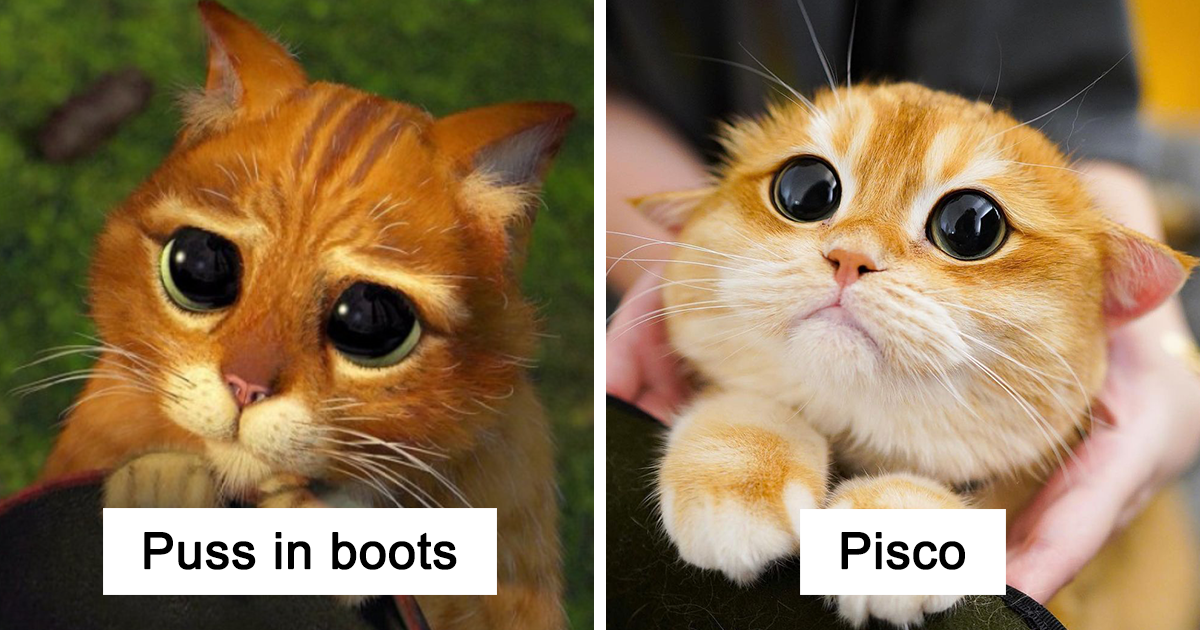
The viral comparison was simple: Pisco looked like the real-life version of Puss in Boots doing his legendary pleading face from Shrek 2. You know the lookthe oversized eyes, the tiny vulnerable expression, the emotional blackmail wrapped in fur. It is the face that says, “I have done nothing wrong,” even when there is a shredded roll of toilet paper behind him waving like a white flag.
But Pisco’s popularity is more than a cute coincidence. His rise shows why the internet still adores cats, why animated characters can become cultural shortcuts, and why a fluffy pet with expressive eyes can turn strangers into a worldwide fan club. In a digital world full of noise, stress, and suspiciously dramatic comment sections, one cat with Puss in Boots energy can feel like a tiny golden reset button.
Who Is Pisco, the Cat That Looks Like Puss in Boots?
Pisco is a golden British Shorthair who gained attention online after people noticed his striking resemblance to DreamWorks’ famous feline hero. With his round face, plush coat, coppery-golden coloring, and wide greenish eyes, Pisco appears as if someone reached into the Shrek universe, picked up Puss in Boots, removed the sword for safety reasons, and placed him gently on Instagram.
What made the comparison explode was not only the color of his fur or the general “storybook cat” look. It was the expression. Pisco’s eyes often appear large, glossy, and impossibly persuasive. In many photos, he looks directly at the camera with the kind of soft, dramatic gaze that makes people type comments like “I would die for this cat” and, for once, the internet is only exaggerating by about 12 percent.
Early coverage described Pisco as a real-life Puss in Boots, and social media users quickly agreed. Fans compared him to the famous Shrek scene where Puss uses his adorable eyes to disarm everyone around him. In the movie, it is a tactical weapon. In real life, it is probably how Pisco gets treats.
Why the Puss in Boots Comparison Worked So Well
Puss in Boots is not just any animated cat. Introduced in the Shrek franchise and voiced by Antonio Banderas, the character became famous for being a charming little contradiction: brave but tiny, dramatic but lovable, dangerous but fluffy. DreamWorks describes him as a swashbuckling feline, a lover, fighter, and outlaw with a personality much larger than his boot size.
That contrast is the secret sauce. Puss looks soft enough to cuddle but acts like he just rode in from a duel at sunset. He is a tiny orange warrior with a hat, boots, sword, and the confidence of a cat who has never paid rent. When he turns on the innocent eyes, the joke lands because we know he is not helpless. He is manipulating the room, and honestly, we respect the strategy.
Pisco naturally echoes the most recognizable part of that character: the eyes. The internet did not need a long explanation. One image was enough. People saw the round face, the pleading stare, and the warm golden coat, and their brains immediately shouted, “PUSS IN BOOTS!” The meme practically wrote itself, put on a tiny hat, and went viral.
The Science of Why Pisco Looks So Cute
There is actual science behind why people react so strongly to cats like Pisco. Researchers often discuss a concept called “baby schema,” which refers to features such as big eyes, round faces, small noses, and soft proportions. These traits tend to trigger a nurturing response in humans. In simpler terms, our brains see those features and say, “Protect the small adorable thing immediately. Also, maybe give it snacks.”
Studies on cuteness have found that human beings respond not only to infant faces but also to animal faces with baby-like features. Cats, dogs, and other pets can activate the same kind of visual attention and positive emotional response. Pisco has the deluxe package: round head, large eyes, plush body, and a permanently gentle expression. He is basically a walking case study with whiskers.
This is why his photos spread so easily. Viewers did not need to know his backstory. They did not need a long caption. The image communicated instantly. His face delivered warmth, humor, nostalgia, and cuteness in one furry little package. In online content, that is powerful. In cat terms, it is the equivalent of knocking a glass off a table and somehow getting applause.
Why the Internet Still Loses Its Mind Over Cats
Cats have ruled the internet for decades because they are unpredictable, expressive, and completely unaware of our deadlines. From classic memes to viral videos, cats offer a perfect mix of comedy and comfort. They can look majestic one second and fall off a sofa the next. They are tiny household philosophers who also chase invisible dust. That range is hard to beat.
Research on internet cat content suggests that watching cat videos and looking at cat media can improve mood, increase positive emotions, and reduce negative feelings for many viewers. That does not mean a cat photo can fix every problem, but it can create a quick emotional lift. Sometimes a person does not need a motivational speech. Sometimes they need a golden British Shorthair looking like he is about to ask Shrek for backup.
Pisco arrived at the perfect intersection of internet culture: nostalgia, animation, pets, humor, and cuteness. The Shrek movies remain deeply familiar to many audiences, especially because the franchise blends fairy-tale parody with memorable characters. Puss in Boots, in particular, became one of those characters people instantly recognize. Add a real cat who looks like him, and the internet’s reaction becomes almost inevitable.
The Power of Nostalgia: Why Shrek Fans Reacted So Strongly
Nostalgia is a strong ingredient in viral content. People do not just see Pisco as a cute cat; they see a reminder of a movie moment they already love. Shrek’s Puss in Boots is associated with comedy, adventure, childhood memories, and that unforgettable wide-eyed expression. When Pisco mirrors that look, it creates a bridge between real life and animation.
That is why the reaction feels bigger than a normal “cute pet” post. It is not just, “Look at this adorable cat.” It is, “Look, the animated character escaped into our timeline, and he is sitting politely.” The comparison gives people a shared joke. Everyone understands the reference. Everyone can participate. No advanced degree in meme studies required, though if that degree exists, a cat probably teaches the seminar.
This kind of visual connection is also perfect for social platforms. People scroll quickly, and images have only a fraction of a second to earn attention. A cat who resembles a beloved animated character stops the thumb. The viewer pauses, smiles, and shares. That is the holy trinity of internet virality.
What Pisco’s Famous Eyes May Really Mean
While fans love the “pleading eyes” comparison, it is important to remember that real cats are not animated characters. A cat’s eyes can communicate many things depending on context. Wide pupils might indicate playfulness, excitement, fear, stress, or simply lighting conditions. Cat body language should be read as a complete picture, including ears, tail, posture, whiskers, and behavior.
That is why responsible pet content matters. Pisco’s appeal comes from his natural look and calm, photogenic presence. The best viral pet accounts are the ones where the animal appears comfortable, safe, and respected. A cute photo should never require scaring, forcing, or stressing a pet. The internet may want content, but cats want dignity, naps, and a suspiciously specific spot on the couch.
For pet owners hoping to photograph their own Puss in Boots lookalike, patience is everything. Natural light, quiet surroundings, treats used responsibly, and a relaxed cat will always produce better results than chasing an animal around with a phone. The goal is not to manufacture cuteness. Cats already come with it installed.
Why British Shorthairs Are So Photogenic
Pisco’s breed also plays a role in his camera-ready charm. British Shorthairs are known for their round faces, dense coats, sturdy bodies, and calm expressions. Their plush appearance can make them look almost toy-like, though any British Shorthair owner will confirm that the “toy” has opinions, boundaries, and a personal schedule.
The breed’s rounded features are one reason Pisco photographs so well. His face naturally emphasizes the same traits that people associate with cuteness: softness, symmetry, and big eyes. Combined with his golden color, he gives off a warm, animated quality. He does not need boots to look like a fairy-tale character. He just needs to sit there and let the internet lose composure.
Still, it is important not to reduce any cat to appearance alone. Cats have personalities, preferences, and moods. A viral photo captures one moment, but the real animal has a whole life outside the frame. That is part of what makes beloved pet accounts fun: people enjoy seeing not just the perfect pose, but also the everyday momentslounging, stretching, judging humans silently, and pretending they did not hear their name.
How One Cat Became a Mini Internet Celebrity
Pisco’s popularity shows how modern pet fame works. A single comparison can spark attention, but ongoing charm keeps people interested. Fans do not follow a pet account only because of one viral image. They stay because they enjoy the personality, the consistent cuteness, and the sense that the animal has become a familiar little character in their feed.
In Pisco’s case, the Puss in Boots resemblance gave people a reason to click. His fluffy presence gave them a reason to stay. That pattern is common in viral pet culture. First comes the hook: unusual face, funny behavior, famous resemblance, dramatic expression. Then comes the relationship: viewers return because the animal feels comforting, funny, and recognizable.
Pet influencers may sound like a silly modern invention, but they reveal something very human. People form emotional attachments to animals they may never meet. A cat photo can become part of someone’s daily routine. It can offer a tiny pause in a stressful day. It can remind people that joy does not always arrive in grand dramatic packages. Sometimes it arrives with whiskers and giant eyes.
What Brands and Content Creators Can Learn From Pisco
Pisco’s viral moment is also a useful lesson for creators, bloggers, and social media managers. Great content often works because it is instantly recognizable, emotionally clear, and easy to share. The title itselfan adorable cat looks exactly like Shrek’s Puss in Bootsis a perfect viral promise. It tells readers what they will see and why they will care.
1. Familiar references travel faster
When content connects to a well-known character, movie, meme, or cultural memory, audiences understand it immediately. Pisco did not need a complicated introduction because Puss in Boots already lived in people’s minds. The comparison created instant context.
2. Emotion beats overexplaining
The post worked because it made people feel something quickly: delight, nostalgia, amusement, and affection. Online audiences often share content that gives them an easy emotional reward. Pisco’s face delivered that reward faster than a cookie disappearing from a kitchen counter.
3. Authentic pet content wins
The strongest animal content usually feels natural. Viewers can sense when a pet is comfortable versus when a photo feels forced. Pisco’s appeal comes from the impression that he is simply being himself: fluffy, expressive, and accidentally cinematic.
The Funniest Part: Pisco Does Not Know He Is Famous
One of the best things about viral cats is that they have no idea what is happening. Pisco does not wake up thinking, “Today I shall maintain my personal brand.” He does not care about engagement rates, algorithm changes, or whether his latest post needs a stronger caption. He is a cat. His priorities are probably food, comfort, curiosity, and occasionally staring into space as though receiving instructions from an ancient feline satellite.
That gap between human excitement and cat indifference is part of the humor. We see a celebrity. The cat sees a box. We see a Puss in Boots lookalike. The cat sees a person holding a camera instead of a treat. The internet creates meaning around the image, while the cat simply exists with spectacular timing.
Why This Viral Cat Story Feels So Wholesome
Not every viral trend makes the world feel better. Some are exhausting, dramatic, or so confusing that you need a nap afterward. Pisco’s story is refreshingly simple. A beautiful cat looks like a beloved animated character. People noticed. People smiled. People shared. No scandal, no complicated debate, no need for a 48-minute explainer video.
That simplicity is valuable. The internet can be chaotic, but animal stories often cut through the noise. A cat like Pisco gives people a shared moment of harmless joy. For a few seconds, strangers across the world agree on one thing: this cat is ridiculously cute, and yes, he absolutely deserves tiny boots in theory, though in practice the cat’s comfort comes first.
Experience Section: What It Feels Like to Live With a “Puss in Boots” Cat
Anyone who has lived with an expressive cat knows the Pisco effect is very real. Some cats do not merely look at you; they perform emotional theater. They sit near the food bowl with tragic eyes, as if they have not eaten since the invention of electricity. They stare at a closed door like a wronged prince. They blink slowly from a blanket pile as if granting royal permission for you to continue breathing in their home.
The most memorable “Puss in Boots” moments usually happen when a cat wants something. Maybe it is dinner. Maybe it is a lap. Maybe it is access to a room they ignored all day until the door closed. Suddenly, the eyes grow wider. The face softens. The body becomes still. You tell yourself, “Be strong.” Then the cat tilts its head half an inch, and the negotiation is over. Congratulations, you have been defeated by a creature that weighs less than a bowling ball.
Photographing a cat with that kind of expression can be both delightful and hilariously difficult. Cats do not follow creative direction. You can set up the perfect lighting, clear the background, hold the camera steady, and then your cat will turn around to inspect a dust particle. The best photos often happen by accident: a quiet moment on the couch, a curious glance toward a window, or a dramatic stare when the treat bag makes the sacred crinkle sound.
Living with a cat like Pisco also teaches patience. The cuteness is not something you control. It appears when the cat feels relaxed and safe. That is why the most rewarding pet photos come from trust. A comfortable cat will show natural expressions, playful curiosity, sleepy softness, and those occasional big-eyed looks that make people melt into furniture.
There is also a special kind of comedy in realizing how much personality can fit into one small face. A cat’s expression can look heroic, offended, confused, majestic, or deeply disappointed in your life choices. One minute the cat resembles a fairy-tale adventurer. The next minute it is sitting in a cardboard box with one paw hanging out, looking like a retired wizard. That range keeps pet ownership endlessly entertaining.
The Pisco story resonates because many cat lovers recognize it from home. They know what it is like to be manipulated by adorable eyes. They know the suspicious feeling of being watched during breakfast. They know that a cat can turn a normal Tuesday into a tiny comedy show. Pisco may have become famous for resembling Puss in Boots, but the deeper appeal is familiar to anyone who has loved a pet: animals do not need to understand internet fame to make people happy. They only need to be themselves.
Conclusion
Pisco’s viral fame is a perfect example of how the internet turns a small, charming moment into a shared cultural event. His resemblance to Shrek’s Puss in Boots gave people an instant reference point, but his natural sweetness kept them engaged. Big eyes, golden fur, a plush face, and a calm expression created the kind of image people could not help but share.
More importantly, this story reminds us why animal content remains so beloved. Cute cats offer comfort, humor, nostalgia, and emotional relief in a format that asks very little from us. We look, we smile, we send the photo to someone with the message “LOOK AT HIM,” and for a moment, the world feels slightly softer.
Pisco may not carry a sword or wear boots, but he has the most powerful weapon of all: a face that can turn the internet into a puddle. Somewhere, Puss in Boots is probably proud.