This Guy Just Wrote His Resume Using Google Autocomplete, And It’s So Brilliant He Deserves A Job

Updating a resume is normally an exercise in controlled exaggeration. You stare at a blank document, replace “answered emails” with “managed cross-functional communications,” and wonder whether ordering lunch for six coworkers counts as logistics experience. Then Aaron Gillies came along and handed the entire assignment to Google Autocomplete.
The result was not an effective traditional resume. It was arguably something more valuable for a comedian and professional content creator: a hilarious demonstration of creativity, digital fluency, timing, and an excellent understanding of what makes people share things online.
Gillies’ Google Autocomplete resume became a viral reminder that sometimes the smartest way to advertise your skills is not to announce them. It is to create something that proves you have them.
Who Created the Google Autocomplete Resume?
The man behind the experiment was Aaron Gillies, a British writer and comedian widely known online as TechnicallyRon. His work has appeared across major publications, and he has built a reputation for turning ordinary frustrations, internet behavior, relationships, and mental health experiences into sharp, highly shareable comedy.
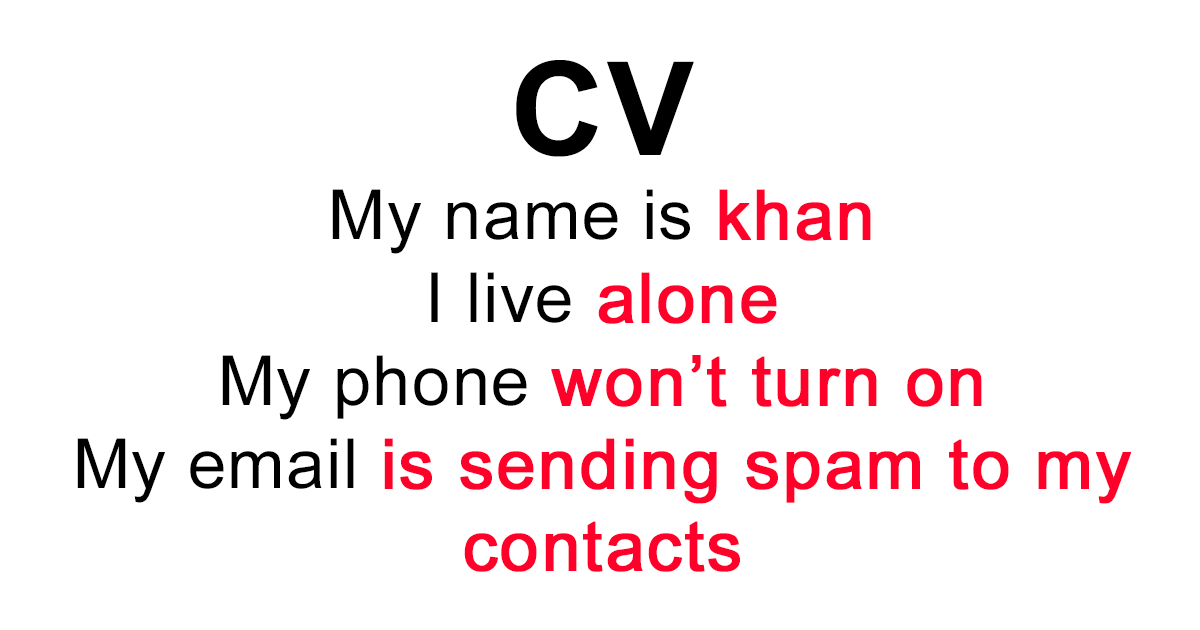
In July 2017, Gillies announced that he needed to update his curriculum vitae, or CV. Rather than struggling with professional summaries and action verbs, he typed the beginnings of standard resume statements into Google and accepted the autocomplete suggestions.
His optimistic conclusion was that the resulting document would soon earn him “every job.” It was a bold prediction for a resume that claimed, among other things, that its owner was “born to love you,” identified as a wolf, and had a phone that “won’t turn on.”
The joke spread because it was easy to understand immediately. Almost everyone has seen Google finish a sentence in a strange, unsettling, or unexpectedly personal way. Gillies simply applied that familiar internet experience to one of the most formal documents in professional life.
How the Autocomplete Resume Worked
Google Autocomplete is designed to help users complete searches faster. As someone begins typing, automated systems display possible query completions based partly on common and trending searches that match the entered text. Predictions can also vary according to factors such as language, location, current events, and personalization settings.
Gillies turned this practical feature into a chaotic writing partner. He started familiar resume sentences and allowed Google to decide how they ended.
A Professional Profile Written by the Internet
A normal candidate might begin with “I am an experienced writer.” Gillies’ version wandered into statements about being a wolf. Instead of carefully presenting his employment goals, he let popular searches construct a personality that sounded like several action movies, song lyrics, conspiracy forums, and malfunctioning electronics had been placed in a blender.
The final document reportedly included declarations about being “trained in gorilla warfare” and being able to prove something mathematically. That is not a recognized professional certification, although it would certainly make the office performance review more exciting.
Why the Results Became So Funny
Autocomplete predictions are not a psychological assessment of the person typing. They are generated predictions related to search activity. Yet when those predictions are inserted into a first-person resume, they suddenly sound like sincere autobiographical claims.
That collision creates the humor. A resume is supposed to be controlled, accurate, polished, and strategic. Autocomplete is unpredictable, collective, and occasionally bizarre. Gillies placed an unruly public algorithm inside a document built around personal control, then watched the two concepts wrestle.
Why This Creative Resume Was Actually Brilliant
No sensible career coach would recommend sending Gillies’ exact document through a standard corporate application portal. An applicant tracking system searching for project management, campaign analytics, or Python experience is unlikely to be impressed by advanced wolf identification.
Nevertheless, as a public demonstration of Gillies’ professional abilities, the resume was remarkably effective.
It Showed His Skills Instead of Listing Them
Anyone can type “creative thinker” into a skills section. Gillies created an original concept from a tool millions of people use every day. That concept demonstrated observational humor, copywriting, cultural awareness, digital literacy, visual presentation, and social media instincts.
Those are valuable abilities for writers, comedians, content strategists, social media managers, creative directors, and advertising professionals. The project functioned as a miniature portfolio piece disguised as a joke.
It Had an Instantly Recognizable Hook
Strong online content usually needs a simple central idea. “A man let Google write his resume” can be understood in seconds. Readers do not need specialist knowledge or a 14-minute introductory video featuring dramatic background music.
The recognizable format also encourages curiosity. People immediately want to know what Google suggested and how absurd the final resume became. That curiosity creates clicks, comments, reposts, and coverage.
It Was Designed for Sharing
The project was compact, visual, and filled with quotable lines. Each strange autocomplete result could become a screenshot, caption, or reaction. In modern content marketing terms, the idea had a high “shareability” factor because its funniest parts remained understandable even when separated from the original post.
Gillies did not merely write a funny resume. He packaged the joke in a format that online audiences and publishers could redistribute easily. That is a practical lesson in digital communication: great ideas travel farther when the audience can explain them without assembling a flowchart.
What Employers Could Learn From the Viral Resume
Hiring teams often ask candidates to demonstrate creativity, initiative, adaptability, communication, and problem-solving. Unfortunately, some recruitment processes then require those qualities to be expressed through rigid forms containing 47 mandatory fields and a password that must include a hieroglyph.
Gillies’ experiment illustrates why portfolios, work samples, social posts, side projects, and unconventional applications can reveal abilities that a conventional resume may hide.
Creative Work Is Evidence
A candidate who develops a clever campaign, produces a useful tool, writes a memorable article, or redesigns an ineffective process is providing evidence. The work allows an employer to evaluate judgment, execution, and communication rather than relying entirely on self-description.
Skills-based hiring similarly encourages employers to examine what candidates can actually do. Creativity should never replace competence, but a well-executed project can make competence more visible.
Personality Can Be Professionally Relevant
Personality is not necessary in equal quantities for every application. A laboratory safety specialist probably should not turn a resume into an interactive treasure hunt. For roles involving writing, entertainment, design, branding, or audience engagement, however, voice and originality may be directly related to job performance.
Gillies’ resume communicated his comedic voice more effectively than a sentence describing him as “a humorous content professional with excellent ideation capabilities.” That sentence sounds as if it was developed during a meeting where every chair was beige.
Would a Google Autocomplete Resume Get Past an ATS?
Probably not, and that distinction matters.
Many employers use applicant tracking systems to collect, organize, parse, or search application materials. ATS-friendly resumes generally rely on conventional headings, readable layouts, relevant keywords, recognizable job titles, and straightforward descriptions of experience.
Unusual graphics, text boxes, decorative columns, vague headings, and unconventional wording may make information harder for some systems to interpret. Career resources therefore recommend connecting job-description keywords to genuine experience, using simple formatting, and tailoring each resume to the target position.
A Google Autocomplete resume is better understood as a publicity piece or portfolio project than as a replacement for a practical application document. A creative candidate can maintain both:
- A clean, targeted resume for application systems and recruiters.
- A creative project, website, video, or campaign that demonstrates personality and original thinking.
Think of the standard resume as the key that opens the door. The creative project is the reason someone remembers who walked through it.
How to Make a Creative Resume Without Sabotaging Your Job Search
Gillies’ experiment succeeded because it matched his profession and public identity. Copying the surface-level joke without understanding its purpose would be less impressive. By now, “I let an algorithm write my application” is a recognizable format rather than a completely new idea.
Job seekers can still borrow the underlying principles.
Start With the Employer’s Problem
A creative application should demonstrate something the employer needs. A copywriter might rewrite a weak product page. A user-experience designer could audit a confusing checkout process. A data analyst might build a clear dashboard from public information. A social media candidate could propose a short campaign with sample posts and measurable objectives.
The goal is not to be strange for recreational purposes. The goal is to make your value obvious.
Keep the Real Resume Accurate
Humor belongs in the concept, not in factual claims about employment, education, certifications, or results. Your standard resume should still present relevant experience honestly, use clear headings, and highlight accomplishments.
Strong accomplishment statements explain the action taken, the project or challenge involved, and the result. Whenever appropriate, numbers can clarify scale: revenue increased, processing time reduced, subscribers gained, errors eliminated, or customers served.
Tailor Creativity to the Industry
A bold concept may work beautifully in advertising and poorly in a conservative legal, medical, government, or financial setting. Even within creative industries, the execution must be polished. A playful idea with broken links, spelling mistakes, or a 300-megabyte attachment demonstrates memorable enthusiasm for the wrong reasons.
Make It Easy to Understand
The strongest creative applications usually contain one clear idea. Avoid making recruiters decode multiple layers of symbolism before discovering your name. Hiring managers have jobs to do, and one of those jobs is not escaping your resume-themed puzzle room.
Career guidance from government agencies and universities consistently emphasizes relevance, clarity, tailoring, and evidence of accomplishments. Originality works best when it strengthens those fundamentals instead of replacing them.
What the Resume Reveals About Google Autocomplete
The joke also exposes something interesting about online language. Autocomplete predictions reflect patterns in what people search for, subject to Google’s systems, policies, and filters. When several predictions are placed next to one another, they can resemble a strange group portrait of public curiosity.
The portrait is not always flattering. Search predictions may be silly, anxious, sensational, repetitive, or inappropriate. Google applies systems intended to prevent certain harmful or policy-violating predictions, but automated tools are not perfect.
Gillies used that unpredictability harmlessly, transforming disconnected search behavior into absurd autobiography. The finished resume sounded human enough to be readable but far too chaotic to be credible. In other words, it had the energy of a networking event held inside a malfunctioning search bar.
The Biggest Lesson: Create Something People Remember
Most resumes are designed to minimize risk. They use familiar sections, safe language, and carefully selected verbs. That approach is sensible for formal applications, but it can also make qualified candidates blend together.
Gillies took the opposite approach. He produced something so distinct that articles were written about it, readers shared it internationally, and the project became part of his professional reputation. His author biographies have even referred to the Google-autocompleted CV among his notable viral creations.
That does not mean everyone should surrender a career history to a search engine. It means memorable work can become its own credential. A candidate who wants to be hired for creativity should occasionally create. A person seeking a writing role should publish writing. Someone pursuing social media work should demonstrate an understanding of social behavior.
The best resume says, “Here are my qualifications.” The best portfolio says, “Here is what happens when I use them.” Gillies’ autocomplete experiment managed to say both while also claiming several qualifications no responsible background-check company could possibly verify.
Practical Experiences Inspired by the Google Autocomplete Resume
Trying an autocomplete-based resume exercise can be surprisingly useful, provided the result is treated as a creative workshop rather than an actual record of employment. The practical value comes from watching a familiar professional structure become unpredictable.
Begin with ten ordinary resume prompts: “I am,” “I have experience in,” “My greatest strength is,” “I am responsible for,” “My coworkers say,” “I want to become,” “I studied,” “I can,” “My goal is,” and “You should hire me because.” Enter each unfinished phrase into a search engine and record one suggestion without changing it.
The first experience is usually loss of control. Resume writing normally involves intense editing. Candidates remove awkward details, improve verbs, and compress complicated careers into neat bullet points. Autocomplete refuses to respect that process. It may transform a serious professional introduction into a medical question, song lyric, celebrity search, or sentence that sounds like it was whispered by a haunted printer.
That unpredictability teaches an important creative lesson: constraints can generate ideas. When writers are free to produce anything, they may freeze. When they must use a specific tool, format, or rule, they have something concrete to react against. Gillies’ constraint was simpleaccept Google’s contributionand that rule gave the project structure.
The second experience is learning how much presentation matters. A random list of search predictions is mildly amusing. The same predictions organized under headings such as personal profile, education, employment history, skills, and references become a coherent joke. Context transforms the material.
This principle applies beyond comedy. A designer can improve ordinary information through layout. A marketer can make familiar data interesting by finding the right angle. A writer can turn common observations into a story by arranging them carefully. Creative value often comes not from discovering material nobody has seen, but from presenting familiar material in a form nobody expected.
The third experience is recognizing the difference between attention and persuasion. A bizarre resume may attract thousands of views, yet views do not automatically prove that someone can perform a specific job. After the funny version is complete, create a second document translating the project into real competencies.
For example, the autocomplete experiment may demonstrate concept development, trend awareness, copy editing, visual communication, audience psychology, content packaging, and organic distribution. Those skills can then be supported with genuine evidence: engagement figures, publication coverage, portfolio links, campaign results, or examples of related work.
The fourth experience is discovering whether the concept matches your professional identity. A comedian benefits when a resume makes people laugh. A brand strategist benefits when the project becomes widely discussed. A software developer might gain more from building a browser extension that analyzes autocomplete patterns. A cybersecurity candidate should probably not demonstrate initiative by breaking into the employer’s network and leaving the resume on the printer.
Finally, the exercise encourages candidates to separate their “application document” from their “attention document.” The application document is accurate, tailored, readable, and optimized for the employer’s process. The attention document is the memorable project that introduces personality and proves creative capability.
Using both creates a balanced strategy. The conventional resume reassures recruiters that the candidate understands professional expectations. The creative companion shows that the candidate can produce ideas beyond those expectations.
Aaron Gillies’ experiment worked because the joke was not random decoration pasted onto a weak professional identity. It was consistent with the work he already did as a writer, comedian, and internet creator. The format was funny, the execution was clear, and the result demonstrated the precise abilities for which he wanted to be known.
That is the experience worth copyingnot the wolf claim, the broken phone, or the questionable warfare training. The real lesson is to choose a simple concept, execute it confidently, connect it to genuine skills, and make it easy for other people to share. Do that well, and your creative resume may not promise every job. It may, however, start the right conversation.
Conclusion
Aaron Gillies’ Google Autocomplete resume was hilariously unsuitable for a conventional hiring portal and perfectly suited to his creative career. By allowing search predictions to complete professional statements, he turned resume writing into a viral comedy format and demonstrated his ability to identify a relatable idea, develop it, package it, and attract an audience.
Job seekers should not confuse novelty with effectiveness. A strong standard resume still needs relevant keywords, clear formatting, truthful experience, and measurable accomplishments. However, candidates in creative fields can benefit from building a companion project that proves their originality instead of merely claiming it.
Gillies may not actually be qualified in mathematically provable gorilla warfare. He did prove that one clever idea can communicate more about a creative professional than an entire page of corporate adjectives.