
Human beings built pyramids, crossed oceans, and mapped the stars, yet one of civilization’s most important achievements is far less glamorous: finding a safe place to go to the bathroom.
The history of toilets is also the history of cities, engineering, public health, privacy, class, and our long campaign against terrible smells. From pits and Roman latrines to castle garderobes, Victorian water closets, and smart toilets, every era has faced the same urgent question: where does the waste go?
Before Toilets: From Open Ground to Organized Pits
For much of early human history, people relieved themselves away from camps, food, and water. Small mobile communities could leave waste behind. Permanent settlements could not. Once hundreds or thousands of people lived together, an informal dumping place could contaminate wells, attract pests, and turn a neighborhood into a place nobody wished to stand downwind from.
Early pit latrines were a major improvement. A hole concentrated waste, reduced surface exposure, and could be covered when full. It was not luxurious, but it was organizedand sanitation begins with organization.
Mesopotamia, Minoan Crete, and the Indus Valley
Some Mesopotamians used simple toilets as early as the fourth millennium B.C.E. Wealthier buildings could include seats positioned above drains or cesspits. Minoan palaces later used water to rinse waste into drainage systems.
The Indus Valley cities of Harappa and Mohenjo-daro developed even more impressive networks. Homes had washing areas, toilets, and brick-lined drains linked to street channels. Their builders understood a truth that remains valid today: a toilet is only as useful as the system carrying waste away.
Private toilets were also status symbols. They required space, construction, water, and labor. Most people still depended on communal facilities, outdoor areas, or simple pits.
Ancient Greece and Rome: The Social Restroom
Romans built public latrines called foricae, often using long stone or marble benches with evenly spaced openings. Water flowed beneath the seats to carry waste away, while another channel sometimes ran in front of users.
Privacy was minimal. There were generally no partitions, so people sat side by side, talked business, traded gossip, or stared ahead while reconsidering their life choices. Clothing such as the toga offered limited cover, but the experience was far more communal than a modern American restroom.
Impressive Engineering, Questionable Hygiene
Roman toilets were advanced without being especially sanitary. Public latrines could be dirty, poorly ventilated, and connected to sewers inhabited by rats, insects, and other unwelcome visitors. Research suggests that Roman sanitation did not eliminate intestinal parasites and may sometimes have helped spread them.
Instead of toilet paper, some Romans used a sponge on a stick, often called a tersorium. It could be rinsed and, in some settings, shared. This is a fine example of how “technically reusable” and “emotionally acceptable” are not the same thing.
Even with those flaws, Roman drains, aqueducts, and public facilities showed that sanitation was civic infrastructure, not merely a household concern.
Medieval Toilets: Garderobes and Chamber Pots
After the western Roman Empire fragmented, sanitation varied widely across Europe. Towns relied on cesspits, open drains, privies, and chamber pots. Some monasteries maintained sophisticated water channels, but the average bathroom was designed for necessity rather than serenity.
The Castle Garderobe
A castle toilet was often called a garderobe or privy. It occupied a small chamber in an exterior wall, with a seat above a vertical shaft. Waste fell into a cesspit, moat, courtyard, river, or the open air below. Gravity did the flushing; everyone at ground level handled the consequences.
Some castles stacked garderobes on several floors. Monasteries often did better, building communal latrine blocks called reredorters over flowing water channels. These systems served many residents and demonstrated careful planning centuries before germ theory.
Life With the Chamber Pot
At night, chamber pots were common. In the morning, their contents went to cesspits, streets, waterways, or collectors who removed “night soil.” Municipal rules sometimes prohibited careless dumping, but rules were only useful when residents obeyed them.
Workers who emptied cesspits performed a dangerous, unpleasant, and essential service. Toilet history repeatedly shows that sanitation depends on labor people prefer not to see.
The Flush Toilet ArrivesThen Waits for Plumbing
In 1596, English courtier Sir John Harington described a flushing water closet with a bowl, valve, and elevated cistern. A working version was installed for Queen Elizabeth I. The design was clever but water-hungry, and it appeared in a world without widespread indoor pipes or municipal sewers. It was a brilliant appliance waiting for an infrastructure network.
In 1775, Scottish inventor Alexander Cumming patented a toilet with an S-shaped trap. Water held in the curve created a seal that blocked foul sewer gases from entering the room. Joseph Bramah later improved the mechanism and made water closets more dependable.
Thomas Crapper Did Not Invent the Toilet
Thomas Crapper was a successful nineteenth-century plumber and sanitary engineer who manufactured and promoted reliable bathroom fixtures. He helped popularize flush toilets and improved plumbing components, but he did not invent the toilet. History simply gave the industry a name too memorable to ignore.
Widespread adoption required mass-produced pipes, dependable water, municipal sewers, and building standards. The Industrial Revolution created appalling urban sanitation problems, but it also supplied the materials and engineering needed to address them.
Cholera, Sewers, and the Public Health Revolution
Early flush toilets sometimes made cities less healthy. They removed waste from homes but often discharged it into rivers used for drinking water. A sparkling bathroom could therefore contribute to a dangerously polluted city.
Nineteenth-century cholera outbreaks forced officials to connect sewage with disease. Physician John Snow’s investigation of the 1854 Broad Street outbreak helped show that contaminated water spread cholera. London’s Great Stink of 1858 added political urgency, and engineer Joseph Bazalgette’s sewer network became a model of municipal sanitation.
The real breakthrough was not porcelain alone. It was the complete system: clean water, sealed traps, waste pipes, sewers, treatment, regulation, and maintenance. The toilet is only the visible tip of an enormous underground machine.
Toilets in the United States: Outhouse to Indoor Bathroom
Indoor plumbing spread unevenly in the United States. Wealthy urban homes and luxury hotels adopted bathrooms first, while tenement residents, working families, and rural communities continued using shared privies or outhouses. During the late nineteenth century, expanding water and sewer networks slowly made indoor bathrooms more practical.
The familiar American bathroomsink, tub or shower, and toilet in one private roombecame increasingly common during the twentieth century. Plumbing codes improved safety, ceramic production reduced costs, and suburban construction standardized the layout.
Before the Toilet Paper Roll
Joseph Gayetty marketed packaged toilet paper in the United States in 1857. Before commercial paper became common, Americans used corncobs, newspapers, catalogs, leaves, and cloth. Perforated rolls appeared later in the century, and manufacturers eventually promoted “splinter-free” paperan assurance modern shoppers are fortunate not to require.
Other cultures continued to favor water-based cleaning with bidets, wash vessels, or handheld sprayers. Toilet habits have never followed one universal design.
Public Restrooms, Privacy, and Equal Access
A safe restroom affects how long someone can work, travel, shop, learn, or participate in public life. In the United States, segregated facilities reinforced Jim Crow. Women entering factories and offices often had to fight for suitable restrooms, while people with disabilities encountered narrow doors and unusable stalls until accessibility standards improved.
Modern debates confirm that toilets are never “just toilets.” They involve dignity, health, caregiving, identity, safety, and who is considered welcome. A lock, grab bar, or changing table seems minor only to someone who does not need it.
Toilets in Space: When Gravity Quits
On Earth, gravity moves waste downward with dependable professionalism. In space, it refuses the assignment. Apollo astronauts used collection devices and sealed bags; solid waste was treated with germicide and stored inside the spacecraft.
Modern spacecraft toilets use airflow and suction. Urine can be collected and processed, while solid waste is contained for storage or disposal. Space sanitation reveals the engineering principle behind every toilet: waste will not politely disappear without energy, direction, and containment.
The Modern Toilet: Less Water, More Technology
Older toilets could use five or six gallons per flush. The U.S. federal standard for many residential toilets is 1.6 gallons, while EPA WaterSense-labeled models use 1.28 gallons or less and must meet performance requirements. That matters because toilets account for nearly 30 percent of indoor household water use.
Current options include dual-flush, pressure-assisted, vacuum, composting, and bidet toilets. Smart models may offer heated seats, automatic lids, deodorizing filters, touchless controls, and health-monitoring sensors. Humanity has traveled from a pit outside the settlement to a machine that warms the seat before dawn.
The Next Sanitation Revolution
Future systems will focus on water conservation, off-grid treatment, pathogen control, and recovering nutrients or energy from waste. A successful design must be affordable, durable, easy to clean, culturally acceptable, and supported by a plan for handling waste after it leaves the bowl.
History makes one lesson clear: a beautiful toilet connected to a broken system is merely expensive furniture with plumbing problems.
What Toilets Throughout History Teach Us
The story is not a simple march from a dirty past to a spotless present. Roman latrines moved waste but could spread parasites. Early flush toilets improved household comfort while polluting rivers. Low-flow toilets saved water but required engineers to improve performance.
Progress came when invention was combined with infrastructure, maintenance, public education, and fair access. The porcelain bowl deserves credit, but so do drain builders, sewer engineers, sanitation workers, plumbers, health researchers, and everyone who has replaced a leaking flapper before it wasted another thousand gallons.
Toilets are an awkward subject, but they measure how communities protect water, control disease, design cities, and respect privacy. The bathroom throne may not include a crown, yet it rests on thousands of years of engineering.
Experiencing Toilet History in the Real World
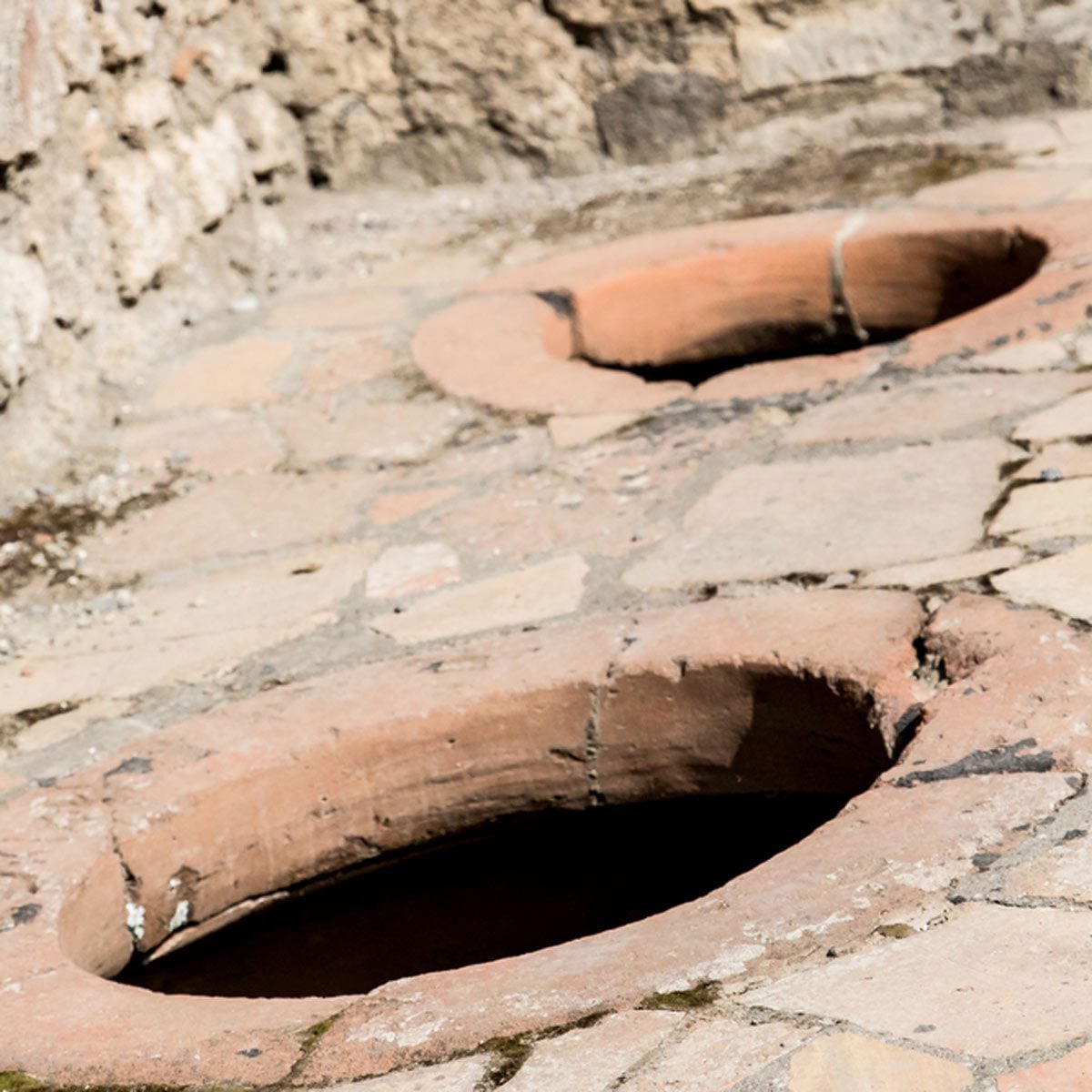
The easiest way to appreciate toilets throughout history is to stop viewing them as isolated objects. At an archaeological site, a stone bench with holes may first look comic. Then the drainage channel, water source, floor slope, and street plan come into focus. The ruin becomes evidence of an urban service. You can imagine running water, crowded seating, limited privacy, unpleasant smells, and the workers responsible for keeping the channel open.
A medieval castle produces a different reaction. Visitors admire towers and banquet halls, but a garderobe reveals daily life. The seat may occupy a cold stone alcove with a shaft dropping toward a moat. Stand there in winter and the romance of castle living loses some sparkle. The design is clevergravity and exterior walls perform the workbut comfort still depends on rank. A lord might have a private privy; servants and soldiers made do with shared or less convenient arrangements.
Historic American homes tell the story of transition. An early bedroom may contain a washstand and chamber pot, while a later bathroom is squeezed beneath stairs or into a former closet. That awkward placement is historical evidence. The house was not designed around plumbing; pipes had to negotiate with the house. Walls were opened, closets disappeared, and families gradually accepted the once-radical idea that a toilet belonged indoors.
An ordinary modern restroom also becomes impressive when you notice the hidden system supporting it: pressurized clean water, a trap seal, ventilation, sewer lines, treatment plants, electricity, cleaning supplies, accessibility features, and maintenance staff. The flush feels effortless only because the complicated parts remain out of sight.
Travel reveals that no single toilet design fits every culture or location. A visitor may encounter a squat toilet, bidet spray, composting toilet, or vacuum toilet on a train. Instead of asking why it is unfamiliar, ask what problem it solves. Squat toilets reduce contact with shared surfaces. Bidets use water for cleaning. Vacuum systems conserve water and work where gravity drainage is difficult. Composting toilets serve remote sites without sewer connections.
Camping provides an even more immediate lesson. Remove indoor plumbing for one weekend and sanitation becomes a deliberate task. Where should waste go? How far is the site from water? What must be packed out? How will hands be cleaned? These are versions of the same questions faced by every permanent settlement in history.
Finally, compare an old high-volume toilet with a modern efficient model. The older fixture releases a dramatic surge; a well-designed new toilet does the job with much less water. That household comparison captures the latest chapter of toilet history: engineers are no longer focused only on removing waste, but on doing it reliably with fewer resources.
Once you understand this history, bathrooms stop being boring. A trap becomes protection from sewer gas. A grab bar becomes independence. A public restroom becomes civic infrastructure. A plumber becomes the person standing between normal life and immediate chaos. History has produced grander monuments, but few inventions are more personally appreciated the moment they fail.