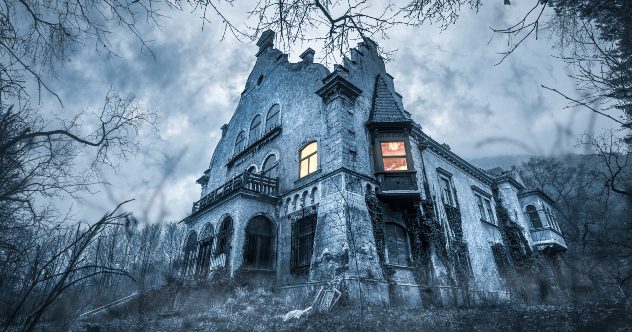

Most people open Zillow to compare mortgage payments, investigate neighborhoods, or quietly judge a stranger’s kitchen backsplash. Then the algorithm serves up a house shaped like a shoe, a suburban basement containing a fake dungeon, or a Cold War bunker with an artificial sky. At that point, the evening’s productivity is officially over.
The strangest homes on Zillow reveal what happens when architecture escapes the sensible boundaries of beige paint and open-concept kitchens. Some properties are playful works of art. Others look like movie sets abandoned immediately after the villain won. A few are genuinely unsettling because their listing descriptions raise more questions than the photographs answer.
This ranking combines viral Zillow listings, properties highlighted by Zillow Gone Wild, and unusual American homes documented by major real estate and design publications. Listing prices and availability may have changed, but the weirdness remains structurally sound.
Why Are Weird Zillow Homes So Addictive?
Zillow browsing is partly practical and partly recreational. A conventional listing lets shoppers imagine a different address. An outrageous listing lets them imagine an entirely different life. Could you live underground? Would breakfast taste better inside a giant shoe? How many fake skeletons are too many fake skeletons?
Unusual homes also challenge the predictable formulas of modern real estate. Instead of white cabinets, gray flooring, and a carefully staged bowl of lemons, these properties offer retractable staircases, blast doors, indoor boulders, pirate caves, miniature bridges, and rooms that appear to have been decorated during a thunderstorm.
That combination of curiosity, fantasy, humor, and mild alarm has turned strange Zillow listings into a form of online entertainment. The following homes are among the most memorable examples.
10. The Spaceship House in Signal Mountain, Tennessee
A Flying Saucer Parked Beside the Highway
Located at 1408 Palisades Road near Chattanooga, the Spaceship House looks as though extraterrestrials stopped for directions and accidentally left their vehicle behind. Builder Curtis W. King designed the circular modernist residence in the early 1970s as a futuristic prototype and family home.
The approximately 2,000-square-foot structure measures about 52 feet across and stands on angled supports. Its utilities run through the legs, while the rooms radiate around a central point. The original design reportedly included wall-to-wall shag carpeting, a central skylight, futuristic appliances, closed-circuit television, and an electrically retractable staircase.
The staircase eventually became fixed in place, which is probably sensible. Nobody wants to return from grocery shopping and discover that the house has withdrawn its boarding ramp.
With three bedrooms and three bathrooms, the property is more livable than its exterior suggests. Still, its small windows, curved walls, and elevated shell create the unmistakable feeling that takeoff could occur shortly after dinner.
9. The Haines Shoe House in York, Pennsylvania
The Home That Takes “Walk-In Closet” Literally
Built in 1949, the Haines Shoe House is a giant boot-shaped building commissioned by shoe salesman Mahlon Haines. It was originally conceived as an advertising stunt for the Haines Shoe Company, proving that long before social media, business owners already understood the value of making people say, “You have to see this.”
The three-bedroom structure includes shoe-themed stained glass, curved interior spaces, and a kitchen nook tucked into the heel. A fire escape leads to the roof, while murals and original decorative details continue the footwear theme inside.
The house once hosted honeymooners and promotional guests. More recently, it has operated as an overnight rental following extensive renovations. The building is whimsical rather than terrifying during daylight hours, but imagine waking at 3 a.m. inside a giant shoe while rain taps against the toe. Suddenly, every nursery rhyme you have forgotten becomes relevant.
Few strange homes commit so completely to a single visual joke. The Haines Shoe House does not merely contain shoe decorations. It is the shoe. Subtlety was never invited to the design meeting.
8. The Snow White Cottage in Los Angeles, California
A Fairy-Tale Home With Slightly Unsettling Proportions
Hidden in a Los Angeles canyon, the Snow White Cottage resembles a storybook illustration that quietly became real. The two-bedroom, two-bathroom property covers just over 1,000 square feet and features French Art Nouveau influences, uneven rooflines, tiny windows, miniature railings, bridges, and moat-like landscaping.
The scaled-down architectural elements give the home its charm, but they can also make the space feel strangely dreamlike. Doors, windows, and decorative details seem familiar while remaining just different enough to make taller visitors question whether they have entered a fairy tale or started shrinking.
The cottage has often been connected in popular coverage with the visual world of Disney’s Snow White and the Seven Dwarfs. Whether one views it as enchanted or eerie depends largely on lighting. In sunshine, it is adorable. Under foggy skies, it looks like the place where a traveler accepts soup from an unusually friendly witch.
The house reportedly sold for about $1.1 million after appearing on the market. That is a substantial price, although one assumes the woodland creatures provide free housekeeping.
7. The Whale House in Santa Barbara, California
Enter Through the Mouth and Swim Through the Body
Designed by Michael Carmichael and completed in 1978, the Whale House is less a conventional residence than a piece of inhabitable sculpture. Cedar shingles cover the curving exterior like an enormous textured skin, while the entrance leads visitors through what resembles the mouth of a whale.
Inside, straight lines are difficult to find. Organic walls, handcrafted surfaces, stained glass, lofted spaces, and unexpected openings create a flowing interior inspired by nature and marine life. A 75-foot saltwater pool travels between indoor and outdoor areas, enhancing the sense that the building is part house, part creature, and part luxurious aquatic maze.
The property has three bedrooms, multiple bathrooms, a guesthouse, a hand-carved sauna, a hot tub, and gardens surrounded by oak and sycamore trees. It is beautiful, imaginative, and undeniably strange.
The unsettling part is not that the house resembles a whale. It is that the house feels as though it might know that it resembles a whale. Entering through its mouth is delightful architecture, provided you do not think too carefully about where the hallway is leading.
6. The “Florida Man” House in Pinellas Park, Florida
Twenty-Two Rooms and Absolutely No Fear of Commitment
From the street, this Pinellas Park property initially appears relatively ordinary. That illusion lasts until someone enters the house and discovers a pirate cave, a saloon, a space-age kitchen, a hot-rod-themed room, and taxidermy big cats positioned overhead.
The home began as an approximately 800-square-foot residence before owner Bill Spencer gradually expanded it to roughly 4,100 square feet. Inspired partly by Disney attractions and a storm-damaged tree, Spencer developed a maze of themed environments over several decades.
There are reportedly 22 rooms, and the design changes dramatically from one space to the next. One moment, visitors are exploring a pirate hideout. The next, they are beneath a mounted predator wondering whether the listing agent has an emergency exit strategy.
The property reached the market in late 2025 for approximately $500,000 and quickly attracted a buyer. Its originality makes it ideal for a vacation rental or immersive attraction. As a normal family home, however, it poses difficult questions. For example, where does one put a neutral guest room when every available wall is already participating in a theme?
This may be the purest expression of Florida real estate ever produced: creative, excessive, tropical, slightly dangerous-looking, and impossible to summarize without mentioning pirates.
5. The Underground House in Las Vegas, Nevada
Luxury Living 26 Feet Below the Surface
Beneath an unassuming property near the Las Vegas Strip sits a Cold War-era underground mansion designed to make nuclear fallout feel suspiciously like a 1970s resort vacation.
Businessman Jerry Henderson and architect Jay Swayze created the residence during the 1970s as an “Atomitat,” or luxurious self-contained underground environment. The subterranean estate covers approximately 14,620 square feet and sits about 26 feet below ground.
Instead of ordinary windows, painted murals create outdoor scenery. Artificial trees rise beside synthetic lawns, while a programmable lighting system simulates changes in daylight. The bunker includes bedrooms, bars, a theater, a dance floor, saunas, hot tubs, a swimming pool, and a putting green.
It is comfortable, colorful, and deeply uncanny. The fake sky suggests that everything is fine, while the blast-resistant construction quietly reminds residents why the house exists.
The property has returned to the market at different prices over the years, including a multimillion-dollar listing. It offers privacy, security, and freedom from bad weather. It also offers the opportunity to spend several consecutive days forgetting that the real sun exists, which feels less like an amenity and more like the beginning of a science-fiction plot.
4. The Missile Silo Home in York, Nebraska
A One-Bedroom Home Protected by Blast Doors
Some listings advertise storm-resistant windows. This Nebraska property can counter with multiple blast doors and a former intercontinental ballistic missile complex.
Located on roughly six acres, the York residence occupies part of a decommissioned Atlas-F missile site constructed during the Cold War. Its renovated living area includes one bedroom, one bathroom, a kitchen, and comfortable recreational spaces approximately 50 feet underground.
The residential portion covers about 1,256 square feet, making it a surprisingly cozy retreat once visitors pass through the industrial corridors and heavy security doors. Beyond the finished rooms lies the actual missile silo, an enormous vertical chamber that once supported military operations.
The result is a home with two personalities. One side says, “Relax and watch a movie.” The other says, “The federal government expected this structure to survive a direct attack.”
For buyers interested in privacy, history, preparedness, or dramatic entrances, the property checks several boxes. Natural light is not one of them. Still, no neighborhood association is likely to complain about an improperly stored trash can 50 feet underground.
3. The Hidden Dungeon House in Bristow, Virginia
A Normal Suburban Home With a Very Abnormal Basement
The Bristow house demonstrates one of the most effective formulas for creating a viral Zillow listing: begin with a perfectly ordinary exterior, then reveal something in the basement that causes viewers to reconsider the entire property.
Built in 2015, the four-bedroom home featured an attractive kitchen, granite countertops, a center island, family living areas, and familiar suburban finishes. The finished basement, however, contained a concealed space with dark brick walls, a blood-red floor, chains, a cage, and unsettling decorative figures.
Online viewers quickly compared the room to a dungeon, horror set, or portal to another dimension. The listing generated enormous attention because nothing visible from the street prepared shoppers for what waited downstairs.
The room may have been intended as an elaborate themed space rather than evidence of anything sinister. Nevertheless, hidden rooms affect buyers differently when they contain exercise equipment versus cages. One suggests a commitment to wellness. The other suggests that the seller should provide an extremely detailed explanation before accepting offers.
The property was marketed around the $700,000 range and became one of the most widely discussed listings of its week. It proves that finished basements add value, although perhaps not every finish belongs in the brochure.
2. The South Carolina “Nightmare House”
The Listing Description Was Scarier Than the Photographs
In 2017, a distressed property at 709 Michaelmas Avenue in Cayce, South Carolina, went viral after internet users noticed a deeply unsettling statement in its Zillow description.
The listing explained that the upstairs apartment could not be shown under any circumstances. It also stated that the occupant had never paid rent, no security deposit was being held, and yet a lease was apparently in place. The description reportedly concluded by acknowledging that the situation made no sense and discouraging further questions.
That wording transformed a rundown house into an instant online mystery. Photographs showed damaged interiors, a neglected kitchen, stained surfaces, an ominous-looking exterior door, and an oversized paper clip standing in the yard for reasons that remained unclear.
The home did not need confirmed paranormal activity. The listing itself performed all necessary haunting. A forbidden upstairs tenant is more effective than a dozen fake ghosts because the viewer’s imagination supplies the missing information.
Who was living there? Why could the space never be shown? How was the lease created? Why was a gigantic paper clip outside? The answers may have been mundane, but mystery thrives wherever real estate disclosure stops.
The Nightmare House remains a legendary example of how one paragraph can turn a modest fixer-upper into the opening scene of a horror movie.
1. The House of Horrors in Baird, Texas
A Working Haunted Attraction Listed as a Home
No property on this list embraces creepiness more enthusiastically than the former 13 Vultures Haunted Estate near Baird, Texas. Listed for approximately $125,000 in 2023, the three-bedroom property was not merely decorated to look haunted. It operated seasonally as a haunted attraction.
The roughly 2,168-square-foot house occupied nearly two acres and included skeletons, coffins, creepy dolls, masks, fake blood, a funeral viewing room, a surgery scene, and a rusted school bus. Photographs showed frightening props in bathrooms, kitchens, hallways, and bedrooms.
Most sellers remove family photographs before listing a home. This seller left a skeleton in the bathtub.
The listing stated that the property would be sold as is, while the attraction’s props and business equipment could be purchased separately. That created an unusual buying decision: acquire the building alone, or pay extra to ensure that the casket, abandoned bus, and nightmare dolls remain part of the package.
Unlike homes that become creepy through neglect or unexplained details, this one was deliberately designed to frighten people. Every room participated. Even the kitchen appeared to be leaking theatrical blood, which would make an ordinary inspection report difficult to interpret.
For an entrepreneur, the property offered an established entertainment concept. For a residential buyer, it offered affordable space with the minor inconvenience of explaining to every delivery driver why a coffin was visible through the window.
The Baird House of Horrors earns the top position because it combines a legitimate real estate listing, an operating haunted business, unsettling photographs, and a price low enough to make viewers briefly consider buying it. That final detail may be the creepiest part of all.
What the Strangest Zillow Listings Reveal About Home Design
These unusual houses are entertaining, but they also reveal important truths about architecture and real estate. A home can be structurally practical while remaining visually bizarre. The Spaceship House contains ordinary bedrooms beneath its futuristic shell. The missile silo provides recognizable domestic comforts behind industrial blast doors. The Whale House uses sculptural forms without abandoning luxury.
Strange design also affects marketability. A highly customized property attracts enormous attention, yet the number of serious buyers may be limited. Standard homes allow buyers to imagine adding their own identity. Themed houses ask buyers to inherit someone else’s extremely specific dream.
That does not make eccentric architecture unsuccessful. It simply changes the target audience. The right buyer for a pirate cave is not deciding between three similar ranch houses. That buyer has been waiting years for a pirate cave and is probably disappointed that more listings do not contain one.
The Experience of Browsing Creepy and Strange Homes on Zillow
Browsing strange Zillow homes usually begins innocently. You search for houses in a familiar city, adjust the maximum price, and promise yourself that this is serious market research. Fifteen minutes later, you are studying the ventilation system of an underground bunker in another state.
The first lesson is to examine every listing photo. A normal exterior does not guarantee a normal interior. The Bristow dungeon house concealed its viral feature below an otherwise conventional suburban floor plan. The Florida property hid dozens of themed spaces behind a familiar facade. Strange homes reward patient scrolling.
The second lesson is to read the full description. Photographs may create curiosity, but unusual wording can produce genuine suspense. The South Carolina Nightmare House became unforgettable because the listing prohibited access to an occupied apartment while admitting that the rental arrangement made little sense. No professionally staged photograph could compete with that sentence.
Another useful habit is checking the property history. Viral listings are frequently removed, relisted, reduced in price, converted into rentals, or purchased for commercial use. A home may appear to be a fresh discovery even though internet users have been debating its carpeting for a decade. Historical listing data can reveal whether attention led to a sale or merely attracted millions of curious visitors.
It is also worth separating personal taste from design quality. A whale-shaped house may not suit everyone, but its craftsmanship can still be extraordinary. Likewise, a missile silo can be historically significant even when its lack of windows would make many residents feel uncomfortable. “I would never live there” and “this should not exist” are very different judgments.
Potential buyers should look beyond viral photographs and investigate practical concerns. Curved walls may complicate furniture placement. Underground properties require specialized ventilation and waterproofing. Converted commercial or military structures may involve unusual zoning, insurance, maintenance, and financing requirements. Themed interiors can be expensive to remove, especially when the theme includes artificial caves rather than removable wallpaper.
There is also an emotional side to these listings. Many eccentric homes represent decades of personal creativity. Their owners did not choose designs from a builder’s catalog. They shaped spaces around hobbies, stories, collections, fears, or fantasies. Even when the final result looks bizarre, the commitment behind it can be admirable.
For casual Zillow surfers, the best experience comes from allowing curiosity to lead. Compare the ordinary rooms with the shocking ones. Look for clues about how the property evolved. Imagine daily tasks inside the space. Where would groceries go in the Shoe House? How would a repair technician reach the missile silo? Does the artificial sky in the Las Vegas bunker have a cloudy setting?
Finally, remember that online reactions do not always reflect livability. Wide-angle photography, empty rooms, dramatic lighting, and unfinished renovations can make properties appear stranger than they feel in person. Conversely, a harmless-looking image may conceal a layout that becomes deeply confusing during an actual tour.
The most enjoyable part of exploring weird Zillow listings is that they expand the definition of home. A residence can be a sculpture, a bunker, a boot, a fairy-tale cottage, or a haunted business opportunity. Most people will eventually return to practical searches for sensible kitchens and manageable mortgage payments. Still, after seeing a home with a pirate cave, the standard breakfast nook may never feel quite as exciting.
Conclusion
The creepiest and strangest homes on Zillow demonstrate that American real estate contains far more than predictable subdivisions and freshly renovated farmhouses. Across the country, buyers have encountered giant shoes, flying saucers, Cold War shelters, mysterious tenants, hidden dungeons, sculptural whales, and fully operational haunted attractions.
Some of these properties are masterpieces of imagination. Others are memorable because they create questions nobody expected to ask while house hunting. Together, they explain why Zillow surfing has become entertainment as much as research.
The next time a listing appears completely ordinary, keep scrolling. The basement may contain a dungeon, the backyard may contain a school bus full of monsters, and the upstairs apartment may be unavailable under circumstances nobody wishes to explain.