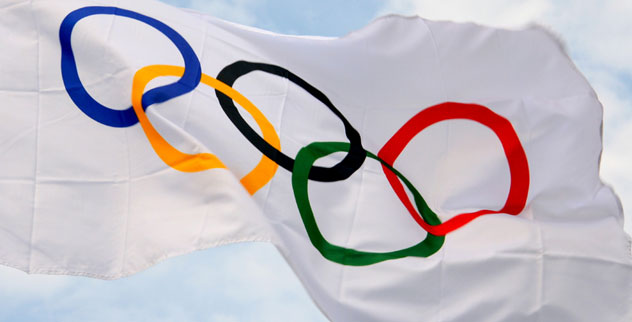

The Olympic Games are supposed to be about faster times, higher jumps, stronger bodies, and medal tables that turn otherwise calm people into spreadsheet detectives. But the real magic of the Olympics has never lived only in numbers. It lives in the trembling hands, the tearful hugs, the comeback races, the brave finishes, and the unforgettable seconds when the whole world seems to inhale at once.
That is why the most emotional Olympic moments stay with us long after the closing ceremony fireworks have faded. A gold medal can define an athlete’s career, but a moment of courage can define an era. Sometimes the athlete wins. Sometimes they lose. Sometimes they barely make it to the finish line. And somehow, those are the stories we remember best.
This list of the top 10 emotional Olympic moments celebrates the scenes that made fans cry, cheer, gasp, and pretend they had “dust in their eyes.” From historic victories to acts of sportsmanship, these Olympic moments prove that the Games are not just a competition. They are a giant, global reminder that humans are complicated, dramatic, resilient creatures who occasionally do spectacular things in very tight uniforms.
1. Derek Redmond Finishes the Race With His Father Barcelona 1992
Few Olympic stories capture heartbreak and love as powerfully as Derek Redmond’s 400-meter semifinal at the 1992 Barcelona Olympics. Redmond, a British sprinter with serious medal hopes, tore his hamstring during the race. In an instant, his Olympic dream collapsed. Most people would have stopped. Redmond did not.
He stood up and began limping toward the finish line. Then came the part that turned a painful sports injury into one of the most emotional Olympic moments ever recorded: his father, Jim Redmond, came down from the stands, moved past officials, and helped his son complete the lap.
Derek was officially disqualified because of the assistance, but the scoreboard was never the point. The image of father and son moving together toward the finish line became a symbol of unconditional support. It said something simple and huge: when life hurts, love may not remove the pain, but it can help carry you through it.
2. Kerri Strug Sticks the Vault Atlanta 1996
At the 1996 Atlanta Olympics, the U.S. women’s gymnastics team was chasing its first Olympic team gold. Kerri Strug injured her ankle on her first vault, but she returned for a second attempt. With the pressure of a nation sitting on her shouldersno big deal, just millions of people watchingshe sprinted down the runway and landed her vault on one good leg.
The landing was brief, controlled, and instantly iconic. Strug raised her arms, then dropped to her knees in pain. The moment helped seal team gold for the United States and made the “Magnificent Seven” one of the most beloved teams in American Olympic history.
Today, the story is discussed with more nuance because sports culture has changed. We now talk more openly about athlete safety, pressure, and the cost of “pushing through.” Even with that deeper perspective, Strug’s vault remains unforgettable because it represented courage under impossible pressure. It was dramatic, painful, triumphant, and very Olympic.
3. Muhammad Ali Lights the Olympic Cauldron Atlanta 1996
Opening ceremonies often try very hard to be emotional. There are lights, music, flags, dancers, and occasionally enough symbolism to make your brain ask for a snack break. But at Atlanta 1996, one moment needed no explanation: Muhammad Ali, visibly affected by Parkinson’s disease, appeared as the final torchbearer and lit the Olympic cauldron.
Ali had won Olympic boxing gold in 1960, then became one of the most famous athletes and cultural figures in the world. By 1996, his physical movements had changed, but his presence was still enormous. The stadium roared as he held the torch. Around the world, viewers understood they were witnessing more than a ceremony. They were seeing resilience, memory, dignity, and the return of a legend to the Olympic stage.
It remains one of the most inspirational Olympic opening ceremony moments because it connected athletic greatness with human vulnerability. Ali did not need to throw a punch that night. Standing there with the flame was powerful enough.
4. Dan Jansen Finally Wins Gold Lillehammer 1994
Dan Jansen’s Olympic journey was the kind of emotional roller coaster that makes even neutral fans choose a side. The American speed skater entered multiple Olympics as a favorite, but heartbreak followed him for years. At Calgary 1988, he learned on race day that his sister Jane had died after a battle with leukemia. He raced anyway and fell. Later Olympic chances also slipped away.
Then came Lillehammer 1994. In what would be his final Olympic race, Jansen won gold in the 1,000 meters and set a world record. After crossing the line, he took a victory lap holding his young daughter, named Jane in memory of his sister.
That is not a sports moment. That is a movie scene that somehow happened in real life. Jansen’s victory was emotional because it was not just about winning; it was about release. Years of grief, pressure, disappointment, and persistence poured into one lap around the ice.
5. The “Miracle on Ice” Lake Placid 1980
The 1980 U.S. men’s hockey team entered the Lake Placid Winter Olympics as a group of college players and amateurs facing the mighty Soviet Union, the dominant force in international hockey. On paper, the matchup looked wildly unfair. Fortunately, Olympic ice does not care about paper.
On February 22, 1980, Team USA defeated the Soviet team 4-3 in one of the greatest upsets in sports history. The victory did not immediately win goldthe Americans still had to beat Finlandbut it became the defining image of the Games and one of the most emotional Olympic moments in U.S. sports culture.
The emotion came from more than hockey. The game unfolded during a tense Cold War period, so the upset felt symbolic to many American fans. But even without the politics, it was pure sports drama: young underdogs, a legendary opponent, a roaring home crowd, and a final countdown that still gives goosebumps.
6. Cathy Freeman Wins Gold at Home Sydney 2000
Cathy Freeman carried one of the heaviest emotional loads of any Olympic athlete. At the Sydney 2000 Olympics, she was not only Australia’s biggest track star; she was also an Indigenous Australian athlete competing at home in front of a nation wrestling with history, identity, and reconciliation.
Freeman had already lit the Olympic flame during the opening ceremony. Ten days later, she stepped onto the track for the women’s 400-meter final wearing her now-famous full-body racing suit. The stadium was electric. The expectations were enormous. Somehow, Freeman ran through all of it and won gold.
Her victory lap, carrying both the Australian and Aboriginal flags, became one of the most meaningful images in Olympic history. It was not merely a race won by a great athlete. It was a national moment layered with pride, pressure, representation, and release.
7. Nadia Comăneci Scores the First Perfect 10 Montreal 1976
At the 1976 Montreal Olympics, 14-year-old Romanian gymnast Nadia Comăneci did something so extraordinary that the scoreboard was not ready for it. After her uneven bars routine, she became the first gymnast in Olympic history to receive a perfect 10.0. The scoreboard displayed “1.00” because it had not been programmed to show a 10.
That tiny scoreboard confusion became part of the legend. Comăneci went on to earn multiple perfect scores at the Games and changed gymnastics forever. Her routines were graceful, precise, and calm in a way that seemed almost unreal.
The emotional power of the moment comes from witnessing a new standard being born. Fans were not just watching someone win. They were watching the definition of excellence shift in real time. Also, any athlete who breaks the scoreboard without touching it deserves a permanent place in Olympic lore.
8. Billy Mills Shocks the World Tokyo 1964
Billy Mills’ victory in the 10,000 meters at the 1964 Tokyo Olympics remains one of the greatest upsets in Olympic track history. Mills, an Oglala Lakota runner from the United States, was not expected to win. He entered the final as an underdog against more celebrated distance runners.
Then came the final lap. Mills surged from behind, found another gear, and raced past the favorites to win gold. The finish was so surprising that it felt almost fictional, like the scriptwriter had consumed too much coffee and decided subtlety was overrated.
What makes Mills’ win especially emotional is the journey behind it. His story included hardship, discrimination, and personal loss. His Olympic victory became more than a medal; it became a moment of visibility and triumph for Native American representation in global sport.
9. Eric “The Eel” Moussambani Finishes Alone Sydney 2000
Eric Moussambani of Equatorial Guinea did not win a medal at Sydney 2000. He did not come close to a world record. In fact, his 100-meter freestyle swim became famous because it was so different from the polished performances fans expected at the Olympics.
Moussambani had learned to swim only months before the Games and had trained in limited facilities. In his heat, the other swimmers were disqualified for false starts, leaving him to swim alone. The race was slow, difficult, and visibly exhausting. But he finished.
The crowd cheered him as if he had won gold because, in a deeper sense, he had won something. He showed the courage to stand on the Olympic stage while clearly outmatched and still complete the task. His story is emotional because it reminds us that the Olympics are not only about being the best in the world. Sometimes they are about daring to begin.
10. Simone Biles Returns to Win Bronze Tokyo 2020
At the Tokyo Olympics, Simone Biles withdrew from several events after experiencing mental health challenges and the “twisties,” a dangerous disconnect gymnasts can feel between body and mind while airborne. The decision sparked global conversation about pressure, safety, and what courage looks like when the world expects perfection.
Then Biles returned for the balance beam final and won bronze. For an athlete used to gold medals, bronze might sound modest on paper. But this medal carried unusual emotional weight. It represented self-awareness, boundaries, recovery, and the bravery to compete on different terms.
Biles helped expand the definition of Olympic strength. Strength is not only sticking the hardest landing. Sometimes it is stepping back. Sometimes it is saying, “I am not okay.” Sometimes it is coming back when you are ready and doing enoughnot for the crowd, but for yourself.
Why Emotional Olympic Moments Matter So Much
The most emotional Olympic moments stay with us because they turn elite athletes back into human beings. That may sound odd, because athletes are obviously human, despite evidence that some sprinters may secretly be powered by lightning. But when we watch the Olympics, it is easy to see competitors as medal machines. Emotional moments break that illusion.
They show us fear, grief, joy, exhaustion, and hope. Derek Redmond needed help. Kerri Strug fought through pain. Dan Jansen carried years of heartbreak onto the ice. Cathy Freeman ran with a nation’s expectations behind her. Simone Biles reminded the world that mental health is part of athletic health.
These stories also make the Olympics accessible. Most of us will never run a 400-meter final, stick a vault, or skate a world-record lap. Many of us, however, know what it feels like to fall short, try again, carry pressure, support someone we love, or finish something difficult when quitting would be easier.
Experiences and Lessons Inspired by the Top 10 Emotional Olympic Moments
Watching the Olympics can feel surprisingly personal. You sit on a couch, perhaps with snacks arranged like a small domestic buffet, and suddenly you are emotionally invested in a sport you remembered existed only six minutes ago. That is the strange beauty of the Games. They make strangers’ dreams feel close.
One experience many fans share is the feeling of being pulled into a story before fully understanding the rules. You may not know every detail of gymnastics scoring, speed skating technique, or hockey strategy, but you understand a shaking breath before a routine. You understand a parent stepping in to help a child. You understand an athlete crying after years of disappointment finally turn into joy.
These moments can also change how people think about success. In everyday life, we often treat success like a clean result: win the prize, get the grade, land the job, finish first. The Olympics complicate that idea in the best way. Eric Moussambani became beloved without winning. Derek Redmond became unforgettable in a race he did not officially finish. Simone Biles’ bronze medal became one of her most meaningful achievements because of what it represented beyond placement.
For young athletes, these stories offer a healthier and richer view of competition. They show that effort matters, but so does well-being. They show that courage is not the same as pretending nothing hurts. They show that asking for help does not erase strength. A teammate, coach, parent, doctor, or friend can be part of the journey without making the achievement any less real.
For families, moments like Derek and Jim Redmond’s finish are especially powerful. Parents watching that race may see themselves not as people who can guarantee victory, but as people who can show up when things fall apart. That lesson is useful far beyond sports. Life rarely lets anyone script the perfect ending. What people remember is who stood beside them when the plan collapsed.
For fans, emotional Olympic moments create shared memories. People remember where they were when a favorite athlete won, when an underdog shocked the world, or when a ceremony suddenly became more moving than expected. These stories travel across generations because they are easy to retell: “You have to see this race.” “You have to watch this vault.” “You have to understand what this meant.”
The best Olympic experiences are not always loud. Sometimes they are quiet realizations. A viewer may watch Cathy Freeman and think about representation. They may watch Billy Mills and think about dignity. They may watch Dan Jansen and think about grief. They may watch Muhammad Ali and understand that greatness can age, change, and still glow.
That is why the top emotional Olympic moments are more than highlight clips. They are small lessons in resilience, pressure, humility, and hope. They remind us that winning is wonderful, but meaning lasts longer. Medals shine under arena lights; stories keep shining after everyone has gone home.
Conclusion
The top 10 emotional Olympic moments prove that the Olympic Games are at their best when they reveal the human heart behind elite performance. Records matter. Medals matter. But the moments we carry with us are usually the ones that feel bigger than sport.
Derek Redmond finishing with his father, Kerri Strug landing her vault, Muhammad Ali lighting the cauldron, Dan Jansen finally winning gold, and Simone Biles redefining strength all show different sides of Olympic courage. Some stories end with gold. Some end with bronze. Some end with no medal at all. Yet each one belongs in Olympic history because each one made the world feel something real.
And that may be the true power of the Olympics. Every four years, the Games remind us that greatness is not only measured in seconds, scores, or podium positions. Sometimes greatness is measured in perseverance, compassion, and the ability to keep moving when the whole world is watching.