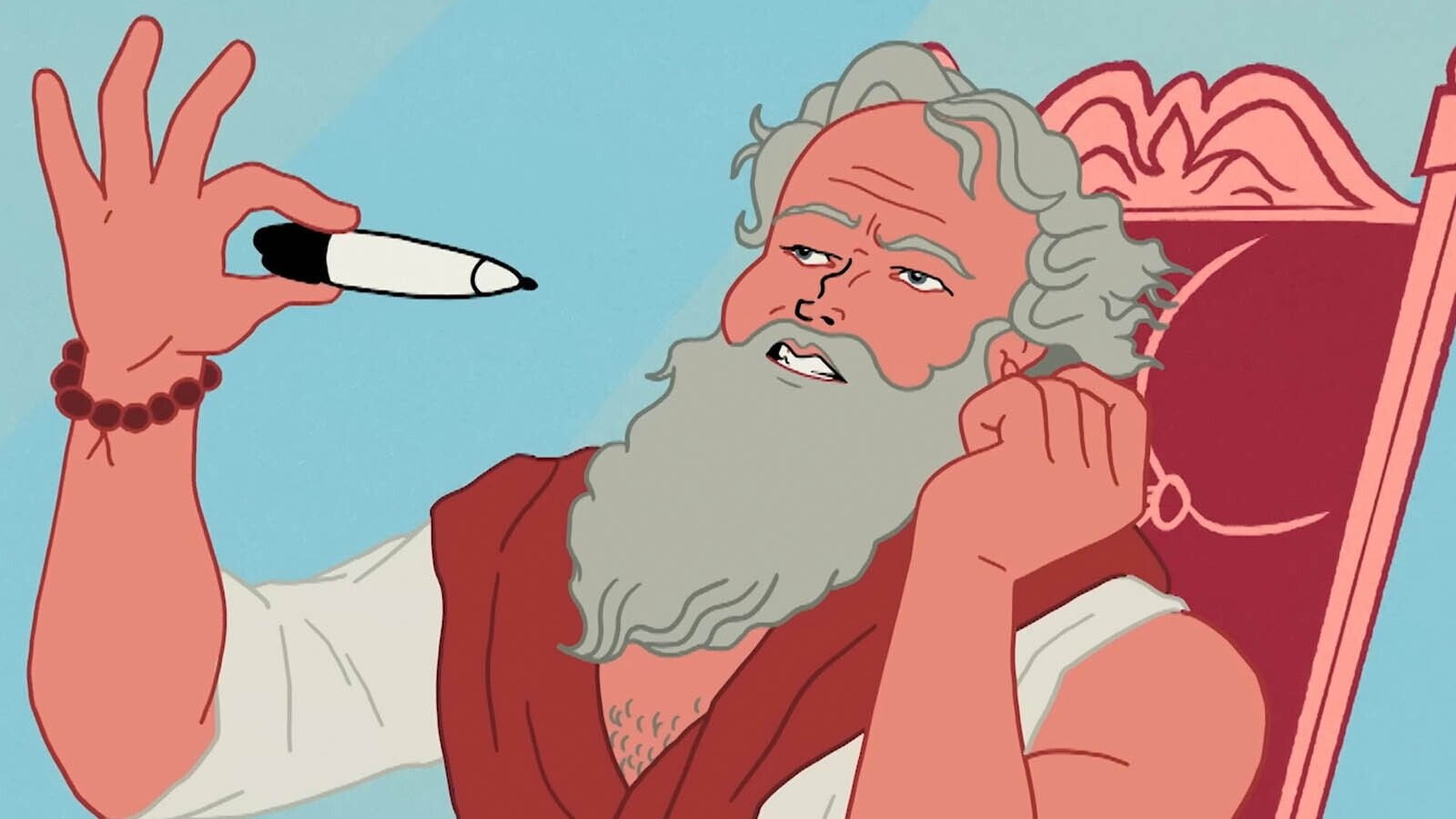

There are some things you do not realize you miss until they suddenly stroll back into the room wearing a fake mustache, carrying a giant pencil, and somehow making a volcano joke feel like breaking news. That is roughly what happened when Saturday Night Live brought animation back into the spotlight with “God – An SNL Animated Short,” a Season 50 cartoon starring Timothée Chalamet as a moody, wildly confident Creator workshopping existence with a group of increasingly nervous angels.
For longtime viewers, the phrase “An SNL Animated Short” did more than introduce a sketch. It opened a trapdoor in the memory palace. Suddenly, fans were thinking about Saturday TV Funhouse, Robert Smigel’s gloriously twisted cartoon laboratory that once gave SNL a special kind of bite. The live sketches were still the main meal, of course, but the cartoons were the unexpected side dish that made you say, “Wait, who approved this, and can they approve more?”
SNL cartoons have always worked because they bend the rules of sketch comedy. Live performers can change wigs, accents, and costumes. Animation can change gravity, biology, world history, and the laws of public decency before the first commercial break. That flexibility is exactly why the return of animated SNL shorts feels so refreshing. In a comedy world stuffed with reaction clips, political impressions, and fast-cut digital videos, cartoons bring back a strange, elastic kind of satire that SNL has not used often enough in recent years.
Why SNL Cartoons Hit Differently
Live sketch comedy is built on danger. Someone might break. A prop might fail. A host might read the cue card like it personally betrayed them. Animation has a different kind of danger: it can go anywhere, which means there is nowhere for a weak idea to hide. A cartoon sketch has to justify its own weirdness. It cannot simply rely on the thrill of seeing a movie star in a silly costume. It has to create a full comic universe in two or three minutes.
That is why “God – An SNL Animated Short” worked as more than a nostalgia button. The premise was simple: God and the angels are creating the world. But animation allowed the sketch to visualize bad ideas immediately. Animals, planets, frogs, volcanoes, and cosmic design flaws could appear instantly, as if a divine brainstorming session had been hijacked by a kid with markers and too much sugar. Timothée Chalamet’s voice performance added another layer: his God was not a solemn ruler of the universe, but an impulsive creative director who might reject kangaroos because they did not match the vibe.
That is a very SNL kind of joke. It takes a huge concept and shrinks it down to workplace nonsense. Creation becomes a writers’ room. Angels become exhausted staffers. God becomes the boss who loves his own worst ideas. Anyone who has ever sat in a meeting and watched the least practical suggestion win by force of confidence understands the sketch immediately.
The TV Funhouse Legacy: SNL’s Weird Little Cartoon Bunker
To understand why the comeback feels important, it helps to remember how strong SNL’s cartoon tradition once was. In the late 1990s and 2000s, Robert Smigel’s Saturday TV Funhouse became one of the show’s most distinctive recurring segments. Smigel, already known as a sharp SNL writer and later as the creator of Triumph the Insult Comic Dog, used animation as a satirical pressure cooker. His cartoons could parody politics, children’s programming, superhero tropes, celebrity culture, and the cheerful dishonesty of old TV formats.
The most famous creation from that world was probably The Ambiguously Gay Duo, featuring Ace and Gary, voiced by Stephen Colbert and Steve Carell. The short began on The Dana Carvey Show before finding a more permanent home at SNL. Its bright, old-fashioned superhero style made the joke sharper: the cartoon looked like wholesome Saturday morning entertainment while poking fun at the panic, projection, and cluelessness surrounding masculinity and sexuality.
Other TV Funhouse pieces had their own strange magic. The X-Presidents reimagined former U.S. presidents as action heroes. Fun with Real Audio took actual public figures’ voices and placed them into ridiculous animated settings. Holiday cartoons could start with the cozy feeling of Rankin/Bass specials and then veer into satire so fast viewers almost got comedy whiplash. This was not animation as decoration. It was animation as a trap: familiar, cheerful, colorful, and then suddenly ruthless.
How Digital Shorts Took Over the Pretaped Lane
SNL did not abandon pretaped comedy. It simply shifted formats. In the mid-2000s, the Lonely Island helped launch the era of the SNL Digital Short. “Lazy Sunday” became a viral milestone, and later shorts like “Dick in a Box,” “I’m on a Boat,” and “Natalie Raps” proved that SNL could dominate online conversation before social media became the oxygen tank of television comedy.
That digital-short era was essential. It modernized SNL. It taught the show how to make sketches that lived beyond Saturday night. It created songs people quoted at parties, in dorm rooms, and in offices where everyone should have been working. Later, Please Don’t Destroy carried the pretaped tradition into a new generation with anxious, fast-paced, absurd mini-films that feel native to the internet without losing the SNL stamp.
But the rise of live-action pretapes also pushed cartoons into the background. That was understandable. Digital shorts were cheaper, faster, and easier to build around hosts. They also gave SNL a direct pipeline to YouTube-era sharing. Still, something got lost when animation became rare. Cartoons offered a different comic rhythm. They did not just document absurdity; they could redraw reality until absurdity became the architecture.
Why “God” Felt Like a Small Revival
The Chalamet animated short landed during SNL’s 50th season, a time when the show was already busy looking backward and forward at the same time. A milestone season naturally invites nostalgia, but the best anniversary moments are not museum tours. They are reminders of tools the show can still use. “God” felt like one of those reminders.
The short, written by Streeter Seidell and Mikey Day and animated by Studio Showoff, did not simply imitate TV Funhouse. Its visual style felt newer, looser, and closer to modern adult animation, with expressive faces and surreal cosmic details. Yet the spirit was familiar: a cartoon that could not have worked the same way on the live stage. Try staging a giant space frog holding the sun in its mouth at 30 Rock on a Saturday night. Someone in wardrobe would quit. Someone in props would cry. Kenan Thompson would somehow save it, but still.
Animation gave the sketch permission to be grand and stupid in the best possible sense. It made creation itself look like a chaotic group project. It also let SNL escape the usual boxes of topical comedy. Not every sketch needs to chase the week’s headline. Sometimes the funniest thing on TV is a divine being inventing the natural world with the emotional stability of a sophomore art student defending a bad mural.
The Secret Power of Cartoon Satire
Cartoon satire works because it disarms the audience. A drawing can say things a live sketch cannot say as easily. The bright colors create distance. The silly voices lower defenses. Then the joke sneaks in wearing roller skates. This is why animation has been so useful across American comedy, from The Simpsons and South Park to Adult Swim’s stranger corners. SNL’s best cartoons understood that a childish format can carry very adult observations.
In the TV Funhouse years, animation allowed SNL to parody media language itself: public service announcements, superhero cartoons, holiday specials, news footage, and old educational films. These were not just sketches about characters. They were sketches about how television teaches people to trust certain voices, images, and formats. Smigel’s cartoons often sounded safe before revealing the trapdoor underneath.
Modern SNL could use more of that. Today’s culture is packed with visual languages begging to be mocked: wellness apps, children’s YouTube channels, corporate training videos, true-crime animations, streaming-service explainers, AI commercials, influencer apology graphics, and those inspirational LinkedIn posts that somehow turn missing a flight into a leadership seminar. Animation is perfect for parodying these formats because it can mimic their polish while quietly setting the curtains on fire.
What SNL Should Do Next With Animation
The return of SNL cartoons should not mean a full retreat into nostalgia. Nobody needs a photocopy of 1998. What SNL needs is a regular animated lane: not every week, not forced, but often enough that viewers understand it as part of the show’s toolbox again.
1. Make Animation a Recurring Surprise
Part of the joy of “God” was surprise. It appeared near the end of the episode and felt like a secret dessert. SNL should preserve that feeling. A cartoon every few episodes would keep the format special while giving writers and animators time to build sharper concepts.
2. Let Hosts Use Their Voices, Not Just Their Faces
Celebrity hosts are often judged by how well they perform live. Animation opens another route. Some actors are excellent voice performers, and a cartoon can use a host who might not fit naturally into every live sketch. Chalamet’s role worked because his voice gave the cartoon a specific comic personality: elegant, impatient, and completely unserious.
3. Aim Beyond Politics
Political cartoons can be funny, but animation should not be trapped there. The best opportunities may be in pop culture, tech, lifestyle trends, and fake nostalgia. Imagine SNL cartoons about AI assistants forming a union, children’s cereal mascots attending crisis PR training, or every streaming platform becoming one giant confused dragon. The format invites that kind of madness.
Why We Missed SNL Cartoons More Than We Realized
We missed SNL cartoons because they made the show feel bigger. A live sketch happens in a room. A cartoon can happen inside a president’s brain, at the dawn of time, in a fake toy commercial, or in a universe where ex-presidents punch villains in patriotic spandex. Animation widens the stage without needing a bigger studio.
We also missed them because they changed the pace. A 90-minute SNL episode lives and dies by rhythm. Cold open, monologue, live sketch, pretape, commercial, Update, musical performance: the format is familiar. A cartoon can suddenly tilt the whole night. It gives the audience a new texture, a new sound, a new visual grammar. That matters, especially in an era when viewers are trained to scroll the second anything feels predictable.
Most importantly, SNL cartoons remind us that the show has always been at its best when it experiments. The original SNL was not beloved because it followed a safe formula. It was beloved because it felt like people were trying things on live television that might not survive anywhere else. Animation belongs to that tradition. It is a controlled experiment that still feels a little dangerous.
Experience Section: Watching SNL Cartoons Feels Like Finding a Forgotten Snack in the Pantry
There is a specific kind of delight that comes from seeing an SNL cartoon appear unexpectedly. It is not the same as laughing at a cold open or recognizing a celebrity cameo. It feels more like finding a forgotten snack in the pantry at midnight: you were not looking for it, you did not plan your evening around it, but suddenly life has improved by 14 percent.
For many viewers, SNL is a ritual. You may not watch every episode live, but you know the rhythm. You check the clips the next morning. You compare the host’s best sketch with the one everyone is arguing about online. You decide whether Weekend Update carried the night. Into that familiar routine, an animated short brings a little jolt. It says, “Do not get too comfortable. The show still has a trapdoor.”
The best experience of watching an SNL cartoon is the gradual realization that the sketch can go anywhere. In a live sketch, even a wild one, you are still aware of the stage. You know there are walls, cameras, cue cards, and a cast member waiting just off-screen in a wig that probably has its own emotional history. In animation, those limits vanish. A joke can become a monster, a planet, a fake commercial, or a talking historical figure in half a second. That speed creates a special kind of laughter: surprise first, logic later.
That is why “God – An SNL Animated Short” felt so satisfying. Viewers did not need a complicated setup. They only needed to accept one silly rule: creation is being planned like a messy creative meeting. From there, every visual gag became a bonus. The angels were not majestic beings of light; they were coworkers trying to please a boss with unpredictable taste. God was not calm and all-knowing; he was a temperamental idea machine. The universe, apparently, was made by committee. Honestly, this explains mosquitoes.
Watching older TV Funhouse segments creates a similar feeling, though with a sharper nostalgic edge. They look like cartoons from another era, but the jokes still have teeth. The cheerfulness of the animation almost makes the satire more mischievous. You laugh partly because the format seems too innocent for the subject matter. That contrast is the engine. It is like hearing a school announcer calmly read a cafeteria menu that includes existential dread and a side of tater tots.
The return of cartoons also makes SNL feel more generous. It gives the audience more flavors in one episode. Some viewers come for political impressions. Some come for absurd character pieces. Some come for musical performances, celebrity cameos, or the beautiful sport of watching cast members try not to laugh. Animation adds another door into the show. It welcomes fans of adult cartoons, visual comedy, and surreal humor who may not always connect with traditional sketch formats.
There is also comfort in seeing SNL revive an old muscle without pretending time has stopped. The new animated shorts do not need to be exactly like Smigel’s work. They should not be. Comedy changes. Audiences change. The internet has eaten half of television and is still asking for dessert. But the basic pleasure remains: a smart, strange cartoon can make SNL feel unpredictable again.
That is the real reason fans reacted with such warmth. The cartoon was not just funny. It reminded people that SNL can still open a tiny side door and lead viewers into a completely different comic room. After decades on television, that ability matters. A show survives 50 seasons not by doing one thing forever, but by remembering all the different kinds of trouble it knows how to make.
Conclusion
The return of SNL cartoons feels like a welcome creative spark, not merely a nostalgic callback. From Robert Smigel’s Saturday TV Funhouse to the modern animated short “God,” animation has given Saturday Night Live a way to stretch satire beyond the limits of the live stage. It can be stranger, faster, sharper, and more visually reckless than almost any other format on the show.
SNL does not need to become an animated series. It just needs to remember that cartoons are one of its best secret weapons. Used wisely, they can surprise longtime fans, attract younger viewers, and give writers a playground where the rules of reality are optional. Welcome back, SNL cartoons. Please stay weird, stay colorful, and keep making the universe look like it was assembled five minutes before air.
Note: This article is written in original wording for publication and synthesizes publicly available information from reputable U.S. entertainment, television, comedy, and animation sources, including official SNL-related materials and major media coverage.