
Every movie lover has a breaking point. For some, it is a weak ending that sends two great hours tumbling down the stairs. For others, it is clunky dialogue, bargain-bin CGI, or a character making a decision so silly you start wondering whether the screenplay was written by a sleep-deprived raccoon. The fun of asking, “What 100% ruins a movie for you every time?” is that the answers are both wildly personal and weirdly universal.
Across genres, audiences tend to forgive a lot when a story is exciting, emotional, or genuinely surprising. A cheesy line? Maybe. A plot contrivance? Sometimes. But certain movie mistakes show up again and again because they break trust. They remind viewers they are watching a machine sputter instead of a story unfold. That is when the magic leaks out of the screen and onto the sticky theater floor.
Below are 30 answers that capture the biggest movie flaws people complain about most often, from poor pacing and plot holes to overcooked fan service and endings that feel like they were assembled from leftover spare parts. If you have ever left a film muttering, “Well, that could have been great,” this list will feel painfully familiar.
The Writing Problems That Sink a Movie Fast
-
1. Plot holes big enough to drive a franchise through
A movie does not need airtight logic to work, but it does need internal logic. Once the rules of the world stop making sense, the audience starts playing detective instead of staying emotionally invested. That is rarely a good sign unless the movie is actually about detectives.
-
2. Characters acting dumb just to keep the plot moving
There is a difference between flawed human behavior and screenwriter desperation. If smart characters suddenly forget basic survival instincts because the script needs a jump scare, a breakup, or a dramatic third act separation, viewers feel manipulated rather than thrilled.
-
3. Exposition dumps that sound like hostage negotiations
Nothing kills momentum like two characters explaining things they both already know for the audience’s benefit. Good exposition sneaks in wearing a fake mustache. Bad exposition walks in, clears its throat, and announces the entire backstory like it is reading from a company handbook.
-
4. On-the-nose dialogue with zero subtext
Real people rarely say exactly what they feel in the most efficient possible wording. So when a character blurts out, “I am afraid of commitment because my father left when I was six,” it feels less like drama and more like an emergency therapy speedrun.
-
5. Predictable twists that arrive wearing a neon sign
A twist does not have to be impossible to guess, but it should at least feel clever in execution. If the “big reveal” is obvious from minute twelve, the audience spends the rest of the movie waiting for the film to catch up with them.
-
6. A mystery box with no actual mystery inside
Some movies pile up cryptic clues, strange symbols, and ominous whispers, then act shocked when viewers expect a real payoff. Teasing questions is easy. Delivering satisfying answers is the hard part. Otherwise, the whole thing feels like narrative smoke and mirrors.
-
7. Weak villain motivation
A memorable villain does not need to be likable, but they do need to make sense. If the antagonist’s master plan boils down to “because evil,” tension goes flat. The best villains feel terrifying because you can understand why they think they are right.
-
8. No real stakes
Explosions are not stakes. Laser beams are not stakes. A city in danger means surprisingly little if the audience does not care about the people inside it. Whether the movie is intimate or epic, something meaningful has to be on the line.
-
9. Fake-deep writing that confuses vagueness with intelligence
Some scripts speak entirely in cryptic monologues and dramatic pauses, hoping you will mistake murkiness for genius. But a movie is not automatically profound because nobody understands what anyone is talking about. Sometimes it is just confused in expensive lighting.
-
10. A deus ex machina rescue in the final stretch
When the movie solves its own biggest problem with a last-minute miracle it never earned, the emotional payoff evaporates. Audiences want resolution, not paperwork. If the hero wins because the script dropped a shortcut from the ceiling, it feels cheap.
Pacing, Structure, and Tone: Where Good Movies Go to Panic
-
11. A first act that takes forever to leave the driveway
Set-up matters, but if a movie spends an hour clearing its throat, viewers start checking the runtime like nervous airline passengers. Even a slow burn needs momentum. You should feel the story pulling you forward, not dragging you by the ankle.
-
12. A bloated runtime with scenes that say the same thing twice
Long movies are not the problem. Unfocused movies are. If every emotional beat gets repeated, every conflict gets one extra round, and every goodbye scene multiplies like rabbits, the film starts feeling less epic and more overcaffeinated.
-
13. Tonal whiplash
A movie can balance comedy and tragedy beautifully, but not when it lurches between them like a shopping cart with one broken wheel. A heartbreaking moment followed immediately by a goofy one-liner can make the whole experience feel emotionally untrustworthy.
-
14. Endless endings
There is nothing wrong with a thoughtful wrap-up. There is something wrong with feeling like the movie has ended four times already and is still wandering around the parking lot. One strong ending beats five mediocre farewells every single time.
-
15. A third act that belongs to a different movie
Sometimes a film spends two acts building one kind of story, then suddenly transforms into something else entirely. A grounded thriller becomes sci-fi chaos. A sharp drama becomes an action cartoon. Surprise is good. Betrayal is less charming.
-
16. Repetitive scene structure
Once you notice the same beat happening over and over, the spell breaks. Argument, apology, setback, speech, repeat. Even strong acting cannot fully hide a screenplay that keeps stepping on the same rake.
-
17. Tension built entirely on avoidable misunderstanding
If the central conflict would disappear after one normal conversation, viewers get impatient fast. This is especially painful in romantic dramas and family stories where everyone behaves like basic communication was outlawed in the opening credits.
-
18. Humor that undercuts every serious moment
Quips can be great. Quips deployed like emotional mosquito spray are less great. When every intense, scary, or heartfelt scene gets interrupted by a joke, the movie starts sounding afraid of sincerity.
-
19. A climax with no proper buildup
The big showdown should feel inevitable and earned. If it arrives without the right emotional groundwork, it may be loud, but it will not hit hard. Spectacle without buildup is just cinematic confetti.
-
20. An ending that dodges payoff instead of delivering it
Open endings can be powerful, but only when they feel intentional. When a movie withholds closure because it has written itself into a corner, audiences can smell it. They may not know how to fix it, but they know they have been robbed.
Visual and Performance Issues That Pull Viewers Right Out
-
21. Distracting CGI that looks weightless
Visual effects are supposed to disappear into the movie, not wave at you from the corner. When digital creatures, explosions, or entire environments feel plastic and unreal, the scene loses impact. The eye notices. The brain complains. Immersion packs a suitcase.
-
22. Murky action you cannot actually follow
Action should create excitement, not homework. If the camera shakes like it owes money and the editing chops every move into confetti, viewers stop admiring the choreography and start longing for a still frame and a diagram.
-
23. Sound mixing that buries dialogue
Nothing says “great movie night” like rewinding three times because the whispers are inaudible, then being blasted into orbit by the next explosion. If audiences need subtitles to survive the audio design, frustration takes center stage.
-
24. Leads with no chemistry
You can cast two gorgeous, talented performers and still get the romantic energy of a tax seminar. If the emotional bond does not land, the story’s heart starts beating irregularly. That is a major problem in romances, buddy comedies, and ensemble dramas alike.
-
25. Wooden performances that flatten every scene
Some bad acting is fun-bad. Most of it is just numbing. A flat line reading can puncture tension, comedy, romance, or terror in seconds. Even strong direction struggles when the performances feel emotionally disconnected from the material.
-
26. Style that smothers substance
A movie can be gorgeous and still feel empty. Slick visuals, dramatic slow motion, and stunning production design mean very little if the story underneath is flimsy. Eventually, style without purpose starts to feel like a luxury wrapping on an empty box.
Franchise Habits and Modern Movie Traps
-
27. Fan service that elbows the story out of the room
Nostalgia works best as seasoning, not the entire meal. Cameos, callbacks, and wink-wink references can be delightful, but not when they exist purely to trigger applause and stall the plot. A movie still has to be a movie, not a scavenger hunt.
-
28. Sequel bait instead of a real ending
Audiences did not buy a ticket to watch a two-hour trailer for a future project that may or may not happen. Leaving room for more is fine. Refusing to finish the current story because the studio hopes for a cinematic universe is another matter.
-
29. Trailer spoilers that reveal the best moments in advance
This one starts before the movie even begins. If the funniest joke, biggest twist fake-out, coolest stunt, and emotional reunion were all in the marketing, the actual viewing experience can feel like déjà vu with popcorn.
-
30. Product placement so obvious it deserves a supporting credit
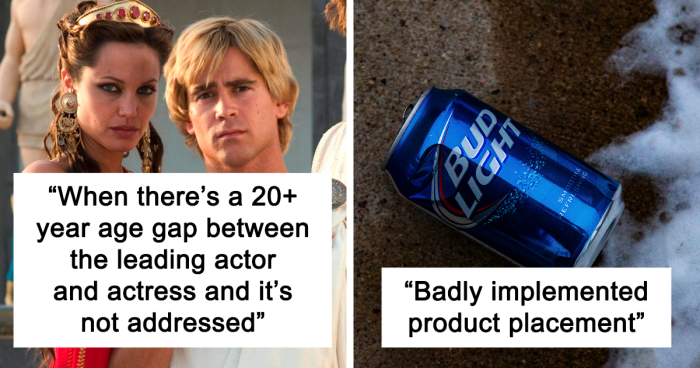
Most viewers can accept brands existing in a movie world. What they cannot ignore is the scene where a character pauses in the middle of danger to lovingly discuss a phone feature or beverage label. At that point, the movie has stopped and the advertisement has clocked in.
Why These 30 Answers Matter More Than They Seem
All 30 of these answers point back to one simple truth: what ruins a movie is usually not one tiny flaw. It is the moment the audience feels the illusion crack. Great films can survive imperfections because they keep viewers emotionally invested. Maybe the plot is slightly messy, maybe one effect looks a little rough, maybe one supporting character exists mainly to say, “We’re running out of time!” But if the movie still earns your attention, you roll with it.
Bad movies, or just disappointing ones, lose that grace. Once viewers stop trusting the story, every flaw gets louder. The awkward dialogue becomes unbearable. The pacing feels slower. The CGI looks faker. The ending lands harder in the worst possible way. It is like hearing one person chew with their mouth open in a quiet room; after that, you cannot focus on anything else.
That is why the best filmmakers sweat the little things. They know audiences are generous until they are not. And once a movie crosses that invisible line, people remember the irritation almost as vividly as they would have remembered a great scene. Sometimes even more vividly. Nobody leaves a theater saying, “Well, that was competently average, and I shall treasure it forever.” They leave talking about what worked, or what completely wrecked the ride.
Movie-Watching Experiences That Make These Complaints Feel So Real
If you love movies, you probably do not remember every plot point from every film you have seen, but you absolutely remember the feeling of being let down. You remember leaning forward during a promising first act, only to realize halfway through that the movie had mistaken mystery for confusion. You remember a thriller that was all setup and no payoff, a comedy that showed every decent joke in the trailer, or a blockbuster that looked so digitally overworked it felt like the actors were performing inside a premium screensaver.
These experiences stick because watching a movie is a small act of trust. You sit down and agree to give a story your time, your focus, and usually an overpriced snack. In return, the movie is supposed to take you somewhere. That “somewhere” can be exciting, emotional, terrifying, hilarious, heartbreaking, or strange. The genre does not matter nearly as much as the follow-through. When a film keeps its promises, audiences forgive a surprising amount. When it breaks them, the disappointment feels weirdly personal.
Think about the experience of sitting in a packed theater during a movie everyone had hyped for months. The lights go down, the logo appears, and for a while, it works. People laugh in the right places. The action scenes land. The crowd is with it. Then a twist arrives that makes no sense, or the finale starts dragging, or a beloved character behaves in a way that feels written by a committee. You can feel the room change. The laughter gets thinner. The silence gets heavier. By the time the credits roll, the energy is not outrage exactly, but something more familiar: deflation.
Streaming has created a different version of that same feeling. At home, the movie has to compete with your phone, your fridge, and the tempting thought that maybe you should just rewatch something you already know you love. That means pacing matters even more. A film that takes too long to get moving or repeats itself too often starts losing the room immediately. The pause button becomes a threat. Once viewers start checking messages or folding laundry during a supposedly crucial scene, the movie is probably cooked.
There is also the special heartbreak of a film that almost works. In some ways, those are the hardest to forget. The cast is terrific, the premise is great, the score is doing its best heroic labor, and then the script face-plants in the last twenty minutes. A weak ending can rewrite your memory of everything that came before it. Suddenly, scenes you enjoyed feel like empty promises. A thrilling setup becomes wasted potential. You leave not angry, but mourning the better movie you briefly thought you were getting.
That is why conversations about what ruins a movie are so lively. They are not really just complaints. They are audience standards in disguise. Viewers are saying, “Please care as much as I do.” They want sharp writing, clear stakes, believable behavior, and visual choices that serve the story rather than distract from it. They want a film to feel made, not assembled. And when a movie delivers that, even imperfectly, people notice. They recommend it, rewatch it, quote it, defend it, and drag their friends into seeing it. In the end, what ruins a movie is not just a bad choice. It is the absence of the care that makes cinema memorable in the first place.
Final Take
So, what 100% ruins a movie every time? The short answer is this: anything that breaks immersion, betrays the story, or treats the audience like they will not notice. Whether it is lazy writing, clumsy pacing, forced humor, or a finale that collapses under its own weight, the worst movie mistakes all share one trait. They remind viewers they are watching something manufactured instead of something meaningful.
The good news is that the opposite is also true. When a movie respects its own world, trusts its characters, and sticks the landing, audiences will happily forgive a minor flaw or two. Nobody needs perfection. They just need a reason to care. And once they care, the whole thing works a little like movie magic again, which is convenient, because that is kind of the point.
SEO Tags