
Picture a classroom, office, or family dinner where every brain processes information
in exactly the same way. Meetings would be wonderfully predictableand probably about
as inventive as a drawer full of identical socks. Human brains vary in attention,
language, memory, sensory processing, movement, emotional regulation, and social
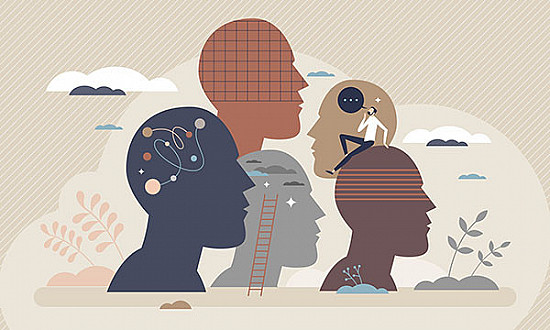
communication. Neurodiversity is the idea that this variation is a
normal part of being human.
The term is often discussed alongside autism, attention-deficit/hyperactivity disorder,
dyslexia, and other developmental or learning differences. However, neurodiversity is
broader than a list of diagnoses. It offers a way to understand neurological differences
without automatically treating every departure from the statistical norm as a defect.
This independent educational article examines the concept discussed by Harvard Health
and other respected medical and disability organizations. It is not produced by or
affiliated with Harvard Health.
What does neurodiversity mean?
Neurodiversity refers to the full range of ways human brains develop, process
information, communicate, and respond to the world. In the same way that biodiversity
describes variation among living organisms, neurodiversity describes variation among
nervous systems and minds.
The term is widely associated with Australian sociologist Judy Singer and the autistic
self-advocacy movement of the late 1990s. Its central idea is straightforward: there is
no single correct way to think, learn, communicate, or behave. A brain that works
differently from the majority is still a human brain, not a software error waiting for
an emergency update.
This does not mean that every neurological difference is easy, harmless, or free of
disability. Some people experience serious communication, sensory, behavioral,
learning, medical, or daily-living challenges. A neurodiversity-informed approach
recognizes two truths at once: neurological differences deserve respect, and people
may also need treatment, accommodations, technology, therapy, or continuing support.
Neurodiversity, neurodivergent, and neurotypical
These terms are closely related, but they are not interchangeable.
Neurodiversity describes a group
A classroom containing students with different cognitive styles is neurodiverse. So is
a workplace, family, or society. Strictly speaking, every group of people is
neurodiverse because no two brains are completely identical.
Neurodivergent describes an individual or subgroup
A person may call themselves neurodivergent when their attention, learning,
communication, sensory processing, or behavior differs meaningfully from dominant
social expectations. It is an umbrella term rather than a formal medical diagnosis. A
clinician does not diagnose someone with “neurodivergence” in the same way they
diagnose ADHD, autism, or a learning disorder.
Neurotypical refers to dominant expectations
Neurotypical generally describes people whose neurological development and functioning
fit common educational and social expectations. It is also an informal term, not a
medical certificate declaring that somebody’s brain has passed an official inspection.
Which conditions are considered neurodivergent?
There is no universally accepted master list. Neurodiversity developed largely within
autistic advocacy and remains strongly connected with autism. Today, the umbrella
commonly includes:
- Autism spectrum disorder
- Attention-deficit/hyperactivity disorder, or ADHD
- Dyslexia, dyscalculia, and dysgraphia
- Developmental coordination disorder, sometimes called dyspraxia
- Tourette syndrome and other tic disorders
- Language and communication disorders
- Intellectual and other developmental disabilities
Some people use the term more broadly to include obsessive-compulsive disorder,
epilepsy, acquired brain injury, or certain mental health conditions. Others prefer to
reserve it for neurodevelopmental differences that begin during childhood. Because the
boundaries depend on context and community, it is usually better to ask what someone
means than to patrol the vocabulary like a grammar referee carrying a whistle.
The medical model and the neurodiversity model
Traditional medical language often focuses on symptoms, impairment, diagnosis, and
treatment. That approach can be essential. A diagnosis may open the door to therapy,
medication, educational services, insurance coverage, workplace accommodations, or a
clearer explanation for years of unexplained difficulty.
The neurodiversity model adds another question: how much of the difficulty comes from
the person’s condition, and how much comes from an environment designed for only one
kind of mind?
Consider a student who understands science deeply but cannot complete a timed,
handwritten examination. A purely deficit-focused view might conclude that the student
is careless or incapable. A neurodiversity-informed view asks whether additional time,
keyboard access, or a quieter testing room would allow the student to demonstrate
actual scientific knowledge.
The two models do not have to fight in the parking lot. Good care can recognize
disability and reduce suffering without attempting to erase a person’s identity,
harmless self-regulation, communication preferences, or personality.
Potential strengths associated with neurodivergence
Neurodivergent people are not one personality type, and no condition automatically
provides a superpower. Still, some individuals report or demonstrate strengths such as:
- Strong pattern recognition
- Sustained attention to highly engaging subjects
- Creative or unconventional problem-solving
- Deep knowledge in areas of interest
- Strong visual, spatial, musical, or mechanical skills
- Direct and precise communication
- Careful attention to detail
- Persistence developed through navigating difficult systems
Context matters. The same characteristic can be useful in one setting and exhausting
in another. Intense focus may support excellent research but make interruptions
unusually disruptive. Sensitivity to sound may help a musician notice subtle
differences while making an open-plan office feel like a percussion concert inside a
blender.
It is also unfair to demand a special talent as the price of dignity. A neurodivergent
person does not need to be a coding genius, memory champion, or artistic prodigy to
deserve respect, access, and inclusion.
Common challenges and support needs
Neurodivergence may affect several areas of life, and every person has a different
profile of strengths, difficulties, and support needs.
Executive functioning
Planning, beginning tasks, switching attention, estimating time, organizing materials,
and remembering several steps can be difficult. A person may understand a project
perfectly and still struggle to begin it before the deadline starts breathing down
their neck.
Sensory processing
Lights, sounds, textures, smells, crowds, temperature, or physical contact may feel
unusually intense or difficult to filter. Other people may seek additional movement,
pressure, or sensory input to remain comfortable and regulated.
Communication and social interpretation
Some people prefer literal language, need additional processing time, communicate more
comfortably in writing, or find unwritten social rules confusing. Eye contact, facial
expressions, tone of voice, and conversational timing may require conscious effort
rather than happening automatically.
Learning and motor skills
Reading, spelling, handwriting, mathematics, sequencing, coordination, or spoken
language may be affected even when intelligence and creativity are strong. Someone can
explain an advanced concept brilliantly while fighting every sentence they must place
on a page.
Emotional regulation and mental health
Repeated misunderstanding, exclusion, academic pressure, sensory overload, or the
effort required to hide differences can contribute to stress, anxiety, low
self-esteem, and exhaustion. Co-occurring conditions are common, which is one reason
an individualized professional assessment may be valuable.
Masking and neurodivergent burnout
Masking, sometimes called camouflaging, means suppressing natural behaviors or
rehearsing socially expected ones to avoid criticism or exclusion. Examples may
include forcing eye contact, copying other people’s gestures, hiding sensory distress,
or using enormous mental energy to appear organized.
Masking may help someone move through an unsupportive environment, but the effort can
be costly. Prolonged overload may contribute to burnouta period of exhaustion,
reduced capacity, heightened sensitivity, and difficulty performing tasks that were
previously manageable.
The answer is not to ban every coping strategy. It is to create environments where
people do not have to perform a full Broadway production of “looking normal” simply
to be treated with basic respect.
How neurodiversity changes education
A neurodiversity-affirming school does not automatically lower academic expectations.
Instead, it removes unnecessary barriers and offers more than one route to learning.
Helpful educational practices may include:
- Providing instructions verbally and in writing
- Breaking large assignments into clear stages
- Allowing movement or sensory breaks
- Using predictable schedules and giving advance notice of changes
- Providing appropriate assistive technology
- Offering quiet testing spaces or additional time when appropriate
- Allowing different methods of demonstrating knowledge
- Teaching organization and self-advocacy directly
In the United States, eligible students may receive support through an Individualized
Education Program or a Section 504 plan. Exact eligibility and services depend on the
student’s needs and applicable laws. Accommodations are not shortcuts. They are ramps
around barriers unrelated to the skill being measured.
How neurodiversity changes the workplace
Many workplaces accidentally reward one communication style: rapid verbal answers,
comfort with interruptions, vague instructions, and enthusiasm for fluorescent
lighting that could interrogate a sandwich. That environment can hide valuable talent.
Practical workplace supports may include clear written priorities, specific deadlines,
agendas distributed before meetings, reduced-distraction workspaces, flexible
communication methods, predictable feedback, noise-reducing options, and reasonable
flexibility in scheduling or work location.
Managers should focus on essential job results rather than harmless differences in
style. An employee who makes limited eye contact may still be listening carefully.
Someone who requests precise instructions is not necessarily being difficult; they may
be protecting the project from preventable confusion.
Under the Americans with Disabilities Act, qualified employees with covered
disabilities may be entitled to reasonable accommodations unless the accommodation
would create an undue hardship. “Neurodivergent” alone is not a legal category, so
legal protections depend on the person’s condition, limitations, job, and individual
circumstances.
Identity-first language or person-first language?
Some people prefer identity-first language, such as “autistic person,” because they
consider autism an inseparable part of their identity. Others prefer person-first
language, such as “person with autism.” Preferences can vary across conditions,
generations, families, and communities.
The most respectful method is refreshingly uncomplicated: ask the person. Then use
their chosen language without transforming the discussion into a courtroom drama.
It is also helpful to avoid treating labels such as “high-functioning” or
“low-functioning” as complete descriptions. A person may speak fluently yet require
significant help with daily living. Another person may communicate without speech
while understanding complex ideas. Describing specific abilities and support needs is
generally more accurate.
Is neurodiversity against diagnosis or treatment?
No. A neurodiversity perspective does not require people to reject medical care. Many
neurodivergent people value medication, occupational therapy, speech-language
services, psychotherapy, coaching, communication devices, educational interventions,
or other evidence-based support.
The important question is the goal. Support should aim to improve health,
communication, autonomy, access, safety, comfort, and quality of lifenot simply make
someone appear less unusual for the convenience of other people.
Helping a person communicate pain is different from training them to suppress every
harmless movement. Treating severe anxiety is different from teaching someone that
their natural personality is unacceptable. Acceptance and treatment can comfortably
share the same room.
When might a professional evaluation help?
A professional evaluation may be useful when differences involving attention,
communication, learning, sensory processing, movement, or behavior repeatedly
interfere with school, work, relationships, health, or daily responsibilities.
An assessment may identify a condition, rule out other explanations, document support
needs, and guide treatment or accommodations. For children, families may begin with a
pediatrician, school team, developmental specialist, psychologist, or speech-language
professional.
Adults may consult a primary care clinician, psychologist, psychiatrist,
neuropsychologist, or specialist experienced with adult ADHD, autism, or learning
disorders. Because some adults learned to mask their differences, finding a
professional familiar with varied presentations can be important.
Online questionnaires may help someone organize observations, but they cannot provide
a complete diagnosis. Self-identification can offer community and personal
understanding, although formal documentation may still be needed for certain clinical,
educational, or workplace services.
How to support a neurodivergent person
Begin with curiosity rather than assumptions
Ask what helps, what creates overload, and how the person prefers to receive
information. A label cannot tell you everything about an individual.
Use clear and specific language
“Please send the two-page draft by 3 p.m. Thursday” is more useful than “Get this back
to me soon.” Clear instructions benefit nearly everyone.
Offer choices when possible
Written or spoken instructions, camera-on or camera-off participation, and quiet or
collaborative workspaces can improve access without reducing meaningful standards.
Do not confuse behavior with intention
A delayed response may reflect processing time. Avoided eye contact may support
concentration. Repetitive movement may help regulate stress or sensory input.
Respect autonomy
Support should be developed with a person, not simply imposed on them. Parents,
teachers, clinicians, and managers can contribute expertise, but lived experience
deserves a place at the table.
Real-life neurodiversity experiences: composite examples
The following stories are fictional composites based on commonly reported
experiences. They do not represent specific patients, and they should not be treated
as descriptions of every neurodivergent person.
Maya: the student who knew the answer but could not show it
Maya could explain the solar system with the confidence of a tiny planetarium
director. During timed examinations, however, the ticking clock, scraping chairs, and
fluorescent lights swallowed her concentration. Teachers saw unfinished papers and
assumed she had not studied.
After an evaluation identified ADHD and sensory-related needs, her school introduced
written task steps, additional testing time, and a quieter location. Her scientific
knowledge did not suddenly appear; it had been there all along. The new environment
simply stopped measuring her ability to ignore noise as though that were part of
astronomy.
The experience also changed how adults spoke to her. Instead of saying, “Try harder to
focus,” they began asking, “What is making concentration difficult?” That small change
replaced blame with problem-solving. Maya still needed reminders and planning support,
but she started viewing those needs as useful information rather than proof that she
was lazy.
Ethan: the employee who needed less ambiguity, not less responsibility
Ethan was excellent at locating inconsistencies in financial reports. He struggled
when managers gave broad instructions such as, “Make this look better,” or changed
priorities during hallway conversations he did not realize were official.
His supervisor initially interpreted his follow-up questions as resistance. Ethan,
meanwhile, spent evenings replaying conversations and worrying that he had missed an
invisible workplace rule.
After he requested clearer communication, the team began using written priorities,
meeting summaries, and defined deadlines. The result was not special treatment or a
magical transformation. Ethan still found sudden changes stressful, and his manager
still expected accurate work on time.
However, the shared system reduced errors for everyone, including colleagues who had
never considered themselves neurodivergent. Accessibility turned out to be less like a
private favor and more like installing labels on the office drawers: surprisingly
helpful to the entire species.
Rosa: the parent learning to separate discomfort from danger
Rosa’s autistic son, Leo, rocked his body and covered his ears in busy stores. At
first, relatives told her to stop the behavior so he would “fit in.” Rosa gradually
learned to ask a different set of questions. Was the movement harmful? Was Leo in pain?
Was the environment overwhelming? What was he trying to communicate?
She began shopping during quieter hours, carrying sound-reducing headphones, preparing
Leo with a simple visual plan, and leaving before sensory overload became
unmanageable. She also worked with qualified professionals on communication and
daily-living skills intended to increase his independence.
This approach did not romanticize every challenge. Leo sometimes needed substantial
assistance, and family plans required flexibility. However, the goal shifted from
making him look typical to helping him feel safe, communicate his needs, and
participate meaningfully.
Rosa’s experience illustrates the heart of neurodiversity-affirming support: accept the
person, address the barriers, and take genuine distress or disability seriously.
Conclusion
Neurodiversity is both a fact of human variation and a framework for inclusion. It
reminds us that brains differ, that difference is not automatically deficiency, and
that environments can either magnify disability or remove unnecessary barriers.
At the same time, respectful language should never erase real support needs. Autism,
ADHD, learning disabilities, communication disorders, and related conditions can
affect education, employment, health, relationships, and everyday life. The strongest
approach combines acceptance with practical assistance, evidence-based care, legal
access, and individual choice.
In everyday terms, neurodiversity asks us to replace “Why can’t this person act
normally?” with more useful questions: “What are they experiencing? What do they do
well? What is getting in the way? What support would make participation possible?”
Those questions are kinder, more accurate, and far more productivewhich is a pretty
good upgrade for any brain.
SEO Metadata