Woman Begs People To “Stop Hating” On Her Body After Disneyland Visitors Cruelly Stare And Laugh

A Disneyland visit is supposed to deliver roller coasters, character photos, overpriced snacks, and at least one family argument about the map. It is not supposed to turn a guest’s body into a public attraction.
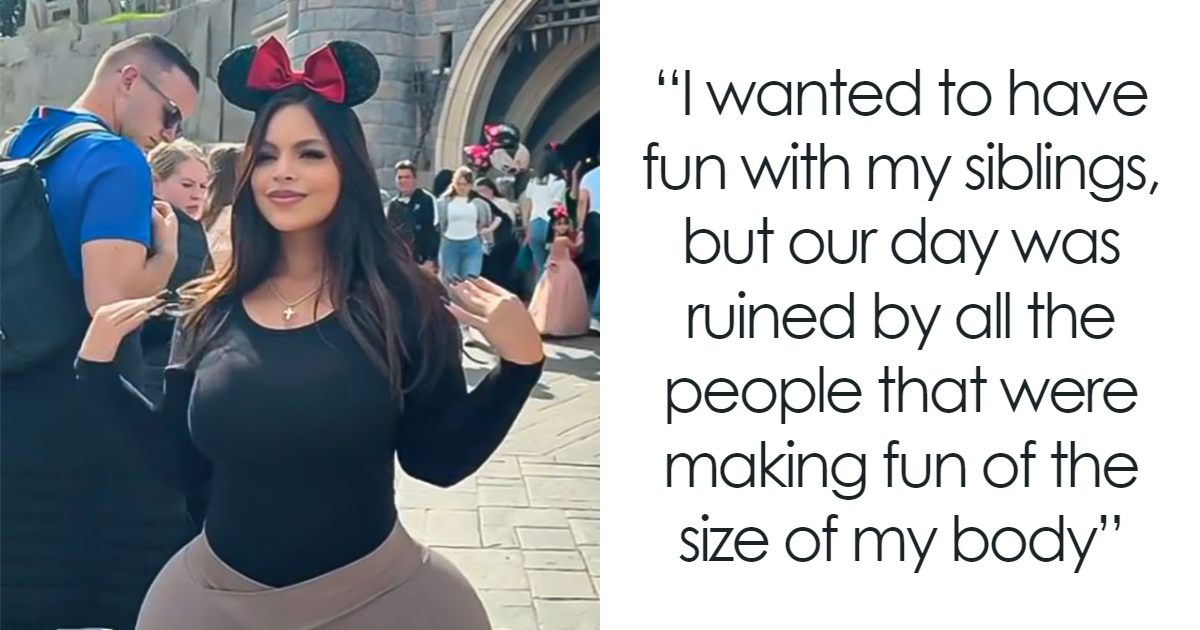
That was the painful message shared by Panamanian model and social media creator Gracie Bon after visiting Disneyland Paris with her siblings. According to Bon, strangers stared, laughed, gave her hostile looks, and took photographs of her without permission. What should have been a carefree family outing became an uncomfortable lesson in how quickly curiosity can cross the line into body shaming.
Her response was direct: People may notice someone who looks different, but they do not have to mock, photograph, or publicly humiliate that person. In other words, seeing is automatic; cruelty is a choice.
Incident reporting synthesized from Bored Panda, UNILAD, the Mirror, and other coverage.
What Happened During Gracie Bon’s Disneyland Visit?
Bon, who has built a large online following around fashion, confidence, and body-positive content, said she went to Disneyland Paris hoping to enjoy the attractions with her siblings. Instead, she noticed visitors repeatedly looking at her body, laughing, pointing cameras in her direction, and apparently encouraging children to participate in the behavior.
Footage shared on her social media accounts appeared to show several guests turning toward her, watching her pass, smiling, or holding up phones. A short video cannot establish exactly what every stranger was thinking, and not every glance necessarily represents mockery. However, Bon said the pattern of reactions was persistent enough to make her and her family feel targeted.
She told followers that people should not be bullied because of their shape, size, condition, or any other physical difference. She emphasized that she was not interfering with anyone else’s day. She was, as she put it, “just existing” and trying to have fun.
Her final request was simple: If someone dislikes another person’s appearance, that opinion does not need to become a public performance. Keep the commentary private and let people enjoy their lives.
Bon’s account, the date of the social post, and the reported reactions are documented in contemporary coverage.
Looking Is Human; Turning Someone Into Entertainment Is Not
People naturally notice what is unusual or unfamiliar to them. A distinctive outfit, striking hairstyle, disability aid, tattoo, height, or body shape may briefly catch the eye. That initial reaction is not the same as sustained staring, whispering, laughing, pointing, or secretly recording someone.
The difference is behavior.
A quick glance can be instinctive. Repeatedly turning around is a decision. Pulling out a phone is a decision. Inviting friends or children to join the spectacle is definitely a decisionand not a particularly magical one.
Public spaces are shared spaces. Nobody can reasonably expect complete visual privacy while walking through a crowded theme park. At the same time, purchasing an admission ticket does not mean consenting to become a stranger’s joke, viral clip, or souvenir photograph.
Basic manners do not require advanced training. Do not point. Do not laugh at someone’s body. Do not photograph strangers merely because of their appearance. Do not provide live commentary as if you have been hired to host a fashion roast nobody requested.
Why Body Shaming Is More Serious Than a “Harmless Joke”
Body shaming includes insulting, mocking, judging, or negatively stereotyping a person because of physical appearance. It can target weight, height, skin, scars, disability, facial features, body proportions, hair, age, or clothing. Although perpetrators may dismiss their comments as humor, the person being targeted experiences the entire social situationnot merely the punchline.
Weight stigma can affect mental health
Research has repeatedly associated weight stigma with anxiety, depression, body dissatisfaction, low self-esteem, stress, disordered eating, and reduced quality of life. A systematic review focused on young people found links between weight-based stigma and several negative mental health outcomes, although researchers also noted that more high-quality longitudinal studies are needed to clarify cause and effect.
The CDC likewise recognizes that weight stigma can have social and mental health consequences, including anxiety and poor body image. The organization describes obesity as a complex condition influenced by genetics, medications, sleep, stress, environment, access to health care, food availability, and numerous other factorsnot simply an individual failure of willpower.
Research and public-health findings on weight stigma.
Shame does not reliably produce healthier behavior
There is a stubborn cultural myth that humiliating people about weight will motivate them to make healthier choices. Evidence suggests the opposite can happen. Stigma may increase stress, encourage social withdrawal, worsen emotional eating, and make people reluctant to exercise publicly or seek medical care.
Harvard Health has noted that people experiencing weight stigma may avoid health care and social situations or use food and substances to cope with distress. That does not mean every insult produces the same outcome, but it does dismantle the idea that public ridicule is some kind of community wellness program.
Nobody has ever needed a stranger beside the teacup ride to conduct an unsolicited health consultation.
Health effects and avoidance behaviors associated with weight stigma.
Body shame can become internalized
When negative messages are repeated, people may begin applying those judgments to themselves. This process is often described as internalized weight bias. Instead of merely recognizing that society holds unfair stereotypes, an individual starts believing that body size determines personal worth, attractiveness, discipline, or deservingness.
The National Eating Disorders Association identifies weight stigma as an important contributor to internalized bias and body dissatisfaction. Yale Medicine also notes that eating disorders can affect people of every shape and size, while bullying, social pressure, and negative body image may worsen harmful relationships with food.
Body image and eating-disorder context.
Why the Behavior of Parents Matters
One of Bon’s strongest concerns was that adults appeared to be teaching children to react negatively to her body. Whether every child in the footage understood the situation is impossible to determine, but the broader point deserves attention: Children learn social behavior by watching adults.
When parents stare, whisper, laugh, or make cutting remarks about a stranger, children receive a powerful lesson. The lesson is not about health. It is that a person who looks different is available for public inspection.
Parents can model a better response. When a child loudly asks why someone looks different, the adult does not need to panic, scold, or pretend the person has become invisible. A calm reply works well: “People have different bodies. It is not polite to point or comment about someone’s appearance.” Then move on.
That response acknowledges reality without turning difference into something frightening or funny. It also teaches privacy, empathy, and self-controlthree skills significantly more useful than learning how to zoom a smartphone camera.
The American Academy of Pediatrics has warned that stigmatizing weight language can cause embarrassment and shame. Experts also advise adults to consider how their own negative body talk may be absorbed by children, who often internalize comments even when those comments are not directed at them.
Guidance and evidence concerning children, parental language, and weight stigma.
The Complicated Role of Social Media
Social media gave Bon a way to document what she experienced, describe the emotional impact, and receive support from people who believed she had been treated unfairly. Without that platform, the incident might have remained a private, miserable family memory.
Yet social media is also part of the environment that turns bodies into content. Users are trained to record first and think about consent later. Strangers are transformed into reaction videos, memes, background characters, and “look what I saw today” posts. The camera can provide evidence, but it can also intensify the same surveillance being criticized.
Viral clips reward instant judgment
Online audiences are often asked to decide within seconds whether a person is a victim, villain, attention seeker, hero, or fraud. Nuance performs poorly when outrage is available in high definition.
Some commenters supported Bon and condemned the apparent mockery. Others questioned whether bystanders were actually laughing at her, criticized her appearance, or speculated about cosmetic procedures. Those responses illustrate the central problem: A plea to stop reducing a woman to her body quickly became another invitation to debate her body.
Whether a person’s appearance is natural, medically influenced, cosmetically altered, carefully styled, or filtered does not determine whether strangers may harass that person. Respect is not a prize awarded only after someone passes an authenticity inspection conducted by the comment section.
Appearance-focused feeds can distort body image
Health organizations have warned that edited images, filters, constant comparison, and appearance-centered algorithms can contribute to poor body image and lower self-esteem. UConn’s Rudd Center has also documented how television, movies, and social media frequently reinforce stereotypes that portray larger people as lazy, undisciplined, unpopular, or personally to blame for their size.
More inclusive representation can help, but inclusion should mean allowing people of different sizes to exist in ordinary contexts. A larger person should be able to ride an attraction, eat lunch, wear a fashionable outfit, or pose for a family photo without every activity becoming a referendum on weight.
Media portrayals and social-media body-image effects.
Body Positivity Does Not Require Pretending Health Is Simple
Discussions about body shaming often become trapped in a false choice. One side is accused of denying all health concerns, while the other claims ridicule is merely “honesty.” Neither position is useful.
A person can believe in evidence-based health care while opposing humiliation. Doctors can discuss weight when medically relevant without treating patients as morally defective. Individuals can pursue nutrition, movement, medication, therapy, surgery, weight change, or no weight-focused goal at all without surrendering their right to dignity.
Health cannot be accurately diagnosed from a passing glance in a theme-park queue. Body size alone does not reveal blood pressure, mobility, cardiovascular fitness, eating patterns, laboratory results, mental health, medications, disability status, or medical history. Even qualified clinicians need information and consent; a stranger with a churro has considerably fewer diagnostic powers.
It is also useful to distinguish body positivity from body neutrality. Body positivity encourages appreciation of diverse bodies, while body neutrality allows people to focus less on appearance and more on what their bodies enable them to experience. Someone does not have to adore every inch of their body every morning to deserve a peaceful day in public.
How Bystanders Can Respond to Public Body Shaming
Witnessing harassment can be uncomfortable, particularly when the target is a stranger. A bystander does not always need to start a confrontation. Small actions can interrupt the social permission that allows cruelty to grow.
- Do not join the audience. Refuse to stare, laugh, share the recording, or reward the person making comments.
- Check on the targeted person. A quiet “Are you okay?” can restore a sense of human connection.
- Create a distraction. Ask for directions, begin an unrelated conversation, or help the person move away from the situation.
- Address the behavior when it is safe. A calm statement such as “Please stop photographing her” may be more effective than an insult-filled argument.
- Contact staff. Theme-park employees or security personnel may be able to intervene when conduct becomes persistent or threatening.
The goal is not to produce another viral showdown. It is to reduce harm and give the targeted person options.
What People Experiencing Body Shaming Can Do
The responsibility always belongs to the people behaving cruelly, not to the person being targeted. Still, practical strategies can help someone regain control.
Moving toward trusted friends, staff members, or a well-lit populated area may improve safety. Documenting persistent harassment can be useful, particularly if someone is following, threatening, or repeatedly filming. A person may also choose a direct boundary such as, “Do not photograph me,” provided it feels safe to speak.
Afterward, talking with supportive people can prevent an ugly encounter from becoming an isolated burden. Curating social media feeds, blocking abusive accounts, and limiting repeated exposure to cruel comments may also protect emotional well-being.
Professional support may be appropriate when an incident triggers persistent anxiety, shame, eating problems, avoidance of public places, depression, or obsessive thoughts about appearance. Seeking help is not an admission that the harassers were right. It is a way of refusing to let their behavior keep occupying space in your life rent-free.
Related Experiences: What a Moment of Public Ridicule Can Feel Like
Experiences resembling Bon’s story often follow a recognizable pattern. A person enters a public place expecting an ordinary day. Perhaps she has spent extra time selecting an outfit, reminding herself not to worry about photographs, and deciding that she deserves to participate fully. Then she notices the first stare.
At first, she dismisses it. People look around. Maybe the stranger was watching something behind her. Then another person turns. Someone whispers. A phone rises. A laugh follows.
The physical space has not changed, but the emotional atmosphere has. The person is no longer thinking about the ride, music, family conversation, or food. She is scanning faces. Every smile begins to feel suspicious. Every camera might be pointed at her. A place designed for entertainment becomes a room full of potential judges.
This hyperawareness can continue even after the obvious behavior stops. A family member may say, “Ignore them,” intending to help. But ignoring repeated humiliation requires mental effort. The targeted person must pretend not to notice while simultaneously tracking whether the situation is escalating.
Consider a composite example based on common reports of public body shaming. A woman visits an amusement park with friends and wears shorts because the weather is hot. In a ride queue, a group behind her begins whispering and laughing. One person appears to take a picture. The woman says nothing because she does not want a confrontation. Twenty minutes later, she leaves the line, claims she feels sick, and suggests going home.
Her friends may remember the trip as a disappointing afternoon. She may remember it as proof that public enjoyment comes with conditions: Be smaller, dress differently, attract less attention, or remain at home.
That is how a brief act of mockery can shrink a person’s world. The harm is not limited to hurt feelings during one afternoon. It can influence future decisions about swimming, exercising, traveling, dating, attending celebrations, visiting doctors, appearing in photographs, or simply wearing weather-appropriate clothing.
There is also a second injury when the story is shared. Listeners sometimes respond with interrogation instead of empathy: “Are you sure they were laughing at you?” “What were you wearing?” “Why didn’t you confront them?” “Why did you post the video?” These questions may be reasonable in a factual investigation, but delivered carelessly, they can sound like another demand that the targeted person defend her right to feel hurt.
A more helpful response begins with acknowledgment: “That sounds humiliating. I’m sorry it happened.” Details can be discussed later without treating empathy as something that must wait for courtroom-level evidence.
Public body shaming also affects witnesses. A child who sees a parent mock someone learns that ridicule creates social bonding. A teenager with similar insecurities may hear the laughter and quietly conclude that she could be next. Another adult may disagree but remain silent, unintentionally signaling that the behavior is acceptable.
The good news is that respectful behavior spreads, too. One person can refuse to laugh. A parent can redirect a child kindly. A friend can stand beside the person being targeted. An employee can enforce boundaries. A stranger can offer a reassuring smile that says, without making a speech, “You belong here.”
Bon’s Disneyland experience resonated because it was not only about one model, one park, or one viral video. It reflected a fear shared by many people whose bodies attract unwanted attention: the fear that leaving home means surrendering control over how others discuss, photograph, and evaluate them.
The solution is not to demand that everyone stop noticing differences. That would be impossible. The solution is to build the small social discipline required to notice without humiliating, remain curious without invading, and disagree with someone’s choices without treating that person as less human.
Conclusion: The Most Important Rule Is Respect
Gracie Bon’s account of being stared at, laughed at, and photographed during a Disneyland visit sparked debate because it sits at the intersection of body image, public etiquette, social media, and personal freedom.
Viewers can debate what individual bystanders intended or whether every glance captured on video represented cruelty. What should not be controversial is the larger principle: Nobody deserves to be mocked, followed, photographed, or turned into entertainment because of body size or appearance.
Theme parks promise temporary escape from ordinary stress. Guests should be able to spend their day worrying about long lines and whether they can handle another spinning ridenot whether a stranger is creating humiliating content about them.
Respect does not require loving another person’s appearance, understanding every medical factor, or agreeing with every choice. It requires enough maturity to let other people occupy public space without punishment. Sometimes kindness is active intervention. Sometimes it is a supportive word. And sometimes it is simply keeping the camera down and the rude opinion inside one’s own head.