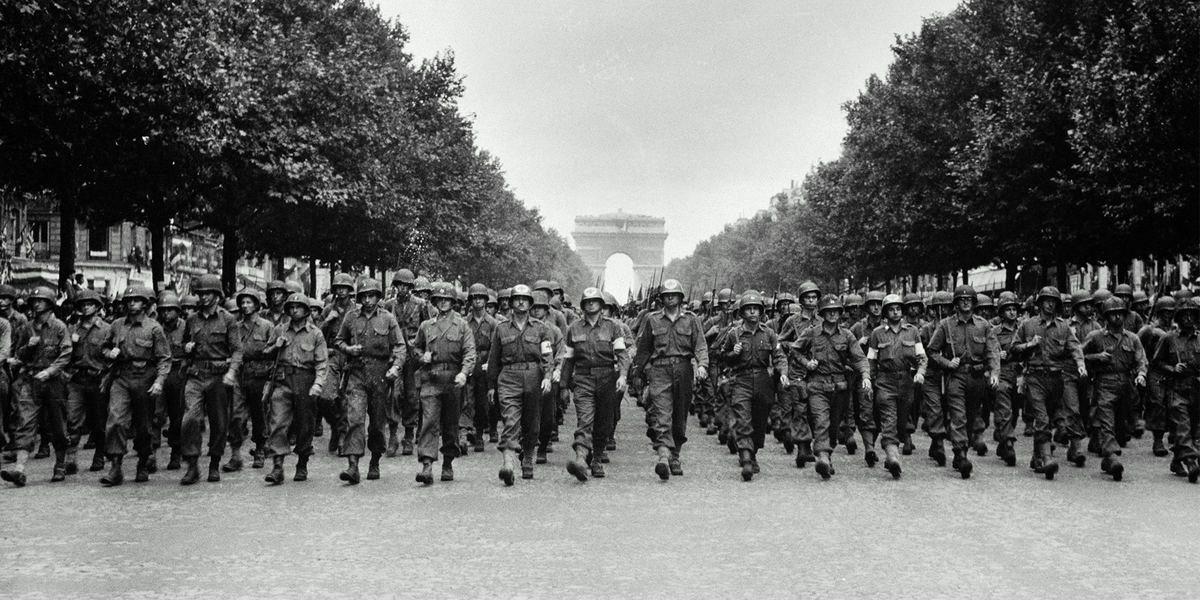

World War II was not won by one dramatic charge, one brilliant general, or one lucky roll of history’s dice. It was shaped by thousands of clashes across deserts, oceans, frozen forests, bombed-out cities, muddy beaches, and tiny islands that suddenly became the center of the world. Some WWII battles were huge turning points. Others were desperate defensive stands. A few were strategic “chess moves” played with ships, planes, tanks, radios, weather reports, and nerves of steel.
This guide walks through 30 major battles that shaped the course of history. We are not ranking bravery, suffering, or importance as if history were a sports bracket. Instead, we are looking at how each battle changed momentum, exposed weaknesses, opened fronts, protected supply lines, or forced leaders to rethink everything. Spoiler alert: generals love plans, but World War II had a habit of laughing at them.
Why WWII Battles Still Matter Today
Major World War II battles still matter because they explain how the modern world was built. Borders shifted. Empires weakened. The United States and Soviet Union emerged as superpowers. Air power, aircraft carriers, amphibious assaults, codebreaking, radar, logistics, and combined-arms warfare became central to modern military strategy. These battles also remind us that history is not abstract. Every “turning point” was lived by people who were tired, frightened, hungry, determined, and often very young.
Below are 30 battles and campaigns that changed the direction of the war in Europe, North Africa, Asia, and the Pacific.
30 Major WWII Battles That Changed History
1. Battle of Westerplatte and the Invasion of Poland
The German invasion of Poland on September 1, 1939, opened World War II in Europe. At Westerplatte, a small Polish garrison resisted German attack far longer than expected. Militarily, Poland was overwhelmed by Germany from the west and the Soviet Union from the east, but Polish resistance became a symbol of national courage. The campaign showed the terrifying speed of Blitzkrieg: aircraft, armor, and infantry working together like a very bad Monday arriving all at once.
2. Battle of the Atlantic
The Battle of the Atlantic was not one battle but a long struggle for control of sea lanes. German U-boats tried to cut Britain off from food, fuel, weapons, and American support. Allied convoys, sonar, radar, escort carriers, codebreaking, and improved anti-submarine tactics eventually turned the tide. Without victory in the Atlantic, D-Day would have been impossible. Wars are won by soldiers, yes, but also by cargo ships full of boots, beans, bullets, and fuel.
3. Battle of France
In 1940, Germany shocked the world by defeating France in only weeks. German armored forces pushed through the Ardennes, bypassing expectations and splitting Allied defenses. The fall of France gave Nazi Germany control of much of Western Europe and forced Britain to fight on largely alone. It was one of the most dramatic strategic collapses of the war and a warning that old assumptions can be more dangerous than new weapons.
4. Dunkirk Evacuation
The evacuation at Dunkirk was a military disaster turned into a rescue legend. Hundreds of thousands of British, French, and Allied troops were evacuated from the beaches of northern France. The soldiers left behind equipment, but Britain saved a core army that would fight again. Dunkirk did not win the war, but it prevented Britain from losing the ability to continue it.
5. Battle of Britain
The Battle of Britain was fought in the skies during 1940. Germany needed air superiority before any invasion of Britain, but the Royal Air Force, aided by radar, command organization, and determined pilots, resisted the Luftwaffe. The battle marked Hitler’s first major defeat and proved that air defense could stop an invasion plan before ships ever left port.
6. Siege of Tobruk
In North Africa, Tobruk became a stubborn Allied fortress. Its defenders tied down Axis forces and disrupted supply lines. The siege mattered because North Africa was a contest for the Mediterranean, the Suez Canal, and access to Middle Eastern oil. Tobruk showed that desert warfare was not just about tanks racing across sand; it was also about ports, water, fuel, and patience.
7. Operation Barbarossa and the Battle of Moscow
Germany’s invasion of the Soviet Union in 1941 was the largest land invasion in history. The push toward Moscow was meant to crush Soviet resistance quickly. Instead, Soviet defense, brutal weather, stretched German supply lines, and fierce counterattacks halted the advance. The Battle of Moscow proved that Nazi Germany could be stopped on land. It also showed the Eastern Front would become a war of endurance on a scale almost beyond imagination.
8. Attack on Pearl Harbor
Japan’s surprise attack on Pearl Harbor on December 7, 1941, brought the United States directly into World War II. The attack damaged battleships and shocked the American public, but it failed to destroy U.S. aircraft carriers, fuel storage, and repair facilities. Strategically, Pearl Harbor awakened an industrial giant. Japan won the morning; it did not win the war.
9. Battle of Singapore
The fall of Singapore in February 1942 was one of Britain’s greatest military defeats. Japanese forces advanced down the Malay Peninsula and captured what had been considered a major imperial fortress. The battle shattered myths of European invincibility in Asia and accelerated the decline of colonial power after the war.
10. Battle of Bataan and Corregidor
In the Philippines, American and Filipino forces held out against Japan for months despite shortages of food, medicine, and ammunition. Bataan and Corregidor delayed Japanese plans and became symbols of sacrifice. The later Bataan Death March revealed the cruelty of the conflict in the Pacific and deepened American determination to return to the Philippines.
11. Battle of the Coral Sea
The Battle of the Coral Sea in May 1942 was the first naval battle in which opposing ships never directly saw one another. Aircraft carriers did the fighting from over the horizon. The Allies checked Japan’s advance toward Port Moresby, protecting Australia’s strategic position. It was a tactical mixed result but a strategic Allied success.
12. Battle of Midway
Midway was one of the most decisive battles of World War II. American codebreakers helped identify Japanese plans, and U.S. carrier aircraft destroyed four Japanese carriers. The battle shifted the balance of naval power in the Pacific. After Midway, Japan’s expansion slowed, and the United States began moving toward offensive operations.
13. First Battle of El Alamein
The First Battle of El Alamein in 1942 stopped Axis forces from advancing deeper into Egypt. Had the Axis broken through, the Suez Canal and Middle Eastern oil routes would have been threatened. The battle stabilized the North African front and set up a larger Allied counteroffensive.
14. Second Battle of El Alamein
The Second Battle of El Alamein was a major British-led victory under General Bernard Montgomery. It pushed Axis forces westward and marked a turning point in North Africa. Winston Churchill famously noted that before Alamein Britain had no victory and after it no defeat. That may sound polished enough for a monument, but the strategic point was real: Axis momentum in Africa was broken.
15. Guadalcanal Campaign
Guadalcanal was the first major Allied land offensive against Japan. The struggle involved land fighting, carrier battles, naval night battles, and constant air combat around Henderson Field. Victory gave the Allies a foothold in the Solomon Islands and taught painful but valuable lessons in joint operations. Guadalcanal was where the Pacific War became a long Allied advance instead of a Japanese expansion.
16. Battle of Stalingrad
Stalingrad was a brutal urban battle and one of the most important turning points of the war. German forces became trapped in the city after a Soviet counteroffensive surrounded them. The surrender of the German Sixth Army in early 1943 destroyed the myth of unstoppable German power. Stalingrad shifted momentum on the Eastern Front and came at a horrifying human cost.
17. Operation Torch
Operation Torch was the Allied invasion of French North Africa in November 1942. It gave U.S. forces their first major experience fighting Germany and Italy in the European theater. The operation helped squeeze Axis forces between Allied armies advancing from east and west. It also showed that coalition warfare required diplomacy, logistics, and occasionally the patience of a saint with a very large map.
18. Battle of Kursk
Kursk in 1943 was the largest tank battle in history and Germany’s last major offensive initiative on the Eastern Front. Soviet defenses absorbed the attack, then counteroffensives pushed German forces back. After Kursk, the Red Army increasingly held the initiative. The battle demonstrated the power of defense in depth, intelligence preparation, and industrial endurance.
19. Invasion of Sicily
The Allied invasion of Sicily in 1943 opened the road into Italy and helped trigger the fall of Benito Mussolini. The campaign gave the Allies valuable amphibious experience before Normandy. Sicily also forced Germany to divert troops to southern Europe, complicating Axis defense planning across the continent.
20. Battle of Monte Cassino
Monte Cassino was a grinding series of battles in Italy. Allied forces faced fortified German defenses, mountainous terrain, and awful weather. The eventual breakthrough opened the road to Rome, but at a terrible cost. The battle highlighted the difficulty of fighting through Italy, where every hill seemed personally designed to ruin somebody’s day.
21. D-Day and the Battle of Normandy
On June 6, 1944, Allied troops landed on the beaches of Normandy in Operation Overlord. The invasion required massive planning, deception, air support, naval power, and courage from soldiers landing under fire. Normandy opened a Western Front that forced Germany to fight major Allied armies from both east and west. It was one of history’s most complex and consequential amphibious operations.
22. Battle of the Philippine Sea
The Battle of the Philippine Sea in June 1944 crippled Japanese naval aviation. U.S. pilots and anti-aircraft defenses destroyed large numbers of Japanese aircraft in what became known as the “Great Marianas Turkey Shoot.” The battle protected the invasion of the Mariana Islands and brought American bombers closer to Japan.
23. Warsaw Uprising
The 1944 Warsaw Uprising was a massive resistance effort by the Polish Home Army against German occupation. The fighters hoped to liberate Warsaw before Soviet forces entered the city. The uprising lasted 63 days before being crushed, and much of Warsaw was destroyed. It remains one of the most tragic examples of courage colliding with geopolitical reality.
24. Operation Market Garden and Arnhem
Operation Market Garden was an ambitious Allied plan to seize bridges in the Netherlands and push quickly into Germany. Airborne troops captured several objectives, but the bridge at Arnhem proved too far and too difficult to hold. The operation failed to end the war early, showing that bold plans still need roads, fuel, timing, and a little less optimism in the brochure.
25. Battle of Leyte Gulf
Leyte Gulf in October 1944 was one of the largest naval battles in history. It marked a major step in the liberation of the Philippines and severely weakened Japan’s remaining fleet. The battle included carrier strikes, surface actions, and desperate Japanese tactics. After Leyte Gulf, Japan’s navy could no longer seriously challenge Allied control of the Pacific.
26. Battle of the Bulge
In December 1944, Germany launched a surprise offensive through the Ardennes. The Battle of the Bulge became the largest battle fought by the U.S. Army in World War II. American resistance at places like Bastogne slowed the German advance until Allied air power and reinforcements helped reverse it. The battle consumed German reserves that could not be replaced.
27. Battle of Iwo Jima
Iwo Jima was a small volcanic island with huge strategic value. U.S. Marines faced deeply dug-in Japanese defenders who used caves, tunnels, and fortified positions. The island provided emergency landing fields for bombers and fighters, but victory came at enormous cost. The famous flag raising on Mount Suribachi became an iconic image, though the fighting continued fiercely afterward.
28. Battle of Okinawa
Okinawa was one of the bloodiest battles of the Pacific War. It brought Allied forces close to the Japanese home islands and exposed the likely cost of a full invasion of Japan. Kamikaze attacks, cave defenses, civilian suffering, and relentless ground combat made Okinawa a grim preview of what might come next.
29. Battle of Berlin
The Battle of Berlin was the final major battle in Europe. Soviet forces surrounded and stormed the German capital in spring 1945. Hitler died in Berlin, and Nazi Germany surrendered shortly afterward. The battle ended the European war but also foreshadowed the Cold War division of Europe.
30. Battles of Imphal and Kohima
In 1944, Japanese forces attempted to invade India through Burma. At Imphal and Kohima, British, Indian, and Allied forces stopped the offensive. These battles broke Japanese momentum in Burma and opened the way for Allied advances back into Southeast Asia. They are sometimes overlooked in Western memory, but their strategic impact was enormous.
Key Patterns Behind the Battles
Logistics Beat Drama
World War II battles often turned on supply. Armies needed fuel, food, ammunition, spare parts, medicine, and transport. Rommel’s desert forces, German units outside Moscow, Japanese troops on Guadalcanal, and defenders across the Pacific all learned that bravery cannot refuel a tank. Logistics may not look glamorous in a movie trailer, but it is the quiet engine of victory.
Air and Naval Power Changed Everything
From Britain to Midway, from the Atlantic to Leyte Gulf, the war proved that control of the air and sea could decide what happened on land. Aircraft carriers replaced battleships as the kings of naval warfare. Radar and codebreaking turned information into a weapon. Bombers, fighters, and naval aviation reshaped strategy across entire theaters.
Coalitions Won the War
No single country won World War II alone. The Allies succeeded through cooperation among nations with different armies, languages, leaders, and political goals. That cooperation was not always smooth. In fact, it sometimes had all the elegance of a committee meeting in a thunderstorm. But the combined weight of American industry, Soviet manpower, British endurance, Chinese resistance, and contributions from many other nations overwhelmed the Axis powers.
Human Experiences and Lessons from WWII Battles
Studying WWII battles is not just about memorizing dates or arguing over which tank had the better armor. The deeper experience is emotional and human. When you read about Normandy, you can almost feel the weight of wet uniforms, seasickness, fear, and responsibility. Soldiers did not land on Omaha Beach thinking, “I am participating in a major SEO-friendly historical turning point.” They were trying to survive the next few minutes, help the person beside them, and move forward because stopping often meant disaster.
The same is true at Stalingrad, where civilians and soldiers endured hunger, cold, rubble, snipers, and street fighting so intense that a single building could become a battlefield. Stalingrad teaches that cities are not just places on maps. They are homes, factories, hospitals, schools, stairwells, cellars, and memories. When war enters a city, strategy becomes personal. Every ruined wall has a story.
In the Pacific, battles like Guadalcanal, Iwo Jima, and Okinawa reveal another kind of experience: isolation. Troops fought in heat, mud, disease, caves, jungles, coral dust, and terrifying naval bombardments. The Pacific War was often a battle against geography itself. A tiny island could become a fortress, an airfield, a graveyard, and a symbol all at once. For the people fighting there, victory was measured in yards, not headlines.
There is also the experience of waiting. Waiting in a convoy crossing the Atlantic while U-boats hunted below. Waiting in a foxhole during the Battle of the Bulge while snow covered helmets and boots. Waiting in London during the Battle of Britain while aircraft engines growled overhead. Waiting may sound passive, but in wartime it can be one of the hardest forms of courage.
These battles also teach humility. Leaders made brilliant decisions and terrible mistakes. Intelligence sometimes saved lives; sometimes warnings were ignored. Technology mattered, but so did weather, morale, training, luck, and local knowledge. World War II reminds us that history is never a clean spreadsheet. It is messy, human, and full of consequences nobody fully sees at the time.
For modern readers, the most important lesson may be remembrance with responsibility. WWII battles should not be treated like action scenes detached from suffering. They shaped freedom, power, diplomacy, military doctrine, and national memory, but they also destroyed lives on a scale that should make every generation cautious about war. Learning about these battles helps us understand not only how the Allies won, but why peace, alliances, preparedness, and moral clarity matter.
Conclusion
The major battles of World War II shaped the course of history because they changed momentum across continents and oceans. Some stopped invasions. Some opened new fronts. Some broke armies, fleets, or political myths. Others revealed the cost of occupation and the courage of resistance. Together, these WWII battles show how strategy, technology, logistics, leadership, and ordinary human endurance combined to decide the fate of nations.
From Pearl Harbor to Midway, from Stalingrad to Normandy, from Leyte Gulf to Berlin, the war’s turning points were never simple. They were hard-won, often costly, and deeply human. To study them is to understand how fragile history can beand how much can depend on people facing impossible odds and still choosing to act.
SEO Tags